What Is pH and Why Does It Matter?
pH measures how acidic or alkaline a substance is on a scale from 0 to 14:
pH 0–6 → Acidic pH 7 → Neutral pH 8–14 → Alkaline
Your skin naturally has a slightly acidic pH of about 4.5 to 5.5, known as the acid mantle. This protective layer helps:
Prevent moisture loss Defend against bacteria Maintain skin balance
What Is the pH of Handmade Soap?
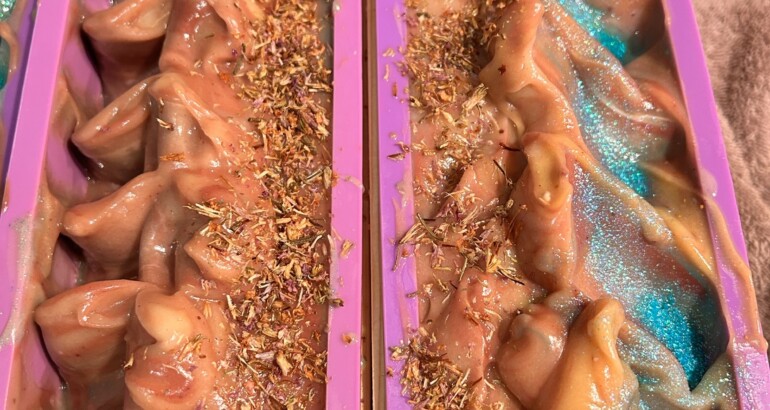
True handmade soap (cold or hot process) is created through saponification, where oils react with lye (sodium hydroxide).
After proper curing, handmade soap typically has a pH of:
👉 8.5 to 10
This means:
It is naturally alkaline It cannot be adjusted to a low pH without destroying the soap structure
Why Handmade Soap Is Still Safe for Skin
Even though it’s alkaline, well-made soap is still gentle and beneficial.
✔️ No Free Lye Remains
A properly formulated soap completes saponification, leaving no active lye.
✔️ Superfatting Protects the Skin
Extra oils are left in the formula (such as olive oil, tallow, shea butter):
These nourish the skin They reduce potential dryness
✔️ Natural Glycerin Is Preserved
Handmade soap naturally contains glycerin:
Attracts moisture to the skin Helps maintain hydration
Handmade Soap vs Commercial Cleansers (Written Comparison)
Here’s how they differ:
pH level: Handmade soap is typically pH 8.5–10 (alkaline) Commercial cleansers are usually pH 5–7 (closer to skin pH) Ingredients: Handmade soap uses natural oils and butters Commercial products often use synthetic detergents like SLS Glycerin content: Handmade soap retains natural glycerin Commercial soap often removes glycerin for resale Skin feel: Handmade soap feels nourishing and conditioning Commercial cleansers can feel stripping or drying
Many commercial “soaps” are not true soap—they are syndet bars (synthetic detergents).
Can You Lower the pH of Soap?
❌ No, not without ruining it.
Lowering the pH too much:
Stops proper saponification Turns the product into something other than soap
However, you can make soap gentler by:
Using a 5–8% superfat Choosing conditioning oils (olive, tallow, castor) Allowing full curing (4–6+ weeks)
Does Alkaline Soap Damage Skin?
For most people, it does not.
Your skin naturally restores its pH after washing within a short time.
However, people with:
Very sensitive skin Eczema or psoriasis may benefit from alternating with lower pH cleansers.
Products containing honey act as natural humectants and help soothe and support compromised skin.
Why Formulation Matters More Than pH
The quality of soap depends more on formulation than on pH alone.
A well-crafted bar focuses on:
Balanced fatty acids Nourishing oils and butters Additives like honey and botanical extracts Proper curing time
These factors determine how the soap feels on the skin.
Handmade soap is naturally alkaline—but not harmful when properly made.
It can:
Clean effectively Support hydration Deliver nutrients to the skin
The key is not lowering the pH, but creating a well-balanced, high-quality formula.
✨ Experience the difference of true handcrafted skincare
Our soaps are made in small batches using natural oils, honey, and botanical extracts:
👉 Visit www.ZenChemyLab.ca
Or check out my soap collection:
The Science Behind Skin Barrier, pH, and TEWL
To truly understand how soap affects your skin, we need to look at the skin barrier and something called TEWL (Transepidermal Water Loss).
What Is the Skin Barrier?
Your outermost skin layer, the stratum corneum, acts like a protective shield.
It is often described as a “brick and mortar” structure:
Bricks → Skin cells (corneocytes) Mortar → Lipids (ceramides, cholesterol, fatty acids)
This barrier is responsible for:
Locking in moisture Protecting against irritants and bacteria Maintaining overall skin health
What Is TEWL (Transepidermal Water Loss)?
TEWL refers to the amount of water that passively evaporates from your skin into the environment.
👉 In simple terms:
It measures how much moisture your skin is losing.
Low TEWL → Healthy, hydrated skin High TEWL → Dry, compromised skin barrier
How pH Affects the Skin Barrier
Your skin’s natural pH (around 4.5–5.5) helps maintain:
Enzyme activity that builds healthy lipids A balanced microbiome Strong barrier function
When you use an alkaline product (like soap):
Skin pH temporarily increases Lipid organization can be slightly disrupted TEWL may increase briefly
Why Handmade Soap Doesn’t Permanently Damage the Skin
This is key—and often misunderstood.
Even though handmade soap is alkaline:
✔️ The effect is temporary
Your skin naturally returns to its normal pH within a short time (usually within minutes to a couple of hours).
✔️ High-quality formulations reduce TEWL impact
Soaps rich in:
Tallow Olive oil Shea butter Honey
help replenish lipids and reduce moisture loss.
✔️ Glycerin helps restore hydration
Naturally occurring glycerin in handmade soap:
Attracts water to the skin Supports barrier recovery
TEWL and Poor-Quality Cleansers
Not all cleansing products are equal.
Products that can significantly increase TEWL:
Harsh detergents (like SLS) Alcohol-heavy cleansers Overly stripped commercial soaps
These can:
Remove natural lipids
Weaken the skin barrier
Lead to chronic dryness and irritation
A well-formulated soap minimizes disruption and supports recovery.
ZenChemyLab’ formulations with:
Honey → humectant, helps reduce TEWL Beeswax → forms a light protective barrier
Tallow → rich in skin-compatible fatty acids
Botanical extracts → support skin repair create a balanced cleansing experience, even with an alkaline pH.
Scientific Takeaway
Yes, soap temporarily raises skin pH Yes, TEWL may increase briefly But healthy skin + well-formulated soap = rapid recovery and no long-term damage
👉 The real problem is not pH alone—it’s harsh, poorly formulated cleansers
Check out artisan soap collection: