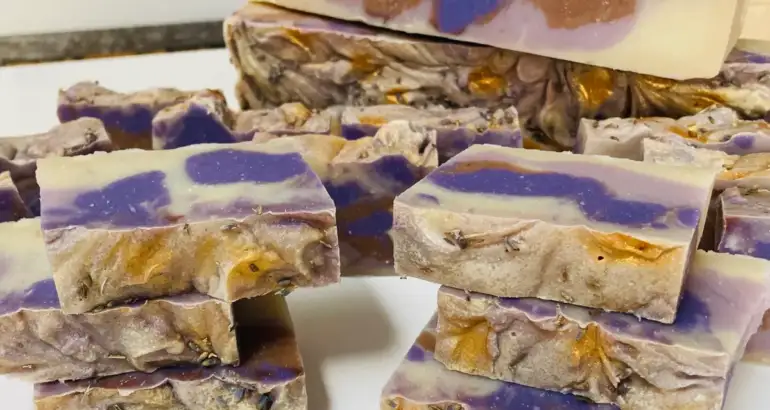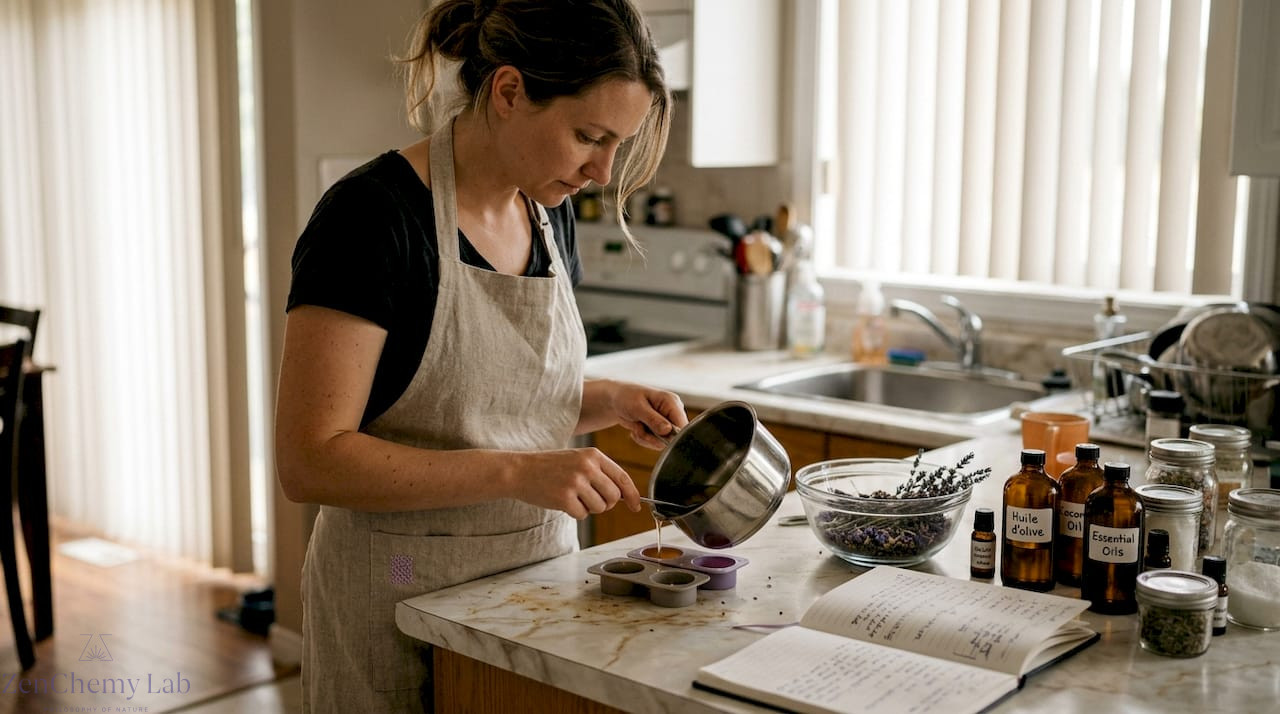
You’ve seen the labels: ‘handmade,’ ‘natural,’ ‘pure.’ They promise safety and simplicity, but here’s the truth most makers won’t tell you. Handmade doesn’t guarantee safety, and ‘natural’ has no legal meaning. Even small-batch cosmetics must meet strict regulations for ingredient disclosure, safety substantiation, and manufacturing practices. This article breaks down the real standards behind handmade products, what to look for on labels, and how to choose skincare that’s genuinely safe and transparent.
Table of Contents
- What defines a handmade cosmetic?
- Core cosmetic regulations: What applies to handmade products?
- Natural versus synthetic: How standards impact your choices
- Beyond the basics: Organic and purity certifications
- How to check if a handmade cosmetic meets safe standards
- Explore safe, transparent handmade skincare options
- Frequently asked questions
Key Takeaways
| Point | Details |
|---|---|
| Handmade isn’t always safer | Strict safety, labelling, and ingredient standards apply to all cosmetics, not just mass-produced brands. |
| Transparency matters most | Focus on clear ingredient lists, GMP compliance, and evidence of responsible production practices. |
| Certifications offer extra assurance | Natural and organic standards like Naturland go beyond regulations for added purity and trust. |
| Check before you buy | Always read ingredient labels and look for proof of compliance or third-party verification. |
What defines a handmade cosmetic?
The word ‘handmade’ evokes images of purity and care, but there’s no single global definition for what qualifies as handmade in cosmetics. In Canada, the US, and the EU, regulatory bodies focus on safety and ingredient transparency, not production scale or artisan methods.
Some makers use ‘handmade’ as a marketing term to suggest superior quality or purity, but this label alone doesn’t guarantee either. What matters is whether the product meets safety standards, discloses all ingredients properly, and follows good manufacturing practices.
“‘Handmade’ has no legal definition in North America; regulatory bodies focus on safety and full ingredient disclosure over product origin.”
Instead of relying on the word ‘handmade,’ look for these indicators of quality:
✓ Full ingredient list using INCI (International Nomenclature of Cosmetic Ingredients) names
✓ Clear contact information for the maker or brand
✓ Evidence of third-party certifications or compliance with Good Manufacturing Practices
✓ Transparent sourcing and production claims you can verify
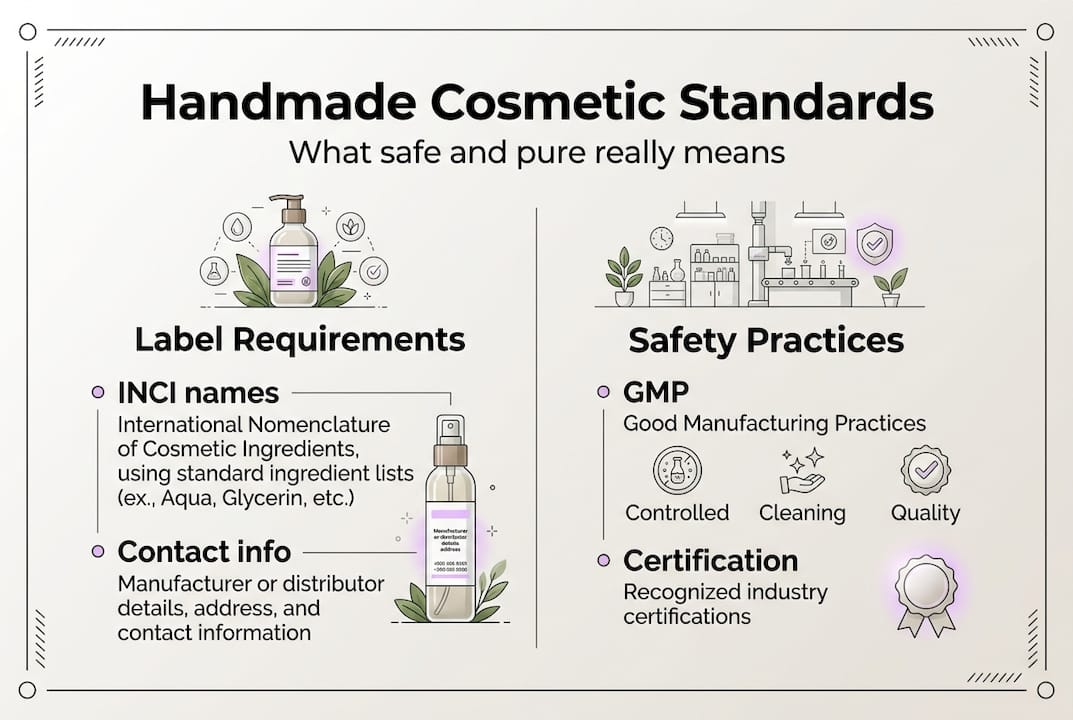
The distinction between handmade versus commercial soaps often comes down to batch size and ingredient selection, but both must meet the same safety requirements. A small-batch soap made with poor hygiene practices is riskier than a factory-produced bar that follows strict protocols.
Core cosmetic regulations: What applies to handmade products?
Having established the confusion around ‘handmade’ claims, let’s look at the core regulations that actually govern these products. Whether you’re buying from a local artisan or a major brand, the same foundational rules apply.
1. Safety substantiation and labelling
Every cosmetic product sold in North America must have evidence that it’s safe for use. This means makers must substantiate safety through testing, scientific literature, or expert assessment. Labels must list all ingredients in INCI format, arranged in descending order by weight.
2. Good Manufacturing Practices (GMP)
Handmade cosmetics must comply with FDA’s Modernization of Cosmetics Regulation Act (MoCRA) requirements for safety substantiation, ingredient labelling, GMP (with some exemptions), facility registration, and more. Small makers may qualify for certain exemptions, but the core principle remains: production must occur in clean, controlled environments that prevent contamination.
3. Product listing and facility registration
Depending on business size and region, makers must register their facilities and list their products with regulatory authorities. In the US, businesses exceeding certain revenue thresholds must comply with MoCRA’s registration requirements. EU Regulation 1223/2009 mandates Cosmetic Product Safety Report (CPSR), GMP, prohibited ingredients lists, and no distinction for handmade products.
4. Mandatory reporting and record keeping
Makers must report serious adverse events to regulatory bodies and maintain records for three to six years. This includes formulation details, safety assessments, and any consumer complaints or reactions.
Key statistic: Under MoCRA, facilities that manufacture or process cosmetics for distribution in the US must register with the FDA, and products must be listed, with exemptions only for very small businesses earning under specific thresholds.
Understanding these baseline requirements helps you evaluate whether a handmade product truly prioritises your safety. When shopping for items like those that require careful understanding pH in soaps, knowing the maker follows GMP and proper formulation practices becomes essential.
Natural versus synthetic: How standards impact your choices
Now that the regulatory baseline is clear, let’s compare how handmade products differ from mass-produced or synthetic cosmetics in terms of standards and expectations.

Here’s a reality check: there’s no legal definition of ‘natural’ in North America or the EU. Regulators regulate for product safety, not the source of ingredients or ‘natural’ claims, and do not define ‘natural’ legally. This means a product labelled ‘all natural’ might contain synthetic preservatives, and that’s perfectly legal as long as the ingredients are safe and disclosed.
Synthetic doesn’t mean unsafe. Many synthetic ingredients undergo rigorous safety testing and perform specific functions that natural alternatives can’t match. Conversely, natural ingredients can cause allergic reactions or irritation in some users. Regulations govern all ingredients equally, focusing on safety rather than origin.
| Aspect | Natural ingredients | Synthetic ingredients |
|---|---|---|
| Regulatory scrutiny | Same safety standards apply | Same safety standards apply |
| Allergen potential | Can trigger reactions (e.g., essential oils) | Can trigger reactions (e.g., fragrances) |
| Stability | May require more preservatives | Often more stable |
| Environmental impact | Varies by sourcing and processing | Varies by manufacturing |
| Transparency | Depends on maker disclosure | Depends on maker disclosure |
Some voluntary certifications, like Naturland, ban certain synthetics and set stricter standards than law requires. These certifications offer added assurance for consumers seeking specific purity or ethical standards, but they’re not mandatory for legal compliance.
Pro Tip: Focus on proven safety, transparency, and evidence-based claims rather than marketing buzzwords like ‘natural’ or ‘chemical-free.’ Every substance is a chemical, including water. What matters is whether the ingredient is safe at the concentration used and properly disclosed on the label.
The debate between natural versus synthetic skincare often misses the point: both categories include safe and unsafe options. Your best protection is choosing products from makers who prioritise transparency and follow established safety protocols.
Beyond the basics: Organic and purity certifications
The discussion of natural versus synthetic leads naturally to the extra certifications and standards that go beyond minimum legal requirements. While regulations set the safety floor, voluntary certifications raise the bar for ingredient sourcing, environmental practices, and ethical production.
Naturland requires organic agricultural ingredients, prohibits synthetic dyes and certain processing, and enforces strict traceability, GMP, and environmental management. This certification addresses concerns that basic regulations don’t cover, such as pesticide use in ingredient farming or sustainable harvesting practices.
Key features of purity certifications:
✓ Organic sourcing: Agricultural ingredients must come from certified organic farms
✓ Banned substances: Specific synthetic dyes, fragrances, and processing aids are prohibited
✓ Traceability: Complete supply chain documentation from farm to finished product
✓ Environmental standards: Requirements for waste management, energy use, and packaging
✓ Ethical practices: Fair labour conditions and community impact considerations
| Certification | Primary focus | Key requirements | Verification |
|---|---|---|---|
| Naturland | Organic purity | 95%+ organic ingredients, banned synthetics | Annual audits |
| COSMOS | Natural/organic cosmetics | Ingredient origin, processing limits | Third-party inspection |
| USDA Organic | Agricultural ingredients | Organic farming standards | Government oversight |
| Ecocert | Ecological production | Natural ingredient minimums, eco-packaging | Regular audits |
These certifications help consumers have greater trust in product purity and eco ethics. They provide independent verification that a maker’s claims align with their actual practices. When you see a Naturland seal on a product, you know it has met standards far exceeding basic legal compliance.
Pro Tip: Not all excellent handmade products carry certifications. Certification costs can be prohibitive for very small makers. Look for makers who voluntarily disclose their sourcing, testing, and production practices even without formal certification.
For consumers seeking certified natural products, these seals offer peace of mind. They confirm that someone independent has verified the maker’s claims about purity, sourcing, and environmental responsibility.
How to check if a handmade cosmetic meets safe standards
With this added layer of assurance in mind, let’s see what practical steps you can take as a consumer to verify product safety and quality.
1. Examine the ingredient list
Labels must list all ingredients by INCI name in order, disclose allergens, and makers must substantiate safety and keep records (3-6 years). Check that the list is complete, uses proper INCI names (not just common names), and appears in descending order by weight. The first five ingredients make up the bulk of the product.
2. Look for compliance indicators
Search for evidence of Good Manufacturing Practices, facility registration, or third-party certifications. Many responsible makers display this information on their websites or product packaging. If you can’t find it, ask directly.
3. Research the maker’s transparency
Visit the maker’s website or contact them with questions about safety substantiation, adverse event reporting, or ingredient sourcing. Makers who follow proper standards will answer confidently and provide documentation if requested.
4. Verify certifications
If a product claims organic or purity certification, verify the seal is legitimate. Most certifying bodies maintain online databases where you can confirm a maker’s certification status.
5. Assess traceability
Prefer products with traceable sourcing and organic/purity certifications. Makers who can tell you where their ingredients come from and how they’re processed demonstrate a commitment to quality and transparency.
Pro Tip: Be wary of makers who refuse to disclose full ingredient lists, claim their formulas are ‘proprietary secrets,’ or dismiss safety questions. Transparency is a hallmark of responsible cosmetic production, whether handmade or commercial.
When exploring handmade skincare options, use this checklist to evaluate each product. The goal isn’t perfection but rather finding makers who prioritise your safety and provide the information you need to make informed choices.
Explore safe, transparent handmade skincare options
Armed with this checklist, you’re positioned to make informed choices. Understanding the real standards behind handmade cosmetics empowers you to look beyond marketing claims and focus on what truly matters: safety, transparency, and proven quality.

ZenChemy Lab creates handmade skincare that meets rigorous safety, ingredient, and transparency standards. Every product is formulated with full ingredient disclosure, proper safety substantiation, and adherence to Good Manufacturing Practices. We believe you deserve to know exactly what you’re putting on your skin and why each ingredient is there.
Browse our artisan soap collection to discover small-batch soaps crafted with certified organic ingredients and transparent sourcing. Each bar is made in controlled conditions that prioritise purity and safety. Or explore our full range of handmade skincare products designed to deliver effective, natural self-care without compromising on regulatory compliance or ingredient quality.
Your self-care routine should be both safe and naturally effective. When you choose products that meet clear standards and provide full transparency, you’re investing in skincare that respects both your skin and your right to know what you’re using. Learn more about why natural versus synthetic standards matter and how to evaluate products based on science rather than marketing.
Frequently asked questions
Are handmade cosmetics regulated differently than commercial cosmetics?
No, handmade cosmetics must comply with the same safety, labelling, and good manufacturing standards as commercial products. Regulatory bodies don’t distinguish between production scale when it comes to consumer safety.
What does ‘handmade’ mean on a cosmetic product?
There is no legal definition of ‘handmade’ in North American cosmetic law. The label typically indicates small-batch production, but safety and ingredient rules still fully apply regardless of how the product is made.
How can I tell if a handmade cosmetic is truly natural or safe?
Examine the ingredient list for INCI names, look for third-party natural certifications like Naturland and similar standards that provide added assurance of purity beyond legal minimums, and ensure the maker follows Good Manufacturing Practices. Ask questions about sourcing and safety substantiation.
What ingredient information must be included on a handmade cosmetic label?
Label requirements apply equally to handmade and commercial products. All cosmetics must identify every ingredient using the INCI system in descending order by weight, including potential allergens. Contact information for the responsible party must also appear on the label.
Do organic certifications guarantee a handmade cosmetic is safer?
Organic certifications verify ingredient sourcing and production methods but don’t replace safety regulations. They offer added assurance about purity, environmental practices, and ethical sourcing, complementing rather than replacing mandatory safety standards. Both certified and non-certified products must meet the same baseline safety requirements.