You deserve skin that feels as soft and radiant as it looks, but achieving that spa-quality glow at home can feel overwhelming. The good news? With the right natural ingredients and a simple step-by-step approach, you can transform your self-care routine into a luxurious ritual that delivers real results. This guide walks you through everything you need to know, from selecting the perfect exfoliant to mastering the technique that protects your skin barrier while revealing smoother, healthier skin. We’ll cover what to use, how to do it safely, common mistakes to avoid, and how to make this practice a lasting part of your wellness journey.
Table of Contents
- What you need for an at-home body scrub
- Step-by-step body scrub process for glowing skin
- How often to use a body scrub for healthy skin
- Expert tips and troubleshooting for safer, more effective scrubs
- Elevate your body care with natural products from ZenChemy Lab
- Frequently asked questions
Key Takeaways
| Point | Details |
|---|---|
| Prep is essential | Soaking and cleansing first ensures the body scrub works effectively and safely. |
| Gentle technique matters | Use soft, circular motions with light pressure to avoid skin damage when exfoliating. |
| Customize for your skin | Adjust ingredients and frequency based on your skin type and needs for maximum benefit. |
| Moisturize immediately | Applying moisturizer while the skin is still damp helps lock in hydration post-scrub. |
| Safety first | Avoid scrubbing freshly shaved, broken, or sunburned skin to prevent irritation or injury. |
What you need for an at-home body scrub
Now that you’re curious about the benefits of a home scrub, let’s make sure you have everything you need to do it right. Creating an effective body scrub starts with gathering quality ingredients and understanding how they work together. DIY natural body scrub recipes require basic pantry ingredients and attention to hygiene for shelf life.
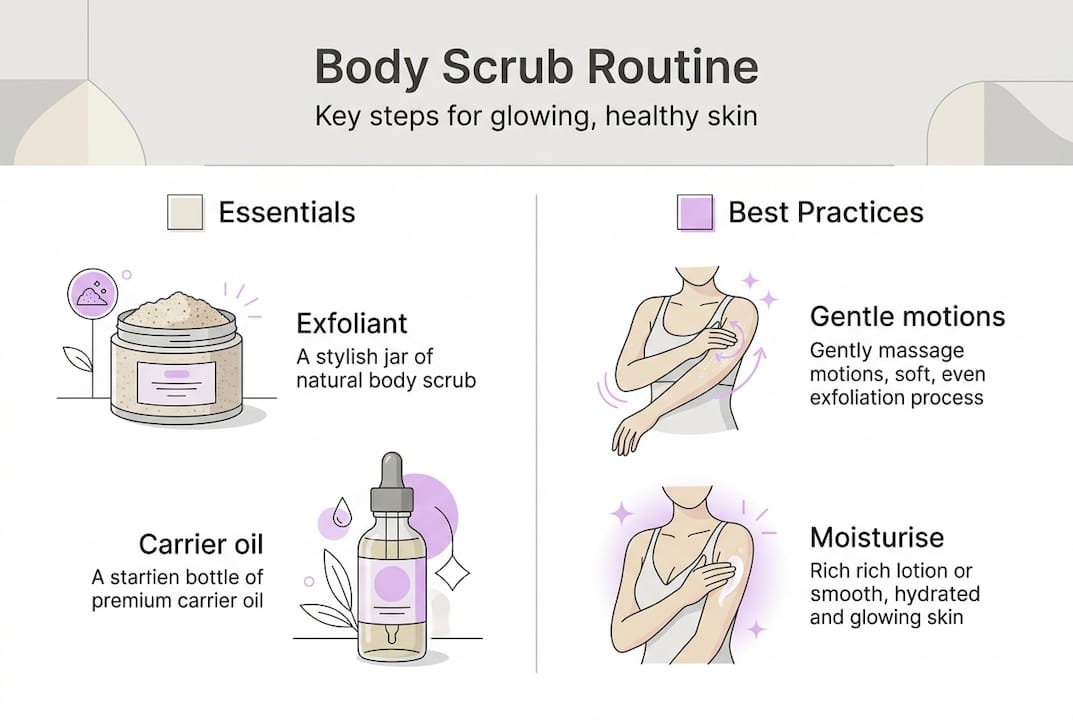
| Component | Options | Purpose |
|---|---|---|
| Base exfoliant | White/brown sugar, sea salt, coffee grounds | Physical exfoliation |
| Carrier oil | Coconut, jojoba, sweet almond, olive | Moisture and binding |
| Optional add-ins | Essential oils, dried botanicals, vitamin E | Fragrance and skin benefits |
| Tools | Clean glass jar, wooden spoon, measuring cups | Mixing and storage |
The foundation of any effective scrub is the right ratio: 2:1 exfoliant to oil by volume. This balance ensures proper texture without being too oily or too abrasive. Sugar dissolves more gently than salt, making it ideal for sensitive areas, while salt provides deeper exfoliation for rough patches like elbows and heels.
Preparation tips for success:
✓ Use a completely dry spoon and jar to prevent bacterial growth
✓ Measure ingredients accurately for consistent texture
✓ Mix thoroughly until oil coats all granules evenly
✓ Store in a cool, dark place away from shower steam
✓ Never introduce water into your storage container
Pro Tip: Match your carrier oil to your skin type. Jojoba mimics skin’s natural sebum for balanced hydration, coconut oil suits normal to dry skin, and sweet almond works beautifully for sensitive skin without clogging pores.
If DIY isn’t practical for your schedule, professionally formulated options like our luxurious salt scrub, luxurious sugar scrub, or coffee body scrub deliver spa-quality results with optimal ingredient ratios and extended shelf life. For more DIY body scrub recipe inspiration, explore variations that suit your preferences.
Step-by-step body scrub process for glowing skin
With your ingredients gathered and workspace ready, here’s exactly how to turn them into a spa-quality experience. Following the proper sequence ensures you maximise benefits while protecting your skin barrier. Step-by-step body scrub process according to dermatologist guidelines emphasises preparation and technique over aggressive scrubbing.
The complete body scrub routine:
-
Soak and soften (3-5 minutes): Stand under warm water to open pores and soften dead skin cells. This makes exfoliation more effective and comfortable.
-
Cleanse first: Wash with a gentle body wash to remove surface dirt, oils, and product buildup. Clean skin allows the scrub to work directly on dead cells.
-
Apply to damp skin: Turn off the water but stay in the shower. Scoop a generous amount of scrub and apply to one area at a time.
-
Massage with circular motions (30-60 seconds per area): Use gentle, consistent pressure. The proper method: cleanse first, apply scrub to damp skin, massage gently and focus on rough areas but avoid harsh pressure.
-
Focus on rough zones: Spend extra time on elbows, knees, heels, and any areas with texture concerns.
-
Rinse thoroughly: Use lukewarm water to remove all scrub particles. Check behind knees and between toes.
-
Pat dry gently: Don’t rub. Your skin should feel smooth but slightly damp.
-
Moisturise immediately: Apply body lotion or oil within 3 minutes to lock in hydration.
| Step | Duration | Key tip |
|---|---|---|
| Soak | 3-5 min | Warm, not hot water |
| Cleanse | 1-2 min | Remove surface buildup |
| Scrub massage | 30-60 sec per area | Circular, gentle pressure |
| Rinse | 1-2 min | Lukewarm water |
| Moisturise | Within 3 min | Lock in hydration |
Pro Tip: Always use circular motions rather than back-and-forth scrubbing. This technique is gentler on skin and more effective at lifting dead cells. Never scrub sunburned, irritated, or freshly shaved skin, as this can cause inflammation and damage.
Safety note: Over-exfoliation damages your skin barrier, leading to increased sensitivity, redness, and moisture loss. If your skin feels tight, stings, or looks inflamed after scrubbing, you’ve gone too far. Reduce frequency and pressure immediately.
For facial exfoliation, switch to gentler formulas like our turmeric face scrub or start with a mild cleanser like turmeric honey face wash before introducing physical exfoliation. Learn more about safe exfoliation tips for different skin types.
How often to use a body scrub for healthy skin
After mastering the method, it’s just as important to scrub only as often as your skin needs. Frequency depends entirely on your skin type, and more is definitely not better. Optimal frequency varies by skin type: 1x/week for dry/sensitive, 2-3x for oily/normal skin.
Recommended scrubbing frequency by skin type:
✓ Dry or sensitive skin: Once per week maximum. Your skin produces less oil and needs more time to recover between sessions.
✓ Normal skin: 1-2 times per week. This maintains smoothness without stripping natural oils.
✓ Oily or acne-prone skin: 2-3 times per week. More frequent exfoliation helps prevent clogged pores, but watch for irritation.
✓ Combination skin: 1-2 times per week, adjusting based on how different areas respond.
68% of dermatology visits related to exfoliation stem from misuse or overuse, highlighting how common it is to scrub too aggressively or too often. Over-exfoliation is very common and can cause irritation, dryness, and breakouts.
Warning signs you’re over-exfoliating:
✗ Persistent redness or sensitivity
✗ Tight, uncomfortable feeling after moisturising
✗ Increased breakouts or irritation
✗ Flaking or peeling skin
✗ Stinging when applying products
Pro Tip: Always adjust your routine according to your skin’s sensitivity and response. If you notice any warning signs, skip your next session and focus on gentle hydration. Your skin will tell you what it needs if you pay attention.
Pair your exfoliation routine with daily SPF protection and rich moisturisers. Products like our sun-kissed glow bronzer add radiance while protecting newly revealed skin. For outdoor activities, complement your routine with natural bug repellent that won’t interfere with your skincare. Review exfoliation guidelines for personalised recommendations.
Expert tips and troubleshooting for safer, more effective scrubs
Even with the best process, mistakes can happen. Here’s how to avoid them and level up your routine. Understanding what not to do is just as important as mastering technique. Mechanical scrubs can cause micro-tears, so chemical exfoliation is preferred for sensitive or darker skin types. Avoid overuse, cuts, irritation, and freshly shaved areas.
What not to do:
✗ Never use body scrubs on your face (too coarse and damaging)
✗ Avoid scrubbing broken, sunburned, or inflamed skin
✗ Don’t exfoliate immediately after shaving or waxing
✗ Skip scrubbing if you have active acne, eczema, or rosacea
✗ Never apply excessive pressure or scrub for too long
✗ Don’t use expired or contaminated products
Pro Tip: For sensitive or darker skin tones, opt for gentle sugar-based scrubs or consider chemical exfoliation with AHAs instead. Physical scrubs can cause post-inflammatory hyperpigmentation in darker skin if used too aggressively. Our AHA serum for exfoliation offers a gentler alternative for facial skin.
Edge cases and advanced tips:
✓ Using accessories: Exfoliating mitts or brushes can enhance your scrub but require even lighter pressure. Let the tool do the work.
✓ Seasonal adjustments: Reduce frequency in winter when skin is drier. Increase slightly in summer if you’re more active and sweaty.
✓ Post-scrub care: Always apply SPF if you’ll be outdoors within 24 hours. Freshly exfoliated skin is more vulnerable to UV damage.
✓ Moisturiser matters: Choose rich, fragrance-free formulas immediately after scrubbing. Your skin absorbs products better when freshly exfoliated.
Dermatologist caution: ‘Natural’ doesn’t automatically mean safer. Even natural ingredients can irritate or damage skin if used incorrectly. Focus on gentle pressure, appropriate frequency, and listening to your skin’s response rather than assuming all natural products are universally safe.
Troubleshooting common issues:
Problem: Skin feels irritated or red after scrubbing
Solution: You’re using too much pressure or scrubbing too long. Reduce both and skip your next session.
Problem: Increased dryness or flaking
Solution: You’re over-exfoliating. Cut frequency in half and boost moisturiser application.
Problem: Breakouts after scrubbing
Solution: Your scrub may be too oily for your skin type, or you’re not rinsing thoroughly. Switch to a lighter carrier oil.
Problem: Uneven results
Solution: Ensure you’re spending equal time on all areas and using consistent pressure throughout.
For more guidance on ingredient safety and effectiveness, explore mechanical vs chemical exfoliation to determine which approach suits your skin best.
Elevate your body care with natural products from ZenChemy Lab
For those who want to take their skincare routine further or save time, here’s how ZenChemy Lab can help. While DIY scrubs offer wonderful customisation, professionally formulated products deliver consistent results with optimised ingredient ratios, extended shelf life, and expert-backed formulations.

Our expert-formulated scrubs and soaps offer a convenient, safe alternative for those seeking professional results at home. Each product is crafted with the same natural philosophy you’d use in your DIY routine but with the precision and stability that comes from years of formulation expertise. From rejuvenating scrubs that balance exfoliation with nourishment to gentle soaps that cleanse without stripping, we’ve designed every product to extend your self-care ritual.
If you’re curious about the science behind ingredient choices, our guide on natural vs synthetic skincare explains what truly matters for skin health. For specialised concerns like acne or eczema, our pine tar tallow soap combines traditional remedies with modern understanding. Explore our full range of natural handmade skincare to discover products that align with your values and deliver the results you deserve.
Frequently asked questions
Can I use a body scrub on my face?
No, body scrubs are too harsh and can damage facial skin. Coarse scrubs can cause micro-tears and irritation on delicate facial skin. Use gentler face-specific products instead.
What’s the best base ingredient for sensitive skin?
Sugar is gentler than salt and better suited for sensitive or delicate skin types. Sugar scrubs are less abrasive than salt and preferred for sensitive skin.
How long does a homemade body scrub last?
When stored in a cool place and kept free from water, homemade scrubs typically last 1-2 months. Shelf life for DIY body scrubs is 1-2 months if kept dry and refrigerated.
Why is my skin red after scrubbing?
Redness is a sign of over-exfoliation or too much pressure. Over-exfoliation commonly causes redness and irritation. Reduce frequency and be gentle.
Is it safe to use a body scrub after shaving?
No, avoid scrubbing freshly shaved skin to prevent irritation and inflammation. Body scrubs should not be used on recently shaved areas due to skin vulnerability.