
TL;DR:
- Clean beauty emphasizes ingredient transparency, safety, sustainability, and ethical sourcing.
- There are no universal standards; certifications like EWG Verified offer more reliable assurance.
- The movement fosters informed consumer choices and a shift towards honesty in self-care products.
If you’ve ever scanned a product label searching for ‘clean beauty’ and walked away more confused than when you started, you’re not alone. The term is everywhere, yet no standardized definition or regulatory framework actually exists for it. Brands set their own standards, retailers create their own programmes, and consumers are left sorting through the noise. This guide cuts through the marketing clutter so you can make genuinely informed choices about your skincare and body care routine, from the ingredients you welcome in to the ones you decide to leave out.
Table of Contents
- What does clean beauty mean?
- What is (and isn’t) clean? Key standards and controversies
- What ingredients do clean beauty products avoid?
- Clean beauty, natural skincare, and sustainability: How do they connect?
- A fresh perspective: Clean beauty is about progress, not perfection
- Explore true clean beauty with ZenChemy Lab
- Frequently asked questions
Key Takeaways
| Point | Details |
|---|---|
| No universal definition | Clean beauty labels differ because there are no official rules, so always check brand standards. |
| Safety and transparency | Clean beauty products focus on avoiding potentially harmful ingredients and being honest about formulation. |
| Read the ingredient list | For real peace of mind, look beyond marketing claims to the full ingredient disclosure and certifications. |
| Sustainability connects | Clean beauty and natural skincare both value sustainability, making ethical choices part of your self-care routine. |
| Progress over perfection | Clean beauty is about better, more mindful self-care—not chasing unattainable purity standards. |
What does clean beauty mean?
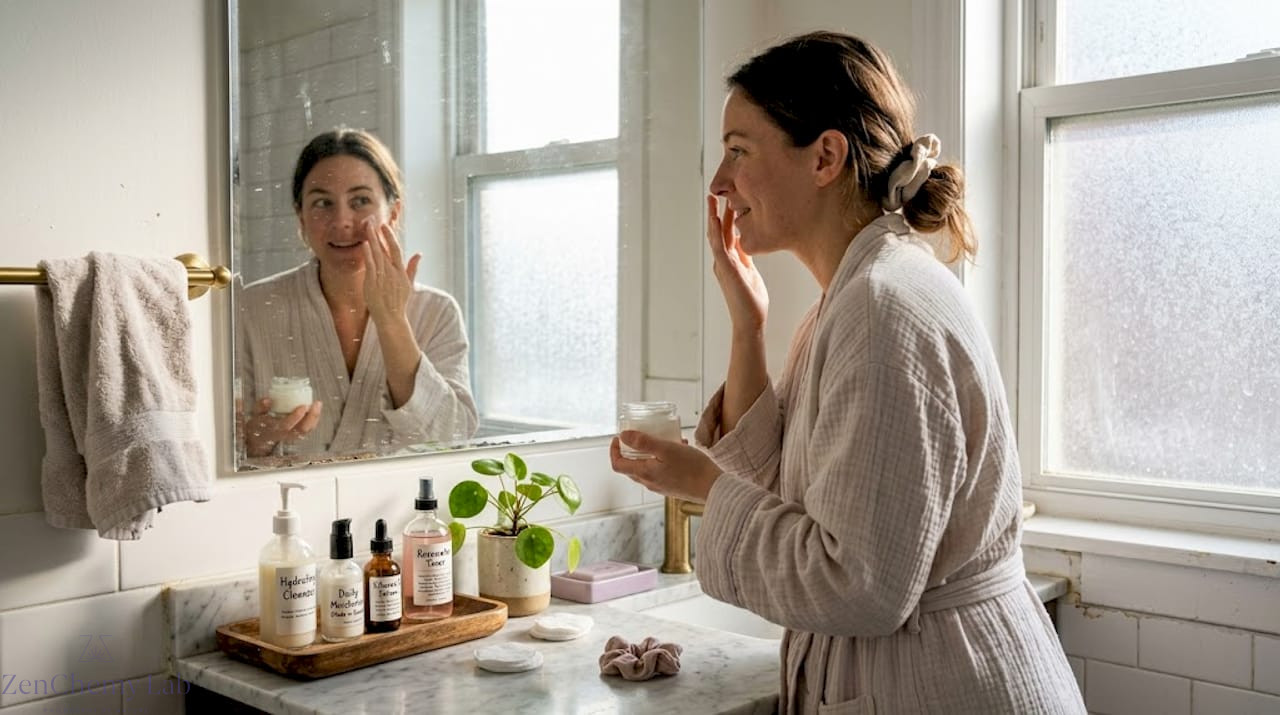
At its core, clean beauty is a values-driven approach to skincare and cosmetics. Rather than focusing on what a product contains, it focuses on what it doesn’t contain, alongside a broader commitment to how ingredients are sourced, tested, and disclosed. Think of it less as a strict rulebook and more as a guiding philosophy.
Clean beauty prioritises safety by avoiding potentially harmful ingredients, emphasising transparency, sustainability, ethical sourcing, and non-toxic formulas. That’s a meaningful set of values, even if the boundaries aren’t always crisp.
Here’s what most clean beauty brands agree on:
- ✅ Ingredient transparency: Full disclosure of what’s in the formula, and why
- ✅ Non-toxic formulas: Avoiding ingredients with evidence of harm or high allergenic potential
- ✅ Sustainable sourcing: Prioritising botanicals and raw materials that are responsibly harvested
- ✅ Ethical production: No animal testing and, ideally, fair labour practices throughout the supply chain
- ✅ Environmental awareness: Packaging, carbon footprint, and biodegradability all factor in
The movement gained real momentum because consumers started asking harder questions. Why are certain chemicals allowed in personal care products with limited safety testing? Why is it so difficult to understand what’s actually on an ingredient list? Clean beauty rose as a direct response to those concerns.
“Clean beauty isn’t just about what’s left out of a formula. It’s a commitment to being honest with the people who trust you enough to put your product on their skin.”
It’s worth noting that not all clean beauty products are natural, and not all natural products qualify as clean. A product can be free of synthetic chemicals and still contain a botanical ingredient that causes irritation. Conversely, a carefully chosen, well-tested synthetic ingredient can absolutely fit within a clean beauty framework. This distinction matters when you’re browsing plant-based essentials and trying to decide what genuinely suits your skin.
The lack of a single regulatory standard means the burden falls on you, the consumer, to ask questions and read labels. That’s not a flaw in the system you have to accept passively. With a little knowledge, it becomes your biggest advantage.
What is (and isn’t) clean? Key standards and controversies
With the foundational definition in mind, it’s important to see how ‘clean’ is interpreted in practice, and why that’s not as straightforward as many expect.
No legal standard governs what a brand can call ‘clean beauty.’ Each company, and each retailer, writes its own rules. That’s where things get complicated.
| Standard type | Who sets it | Example | Reliability |
|---|---|---|---|
| Self-imposed brand list | The brand itself | Various artisanal brands | Variable |
| Retailer programme | The retailer | Clean at Sephora (100+ banned ingredients) | Moderate |
| Third-party certification | Independent body | EWG Verified | Higher |
| Government regulation | Federal agency | Health Canada cosmetics regs | Baseline only |
Sephora’s Clean at Sephora programme bans over 100 ingredients, which sounds reassuring. But a product labelled ‘clean’ there might still contain ingredients that another retailer’s programme flags as problematic. That inconsistency is the heart of the controversy.
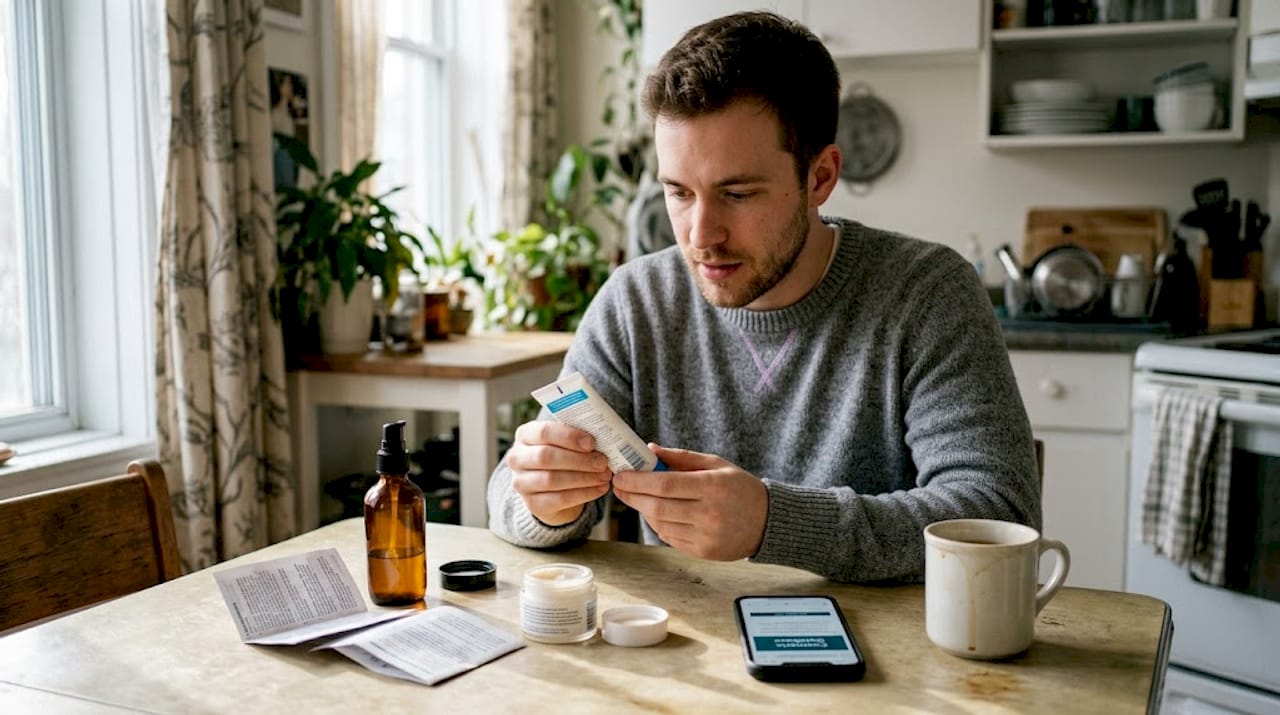
Greenwashing is also real. Some brands use ‘clean,’ ‘green,’ or ‘pure’ purely as marketing language, with little substance behind the claims. Litigation over misleading PFAS disclosures in ‘clean’ products has highlighted just how far some marketing can stretch the truth.
What actually offers reliable assurance?
- 🔍 EWG Verified: Requires full ingredient disclosure and safety screening against the Environmental Working Group’s database
- 🔍 COSMOS or ECOCERT: Strong standards for organic and natural cosmetics, including sourcing and processing
- 🔍 Leaping Bunny: Cruelty-free certification with supply chain accountability
When evaluating a brand, check whether their claims are backed by a recognised certification or just a curated-sounding ‘never list.’ Understanding handmade cosmetic standards can help you appreciate what genuinely rigorous formulation looks like, and how to spot shortcuts.
For a deeper look at how natural vs synthetic skincare ingredients stack up scientifically, you’ll find the distinction becomes much clearer once you understand what the evidence actually says. The clean beauty label is a starting point, not a finish line.
What ingredients do clean beauty products avoid?
Seeing the disagreements around standards and claims, the next step is to understand exactly which ingredients are most often avoided and why.
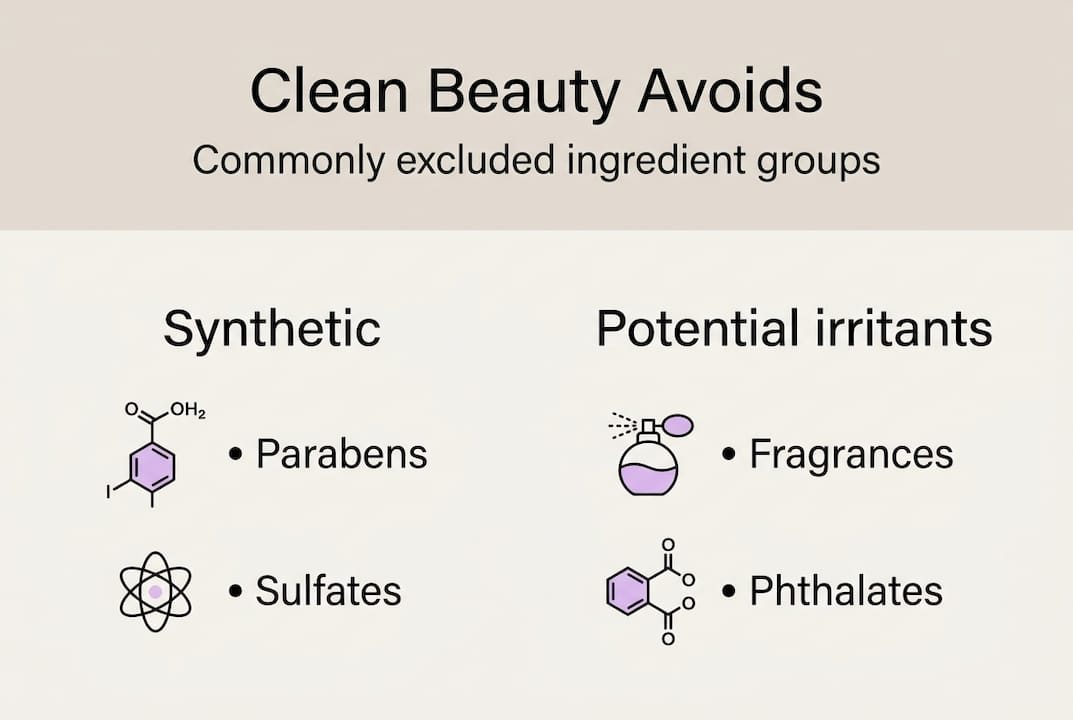
Avoiding potentially harmful ingredients is the defining feature of clean beauty formulas. Here are the most common entries on a clean beauty ‘no list’:
| Ingredient | Reason for avoidance |
|---|---|
| Parabens | Potential endocrine disruption; allergen risk |
| Phthalates | Linked to hormonal disruption |
| Synthetic fragrance | Broad allergen risk; undisclosed chemical mixtures |
| SLS / SLES | Skin irritation, especially for sensitive skin types |
| Formaldehyde donors | Preservatives that release formaldehyde; carcinogen concerns |
| Certain silicones | Environmental persistence; some linked to bioaccumulation |
Here’s how to read a label effectively:
- Start at the end. Ingredients are listed in descending order by concentration. The last few entries are present in tiny amounts.
- Watch for aliases. Formaldehyde releasers hide under names like DMDM hydantoin or diazolidinyl urea.
- Look up anything unfamiliar. The EWG Skin Deep database lets you search individual ingredients for safety ratings.
- Check fragrance disclosures. A product listing only ‘fragrance’ or ‘parfum’ may contain dozens of undisclosed chemicals.
- Seek out full ingredient transparency. Brands that explain why each ingredient is included are generally more trustworthy.
Pro Tip: Don’t assume ‘fragrance-free’ and ‘unscented’ mean the same thing. Unscented products can still contain masking fragrances to neutralise other smells. Always opt for ‘fragrance-free’ if you have sensitive or reactive skin.
It’s also worth understanding that not every synthetic ingredient is harmful. Some ingredients for radiant skin are well-studied synthetics with decades of safe use. The goal of clean beauty is informed exclusion, not blanket fear of anything lab-made. Choosing purity and safety means understanding nuance, not just following a list.
Clean beauty, natural skincare, and sustainability: How do they connect?
Understanding ingredients helps, but clean beauty’s real-world impact is also about sustainability, natural luxury, and making ethical choices for your self-care routine.
Clean beauty emphasises transparency, sustainability, and ethical sourcing. That’s where it overlaps meaningfully with the natural skincare world. But the overlap isn’t complete.
Here’s a quick way to think about it:
- 🌿 Natural skincare focuses on ingredient origin, favouring botanicals, plant oils, and minerals
- ✨ Clean beauty focuses on ingredient safety, regardless of whether the source is natural or synthetic
- 🌱 Organic beauty focuses on how ingredients are grown and processed, often with certification
- 💚 Sustainable beauty focuses on the full lifecycle, from sourcing and production to packaging and disposal
These categories overlap, but none fully contains the others. An artisanal brand crafting small-batch products from botanically sourced ingredients can align beautifully with all four. But it still needs to demonstrate that alignment through genuine transparency, not just appealing packaging.
The clean beauty market is valued at USD 10 to 18 billion in 2025 to 2026, with projections reaching USD 20 to 29 billion by 2031 to 2033. That growth is driven by real consumer demand for transparency, especially across the Asia-Pacific region.
Pro Tip: When choosing a brand for your self-care routine, ask three questions: Do they disclose every ingredient? Can they explain their sourcing? What’s their packaging story? Brands that answer all three confidently are the ones worth trusting.
Sustainability in beauty also means considering sustainable self-care practices at home. How you use, store, and dispose of products matters too. Indulgence and ethics aren’t mutually exclusive. Exploring botanical skincare and organic body care essentials can show you just how luxurious responsible choices can feel.
A fresh perspective: Clean beauty is about progress, not perfection
With all these facts in hand, it’s worth pausing to consider what really matters most in the clean beauty conversation.
Here’s an honest take: the clean beauty movement is imperfect, and that’s okay. Critics rightly point out that some demonised ingredients have decades of safe use behind them, and that the higher costs of clean products don’t always reflect proportional safety gains. That critique deserves to be heard.
But fixating on perfection misses the point. Clean beauty’s greatest contribution isn’t an unblemished product. It’s the cultural shift it has created toward asking harder questions, reading labels, and expecting honesty from brands. That shift benefits everyone.
At ZenChemy Lab, we believe the best approach is informed confidence, not ingredient-driven fear. Some of the most skin-nourishing formulas combine carefully chosen botanicals with safe, well-researched synthetics. What matters is that you understand what you’re putting on your skin and why. The science behind clean beauty supports nuance, not absolutes. Chase transparency and efficacy together, and you’ll always make choices worth feeling good about.
Explore true clean beauty with ZenChemy Lab
If you’re ready to put clean beauty into practice and indulge in the experience, here’s how ZenChemy Lab can guide your journey.
At ZenChemy Lab, every product is built on a commitment to ingredient transparency, artisanal quality, and a genuinely luxurious self-care experience. We believe you deserve to know exactly what you’re applying to your skin and why each ingredient earns its place in our formulas.

Start with our essential skincare tips to build a clean routine from the ground up. Explore natural vs synthetic skincare to understand the science behind what we choose and why. Then browse our artisanal soap collection, handcrafted and formulated in Canada, for a clean beauty experience that feels as good as it sounds.
Frequently asked questions
Is clean beauty better for sensitive skin?
Clean beauty often avoids harsh chemicals such as synthetic fragrances and SLS, making it a promising choice for sensitive skin types. That said, always review ingredient lists carefully and patch test any new product before full use.
Are all natural products considered clean beauty?
Not necessarily. ‘Natural’ describes ingredient origin, while ‘clean’ emphasises safety and non-toxicity. Definitions vary by brand and retailer, meaning even safe synthetics can sit comfortably within a clean beauty framework.
How can I tell if a product truly meets clean beauty standards?
Look for reputable third-party certifications such as EWG Verified, full ingredient lists, and brands that are transparent about their formulation choices. Voluntary certifications offer more reliable benchmarks than self-imposed brand claims alone.
Why do clean beauty products cost more?
Higher ingredient standards, ethical sourcing, and small-batch artisanal production all contribute to elevated costs. As critics note, those higher prices don’t always guarantee proportional safety gains, so it pays to research the brand behind the label.

5 Comments