TL;DR:
- Fair trade skincare involves ingredients traded according to recognized standards that promote fair wages, environmental sustainability, and community development. Recognizing certified fair trade products requires checking official marks like FAIRTRADE and understanding that labels such as “ethically sourced” or “natural” do not guarantee fair trade practices. Distinguishing fair trade from organic and other labels ensures consumers make truly ethical choices aligned with their values and supports transparent, equitable supply chains.
Walk down any skincare aisle and you’ll see words like “natural,” “organic,” “ethical,” and “eco-friendly” splashed across almost every bottle. Many shoppers assume these labels signal fair wages, responsible sourcing, and ethical trade practices. They don’t. Fair trade skincare is a distinct category with specific standards, and confusing it with organic or natural claims is one of the most common mistakes eco-conscious consumers make. This guide clears up the confusion, breaks down what fair trade actually means in skincare, and gives you practical tools to spot authentic products and make purchasing decisions that truly align with your values.
Table of Contents
- What is fair trade skincare?
- How to identify authentic fair trade skincare
- Fair trade vs organic and other labels
- Why fair trade matters for eco-conscious skincare
- The uncomfortable truth about ethical skincare labels
- Discover eco-friendly and fair trade-inspired skincare
- Frequently asked questions
Key Takeaways
| Point | Details |
|---|---|
| Fair trade defined | Fair trade skincare means ethical sourcing and better conditions for producers, backed by credible standards. |
| Label vigilance needed | You must check wording closely since not all ingredients in a product are always fair trade certified. |
| Certifications differ | Fair trade and organic are not the same—each certification covers distinct criteria. |
| Impact matters | Choosing fair trade supports both people and planet, fostering responsible self-care. |
What is fair trade skincare?
Fair trade skincare isn’t simply a marketing feel-good term. It refers to skincare whose ingredients and supply chain are sourced and traded according to recognised fair trade standards designed to improve conditions for farmers and workers, while supporting social, environmental, and economic goals.
That definition carries real weight. It means workers who harvest shea butter, cocoa, argan oil, or vanilla extract are paid fairly. It means farmers have access to better resources and community investment funds. It means environmental stewardship is part of the sourcing agreement, not an afterthought.
Fair trade standards typically address three interconnected pillars:
- ✅ Social goals: Fair wages, safe working conditions, no child labour, and the right for workers to organise
- ✅ Environmental goals: Responsible land use, restricted pesticide use, support for biodiversity, and sustainable farming practices
- ✅ Economic goals: Fair minimum prices for farmers, premium payments that fund community development projects like schools and clinics
The critical distinction is between a marketing claim and a certified fair trade product. Any brand can write “ethically sourced” on a label with zero oversight. In contrast, Fairtrade certification is backed by defined standards and an assurance and certification framework, meaning an independent body audits the supply chain to verify compliance.
“Fair trade is not just about paying more. It’s about building trade relationships that are equitable, transparent, and sustainable for everyone in the supply chain, from the farmer to the finished product.”
Understanding the ethical skincare meaning behind these certifications is your first step toward making genuinely informed choices, rather than ones based on attractive packaging alone.
How to identify authentic fair trade skincare
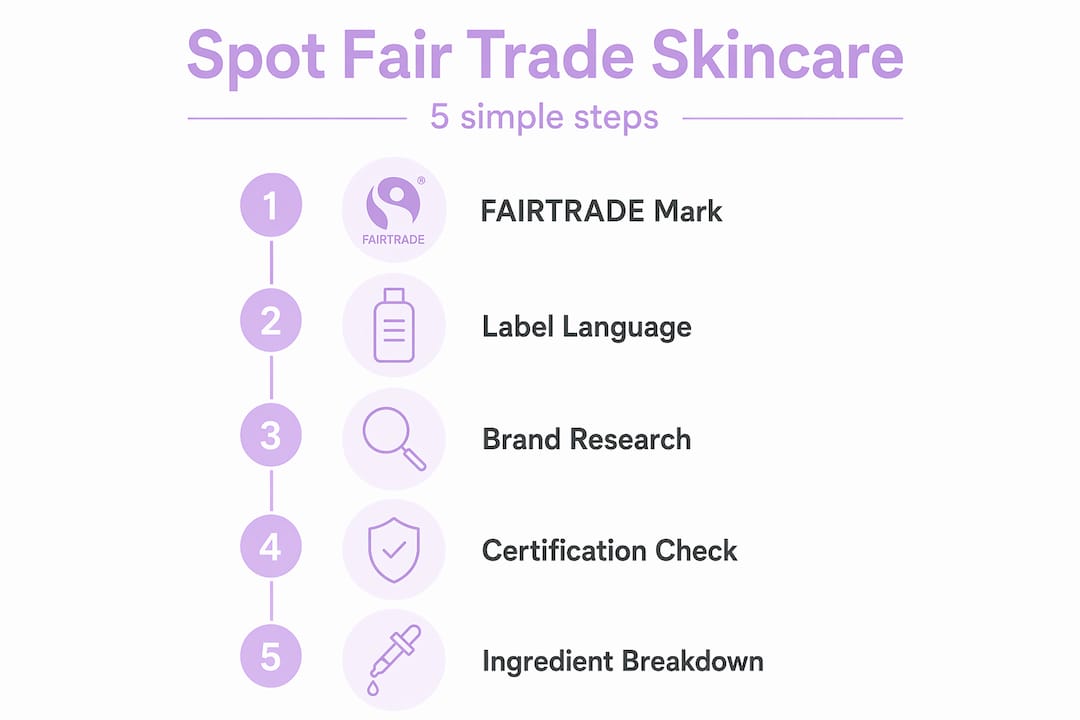
Understanding the standards is one thing, but knowing how to identify authentic fair trade skincare on the shelf is crucial. Labels can be misleading, and even well-intentioned shoppers get tripped up. Here’s a practical, step-by-step approach.
Step 1: Look for the official FAIRTRADE Mark
The FAIRTRADE Mark is the most widely recognised symbol of certified fair trade. Products bearing this mark are linked to certified ingredients and traceability requirements verified by Fairtrade International. It’s not a logo any brand can self-apply. It requires licensing and ongoing audits.
Step 2: Read the label language carefully
Watch for the phrase “contains Fairtrade ingredients.” This is important because fair trade claims may apply to specific ingredients rather than every ingredient in the finished product. A moisturiser might contain certified Fairtrade shea butter, but the remaining 15 ingredients may have no fair trade status at all.
Step 3: Research the brand’s transparency
Genuine fair trade brands tend to name their supply chain partners, share farmer stories, and publish sourcing reports. If a brand says “ethically sourced” but offers zero detail about where or how, that’s a flag worth noting.
Step 4: Distinguish partial from full certification
Very few skincare products are 100% fair trade certified across all ingredients. Most achieve partial certification, meaning select key ingredients meet the standard. Neither partial nor full certification is inherently dishonest, but you need to understand which one you’re buying.
Step 5: Cross-check via the Fairtrade website
Fairtrade International maintains a searchable database of licensed products and producers. If a product claims certification, you can verify it directly.
| Label type | What it signals | What it doesn’t guarantee |
|---|---|---|
| FAIRTRADE Mark | Certified ingredient(s) meet fair trade standards | All ingredients are fair trade |
| “Contains Fairtrade ingredients” | Some ingredients certified | Whole product is certified |
| “Ethically sourced” | Brand’s own claim, no third-party audit | Any verified standard |
| “Natural” | Marketing term only | Ethical sourcing or fair wages |
| “Eco-friendly” | Brand’s own positioning | Certification or fair trade compliance |
Understanding handmade cosmetic standards also helps, particularly if you’re shopping for artisanal or small-batch skincare where supply chains are shorter and sometimes more traceable.
Pro Tip: When you see a certification logo, flip to the brand’s website and search for the specific certification body. Legitimate certifications will have a licence number or producer name you can verify independently. If the brand can’t provide that, the claim may be surface-level only.
One more nuance worth knowing: some brands pursue certification for their most high-profile ingredients like shea or cocoa butter, while sourcing other botanicals with no formal ethical framework. This is common in the artisanal skincare benefits space, where small producers may have genuine ethical values but lack the resources for full formal certification across every ingredient. That doesn’t make them dishonest, but it does mean you should ask questions.
Fair trade vs organic and other labels
Since labels can be confusing, it’s important to distinguish fair trade from organic and other similar claims. These terms address completely different aspects of a product’s journey, and mixing them up leads to purchasing decisions that don’t actually reflect your values.
The clearest distinction is this: fair trade is not the same as organic. Organic certification focuses on how ingredients are grown, including soil health, pesticide restrictions, and farming methods. Fair trade focuses on the people who grow and harvest those ingredients, specifically whether they’re paid fairly, protected from exploitation, and supported by equitable trade agreements.
A product can be certified organic and sourced through exploitative labour conditions. Equally, a fair trade product may not be organically grown. The two certifications serve different purposes and neither one implies the other.
Here’s a straightforward comparison of the most common labels you’ll encounter:
| Label | Primary focus | Who oversees it | What it doesn’t cover |
|---|---|---|---|
| Fairtrade certified | Trade ethics, fair wages, community | Fairtrade International | Farming methods, organic growing |
| Certified organic | Farming practices, no synthetic pesticides | ECOCERT, USDA Organic, etc. | Labour conditions, trade equity |
| “Natural” | Marketing claim, ingredient origin | No governing body | Ethics, labour, or organic growing |
| Vegan certified | No animal-derived ingredients | Vegan Society, PETA | Fair trade or organic status |
| Cruelty-free certified | No animal testing | Leaping Bunny, Choose Cruelty Free | Labour conditions, farming, or organics |
A few common misconceptions worth addressing directly:
- “Natural means ethical.” It doesn’t. Palm oil is natural. It’s also linked to deforestation and labour exploitation unless specifically certified.
- “Organic means fair trade.” Not at all. Organic simply addresses cultivation methods. A farm can grow organically and still underpay workers.
- “Vegan means sustainable.” Vegan status says nothing about how ingredients were farmed, who harvested them, or whether workers were paid fairly.
Learning more about natural vs synthetic skincare helps you move past surface-level marketing and focus on what actually matters for your skin and your conscience. Similarly, understanding organic body care meaning gives you a clearer picture of how organic claims differ from fair trade ones in practical, real-world skincare contexts.
Why fair trade matters for eco-conscious skincare
Beyond certifications, there are tangible benefits for people and the planet when you prioritise fair trade skincare.
Start with the human impact. Many of the core ingredients in natural skincare, including shea butter from West Africa, argan oil from Morocco, and vanilla from Madagascar, are harvested in regions where workers are vulnerable to economic instability. Fair trade frameworks ensure these farmers receive a minimum price that covers their production costs, plus a Fairtrade Premium that funds community projects. Schools get built. Clean water access improves. Healthcare becomes more reachable. These aren’t abstract outcomes; they’re direct results of where your skincare dollar goes.

The environmental benefits are equally significant. Fair trade standards often include requirements for sustainable land management, restricted pesticide use, and protections for biodiversity. This means that choosing certified products can contribute to healthier ecosystems in the regions where your ingredients originate.
✅ Key benefits of choosing fair trade skincare:
- Supports fair wages and safe working conditions for farmers and harvesters
- Funds community development projects through Fairtrade Premium payments
- Encourages sustainable farming and land management practices
- Promotes supply chain transparency and traceability
- Discourages exploitative labour arrangements in ingredient sourcing
- Aligns your purchasing power with your values around equity and sustainability
Fair trade also complements artisanal craftsmanship. When brands source fair trade ingredients, they’re often building longer-term relationships with smaller farming co-operatives, which means more consistent quality, better traceability, and a genuine story behind every ingredient. That shea butter in your body balm didn’t just appear from a warehouse. It was harvested by a named community, processed with care, and traded under fair conditions.
📊 Statistic worth noting: According to Fairtrade International, fair trade standards support social, environmental, and economic goals across the supply chain, with Fairtrade Premium funds directed back to farmer communities for self-determined development projects.
Explore our sustainable skincare guide to see how fair trade fits into a broader eco-conscious routine. And if you’re curious about specific ingredients to look for, our guide to botanical cosmetics walks you through the plant-based ingredients most likely to benefit from fair trade sourcing.
The uncomfortable truth about ethical skincare labels
Here’s what we’ve noticed after years of working with natural ingredients and watching the skincare market grow: most people dramatically overestimate what a single label guarantees.
Shoppers see “organic” and assume the farmers were paid fairly. They see “natural” and assume the supply chain is clean. They see “eco-friendly” on the packaging and assume the whole business operates sustainably. None of these assumptions are accurate, and brands benefit from the confusion.
Even the FAIRTRADE Mark, which is one of the most reliable and independently verified ethical certifications available, is partial by nature in skincare. A shea butter sourced from a Fairtrade-certified co-operative is genuinely a positive choice. But if the other 12 ingredients in that same product have no ethical sourcing framework at all, the overall picture is incomplete.
This isn’t cynicism. It’s label literacy. And it’s the skill that separates a genuinely eco-conscious consumer from one who’s simply purchasing a good feeling.
Our honest advice: layer your certifications and your questions. Look for the FAIRTRADE Mark, and also look for organic certification, cruelty-free status, and genuine supply chain transparency. No single label covers every ethical dimension. The brands worth trusting are the ones who are transparent about what they do and what they haven’t yet achieved.
Small-batch and artisanal skincare producers often occupy an interesting middle ground here. They may not carry formal Fairtrade certification because the licensing costs are prohibitive for a small operation, but they may source directly from small farms, pay above-market prices, and build genuine relationships with producers. That context matters. Certification is a strong signal, but it’s not the only one. Learning to read a brand’s sourcing story alongside its certifications gives you a much fuller picture than any one mark can provide.
Read more about the real-world artisanal skincare benefits that go beyond marketing to understand why ingredient provenance and producer relationships are so central to authentic ethical skincare.
Discover eco-friendly and fair trade-inspired skincare
If you’re ready to elevate your self-care with products that reflect your values, here’s where to start.
At ZenChemy Lab, we believe that what goes into a product matters as much as what it does for your skin. We handcraft artisanal soaps and botanical body care items using natural ingredients selected for purity, quality, and mindful sourcing. Our formulations are built around botanicals that align with the ethical and eco-conscious values this guide has outlined.

Browse our natural skin care collection to explore products crafted with transparency and intention. If you’re building a more conscious routine from scratch, our natural skincare routine tips give you a practical framework for integrating ethical choices at every step. And for a sensory, values-aligned cleansing experience, discover our handmade soap collection, where each bar is made in small batches with care for your skin and the planet.
Frequently asked questions
Does fair trade skincare guarantee all ingredients are fair trade certified?
No. Fair trade claims often apply to specific ingredients only, so check label language such as “contains Fairtrade ingredients” for accurate details.
Is fair trade the same as organic?
No. Fair trade focuses on ethical sourcing, labour conditions, and trade equity, while organic certification relates specifically to how ingredients are grown and produced.
How can I tell if my skincare product is truly fair trade?
Look for the official FAIRTRADE Mark, which indicates certified ingredients and traceability requirements, and read the label wording carefully for phrases like “contains Fairtrade ingredients.”
Do fair trade skincare products cost more?
They often do, because fair pricing for farmers, certification costs, and sustainable sourcing all factor into the final price. Most consumers who prioritise ethics find the investment worthwhile for the impact it creates.