TL;DR:
- Handmade soap retains natural glycerin and uses skin-nourishing plant oils.
- It offers gentle cleansing that supports skin health and is environmentally friendly.
- Small-batch, crafted soaps provide a sensory and mindful self-care experience.
Most people grab a bar of soap without giving it a second thought. But once you make the switch to handmade soap, the difference is hard to ignore. Your skin feels softer, less tight after washing, and you stop reaching for moisturiser as often. That shift is not accidental. Handmade soap is crafted with ingredients that work with your skin rather than stripping it bare. This guide walks you through what sets artisanal bars apart, why they benefit your skin and the environment, and how they can genuinely elevate your daily self-care routine.
Table of Contents
- What makes handmade soap different?
- The skincare benefits of handmade soap
- Why handmade soap is a sustainable choice
- Enjoying the experience: the artisan touch
- What most people overlook about handmade soap
- Discover handmade soaps crafted for your skin
- Frequently asked questions
Key Takeaways
| Point | Details |
|---|---|
| Naturally nourishing | Handmade soap keeps skin hydrated using plant-based oils and natural glycerin. |
| Gentle for all skin types | Artisan soaps suit sensitive and allergy-prone skin by avoiding harsh chemicals. |
| Better for the planet | Choosing handmade soap reduces waste and supports sustainable practices. |
| Unique sensory experience | Handmade bars offer appealing scents, textures, and a personal care touch. |
What makes handmade soap different?
Not all soaps are created equal, and the gap between handmade and commercial bars goes well beyond packaging or price. The differences start at the ingredient level and carry through to how each bar actually performs on your skin.
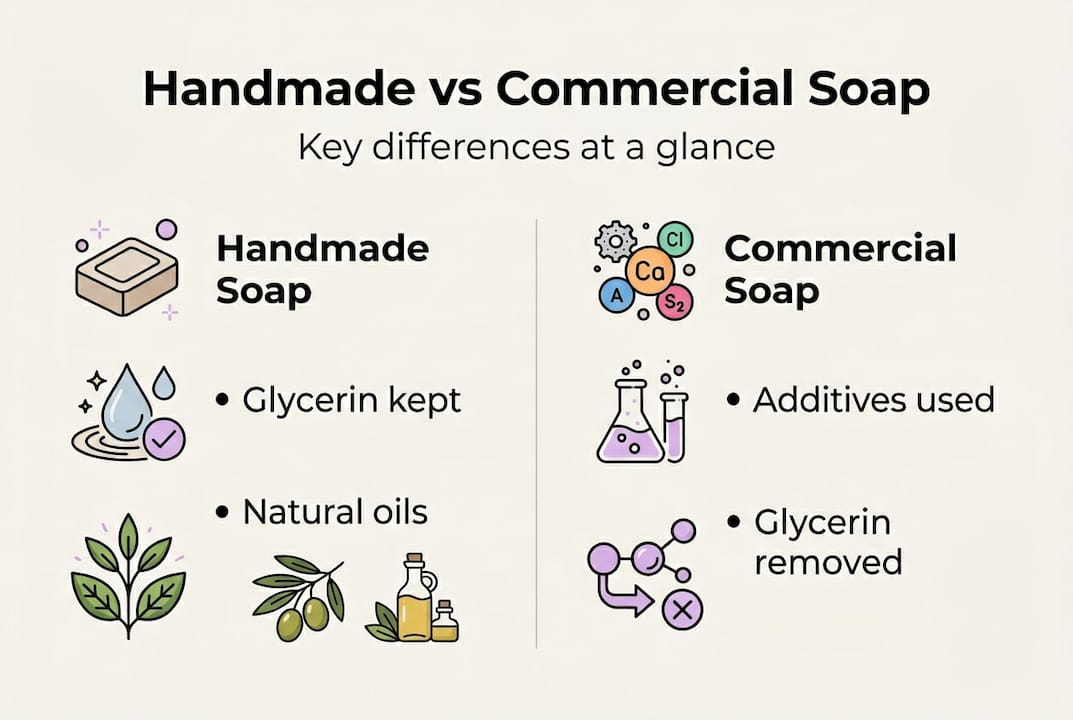
Commercial soaps are often not technically soaps at all. Many are classified as synthetic detergent bars, formulated with surfactants, preservatives, and artificial fragrances designed to extend shelf life and reduce production costs. These ingredients can disrupt your skin’s natural lipid barrier, leading to dryness, tightness, and increased transepidermal water loss (TEWL).
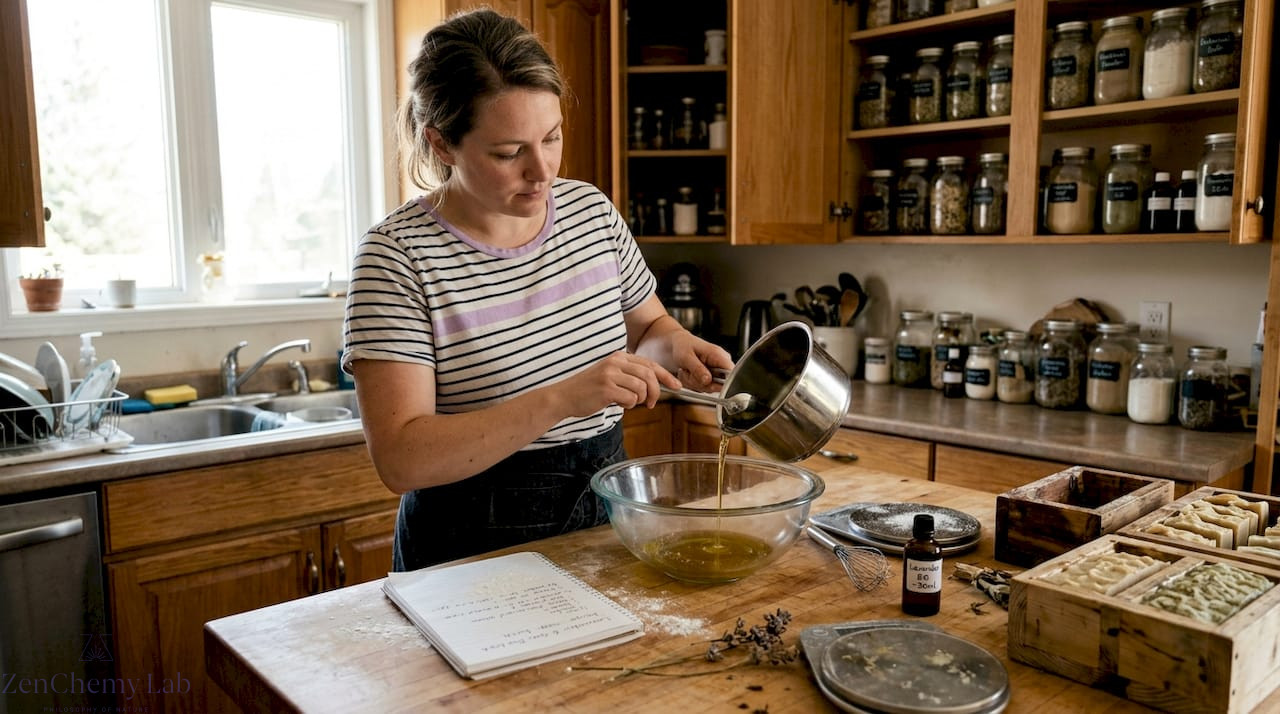
Handmade soap, by contrast, is made through a process called saponification: natural fats and oils react with an alkali (usually sodium hydroxide) to produce real soap and, crucially, glycerin. Glycerin is a powerful humectant that draws moisture from the air into your skin. Handmade soaps retain natural glycerin and use high-quality oils, which directly benefit your skin’s hydration and texture. Commercial manufacturers typically extract that glycerin to sell separately, leaving you with a bar that cleans but does little else.
Small-batch production also means makers can control exactly what goes into each bar. There are no fillers, no unnecessary additives, and no ingredients chosen purely for cost savings.
✅ Benefits unique to handmade soap:
- Retains natural glycerin for lasting moisture
- Uses plant-based oils and butters with skin-nourishing properties
- Free from synthetic detergents and harsh preservatives
- Customisable for specific skin types, concerns, or scent preferences
- Shorter, recognisable ingredient lists
| Feature | Handmade soap | Commercial soap |
|---|---|---|
| Glycerin content | Naturally retained | Often removed |
| Primary cleansing agent | Saponified oils | Synthetic detergents |
| Fragrance source | Essential oils or unscented | Synthetic fragrances |
| Additives | Minimal, natural | Preservatives, dyes, fillers |
| Skin feel after use | Soft, moisturised | Often tight or dry |
| Batch size | Small, controlled | Mass-produced |
The table above makes it clear: these are fundamentally different products, even if they sit in the same aisle at the store.
The skincare benefits of handmade soap
Understanding these fundamental differences, the next step is to explore how handmade soap specifically benefits your skin.
Handmade soaps are formulated with plant-based oils that each bring distinct properties to the bar. Unlike commercial options loaded with synthetic additives, these bars avoid the ingredients most likely to trigger irritation, breakouts, or dryness. For people with sensitive, reactive, or condition-prone skin, that distinction matters enormously.
Natural soaps are gentler and less likely to cause irritation, making them a smart choice for anyone who has struggled with redness or flaking after washing. The absence of synthetic fragrances alone removes one of the most common triggers for contact dermatitis.
Pro Tip: If you have delicate or allergy-prone skin, choose an unscented bar or one scented only with pure essential oils. Avoid bars listing “fragrance” or “parfum” as a single ingredient, since these terms can mask dozens of undisclosed chemicals.
The best natural soaps pair well-chosen oils to balance cleansing with conditioning. Here is a look at the most common ingredients and what they bring to your skin:
| Ingredient | Key benefit |
|---|---|
| Olive oil | Deep moisturising, rich in antioxidants |
| Coconut oil | Effective cleansing, creates a rich lather |
| Shea butter | Soothing, supports skin barrier repair |
| Castor oil | Adds creaminess, boosts lather |
| Sweet almond oil | Softening, gentle for sensitive skin |
| Pine tar | Calming for eczema, acne, and dry skin |
For skin dealing with acne, eczema, or persistent dryness, a targeted formula like pine tar tallow soap can make a real difference. Pine tar has been used for centuries to calm inflamed, irritated skin, and pairing it with nourishing tallow creates a bar that cleanses without stripping.
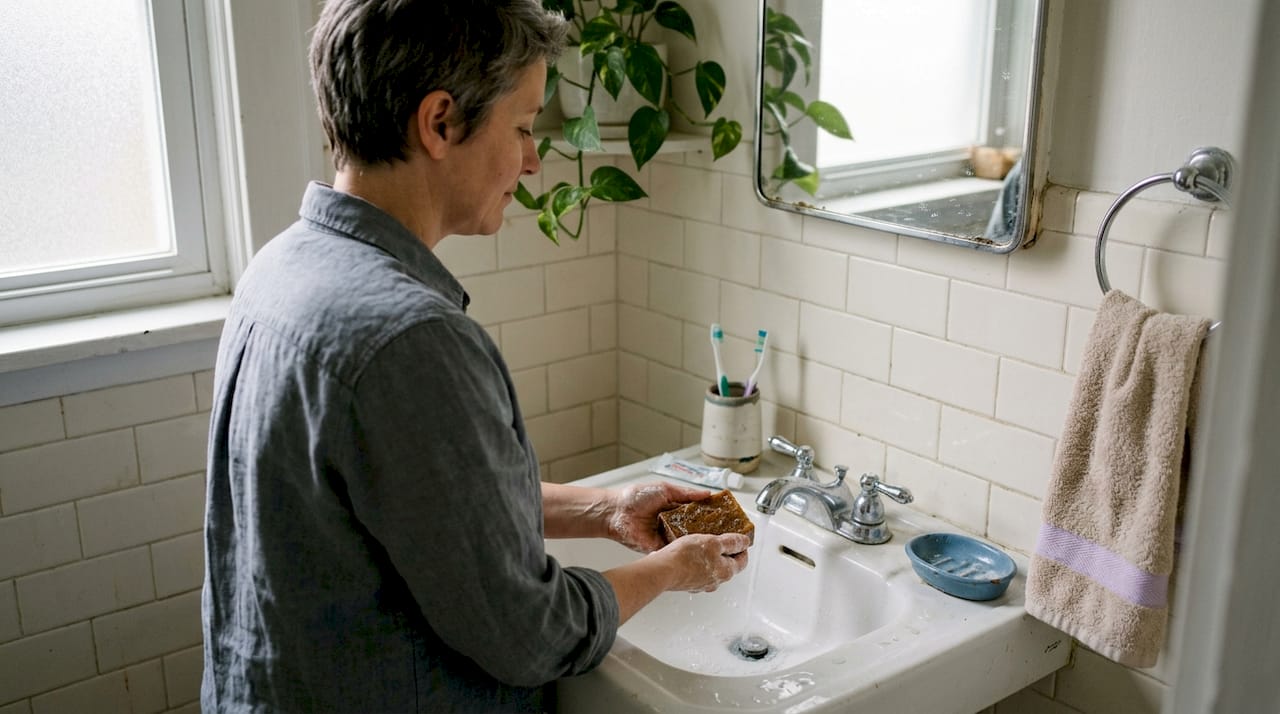
When your soap actively supports your skin barrier rather than compromising it, your entire routine becomes simpler. You may find you need fewer follow-up products, because the soap itself is doing more of the work.
Why handmade soap is a sustainable choice
Besides the benefits for your skin, handmade soap also makes a positive impact on the environment.
Small-batch, local production means fewer kilometres travelled from maker to your bathroom shelf. Lower transportation volume translates directly to a reduced carbon footprint compared to products manufactured at industrial scale and shipped globally.
Artisan soap makers also tend to be more intentional about packaging. Many use recycled paper, compostable wraps, or minimal packaging altogether, avoiding the plastic bottles and multi-layer wrapping common in commercial body wash and liquid soap products.
“Artisan soaps are often free from environmentally harmful ingredients and excess packaging.”
This matters beyond aesthetics. Synthetic detergents and certain preservatives found in commercial soaps can persist in waterways, affecting aquatic ecosystems. Natural, biodegradable soap ingredients break down far more safely.
🌿 Environmental reasons to switch to handmade soap:
- No microplastics (common in exfoliating commercial bars)
- Biodegradable ingredients that break down safely in water systems
- Organic and sustainably sourced oils reduce agricultural harm
- Minimal or plastic-free packaging
- Supports small, local makers rather than large industrial producers
- Concentrated solid bars produce less waste than liquid soap in plastic bottles
Choosing handmade soap is a small, daily decision that adds up over time. Every bar you use is one less plastic bottle in a landfill and one fewer product formulated with ingredients that linger in the environment long after they wash down the drain.
Enjoying the experience: the artisan touch
Aside from practical benefits, choosing handmade soap can turn a basic routine into a sensory experience.
Artisan bars are made with care you can see and feel. The colours come from natural clays, botanicals, and plant-based pigments. The textures vary: some bars are smooth and creamy, others are lightly exfoliating with oat or poppy seed. Each one reflects the maker’s craft and intention, which is something a mass-produced bar simply cannot replicate.
Scent is another dimension entirely. Handmade soaps often use pure essential oils, elevating your daily routine with genuine aromatherapy benefits. Lavender calms. Peppermint invigorates. Citrus lifts your mood. These are not synthetic approximations; they are real botanical compounds that interact with your senses in meaningful ways.
Here are four ways to bring handmade soap into your routine more intentionally:
- Use it as a daily ritual. Treat your morning or evening wash as a moment of mindfulness rather than a task. A beautifully scented bar makes that easier.
- Rotate scents by season. Try warm, earthy scents like cedarwood or clove in winter and fresh, citrus-forward bars in spring and summer.
- Give it as a gift. Handmade soap is a thoughtful, practical gift for almost anyone. Many artisan makers offer custom formulas or gift sets.
- Explore the artisan soap collection to find bars tailored to your skin type, scent preferences, or skincare goals.
Pro Tip: Store your handmade bar on a well-draining soap dish between uses. Keeping it dry between washes prevents it from softening prematurely and extends the life of the bar significantly.
The artisan touch is not just about aesthetics. It reflects a philosophy: that what you put on your body deserves the same attention as what you put in it.
What most people overlook about handmade soap
Most people assume handmade soap is a luxury purchase, something nice to have but not meaningfully different from a commercial bar. That assumption undersells what artisanal soap actually is.
The real value is functional. When your soap retains its natural glycerin, uses oils chosen for their skin-compatible fatty acid profiles, and skips synthetic additives, it actively supports your skin barrier rather than working against it. Over time, many people find they need fewer products in their routine because their skin simply behaves better.
There is also something worth naming about awareness. Choosing a bar with five recognisable ingredients makes you more conscious of what touches your skin every single day. That awareness tends to extend to other products too.
And then there is the community dimension. Buying from small, local makers keeps money in your community, supports sustainable practices, and encourages a kind of accountability that large manufacturers rarely face. These are not small things. They are quiet, consistent choices that reflect your values without requiring a dramatic lifestyle change.
Handmade soap is not a trend. It is a return to something that has always worked, made better by craft and intention.
Discover handmade soaps crafted for your skin
Ready to add handmade soap to your routine? Here is how you can experience these benefits yourself.
At ZenChemy Lab, every bar is formulated with purpose and made in small batches using natural, high-quality ingredients. Whether you are new to artisanal soap or looking to expand your collection, there is a formula for your skin type and preferences.

Browse the artisan soap collection to explore scented and unscented options, or read more about handmade vs commercial soap to deepen your understanding before you shop. If you want guidance on which bar suits your skin best, our best natural soaps guide is a great place to start. Easy online ordering, thoughtful packaging, and products your skin will thank you for.
Frequently asked questions
Is handmade soap better for sensitive skin?
Natural soaps are gentler and less likely to cause irritation, making handmade bars a strong choice for sensitive skin, especially when they are free from synthetic fragrances and harsh detergents.
Does handmade soap last as long as commercial soap?
Handmade soap can last just as long as commercial bars when stored properly on a well-draining dish that keeps it dry between uses.
Are all handmade soaps vegan and organic?
Not all handmade soaps are vegan or organic. Always check the ingredient list and any certifications on the product page before purchasing.
Why is handmade soap sometimes more expensive?
Handmade soap costs more because it relies on quality ingredients and small-batch methods, which take more time and care than mass production but deliver a noticeably better result for your skin.
Recommended
- Handmade soap versus Commercially made soaps – ZenChemy Lab
- Best types of natural soaps for healthy, radiant skin – ZenChemy Lab
- Understanding pH Levels in Handmade Soap: What Your Skin Really Needs – ZenChemy Lab
- Birch Tar Soap: The Science Behind a Traditional Skin Remedy – ZenChemy Lab
- What is water filtration? The science behind beauty – Puriti