
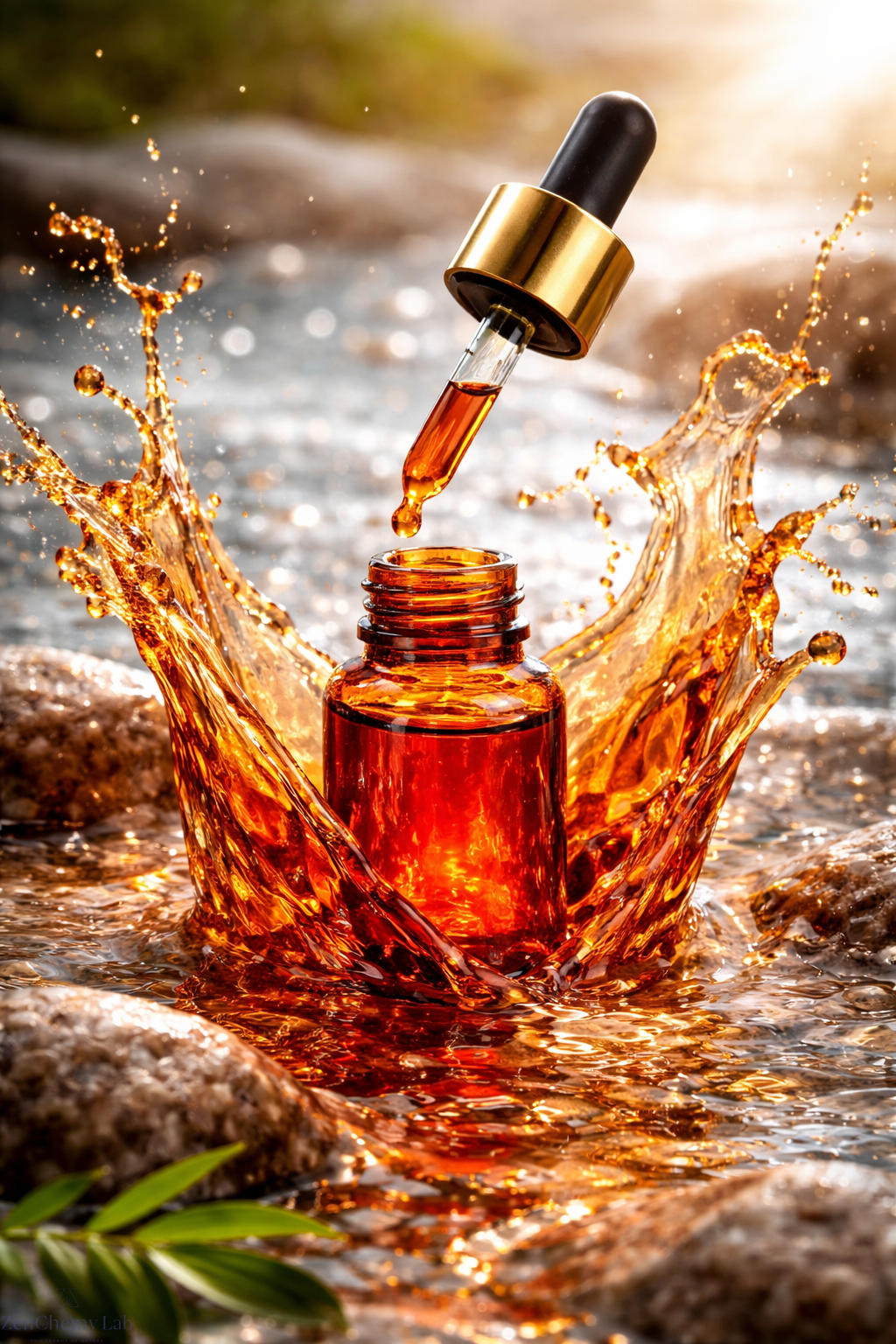
What Is Astaxanthin?
Astaxanthin is a powerful natural antioxidant derived from microalgae, primarily Haematococcus pluvialis. It belongs to the carotenoid family (like beta-carotene), but its antioxidant strength is significantly higher.
It’s often called a “super antioxidant” due to its exceptional ability to protect the skin from oxidative stress and environmental damage.
Why Astaxanthin Is So Powerful
Astaxanthin stands out because of its unique molecular structure, which allows it to protect both the inner and outer layers of skin cells.
Compared to other antioxidants:
Up to 6000× stronger than Vitamin C Around 800× stronger than CoQ10 Much more stable than many common antioxidants
This makes it highly effective in preventing visible signs of aging.
Key Benefits of Astaxanthin for Skin
1. Reduces Fine Lines and Wrinkles
Astaxanthin helps improve skin elasticity and reduces the depth of wrinkles by protecting collagen from degradation.
2. Protects Against UV Damage
It doesn’t replace sunscreen, but it reduces oxidative damage caused by UV exposure and helps prevent premature aging.
3. Improves Skin Hydration
Astaxanthin supports the skin barrier, helping retain moisture and improving overall skin texture.
4. Brightens and Evens Skin Tone
It helps reduce hyperpigmentation and gives the skin a natural, healthy glow.
5. Calms Inflammation
Perfect for sensitive or reactive skin, it reduces redness and supports healing.
Astaxanthin vs Other Antioxidants:
What Makes It Superior?
Not all antioxidants work the same way. While ingredients like Vitamin C and Vitamin E are widely used in skincare, astaxanthin operates on a much deeper and more comprehensive level.
1. Molecular Structure & Protection
Most antioxidants work either on the surface of the skin or within a specific layer.
Astaxanthin is unique because its structure allows it to span the entire cell membrane, meaning it protects both:
The inner part of the cell The outer lipid layer
This gives it a full-spectrum protective effect, unlike many traditional antioxidants.
2. Stability Advantage
One of the biggest challenges in skincare is ingredient stability.
Vitamin C oxidizes quickly and loses effectiveness when exposed to light and air Retinol can degrade and cause irritation if not formulated properly Astaxanthin, on the other hand, is highly stable and maintains its potency longer
This makes it ideal for formulations that need long shelf life and consistent performance.
3. Strength and Efficiency
Astaxanthin is considered one of the most powerful antioxidants available.
Compared to common antioxidants:
Significantly stronger than Vitamin C More effective than Vitamin E in neutralizing free radicals Works synergistically with both, enhancing their effects
Because of this, even very low concentrations deliver visible results.
4. Oil vs Water Solubility
This is a major formulation difference:
Vitamin C is typically water-soluble Hyaluronic Acid is water-based and focuses on hydration Astaxanthin is oil-soluble
This allows astaxanthin to:
Penetrate deeper into the skin barrier Integrate into lipid layers Provide longer-lasting antioxidant protection
👉 This is why it works exceptionally well in facial oils and rich serums.
5. Anti-Inflammatory Power
Many antioxidants focus primarily on fighting free radicals.
Astaxanthin goes further by also:
Reducing inflammation Calming redness Supporting skin recovery
This makes it especially beneficial for:
Sensitive skin Post-treatment skin (like after exfoliation or peels) Environmentally stressed skin
6. No Pro-Oxidant Effect
Some antioxidants (especially unstable Vitamin C) can become pro-oxidant under certain conditions—meaning they can actually contribute to oxidative stress if degraded.
Astaxanthin does not exhibit this behavior, making it:
Safer More reliable More predictable in formulations
7. Synergy with Other Ingredients
Astaxanthin doesn’t replace other antioxidants—it enhances them.
When combined with:
Vitamin E → boosts lipid protection Vitamin C → improves brightening and collagen support Botanical extracts → enhances overall skin defense
It creates a multi-layered antioxidant system.
The Bottom line While traditional antioxidants still play an important role, astaxanthin stands out because it:
Works across multiple layers of the skin Offers superior stability Provides both antioxidant and anti-inflammatory benefits Enhances the performance of other ingredients
It’s not just another antioxidant—it’s a next-generation skin protector.
How Astaxanthin Works in Formulations
Astaxanthin is oil-soluble, which makes it perfect for:
Facial oils Serums Creams Balms
It also gives formulations a rich red-orange hue, which signals its potency.
👉 Important: It must be used in proper concentrations (usually 0.01% – 0.1%) to avoid staining while still delivering benefits.
Astaxanthin in Natural Skincare
In high-quality formulations like those at ZenChemyLab, astaxanthin pairs beautifully with:
Carrier oils (to enhance absorption) Vitamin E (for antioxidant synergy) Botanical extracts (for added skin benefits)
This combination creates a powerful system that:
Protects Nourishes Restores
Who Should Use Astaxanthin?
Astaxanthin is suitable for:
Aging or mature skin Dry or dehydrated skin Sensitive or inflamed skin Anyone exposed to environmental stress (sun, pollution)
It’s especially beneficial for those looking for preventative skincare with visible results.
Astaxanthin is one of the most advanced natural ingredients in modern skincare. It doesn’t just improve how your skin looks—it helps protect it at a cellular level.
If you’re looking to elevate your skincare routine, this is an ingredient worth investing in.
✨ Discover ZenChemyLab’s antioxidant-rich skincare, formulated with advanced actives like astaxanthin to protect, restore, and illuminate your skin naturally.
4 Comments
Josephtup
なかなか見ない、気取らない発信。まじで最高!。 庭園と城壁 あなたの投稿 細かいロジ解説まじで良い — とても良かった!