

TL;DR:
- Antioxidants protect the skin by neutralising free radicals and supporting natural repair processes. Combining multiple antioxidants like vitamin C, vitamin E, and ferulic acid provides broader, more effective protection against ageing and environmental damage. Using antioxidant serums alongside sunscreen enhances skin defence and reduces long-term photoaging.
Antioxidants are compounds that protect your skin by neutralising free radicals and reactive oxygen species (ROS), making them among the most scientifically supported ingredients in modern skincare. The role of antioxidants in skincare extends well beyond simple protection. Vitamin C, flavonoids, and astaxanthin each work at the cellular level to reduce oxidative stress, slow visible ageing, and support the skin’s natural repair processes. Whether you apply them topically or consume them through food, antioxidants are a non-negotiable part of any evidence-based routine.
How do antioxidants protect and repair the skin?
Antioxidants work by donating electrons to unstable free radical molecules, stopping the chain reaction of cellular damage before it starts. Free radicals are generated by UV exposure, pollution, smoking, and even normal metabolic processes. Left unchecked, they break down collagen fibres, damage cell membranes, and accelerate the visible signs of ageing.
The protective benefits of antioxidants in cosmetics go beyond simple neutralisation:
- ✅ Free radical neutralisation: Antioxidants intercept ROS before they oxidise lipids, proteins, and DNA in skin cells.
- ✅ Inflammation reduction: Compounds like flavonoids suppress inflammatory pathways, including NF-κB, reducing redness and irritation.
- ✅ Collagen support: Vitamin C is a required co-factor for collagen synthesis. Without adequate antioxidant activity, collagen production slows and existing fibres degrade faster.
- ✅ Hydration enhancement: Flavonoids stimulate hyaluronic acid synthesis in skin tissue, directly improving moisture retention and elasticity.
- ✅ Product preservation: Antioxidants also prevent product rancidity and potency loss in natural formulations, extending shelf life.
One of the most underappreciated facts about antioxidants for skin health is the synergy effect. Combining multiple antioxidants provides broader protection across different types of ROS and skin layers than any single ingredient can achieve alone. This is why well-formulated serums pair vitamin C with vitamin E and ferulic acid rather than relying on one compound.
Pro Tip: Look for serums that combine vitamin C with vitamin E and ferulic acid. This trio is one of the most studied antioxidant combinations in dermatology, and each ingredient stabilises and amplifies the others.
What are the best antioxidant ingredients for skincare?
Not all antioxidants perform the same way on skin. The best antioxidant ingredients for skincare differ in potency, stability, source, and the specific skin concerns they address.
Vitamin c
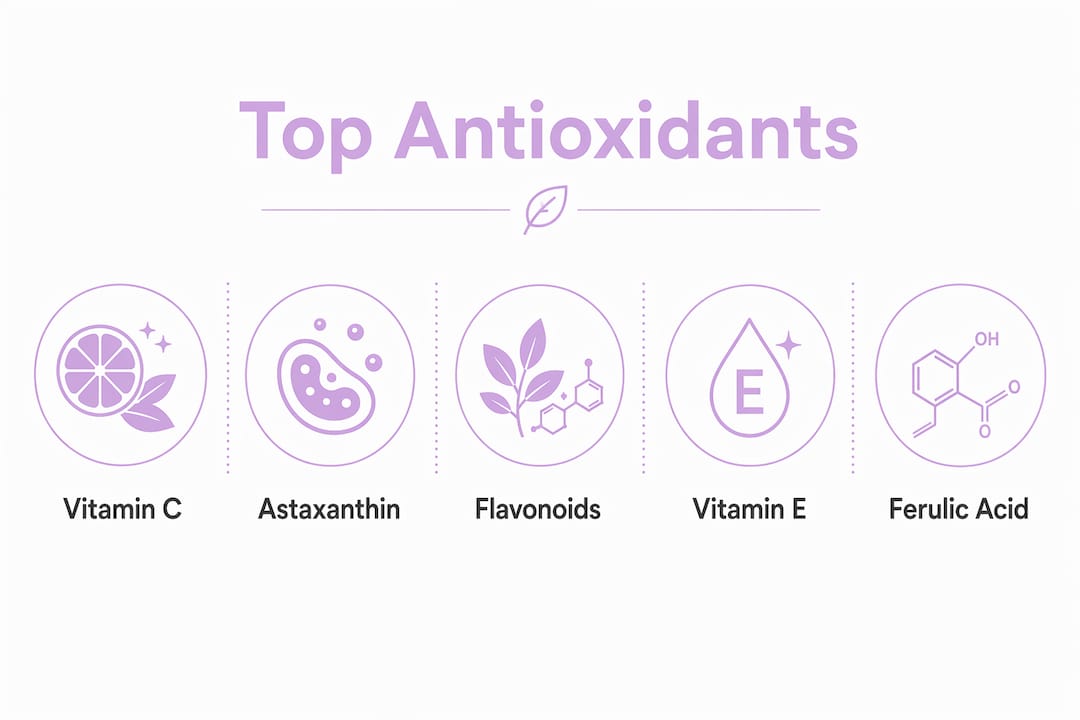
Vitamin C (L-ascorbic acid) is the most researched topical antioxidant. It brightens uneven skin tone, stimulates collagen, and neutralises UV-generated free radicals. Its main limitation is instability. L-ascorbic acid oxidises quickly when exposed to light and air, turning orange and losing efficacy. Encapsulated or derivative forms, such as ascorbyl glucoside or sodium ascorbyl phosphate, offer better shelf stability at the cost of slightly lower potency.
Flavonoids
Flavonoids are a large family of plant-derived polyphenols found in green tea, chamomile, and grape seed extract. They are promising natural alternatives for managing acne, ageing, and pigmentation. Their multi-functional profile sets them apart: a single flavonoid compound can neutralise ROS, reduce inflammation, and stimulate collagen simultaneously.
Astaxanthin
Astaxanthin is a carotenoid derived from microalgae, most notably Haematococcus pluvialis. It is considered one of the most potent natural antioxidants available in cosmetics. Zenchemylab covers astaxanthin’s skin benefits in depth, including its ability to address photoageing and inflammation with minimal irritation.
Natural vs. synthetic antioxidants
Synthetic antioxidants often cause irritation and provide temporary benefits, whereas natural bio-derived antioxidants from microalgae and cyanobacteria offer safer, multifunctional effects including pigmentation inhibition. This is driving a clear industry shift toward bio-derived ingredients in cosmetic formulations. For a deeper look at this comparison, Zenchemylab’s article on natural vs. synthetic skincare breaks down the science clearly.
Delivery systems matter
Nanocarriers improve bioavailability and stability of sensitive antioxidants like vitamins C and E, which otherwise degrade before reaching the deeper layers of the epidermis. This is why the same active ingredient can perform very differently across product formulations.
| Antioxidant | Source | Key Skin Benefit | Main Limitation |
|---|---|---|---|
| Vitamin C (L-ascorbic acid) | Citrus, synthesised | Brightening, collagen synthesis | Oxidises quickly |
| Astaxanthin | Microalgae | Potent anti-ageing, anti-inflammatory | Higher cost |
| Flavonoids (e.g., quercetin) | Green tea, grape seed | Hydration, pigmentation, acne | Variable absorption |
| Retinol | Synthesised, animal | Photoageing repair | Irritation, sun sensitivity |
| Vitamin E (tocopherol) | Plant oils | Moisturising, stabilises vitamin C | Comedogenic at high doses |
Pro Tip: If your skin is sensitive, start with flavonoid-rich botanical formulas before introducing L-ascorbic acid. They deliver meaningful antioxidant benefits with a much lower risk of irritation.
Do antioxidants work better alongside sunscreen?
Sunscreen is not enough on its own. A systems-level approach combining UV filters with antioxidants is recommended to effectively reduce skin ageing, because sunscreens block UV rays but do not neutralise the ROS generated by the UV that does penetrate. That gap is where antioxidants do their most important work.
Here is how to layer antioxidants with sunscreen for maximum benefit:
- Cleanse your skin thoroughly to remove pollutants and oxidative residue from the previous day.
- Apply your antioxidant serum (vitamin C, astaxanthin, or a multi-antioxidant formula) to clean, slightly damp skin. This is your primary defence layer.
- Follow with a moisturiser to support the skin barrier and lock in hydration. Skin hydration directly affects how well active ingredients penetrate and perform. Learn more about skin barrier hydration and why it matters.
- Apply SPF 30 or higher as your final step before sun exposure. Mineral sunscreens with zinc oxide pair particularly well with antioxidant serums.
- Reapply sunscreen every two hours outdoors. Antioxidants do not replace SPF. They complement it by addressing the oxidative damage that UV filters cannot fully prevent.
Topical antioxidant serums complement sunscreens by neutralising free radicals and significantly reducing UV-induced redness and inflammatory markers. That means fewer post-sun flare-ups, less cumulative damage, and visibly calmer skin over time. Pairing a quality SPF mineral sunscreen with an antioxidant serum is one of the most evidence-backed combinations in modern skincare.
Dietary antioxidants also play a supporting role. Foods rich in carotenoids, polyphenols, and vitamins C and E contribute to systemic antioxidant defence, reinforcing what your topical products are doing at the surface.
What does recent research say about antioxidants and ageing skin?
The science on antioxidants and ageing skin has grown considerably in recent years. Clinical studies now confirm benefits that go well beyond anecdotal evidence.
Dietary supplementation shows real results
Clinical improvements in skin barrier function and reduced inflammation have been observed in conditions like atopic dermatitis and psoriasis following antioxidant supplementation. Astaxanthin, DHA, and vitamin D each showed measurable effects, though results varied by antioxidant type and duration. This confirms that what you eat genuinely affects your skin’s resilience.
Retinol and targeted antioxidant potency
0.1% retinol improves photoageing signs, demonstrating that antioxidant type and concentration are critical for effective skin regeneration. This is not a one-size-fits-all category. Choosing the right antioxidant at the right percentage matters as much as using one at all.
Ongoing challenges in formulation
The biggest barriers to antioxidant efficacy remain:
- Stability: Many antioxidants, especially vitamin C and polyphenols, degrade rapidly in standard formulations.
- Penetration: The skin’s outer layer (stratum corneum) limits how deeply most topical actives can reach.
- Bioavailability: Even a well-formulated product may not deliver the active to the target cell layer in sufficient concentration.
Nanocarrier technology addresses all three of these challenges by encapsulating the antioxidant molecule, protecting it from degradation, and improving its ability to cross the stratum corneum. Expect to see more encapsulated and liposomal antioxidant formulas on shelves through 2026 and beyond.
The future of antioxidant skincare
Bio-derived antioxidants from microalgae, cyanobacteria, and fermented botanicals represent the most active area of cosmetic ingredient research right now. These sources offer high potency, low irritation potential, and a sustainability profile that aligns with the broader shift toward natural beauty practices in the industry.
Key takeaways
Antioxidants protect skin by neutralising free radicals, supporting collagen synthesis, and working synergistically with sunscreen to reduce cumulative UV and environmental damage.
| Point | Details |
|---|---|
| Antioxidants neutralise free radicals | They stop oxidative chain reactions that break down collagen and accelerate visible ageing. |
| Synergy outperforms single ingredients | Combining vitamin C, vitamin E, and ferulic acid delivers broader protection than any one antioxidant alone. |
| Natural sources are safer and multifunctional | Bio-derived antioxidants from microalgae and botanicals offer lower irritation risk and additional benefits like pigmentation control. |
| Sunscreen and antioxidants are a pair | UV filters block rays; antioxidants neutralise the ROS that still penetrate, making both necessary for full protection. |
| Delivery technology changes outcomes | Nanocarriers and encapsulation significantly improve the stability and skin penetration of sensitive antioxidants like vitamin C. |
What i’ve learned after years of working with antioxidant formulations
The most common mistake I see is treating antioxidants as a bonus ingredient rather than a foundation. People spend money on a vitamin C serum, use it inconsistently, store it in a sunny bathroom cabinet, and then conclude that antioxidants “don’t work.” The ingredient is not the problem. The formulation, the storage, and the routine are.
The second misconception worth addressing directly: antioxidants are not a substitute for sunscreen. I have seen this framing creep into marketing, and it is genuinely misleading. Antioxidants intercept damage that UV filters miss. They do not replace the filter itself. Both are required, and neither is optional if you care about long-term skin health.
What I find most compelling about the current research is the shift toward bio-derived and marine antioxidants. Astaxanthin from microalgae, phycocyanin from cyanobacteria, and fermented plant extracts are outperforming many synthetic counterparts in both safety and efficacy. This is not a trend. It is a direction grounded in solid science, and it aligns naturally with the philosophy behind handcrafted, botanical skincare.
My practical advice: prioritise formulation quality over ingredient lists. A product with 20% unstabilised vitamin C is less effective than one with 10% in a well-designed encapsulated delivery system. Read the full ingredient list, check for stabilising co-ingredients, and store your antioxidant products away from heat and light. Those habits will do more for your skin than switching products every three months.
— Alex
Discover antioxidant-rich natural skincare at Zenchemylab
The science is clear: well-formulated antioxidant products make a measurable difference to skin health, resilience, and appearance. Zenchemylab builds its entire product philosophy around this principle, sourcing botanical and bio-derived ingredients that deliver genuine antioxidant activity without synthetic irritants.

From artisanal soaps infused with plant-based extracts to botanical body care formulated with nature’s most potent antioxidants, every product is crafted to support your skin’s natural defences. If you are ready to build a routine grounded in both science and nature, explore Zenchemylab’s full range of natural skin products and find the right antioxidant support for your skin type.
FAQ
What is the role of antioxidants in skincare?
Antioxidants neutralise free radicals and reactive oxygen species that cause cellular damage, inflammation, and collagen breakdown. They protect skin from UV and environmental stress while supporting repair and hydration.
Which antioxidant ingredient is most effective for ageing skin?
Vitamin C, astaxanthin, and retinol each have strong clinical evidence for addressing photoageing. Combining vitamin C with vitamin E and ferulic acid delivers the most comprehensive protection against oxidative damage.
Can antioxidants replace sunscreen?
Antioxidants cannot replace sunscreen. UV filters block incoming radiation, while antioxidants neutralise the ROS that still penetrate. Both are required for full protection against UV-induced skin ageing.
Are natural antioxidants better than synthetic ones in skincare?
Natural bio-derived antioxidants from sources like microalgae and botanicals generally cause less irritation and offer multifunctional benefits compared to synthetic alternatives, making them the preferred choice for sensitive or reactive skin types.
How do i know if my antioxidant serum is still active?
Vitamin C serums that have turned orange or brown have oxidised and lost efficacy. Store antioxidant products in opaque, airtight containers away from heat and direct light to preserve potency.

1 Comments