TL;DR:
- Skin hydration depends on internal water levels, topical moisture, and skin barrier integrity to maintain elasticity and texture. Drinking water benefits under-hydrated individuals but does not improve skin in those already adequately hydrated, as deep skin hydration relies on aquaporin channels and barrier lipids. Building an effective routine involves gentle cleansing, applying hydrating serums to damp skin, sealing with occlusives, and supporting barrier lipids with ingredients like ceramides.
Skin hydration is defined as the water content within the skin’s layers, and it is the single most direct factor controlling your skin’s elasticity, texture, and barrier strength. When hydration levels drop, the skin’s “brick and mortar” structure, made up of cells and lipid-rich mortar between them, begins to crack and fail. The role of hydration in skin health extends well beyond drinking eight glasses of water a day. It involves a precise interplay between internal water intake, topical moisture retention, and the integrity of your skin’s natural barrier lipids. Understanding both sides of this equation is what separates a genuinely effective skincare routine from one that only looks good on paper.
How does water intake affect skin hydration and appearance?
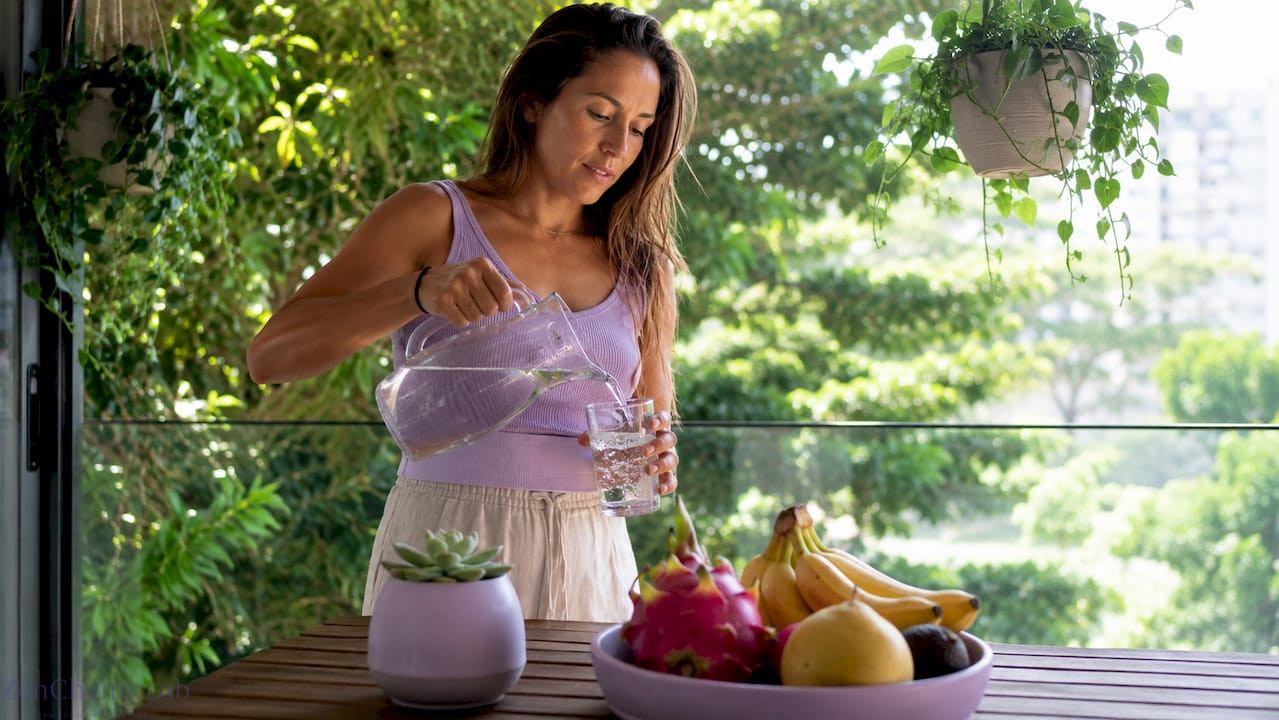
Drinking more water does improve skin hydration, but only up to a point. Controlled trials confirm that increasing daily water intake by 2L over one month produces measurable improvements in both superficial and deep skin hydration, particularly in people who were habitually under-hydrated to begin with. That last detail matters enormously. If you are already drinking adequate fluids, adding more water will not give you a glow.
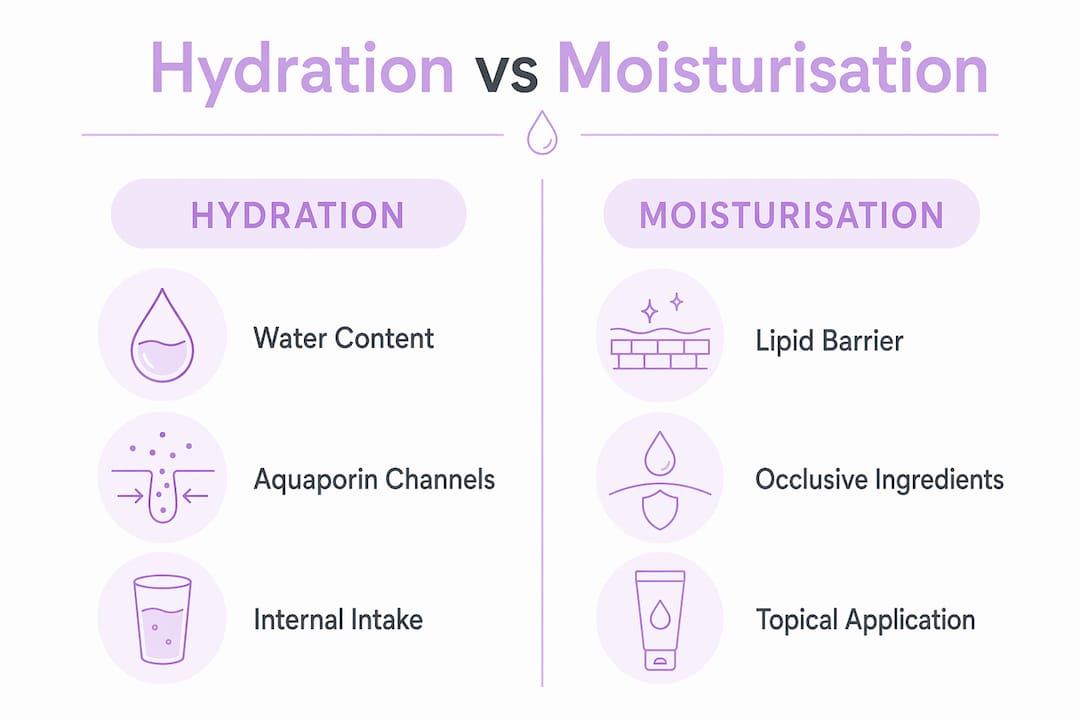
The biology behind this is specific. Water travels through aquaporin-3 channels from deeper tissues up to the epidermis, the outermost skin layer. These protein channels regulate how efficiently moisture reaches the surface. When your body is systemically dehydrated, aquaporin-3 function is compromised, and the epidermis is the first place that deficit shows.
Excessive water intake beyond physiological needs does not improve skin appearance or function in already well-hydrated individuals. Dermatologists are clear on this point. The “more water equals glowing skin” idea is a myth that oversimplifies a complex biological system.
Here is how water intake and skin hydration actually compare across hydration levels:
| Hydration status | Effect on skin moisture | Effect on skin appearance |
|---|---|---|
| Chronically under-hydrated | Measurably lower skin water content | Dull, tight, fine lines more visible |
| Adequately hydrated | Normal skin moisture levels maintained | Healthy texture and elasticity |
| Over-hydrated (beyond needs) | No additional skin moisture benefit | No visible improvement |
Key takeaways from the science:
- ✅ Drinking more water helps most when you are genuinely under-hydrated
- ✅ Aquaporin-3 channels are the biological pathway linking water intake to skin moisture
- ✅ Skin hydration benefits plateau once your body’s physiological needs are met
- ✅ Water intake supports skin health but does not replace topical care
Pro Tip: Track your urine colour as a simple hydration gauge. Pale yellow signals adequate hydration. Dark yellow or amber means your skin is likely feeling the deficit too.
What is the difference between hydration and moisturisation for skin health?
Hydration and moisturisation are not the same thing, and confusing them is one of the most common skincare mistakes. Hydration increases actual water content in the skin, while moisturisation seals that water in by reinforcing the skin’s lipid barrier. You need both working together for genuinely healthy skin.
Dr. Panduranga K. R., a scientist at Himalaya Wellness, explains the distinction clearly:
“Hydration and moisturisation are synergistic. Moisturising seals water in while hydration increases actual skin water content. Neglecting either leads to dryness, sensitivity, and a compromised barrier.”
The skin barrier relies on ceramides, cholesterol, and free fatty acids alongside natural moisturising factors (NMFs) to maintain its integrity. These lipids act as the mortar between skin cells, preventing trans-epidermal water loss (TEWL). When this lipid matrix is depleted, even well-hydrated skin loses moisture rapidly.
Several natural ingredients support both functions at once:
- Aloe vera: Delivers water-based hydration directly to the epidermis while its polysaccharides form a light film that slows moisture loss
- Cucumber extract: Rich in water content and silica, it soothes and temporarily tightens the skin’s surface
- Vitamin E (tocopherol): An antioxidant that integrates into the lipid layer, reinforcing barrier function and reducing TEWL
- Glycerin: A humectant that draws water from the air and deeper skin layers toward the surface
Pro Tip: Apply a hydrating serum to damp skin, then follow immediately with a moisturiser containing ceramides or shea butter. This two-step approach locks water in before it can evaporate.
How do topical ingredients improve persistent skin hydration?
Not all topical hydration products work the same way, and the difference lies in how deeply an ingredient can penetrate the stratum corneum, the outermost layer of the epidermis. Standard moisturisers sit on the surface and reduce TEWL passively. Advanced formulations go further.
Ditrimethylolpropane tetracaprylate (DTTC), an emollient ester used in liquid crystal emulsions, penetrates the stratum corneum without disrupting its lipid matrix. This is significant because most emollients either sit on top of the skin or disrupt the very barrier they are meant to support. DTTC integrates with the skin’s own lipid structure, providing persistent hydration from within the barrier itself.
Hyaluronic acid (HA) is another ingredient where molecular weight changes everything. Low molecular weight hyaluronic acid (under 300 kDa) penetrates deeper into skin layers than high molecular weight variants, which remain on the surface. Most drugstore serums use high molecular weight HA. It still provides surface-level plumping, but it does not address deeper hydration deficits.
Here is a comparison of common hydration ingredients and how they work:
| Ingredient | Mechanism | Depth of action | Best for |
|---|---|---|---|
| High molecular weight HA | Surface film, water retention | Epidermis surface | Immediate plumping, dry skin |
| Low molecular weight HA | Penetrates deeper layers | Mid-epidermis | Lasting hydration, fine lines |
| DTTC (liquid crystal emulsion) | Integrates with lipid matrix | Stratum corneum | Persistent barrier hydration |
| Glycerin | Humectant, draws moisture | Epidermis | All skin types, daily use |
| Ceramides | Lipid barrier reinforcement | Stratum corneum | Sensitive, compromised barriers |
Understanding how humectants attract and retain moisture in the skin helps you read ingredient labels with confidence and choose products that actually deliver.
Pro Tip: When buying a hyaluronic acid serum, look for “sodium hyaluronate” with a low molecular weight specification on the label. This form absorbs more effectively and delivers deeper hydration than standard HA.
How to build a daily skincare routine around hydration science
Applying hydration science to your daily routine does not require a 12-step programme. It requires understanding which steps do what and in what order they work best.
Oral sodium hyaluronate supplementation at 120 mg daily for 12 weeks has been shown in a randomised controlled trial with 150 adults to significantly increase skin moisture, epidermal thickness, and reduce wrinkle depth compared to placebo. Supplements are not a replacement for topical care, but they support hydration from the inside out in a measurable way.
Your daily routine should follow this order:
- Cleanse gently — Use a soap or cleanser that does not strip your skin’s natural lipids. Harsh surfactants disrupt the barrier before you even begin hydrating.
- Apply a hydrating serum on damp skin — Look for low molecular weight hyaluronic acid or aloe vera as the first active ingredient.
- Layer an occlusive or moisturiser immediately after — Shea butter, ceramide creams, or plant-based oils seal the hydration in before it evaporates.
- Use SPF in the morning — UV exposure degrades the skin barrier and accelerates TEWL, undoing your hydration work.
- Drink water consistently throughout the day — Aim for adequate intake based on your body weight and activity level, not an arbitrary number.
- Adjust for climate — Dry or cold climates increase TEWL significantly. Add a facial oil or richer occlusive layer in winter months.
Diet also plays a supporting role. Foods rich in omega-3 fatty acids, such as flaxseed, walnuts, and fatty fish, help maintain the skin’s lipid matrix from the inside. Alcohol and excess caffeine increase fluid loss and can visibly dull skin over time.
Dehydrated skin solutions work best when they address both internal and external hydration together. Topical serums without an occlusive layer fail because water evaporates quickly from the skin’s surface. That is not a product failure. It is a sequencing failure.
Pro Tip: If your skin feels tight after cleansing, your cleanser is stripping too much. Switch to a soap that retains glycerin naturally, such as a cold-process handmade soap, which preserves the glycerin produced during saponification.
Key takeaways
Skin hydration requires both adequate internal water intake and topical barrier support to maintain elasticity, moisture, and healthy skin function.
| Point | Details |
|---|---|
| Water intake has limits | Drinking more water helps under-hydrated individuals but does not improve skin in those already adequately hydrated. |
| Hydration and moisturisation differ | Hydration adds water to skin; moisturisation seals it in. Both are needed for a healthy barrier. |
| Ingredient depth matters | Low molecular weight hyaluronic acid penetrates deeper than standard HA, delivering more lasting results. |
| Barrier lipids are critical | Ceramides, cholesterol, and fatty acids maintain the lipid matrix that prevents trans-epidermal water loss. |
| Routine order is non-negotiable | Apply hydrating serums to damp skin, then seal immediately with an occlusive layer for maximum retention. |
What I have learned about hydration after years in natural skincare
The biggest misconception I see repeatedly is the belief that drinking more water will fix dry or dull skin. It will not, at least not on its own. What I have found, both in formulating products and in speaking with skincare enthusiasts, is that most people are under-moisturising rather than under-hydrating. They apply a serum, skip the occlusive step, and wonder why their skin still feels tight by noon.
The science on low molecular weight hyaluronic acid genuinely changed how I think about ingredient selection. Most people assume all HA serums are equal. They are not. The molecular weight determines whether you are hydrating the surface or the deeper layers, and that distinction shows up on your skin within weeks.
I also think the skincare industry undersells the role of barrier lipids. Ceramides and fatty acids are not glamorous ingredients. They do not have the marketing appeal of retinol or vitamin C. But barrier support is what makes every other product in your routine work better. A compromised barrier means your hydrating serum evaporates, your actives irritate, and your skin never quite settles.
My honest advice: before you add another product to your routine, ask whether your barrier is intact. If your skin is reactive, tight, or perpetually dry despite regular moisturising, the answer is probably no. Start there.
— Alex
How Zenchemylab supports your skin’s hydration needs
Zenchemylab formulates every product with the understanding that healthy skin starts with a well-supported barrier and consistent hydration from both inside and out.

Our artisanal soaps preserve the glycerin produced naturally during saponification, a compound most commercial soaps strip away entirely. Glycerin is one of the most effective humectants for daily skin nourishment, drawing moisture to the surface with every wash. Our botanical body care and natural skincare routines are built around ingredients like aloe vera, Vitamin E, and plant-based oils that work in sequence to hydrate and seal. If you are ready to build a routine grounded in real science and pure ingredients, explore our natural beauty tips and find the right products for your skin type.
FAQ
What is the role of hydration in skin health?
Hydration maintains the water content within skin layers, directly supporting elasticity, barrier function, and a smooth texture. Without adequate hydration, the skin’s lipid barrier weakens and trans-epidermal water loss accelerates.
Does drinking more water improve your skin?
Increased water intake improves skin hydration in people who are chronically under-hydrated, but has no measurable effect on skin appearance in those already meeting their daily fluid needs.
What is the difference between hydrated and moisturised skin?
Hydrated skin has sufficient water content within its layers, while moisturised skin has a reinforced lipid barrier that prevents that water from evaporating. You need both for genuinely healthy, resilient skin.
Which hyaluronic acid is best for deep skin hydration?
Low molecular weight hyaluronic acid (under 300 kDa) penetrates deeper into the epidermis than standard high molecular weight variants, making it more effective for lasting hydration rather than surface-level plumping.
Can supplements improve skin hydration?
Yes. A randomised controlled trial found that oral sodium hyaluronate at 120 mg daily for 12 weeks significantly increased skin moisture and epidermal thickness compared to placebo in 150 adults.