TL;DR:
- Botanical body care involves minimally processed, plant-derived ingredients guided by principles of purity, healing, and sustainability.
- Key bioactives like antioxidants and fatty acids support skin health, with extraction methods affecting their efficacy.
- Combining botanical and synthetic ingredients can optimize product stability, results, and safety for various skin needs.
Walk down any skincare aisle and you’ll spot the word “botanical” on nearly every label. Serums, body butters, scrubs, and lotions all promise the power of plants. But here’s the uncomfortable truth: the term “botanical” has no universal legal definition in most countries, including Canada. That means a product with one drop of lavender extract can legally call itself botanical. If you’ve ever felt confused about what truly qualifies as plant-based body care, you’re not alone. This guide cuts through the noise, defines what botanical body care really means, explains how it works on your skin, and helps you make genuinely informed choices.
Table of Contents
- What botanical body care really means
- Key bioactive ingredients and how they work
- How botanical body care is made: Extraction methods and quality factors
- Benefits and potential drawbacks for your skin
- Botanical vs. synthetic body care: A practical comparison
- The real secret: Why botanical body care is a mindset, not just a product
- Experience the best of botanical body care with ZenChemy Lab
- Frequently asked questions
Key Takeaways
| Point | Details |
|---|---|
| True definition matters | Botanical body care means body products made mainly from pure, plant-based ingredients, not just a green label. |
| Bioactives deliver results | Botanical formulas support hydration, soothe sensitivity, and boost skin health using natural actives. |
| Quality and method count | How botanicals are extracted determines if products are genuinely effective and skin-safe. |
| Hybrids can be smart | Mixing botanicals with safe synthetics often provides the best results and stability for varied skin needs. |
| Mindfulness is key | Choosing and using botanical body care intentionally makes your self-care both rewarding and effective. |
What botanical body care really means
Botanical body care refers to skincare products for the body formulated primarily with plant-derived ingredients such as extracts, oils, hydrosols, butters, and infusions from flowers, herbs, roots, seeds, fruits, and leaves. That’s the foundational definition. But what separates a genuinely botanical product from one that simply borrows the aesthetic?
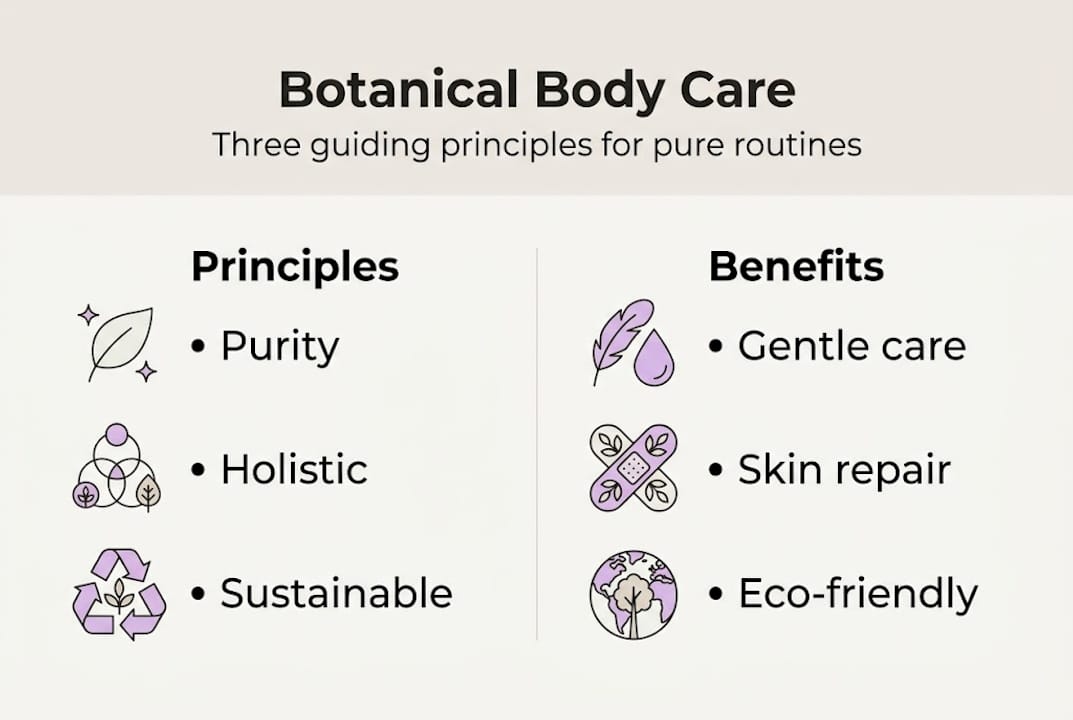
Three core principles guide botanical body care: purity, holistic healing, and sustainability. Purity means the plant ingredients are minimally processed and ideally sourced organically. Holistic healing means the formulation supports your skin’s natural balance rather than overriding it with harsh actives. Sustainability means the sourcing respects the environment and the communities involved in harvesting.
Here’s a quick look at the most common botanical ingredient categories:
| Ingredient type | Examples | Primary skin role |
|---|---|---|
| Floral extracts | Calendula, chamomile, rose | Soothing, anti-inflammatory |
| Seed and nut oils | Rosehip, jojoba, sweet almond | Nourishing, barrier support |
| Root extracts | Turmeric, ginger, licorice | Brightening, calming |
| Fruit extracts | Sea buckthorn, papaya | Antioxidant, restorative |
| Hydrosols | Lavender water, rose water | Toning, gentle hydration |
| Butters | Shea, mango, cocoa | Deep moisture, emollient |
Not all products labelled “botanical” live up to the name. Many contain a token plant extract buried at the bottom of a long ingredient list, surrounded by synthetic fillers. The key is ingredient transparency. Look for organic body care essentials where plant-derived ingredients appear near the top of the INCI (International Nomenclature of Cosmetic Ingredients) list.
✅ Key things to check:
- Plant ingredients listed in the first five to eight INCI positions
- Certifications from COSMOS, USDA Organic, or Ecocert
- Clear disclosure of extraction methods or sourcing origins
- No vague terms like “natural fragrance” without further detail
Pro Tip: Third-party certifications are your best shortcut. They do the label-reading work for you and confirm that purity claims have been independently verified.
Key bioactive ingredients and how they work
Once you understand what botanical body care is, the next question is: what actually makes it effective? The answer lies in bioactive compounds, the naturally occurring chemicals in plants that interact with your skin at a cellular level.
Key bioactive compounds include antioxidants such as polyphenols and flavonoids, essential fatty acids, vitamins A, C, E, and K, anti-inflammatory agents, and natural humectants and emollients. Each of these performs a specific job on body skin.
🌿 Over 60% of consumers now prefer plant-based skincare products, reflecting a major shift in how people think about what they put on their bodies.
Here’s how the most valued actives work in practice:
| Bioactive | Found in | What it does for body skin |
|---|---|---|
| Polyphenols | Green tea, pomegranate | Neutralise free radicals, slow oxidative stress |
| Essential fatty acids | Rosehip oil, hemp seed oil | Reinforce the skin barrier, reduce TEWL (trans-epidermal water loss) |
| Vitamin E (tocopherol) | Sunflower oil, wheat germ | Moisturise, protect against UV damage |
| Allantoin | Comfrey root | Accelerate cell renewal, soothe irritation |
| Beta-glucan | Oat extract | Calm redness, support immune response in skin |
Let’s look at three real-world examples that show up frequently in quality botanical body care:
- Calendula contains flavonoids and triterpenoids that actively reduce inflammation. It’s especially valued for botanical benefits for sensitive skin and is a go-to for post-shave or post-wax body care.
- Shea butter is rich in oleic and stearic fatty acids, which mimic the skin’s own lipids. It softens, seals moisture in, and supports the “brick and mortar” structure of your skin barrier.
- Sea buckthorn is one of the most nutrient-dense botanicals available, packed with omega-7 fatty acids and carotenoids. It’s particularly restorative for dry, stressed, or sun-exposed body skin.
Clinical evidence for botanical actives is growing steadily. Long-term data is still building, but the existing research is promising, especially for barrier support and soothing applications.
How botanical body care is made: Extraction methods and quality factors
The ingredient is only as good as the process used to extract it. Extraction method directly affects how many bioactive compounds survive into the final product, and how stable they are on your skin.
Here are the main methods used in botanical body care production:
- Water infusion: Steeping plant material in water to extract water-soluble compounds like polysaccharides. Gentle but limited in scope.
- Oil maceration: Soaking botanicals in a carrier oil to draw out lipid-soluble antioxidants. Ideal for body oils and butters.
- Alcohol extraction: Uses ethanol to pull polyphenols and flavonoids. Common in toners and some serums.
- Glycerin extraction: Draws out humectants and gentle actives. Suitable for sensitive skin formulas.
- CO2 extraction: A supercritical method that preserves delicate lipophilic compounds without heat damage. Considered a gold standard for potency.
Extraction via solvents like water, oil, glycerin, alcohol, and CO2 each capture different classes of bioactives, which is why a single botanical can appear in multiple product types with different effects. Understanding this helps you match products to your actual skin concern.
When evaluating a botanical body care product, look for these quality signals:
- Third-party testing for potency and purity
- Standardised extracts (meaning the active compound is measured and consistent)
- Transparent sourcing information
- Minimal processing steps between harvest and formulation
Pro Tip: If hydration is your primary concern, look for products using oil maceration or CO2 extraction. These methods best preserve the fatty acids and fat-soluble vitamins your skin needs most. For choosing extraction for your skin, match the solvent to your skin type and the result you want.
Well-made botanical products avoid unnecessary heat, chemical processing, or artificial stabilisers that can degrade the very actives you’re paying for. The best formulations respect the plant from field to bottle.

Benefits and potential drawbacks for your skin
Botanical body care has real, documented advantages, but it also comes with honest caveats. Knowing both sides helps you choose with confidence.
Benefits for dry and sensitive body skin include deep hydration, barrier support, and relief from dryness and irritation, especially when formulated with plant oils and butters. Many botanical products are also vegan and fragrance-free, making them accessible to a wider range of skin types and values.
✅ When botanical body care shines:
- You have dry, sensitive, or reactive skin
- You’re managing conditions like eczema or keratosis pilaris
- You prefer fragrance-free or vegan formulations
- You want long-term skin nourishment over quick fixes
- You’re committed to sustainable and ethical sourcing
But here’s where honest nuance matters. Not all botanical products are regulated or certified organic, and batch inconsistency is a real issue with plant-derived ingredients. Essential oils and certain botanical extracts can cause photosensitivity or allergic reactions in some people, especially those with known plant allergies.
💡 Hybrids that combine botanical actives with safe, well-tested synthetics often deliver better stability, longer shelf life, and more predictable results, without sacrificing the skin-nourishing benefits of plants.
Consider a hybrid approach when:
- You need a longer product shelf life without preservatives derived from plants
- You’re targeting a specific skin concern that requires precise active concentrations
- You’ve experienced batch-to-batch variation with fully botanical products
For botanicals for soothing skin, the evidence is strong. For winter skin protection with botanicals, plant-based balms and lotion bars offer a practical, nourishing barrier against harsh weather. Always patch test new products on a small area of skin before applying them all over your body.
Botanical vs. synthetic body care: A practical comparison
The debate between botanical and synthetic body care is often framed as a battle. It doesn’t have to be. Understanding the real differences helps you make smarter, more personalised choices.
Botanicals tend to be gentler and more sustainable, but they can have shorter shelf lives and slower visible results compared to synthetics, which offer fast, precise action but carry a higher risk of irritation for sensitive skin. The science on botanical vs synthetic increasingly points to thoughtful hybrids as the most effective approach for most people.
| Feature | Botanical body care | Synthetic body care |
|---|---|---|
| Gentleness | ✅ Generally gentler | ⚠️ Can irritate sensitive skin |
| Speed of results | 🕐 Slower, cumulative | ⚡ Faster, targeted |
| Sustainability | ✅ Often more eco-friendly | ⚠️ Varies widely |
| Shelf life | ⚠️ Shorter without preservatives | ✅ Longer, more stable |
| Ingredient transparency | ✅ Usually clearer | ⚠️ Often complex INCI lists |
| Allergy risk | ⚠️ Possible with plant allergens | ⚠️ Possible with synthetic fragrances |
Here’s a simple framework to help you decide:
- Sensitive or reactive skin: Start with botanical. Look for fragrance-free, minimal-ingredient formulas.
- Dry body skin in winter: Botanical butters and lotion bars provide excellent barrier support.
- Need fast results for a specific concern: A hybrid formula may serve you better.
- Committed to sustainability: Prioritise certified botanical products with ethical sourcing.
- Unpredictable skin reactions: Consult a dermatologist and patch test regardless of formula type.
Pro Tip: Choosing a hybrid isn’t a compromise. It’s a smart, science-informed decision. The best botanical vs synthetic data shows that combining nature’s actives with stable, safe synthetics often produces the most consistent, skin-friendly results.
The real secret: Why botanical body care is a mindset, not just a product
Here’s something most skincare content won’t tell you: the biggest predictor of results from botanical body care isn’t the product. It’s the mindset you bring to your routine.
We’ve seen people chase every new “100% natural” launch, switching products every few weeks and wondering why their skin never settles. Real results come from consistency, not from finding the perfect formula. Botanical body care, at its best, encourages you to slow down, read labels with curiosity, and build a relationship with what you put on your skin.
The organic body care mindset isn’t about avoiding all synthetics or spending a fortune on rare plant extracts. It’s about intentional choices. It’s asking: does this ingredient serve my skin? Does this brand align with my values? Am I using this product consistently enough to see what it can actually do?
Botanical body care rewards patience and awareness. That’s not a limitation. That’s the point.
Experience the best of botanical body care with ZenChemy Lab
Ready to move from understanding to action? At ZenChemy Lab, we formulate with transparency, purpose, and genuine respect for plant science. Every product is built around evidence-based botanical actives, clearly listed ingredients, and a commitment to your skin’s long-term health.

Whether you’re just starting to build a botanical routine or looking to refine what you already use, our guides and formulas are designed to make mindful choices easy. Explore our skincare routine tips for practical, step-by-step support, or go deeper into the science on botanicals to understand exactly why our formulas work the way they do. Your skin deserves care that’s both thoughtful and effective.
Frequently asked questions
Are botanical body care products safe for sensitive skin?
Most botanical products are gentle and offer deep hydration and barrier support, but you should always patch test first, since even natural plant ingredients can trigger reactions in some people.
How can I tell if a product is truly botanical?
Check the INCI ingredient list for plant-derived ingredients in the top positions, and look for third-party certifications, since not all botanical claims are regulated or verified.
Will botanical body care products give faster results than synthetic options?
Botanicals support long-term skin health and are generally gentler, but botanicals offer slower results compared to synthetics, which are engineered for faster, more targeted action.
What common benefits do botanicals offer for body skin?
They hydrate, soothe, and restore the skin barrier using antioxidants, fatty acids, and vitamins that work in harmony with your skin’s natural biology.
Can hybrids of botanicals and synthetics be beneficial?
Absolutely. Evidence favours hybrid formulas that pair the nourishing power of plant actives with the stability and precision of safe, well-tested synthetic ingredients.
Recommended
- Organic body care essentials for healthy, sustainable skin – ZenChemy Lab
- Build your natural body care routine: radiant skin – ZenChemy Lab
- Why botanicals soothe sensitive skin: Evidence-based benefits – ZenChemy Lab
- Rose Facial Toner. – ZenChemy Lab
- 5 benefits of unprocessed hair for natural beauty – Gaurash Beauty Supply