
TL;DR:
- Natural botanical skincare supports skin hydration, reduces irritation, and enhances the skin’s protective barrier.
- Building a routine involves gentle cleansing, exfoliation, moisturizing, and customized ingredient choices based on skin type.
- Consistent use over weeks leads to lasting improvements in skin health and resilience.
Store-bought body washes and lotions often promise purity but deliver a cocktail of synthetic fragrances, sulphates, and preservatives that leave your skin feeling tight, irritated, or just plain underwhelmed. If you’ve been cycling through products with little to show for it, a personalised natural body care routine built on artisanal botanicals may be exactly what your skin has been waiting for. This guide covers everything you need: why natural care works, what to gather, how to build your daily routine step by step, how to troubleshoot common issues, and what real, lasting results look like.
Table of Contents
- Why go natural? Key benefits for your skin and well-being
- Gather your essentials: Tools, botanicals, and understanding your skin
- Step-by-step: Building your daily natural body care routine
- Troubleshooting and adapting: Customising your routine for best results
- Why sticking with the process pays off: Our hard-won lessons
- Elevate your routine with artisanal natural care
- Frequently asked questions
Key Takeaways
| Point | Details |
|---|---|
| Understand your skin | Tailor botanical choices to your unique skin type for the best results. |
| Use quality ingredients | Prioritise artisanal, natural botanicals for safety, purity, and effectiveness. |
| Personalise your routine | Adapt your cleansing, moisturising, and care steps to match your needs and preferences. |
| Stay consistent | Long-term commitment to natural routines produces visibly healthier skin. |
Why go natural? Key benefits for your skin and well-being
Switching to a natural body care routine isn’t simply a lifestyle trend. There’s genuine science behind why botanical ingredients outperform many synthetic alternatives, especially for people with reactive or sensitive skin.
Botanical ingredients work with your skin’s biology rather than against it. Plant-derived compounds like polyphenols, flavonoids, and fatty acids interact with your skin’s lipid barrier to support hydration, reduce transepidermal water loss (TEWL), and calm inflammation. Herbal body washes provide antimicrobial, anti-inflammatory, and antioxidant benefits that synthetic cleansers simply can’t replicate in the same holistic way.
One of the most underrated advantages of going natural is the reduction in irritants. Conventional products often contain parabens, artificial dyes, and synthetic perfumes, all of which are common triggers for contact dermatitis and long-term skin sensitivity. Natural alternatives let you sidestep these issues while still enjoying a luxurious sensory experience.
You’ll also find that botanical routines are far more customisable. Whether your skin is dry, oily, acne-prone, or somewhere in between, you can tailor your ingredient choices to your specific needs. Explore body care essentials to understand how personalisation works in practice, or check out natural options for sensitive skin if reactivity is your primary concern.
Here’s a quick look at the core benefits of going natural:
✔ Healthier skin barrier — botanical lipids support your skin’s “brick and mortar” structure
✔ Safer ingredient profiles — fewer synthetic chemicals means fewer potential irritants
✔ Less irritation — gentle plant actives suit even reactive skin types
✔ Eco-friendly — biodegradable ingredients and sustainable sourcing reduce environmental impact
✔ Sensory self-care — natural scents and textures turn your routine into a genuine ritual
One persistent myth worth addressing: natural products aren’t weak. Many people assume that if a product doesn’t foam aggressively or smell strongly synthetic, it isn’t working. In reality, gentler cleansing preserves your skin’s acid mantle, the slightly acidic film that protects against bacteria and moisture loss. A good botanical skincare guide will confirm that effectiveness and gentleness are not opposites.
Now that you know why natural products matter, let’s look at what you’ll need to get started.
Gather your essentials: Tools, botanicals, and understanding your skin
Before you build your routine, you need the right materials and a clear understanding of your skin’s specific needs. Think of this as your prep stage.
Tools you’ll need:
- Glass or BPA-free jars for storing homemade blends
- Soft washcloths or a natural loofah for gentle exfoliation
- Mixing spoons or spatulas (stainless steel works best)
- A small scale for measuring ingredients accurately
- Dropper bottles for liquid oils and serums
These tools help you work cleanly and precisely, which matters when you’re working with active botanicals.
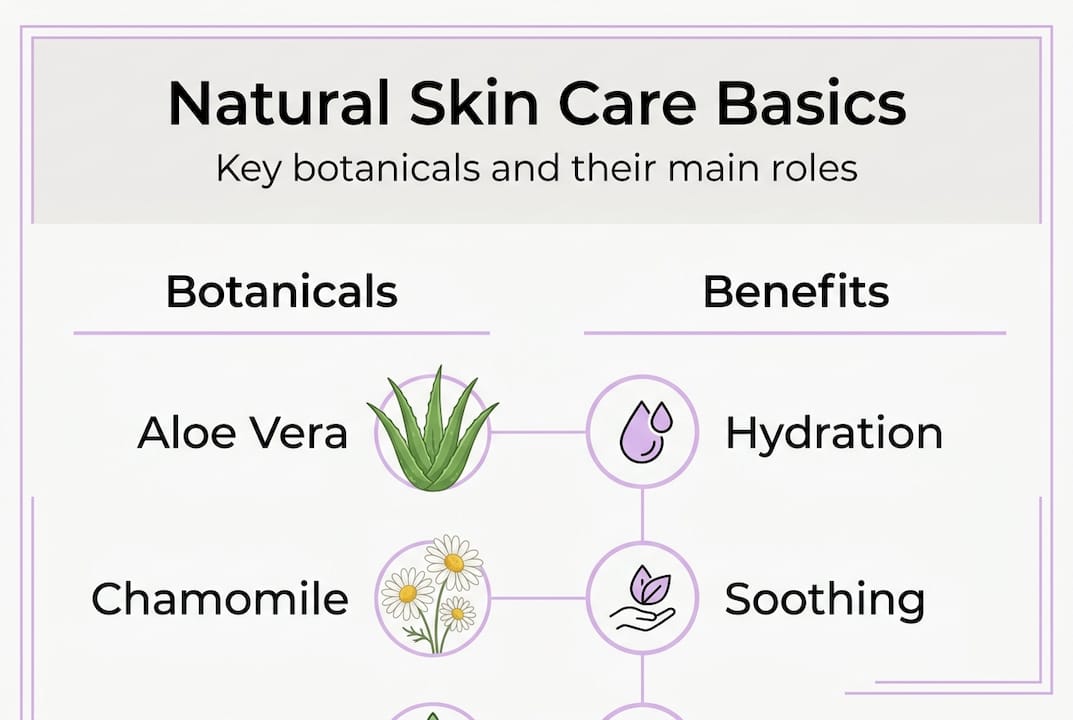
Now, the ingredients. Key botanical ingredients include aloe vera for hydration, jojoba oil, tea tree, shea butter, chamomile, and calendula, each offering distinct benefits for different skin types. Here’s a quick reference:
| Botanical | Key benefit | Best for |
|---|---|---|
| Aloe vera | Deep hydration, soothing | All skin types, especially sensitive |
| Jojoba oil | Balances sebum, non-comedogenic | Oily and combination skin |
| Shea butter | Rich moisture, barrier repair | Dry and very dry skin |
| Tea tree | Antimicrobial, clarifying | Acne-prone and oily skin |
| Chamomile | Anti-inflammatory, calming | Sensitive and reactive skin |
| Calendula | Healing, antioxidant-rich | Damaged or irritated skin |
For carrier oils, consider best natural oils for skin such as sweet almond, rosehip, and argan, depending on your skin’s needs. Pairing the right carrier oil with your chosen botanical makes a meaningful difference in how your skin responds.
Knowing your skin type is non-negotiable before you start mixing. Dry skin needs richer butters and occlusive oils. Oily skin benefits from lightweight, non-comedogenic options like jojoba. Sensitive skin calls for minimal ingredient lists and fragrance-free formulations. If you’re new to DIY blending, the DIY body scrub routine and DIY soap guide are excellent starting points.

Pro Tip: Always patch test a new botanical or oil on the inside of your wrist and wait 24 hours before applying it to larger areas. Even natural ingredients can cause reactions in some individuals.
With your ingredients and tools sorted, you’re ready to dive into the actual steps.
Step-by-step: Building your daily natural body care routine
A natural body care routine doesn’t need to be complicated. Four core steps cover everything your skin needs on a daily basis.
-
Cleanse — Use a gentle, botanical-based body wash or artisanal bar soap. Look for ingredients like calendula, oat extract, or coconut-derived cleansers. Avoid sulphates, which strip your skin’s natural oils.
-
Exfoliate (2-3x per week) — Use a natural scrub made with sugar, sea salt, or ground oats combined with a carrier oil. Exfoliation removes dead skin cells and allows your moisturiser to penetrate more effectively.
-
Moisturise — Apply your chosen botanical lotion, body butter, or oil blend immediately after patting your skin dry. This locks in moisture while your skin is still slightly damp, maximising absorption.
-
Protect — During the day, layer a lightweight SPF product over your moisturiser. At night, opt for a richer repair blend with rosehip or calendula to support overnight skin renewal.
Here’s how a natural routine compares to a conventional one:
| Step | Natural routine | Conventional routine |
|---|---|---|
| Cleansing | Botanical bar or herbal wash | Sulphate-based body wash |
| Exfoliation | Sugar/oat scrub with carrier oil | Synthetic bead scrub |
| Moisturising | Shea butter or jojoba blend | Mineral oil-based lotion |
| Protection | Natural SPF or antioxidant serum | Chemical SPF spray |
Adapting your routine to your lifestyle matters too. If you’re physically active, post-exercise cleansing is essential because physical activity boosts skin blood flow and repair but also increases sweat and bacteria on the skin’s surface. A gentle herbal body wash after workouts prevents irritation and keeps your skin balanced. For a deeper look at building your foundation, the organic essentials guide is worth bookmarking. You might also consider adding a herbal face wash to complement your body routine.
Pro Tip: Exfoliate less frequently in winter when skin is already prone to dryness, and increase frequency slightly in summer when sweat and humidity can cause congestion.
After trying your new routine, you might hit a few bumps. Here’s how to stay on track.
Troubleshooting and adapting: Customising your routine for best results
Even the most thoughtfully assembled routine needs fine-tuning. Here’s how to adapt based on your skin type and address common issues as they arise.
By skin type:
- Dry skin — Favour rich butters like shea or cocoa butter. Apply your moisturiser on damp skin and consider layering with a sealing facial-grade oil at night.
- Oily or acne-prone skin — Avoid heavy oils; stick to jojoba or squalane. Use tea tree in low concentrations (1-2%) as a spot treatment.
- Sensitive skin — Use low essential oil concentrations (below 1%) and favour chamomile or colloidal oat. Keep your ingredient list short.
- Combination skin — Use lighter formulas on oily zones and richer ones on dry patches. Customising by body zone is perfectly acceptable.
Common issues and fixes:
- Irritation or redness — Simplify your routine immediately. Remove the most recently added ingredient and re-introduce after 2 weeks.
- Persistent dryness — Check if you’re cleansing too frequently or using water that’s too hot. Both strip natural oils.
- Breakouts — Look for comedogenic ingredients in your current products. Coconut oil, for example, can clog pores for some people.
- Product build-up — Exfoliate gently and switch to a lighter moisturiser. Build-up often signals over-application.
For guidance tailored to reactive skin, care for sensitive skin offers detailed, skin-type-specific advice.
Safety note: If you experience persistent redness, swelling, or hives after using any botanical product, discontinue use immediately and consult a dermatologist. Natural does not always mean universally safe, and professional guidance is always the right call when in doubt.
Tracking your progress is just as important as making changes. Keep a simple skin journal, noting what you used, how your skin responded, and any adjustments you made. Small, gradual changes are far more informative than overhauling everything at once.
With your routine tailored and troubleshooting done, it’s helpful to reflect on the real rewards you’ll see.
Why sticking with the process pays off: Our hard-won lessons
Here’s the truth most skincare content won’t tell you: no botanical, no matter how pure or potent, will transform your skin overnight. The real results come from consistency, observation, and the willingness to adjust.
We’ve seen it repeatedly. People try a natural routine for two weeks, don’t see a dramatic shift, and return to their old products. But sustainable skin results from botanical care typically emerge over six to twelve weeks as your skin’s barrier rebuilds and its microbiome rebalances. That timeline isn’t a flaw. It’s a sign that something real is happening.
The most striking improvements we’ve observed come not from switching products constantly, but from staying the course and paying close attention. Which ingredient made your skin feel calmer? Which step felt like genuine nourishment? That mindful, curious approach is what turns a routine into a ritual. Embrace the creative side of self-care. Perfection isn’t the goal. Progress is.
Elevate your routine with artisanal natural care
If this guide has inspired you to start or upgrade your natural body care routine, ZenChemy Lab has exactly what you need to take that next step with confidence.

Our artisan soap collection is handcrafted in Canada using high-purity botanicals and time-honoured methods. Each bar is formulated to cleanse gently while supporting your skin’s natural balance. Want to understand the deeper value of switching? Read our guide on handmade soap benefits to see why artisanal really does make a difference. For a broader look at building your full routine, explore our organic essentials for body care and start curating a collection that truly works for your skin.
Frequently asked questions
How do I choose the right botanicals for my skin type?
Match botanicals to your skin’s needs: aloe and jojoba for hydration, tea tree for acne-prone skin, shea butter for dryness, and chamomile or colloidal oat for sensitive or reactive skin.
What’s the most important first step in building a natural body care routine?
Start by identifying your skin type and its specific concerns, then patch test new botanicals before incorporating them into your full routine to avoid unexpected reactions.
Are all-natural products safe for sensitive skin?
Most are, provided you choose low-concentration essential oils and gentle botanicals like chamomile and oat, which significantly reduce the risk of irritation compared to synthetic fragrances.
How often should I exfoliate in a natural body care routine?
Exfoliate once or twice a week as a general rule, adjusting based on how your skin responds and reducing frequency during colder, drier months when your skin barrier is more vulnerable.
What results can I expect from switching to a natural body care routine?
With consistent use over several weeks, you can expect fewer irritations and improved texture, along with a healthier, more even skin tone as your barrier strengthens and rebalances.
Recommended
- How to create a luxurious body scrub routine at home – ZenChemy Lab
- Best types of natural soaps for healthy, radiant skin – ZenChemy Lab
- Sun-kissed Glow Bronzer. – ZenChemy Lab
- Sensitive skin: Why natural solutions matter for purity – ZenChemy Lab
- 7 Best Hair Care Routines for Luxurious, Healthy Results – Joel C Ma Hair Studio


5 Comments