TL;DR:
- DIY organic body scrubs are popular because they avoid unpronounceable ingredients, focusing instead on natural, effective exfoliants and botanicals. Proper ingredient selection, tools, storage, and technique are essential for safe, beneficial, and customizable results that transform skin over time. Consistent use, freshness, and mindful skincare routines maximize their long-term benefits for healthy, radiant skin.
You scan the ingredients list on a store-bought body scrub and count at least a dozen words you cannot pronounce. Parabens, synthetic fragrance, polyethylene beads — none of it sounds like something your skin actually needs. Many people share this frustration, and it is exactly why DIY organic body scrubs have become such a meaningful part of the natural skincare movement. This guide walks you through the science of exfoliation, the best ingredients to use, a clear step-by-step method, and smart tips for getting the most out of every batch you make.
Table of Contents
- What makes an organic body scrub effective
- Gather your ingredients and tools
- How to make your organic body scrub: step-by-step
- How to use your organic body scrub safely and effectively
- Troubleshooting and customising your scrubs
- Why most DIY scrub recipes fall short (and what actually works)
- Next steps for elevating your natural skincare
- Frequently asked questions
Key Takeaways
| Point | Details |
|---|---|
| Choose the right exfoliant | Pick sugar for gentle exfoliation or salt for a deeper cleanse based on your skin needs. |
| Store scrubs properly | Airtight glass or PET jars extend shelf life and keep your scrub safe to use. |
| Exfoliate safely | Limit use to 1-3 times weekly and follow with moisturizer for best results. |
| Personalise ingredients | Customise with botanicals or oils to match your skin’s sensitivity and goals. |
What makes an organic body scrub effective
With a sense of why a personalised approach matters, we can explore what truly goes into an effective organic scrub.
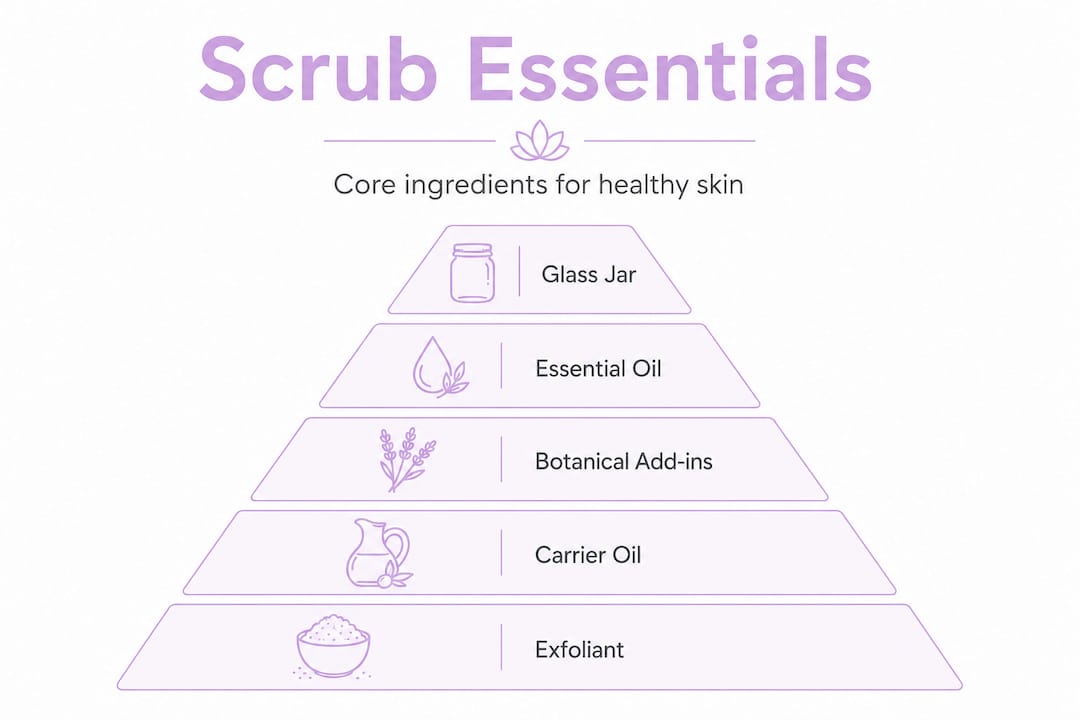
Exfoliation removes dead skin cells from the outermost layer of your skin, the stratum corneum. When this layer builds up, your skin can look dull, feel rough, and absorb moisturisers less efficiently. A well-formulated scrub uses physical particles to buff away that buildup while carrier oils replenish the skin’s lipid barrier at the same time.
Choosing the right exfoliant
The type of exfoliant you choose makes a dramatic difference, especially if your skin leans sensitive. Sugar is gentler and water-soluble with mild glycolic acid for dual exfoliation, while salt provides a deeper cleanse but can dry skin or irritate if the grains are coarse. Coffee grounds sit somewhere in the middle — they exfoliate effectively and deliver antioxidant benefits; you can read more about coffee scrub ingredient insights to see why they have become so popular.
| Exfoliant | Texture | Best for | Key benefit |
|---|---|---|---|
| White sugar | Fine | Sensitive, dry skin | Gentle, dissolves in water |
| Brown sugar | Medium | Normal to dry skin | Molasses adds moisture |
| Sea salt | Coarse | Oily, normal skin | Deep cleanse, mineral-rich |
| Coffee grounds | Medium | All skin types | Antioxidants, circulation boost |
| Oat flour | Ultra-fine | Very sensitive, reactive skin | Soothing, anti-inflammatory |
| Rice bran | Fine | Ageing, dull skin | Brightening, gentle |
The role of natural oils and botanicals
Carrier oils do more than lubricate. They deliver essential fatty acids and fat-soluble vitamins directly to the skin. Jojoba oil closely mimics the skin’s own sebum. Sweet almond oil is rich in oleic acid for deep nourishment. Rosehip oil brings vitamin A to support cell turnover. When you build a luxurious body scrub routine around these oils, you are doing far more than just buffing away dead skin.
Botanical additives — think dried lavender, calendula petals, green tea powder, or turmeric — round out the formula. They bring phytonutrients, antioxidants, and often a gentle calming effect that synthetic scrubs simply cannot replicate.
✅ Checklist for a genuinely organic blend
- ✔ Exfoliant sourced without chemical bleaching agents
- ✔ Carrier oils that are cold-pressed and unrefined
- ✔ Essential oils at safe dilution (typically 1-2%)
- ✔ No synthetic preservatives, colourants, or fragrance
- ✔ Botanicals that are food-grade or certified organic
- ✔ Packaging that prevents moisture contamination
Browsing our body scrub options can also give you a sense of what a truly clean formulation looks like in practice.
Gather your ingredients and tools
Now that you know what acts as the core of a good scrub, let’s assemble what you’ll need to get started.
Having the right tools on hand is half the battle. Skincare making is a bit like baking: precision and cleanliness matter, and the wrong equipment can spoil an otherwise perfect recipe.
Essential ingredients at a glance
| Ingredient | Amount for 250ml batch | Purpose |
|---|---|---|
| Fine white or brown sugar | 150g | Primary exfoliant |
| Carrier oil (jojoba, sweet almond, or coconut) | 60ml | Skin nourishment and binding |
| Vitamin E oil | 5ml | Natural antioxidant, extends shelf life |
| Essential oils of choice | 10-15 drops | Fragrance and therapeutic benefit |
| Botanical additive (optional) | 1-2 tsp | Targeted skin benefit |
| Honey (optional) | 1 tbsp | Humectant, antibacterial |
Tools you will need
- 🥣 A clean, dry glass or stainless steel mixing bowl
- 🥄 A silicone spatula or wooden spoon (avoid metal, which can oxidise oils)
- ⚗️ A kitchen scale for accurate measurements
- 🧤 Disposable gloves to keep your batch uncontaminated
- 🫙 An airtight glass or PET jar for storage
Storage is non-negotiable
This is where many first-time makers go wrong. Proper storage protects your batch from bacteria, oxidation, and moisture. According to shelf life research, you should mix your dry exfoliant and oils in a glass or PET jar, store it airtight in a cool and dark place, and expect a shelf life of 1-2 months unrefrigerated or up to 3-6 months when refrigerated. Always use a clean, dry spoon to scoop your scrub and never introduce wet fingers into the jar.
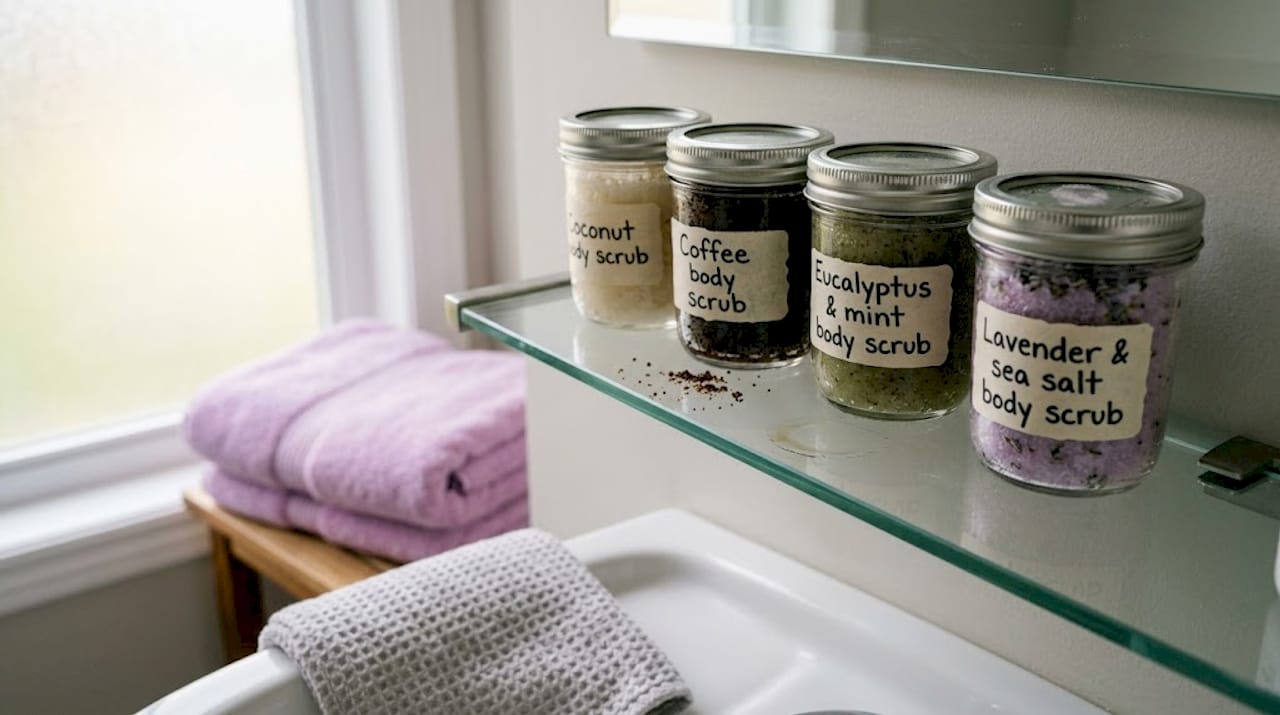
Glass jars are ideal because they do not leach chemicals, they seal tightly, and they are easy to sterilise. Label every jar with the date you made it. If you enjoy making other handmade products, our DIY handmade soap guide walks you through similar principles of safe crafting at home. And if you want a broader picture of the philosophy behind all of this, our thoughts on sustainable self-care are worth a read.
How to make your organic body scrub: step-by-step
With ingredients ready at hand, let’s walk through the actual hands-on process.
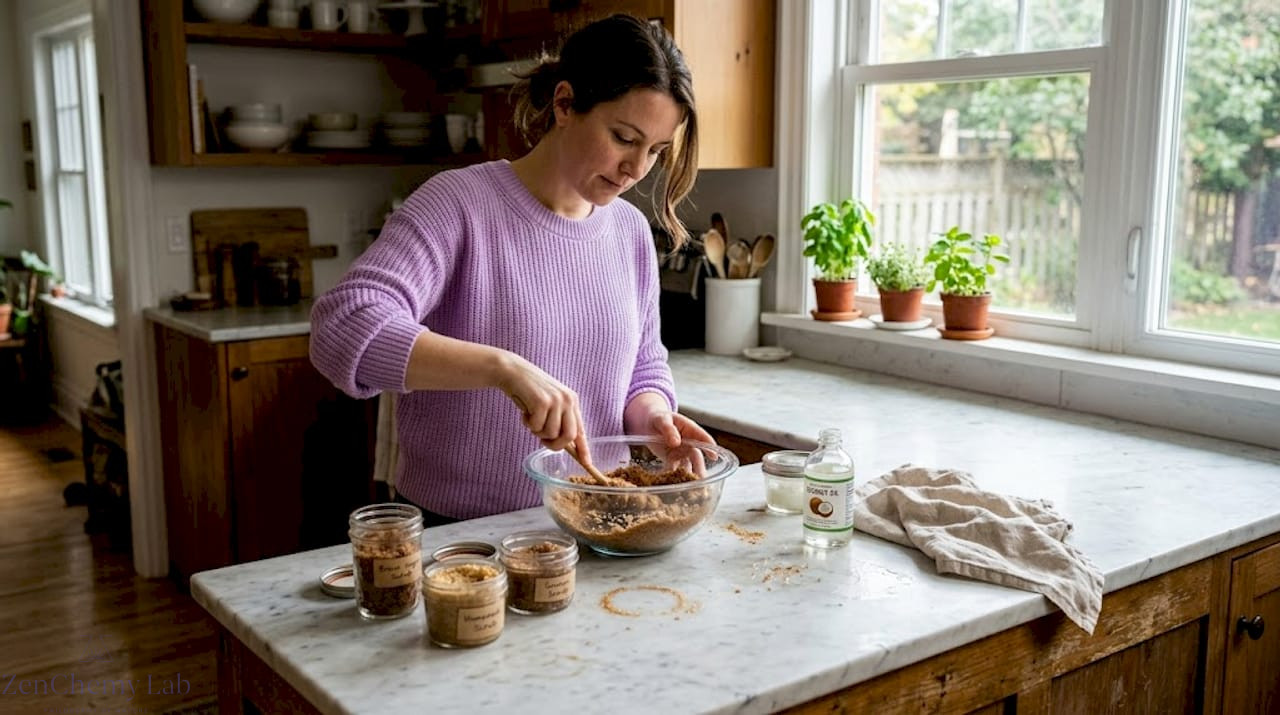
This base recipe is versatile, effective, and easy to customise. Once you have made it once, you will feel confident experimenting with botanicals, essential oils, and alternative exfoliants.
Base recipe: citrus sugar scrub (makes approx. 250ml)
-
Sterilise all equipment. Wash your bowl, spatula, and jar with hot soapy water, then wipe down with rubbing alcohol. Let everything dry completely before you begin.
-
Weigh your sugar. Add 150g of fine white or brown sugar to your mixing bowl. Brown sugar brings extra moisture from its molasses content, making it a particularly good choice for dry skin.
-
Add your carrier oil. Pour in 60ml of your chosen carrier oil. Start with jojoba if you are unsure — it suits almost every skin type and does not go rancid as quickly as many other oils.
-
Incorporate vitamin E. Add 5ml of vitamin E oil and stir everything together with your spatula. The mixture should feel like wet sand: moist but not dripping. If it feels too dry, add oil one teaspoon at a time. If too oily, add a tablespoon more sugar.
-
Add your essential oils. Use 10-15 drops total. For a citrus version, try 8 drops of sweet orange and 5 drops of bergamot. For a calming blend, lavender and frankincense work beautifully together.
-
Fold in botanicals (optional). A teaspoon of dried calendula petals, matcha powder, or spirulina adds both colour and skin benefit. Stir gently to distribute evenly.
-
Transfer to your jar. Spoon the scrub into your clean, airtight jar and press it down to eliminate air pockets. Seal the lid, label it with the date, and store in a cool, dark cupboard.
Pro Tip: For a coffee variation, replace half the sugar with used, fully dried coffee grounds. This boosts circulation benefits and gives a more invigorating scrub. You can store it using the same method, and as confirmed by storage best practices, your batch will stay fresh for 1-2 months at room temperature or up to 3-6 months when kept refrigerated.
Natural variations to try
- 🌿 Green tea and honey: Replace botanicals with 1 tsp matcha powder and 1 tbsp raw honey for brightening antioxidant action.
- ☕ Coffee and coconut: Use coffee grounds as your primary exfoliant with fractionated coconut oil for a warming, energising scrub.
- 🌸 Rose and almond: Brown sugar base with sweet almond oil and 1 tsp dried rose petals for a romantic, soothing blend.
If you are looking for a beautifully crafted example to compare your homemade version against, our salt scrub inspiration shows what a professionally formulated salt scrub looks and feels like.
How to use your organic body scrub safely and effectively
Let’s ensure all your efforts pay off by using your scrub the right way for glowing, healthy skin.
Making a beautiful scrub is one thing. Using it correctly is what actually transforms your skin over time. Technique and frequency matter just as much as the ingredients themselves.
Proper application method
Apply your scrub to damp skin in gentle circular motions, spending about 20-60 seconds on each area. Rinse thoroughly, pat dry with a soft towel, and follow immediately with a moisturiser to lock in hydration while your skin is still slightly warm.
- Step into a warm (not hot) shower and wet your skin fully.
- Scoop a generous tablespoon of scrub and apply it to one section of your body at a time.
- Use the pads of your fingers, not your nails, and work in small, gentle circles.
- Spend extra time on rough areas like elbows, knees, and heels.
- Rinse each section before moving to the next to prevent over-exfoliation.
- Pat dry gently — do not rub — and apply your favourite body oil or lotion within two minutes of stepping out.
“Physical exfoliation is perfectly safe 1-2 times per week for most skin types when gentle pressure and fine-grained exfoliants are used — but for sensitive skin, dermatologists often recommend chemical or enzyme-based options first.” Insights from a dermatologist’s exfoliation guide reinforce this point.
Frequency guide by skin type
| Skin type | Recommended frequency |
|---|---|
| Oily or combination | Up to 3 times per week |
| Normal | 2 times per week |
| Dry | 1-2 times per week |
| Sensitive | Once per week or less |
| Acne-prone | 1 time per week, avoid active breakouts |
Pro Tip: The caffeine in coffee scrubs temporarily constricts blood vessels and reduces puffiness, making them especially useful on mornings when your legs feel heavy or tired.
Over-exfoliation is a real risk. Signs include redness, tightness, sensitivity to your usual moisturiser, or a shiny, almost raw-looking texture. If you notice any of these, rest your skin for a full week and focus on gentle hydration. Building a thoughtful natural body care routine around your scrub will help you stay consistent without overdoing it.
Troubleshooting and customising your scrubs
Even the best methods need adjustments, so here’s how to solve common challenges and make each batch your own.
DIY skincare comes with a learning curve. Most problems are easy to fix once you understand what went wrong and why.
Common issues and quick fixes
- Too oily: Add 2-3 tablespoons more of your exfoliant and stir thoroughly. The balance should feel like wet sand that holds its shape briefly.
- Too dry or crumbly: Add carrier oil one teaspoon at a time until the texture becomes cohesive. Coconut oil is particularly good for binding.
- Scent is too faint: Add 5 more drops of essential oil and stir. Wait 24 hours before reassessing — scent often blooms as the blend rests.
- Gritty texture that feels harsh: Switch to a finer sugar or grind your exfoliant briefly in a food processor before using.
- Signs of spoilage: If you notice any off smell, discolouration, or visible mould, discard the entire batch. Proper storage in an airtight glass jar in a cool, dark place will prevent most spoilage, but contamination from wet hands is the most common culprit.
Customising for specific skin concerns
Every skin type benefits from a slightly different approach. Here are targeted tweaks:
- 🌿 Dry skin: Add a tablespoon of raw honey and use rosehip or avocado oil as your carrier. These are rich in oleic acid and vitamin A.
- 🌸 Sensitive skin: Choose oat flour or ultra-fine sugar as your exfoliant, skip essential oils entirely at first, and use only cold-pressed jojoba or calendula-infused oil.
- 🍋 Dull or uneven skin tone: Incorporate a teaspoon of turmeric powder and a few drops of vitamin C-rich rosehip oil. For a targeted face application, our turmeric face scrub shows how this ingredient shines in a well-calibrated formula.
- 💚 Oily or acne-prone skin: Use sea salt or coffee grounds as your base, add a drop of tea tree essential oil, and keep the carrier oil light — grapeseed or hazelnut oil absorb quickly and do not clog pores.
Pro Tip: Essential oils must always be diluted before skin contact. A safe dilution for body products is 1-2%, which means roughly 10-20 drops per 100ml of finished product. Undiluted essential oils can cause sensitisation and even chemical burns. Browse our body care archive for professionally balanced formulas that can guide your own ratios.
Why most DIY scrub recipes fall short (and what actually works)
After troubleshooting, it is worth expanding our thinking on what really delivers long-term success in natural skincare.
Here is something the average “5-ingredient sugar scrub” blog post will not tell you: a basic mixture of sugar and coconut oil will exfoliate your skin today, but it will not transform it over weeks and months. The reason is ingredient freshness and synergy — two things most DIY guides completely ignore.
Oils oxidise. Botanicals lose their potency. If you are using a carrier oil that has been sitting in your cupboard for two years or dried herbs from a batch you bought long ago, your scrub is technically organic but functionally mediocre. Freshness is not a luxury in natural skincare; it is the entire point. We explore this idea at length in our piece on organic body care meaning, and it genuinely changes how you shop for ingredients.
The second overlooked factor is routine. A single scrub session will leave your skin feeling incredible. But the real benefits — improved texture, more even tone, better moisturiser absorption — come from consistent, well-timed exfoliation paired with quality post-scrub hydration. Transformation is a habit, not a one-off treatment.
The DIY recipes that actually deliver results are the ones that treat ingredients with the same respect a formulator would. That means sourcing fresh, cold-pressed oils, using botanicals within their shelf life, measuring your essential oil dilutions carefully, and pairing every scrub session with a nourishing moisturiser. When you do all of this, the difference is not subtle.
Next steps for elevating your natural skincare
For those ready to take their self-care one step further, ZenChemy Lab offers resources and curated products designed to match these home-crafted values.
Making your own scrubs is deeply satisfying, and it teaches you to read ingredient lists with a sharper eye. But sometimes you want a perfectly calibrated formula you can trust without the prep work.

At ZenChemy Lab, we put the same ingredient consciousness you just read about into every product we formulate. Our articles on botanical cosmetics and plant-based body care go deeper into the ingredients and philosophy behind truly clean formulations. When you are ready to explore ready-made options crafted in Canada with the same values you are building at home, our full body care collection is a natural next step. Your skin deserves ingredients you can trust, every single time. 🌿
Frequently asked questions
How long do homemade organic body scrubs last?
Homemade scrubs typically last 1-2 months unrefrigerated or up to 3-6 months in the refrigerator, provided they are stored in an airtight jar and you always use a clean, dry spoon.
Which exfoliant is best for sensitive skin?
Sugar is generally the gentler choice for sensitive skin because it is water-soluble and dissolves quickly, unlike coarser salts that can cause micro-tears or irritation.
How often should you use an organic body scrub?
Exfoliating 1-3 times per week is ideal for most people, applied in gentle circular motions on damp skin and always followed by a moisturiser to protect the freshly revealed skin barrier.
What is the best jar for storing homemade scrubs?
An airtight glass or PET jar stored in a cool, dark cupboard is your best option, as it prevents oxidation, moisture intrusion, and bacterial contamination between uses.