TL;DR:
- Holistic skincare emphasizes caring for the whole person, including mind, body, and environment, alongside topical routines. It combines evidence-informed ingredients with lifestyle factors like sleep, stress management, and nutrition to maintain skin health and balance. This integrated approach complements clinical treatments and focuses on prevention, consistency, and self-awareness for optimal results.
Many people assume that holistic skincare means tossing out every lab-made formula and relying solely on raw plant matter. That assumption sells the approach far too short. Consumer definitions of holistic skincare are often broad and philosophy-driven, yet when examined through a clinical lens, holistic skincare closely resembles a structured, barrier-focused regimen combined with lifestyle factors such as sleep, stress management, and nutrition. This guide untangles the myths, presents the evidence, and gives you a practical framework for building a routine that honours both nature and science.
Table of Contents
- What does holistic skincare really mean?
- Core pillars of a holistic skincare approach
- How holistic and evidence-based skincare can work together
- Choosing holistic skincare products: What matters most
- Why holistic does not mean anti-science: A balanced take
- Explore evidence-based holistic skincare with ZenChemy Lab
- Frequently asked questions
Key Takeaways
| Point | Details |
|---|---|
| Holistic is evidence-informed | True holistic skincare blends science-backed routines with mindful lifestyle factors for overall wellness. |
| Product safety matters | Natural or artisanal does not always mean safer—check evidence and patch test new products. |
| Clinical care is sometimes essential | Use holistic methods to support skin health, but consult a professional for persistent skin conditions. |
| Personalisation is key | The best routines are tailored to your unique skin, habits, and goals—not dictated by trends. |
| Holistic goes beyond products | Lifestyle choices like stress management, sleep, and nutrition play essential roles in healthy skin. |
What does holistic skincare really mean?
To build a solid foundation, let’s define what holistic skincare actually entails and what makes it different from a typical approach.
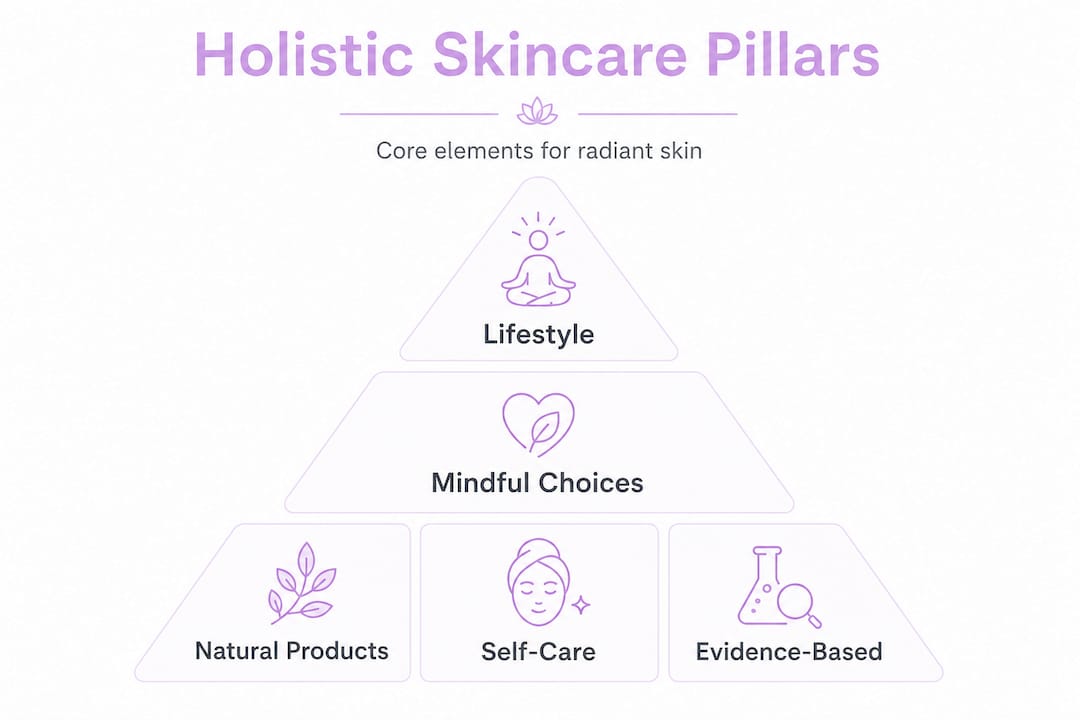
The word “holistic” comes from the Greek holos, meaning whole. In skincare, this translates to caring for the complete person: mind, body, and environment. Your stress levels, sleep quality, gut health, and even your emotional state all influence how your skin looks and feels. A holistic approach considers all of these inputs, not just what you apply to your face.
Here is where many people go wrong: they equate “holistic” with “all-natural only.” These are not the same thing. A truly holistic approach is inclusive. It welcomes evidence-informed ingredients, gentle formulations, and targeted treatments when needed. It simply insists on asking why something is used, not just whether it has a recognisable name on the label.
“Holistic skincare can overlap with integrated or evidence-based regimens. An evidence-based CTMP framework combining gentle cleansing, targeted anti-inflammatory therapy, and photoprotection is actively discussed for atopic dermatitis management.”
This cleanse-treat-moisturise-protect (CTMP) framework is a beautiful example of how evidence-based dermatology and holistic thinking already share significant common ground. Both prioritise:
- ✅ Gentle, barrier-preserving cleansing
- ✅ Targeted care based on individual skin needs
- ✅ Consistent moisturisation to maintain the skin’s lipid barrier
- ✅ Daily photoprotection to prevent cumulative damage
- ✅ A non-aggressive, sustainable approach to skin health
When you look at these principles through a holistic lens, they are not clinical and cold. They are deeply respectful of the skin as a living organ that needs balance, not punishment. For natural skincare routine tips that reflect these principles in everyday practice, the foundation is always the same: know your skin, respect its needs, and be consistent.
If you are ready to go further, learning 5 steps to results in a natural routine gives you a structured path that aligns holistic intention with practical, measurable outcomes.
Core pillars of a holistic skincare approach
Having defined holistic skincare, we can now break down its core pillars for a clearer, actionable understanding.
Holistic skincare operates on two interconnected levels: what you apply to your skin, and how you live. Neglecting either level limits your results. Think of them as two legs of the same stool.
The topical routine
Your daily topical routine is your most direct line of communication with your skin. A well-designed routine does not need to be complicated. In fact, simplicity often outperforms complexity.
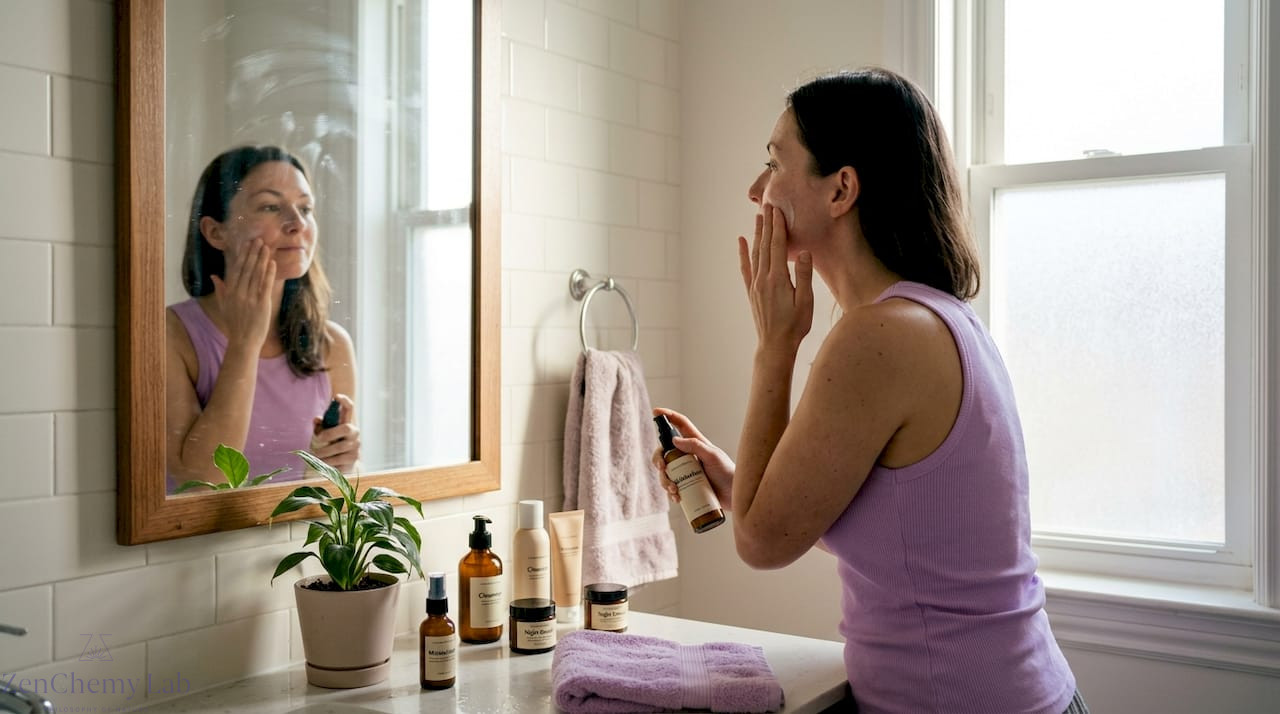
- Cleanse gently to remove impurities without stripping the skin’s natural oils or disrupting the microbiome.
- Treat with targeted actives (serums, botanical extracts, or prescribed treatments) suited to your specific skin concerns.
- Moisturise to reinforce the lipid barrier and reduce transepidermal water loss (TEWL), which is the technical term for moisture evaporating from your skin.
- Protect with SPF every morning to guard against UV-induced oxidative stress and premature ageing.
The lifestyle layer
| Lifestyle factor | How it affects your skin | Simple action to take |
|---|---|---|
| Sleep | Repairs cellular damage overnight; reduces cortisol | Aim for 7 to 9 hours consistently |
| Stress | Elevates cortisol, worsening acne, rosacea, and eczema | Incorporate mindful movement or breathing |
| Diet | Antioxidants and omega-3s support barrier function | Eat colourful vegetables and fatty fish |
| Hydration | Maintains skin plumpness and elasticity | Drink 6 to 8 glasses of water daily |
| Environment | Pollution and UV cause oxidative damage | Use antioxidant serums alongside SPF |
Consistency across both layers is where the real transformation happens. A body care routine that incorporates lifestyle awareness alongside topical care will always outperform one that focuses on products alone.

It is also important to acknowledge a critical truth: holistic lifestyle changes such as improving sleep, managing stress, and adjusting diet can genuinely support skin health, but they do not replace proven dermatological care when a skin disease requires medical treatment. They are complementary tools, not substitutes for professional advice.
Pro Tip: Before adjusting your entire routine, spend two weeks tracking your skin alongside your sleep and stress levels. Patterns often emerge that are more revealing than any ingredient list. A simple skincare workflow can help you identify what is and is not working systematically.
How holistic and evidence-based skincare can work together
Now that we understand the main pillars, it is vital to distinguish how holistic skincare complements rather than substitutes strong clinical science.
One of the most empowering realisations in modern skincare is that holistic and evidence-based approaches are not opposites. They can and do work in harmony. The friction only arises at the extremes: either rejecting all science in favour of folklore, or dismissing traditional plant wisdom simply because it lacks a double-blind trial.
Here is a helpful comparison to orient your thinking:
| Feature | Holistic skincare | Clinical skincare |
|---|---|---|
| Primary focus | Whole-person wellbeing and prevention | Diagnosing and treating specific conditions |
| Typical ingredients | Botanicals, plant oils, natural actives | Retinoids, antibiotics, corticosteroids |
| Lifestyle integration | Core component | Often secondary |
| Who leads the approach | The individual with guidance | A dermatologist or medical professional |
| Best suited for | Daily maintenance, prevention, wellbeing | Active skin disease, moderate-to-severe concerns |
📌 Key insight: Holistic care excels at maintenance and prevention. Clinical care excels at treatment. The smartest skincare enthusiasts use both, appropriately and at the right time.
Complementary healthcare guidance consistently cautions that while interest in herbal and complementary approaches for skin conditions is widespread, the quality of available studies is often inconsistent. Some interventions lack sufficient evidence or show inconsistent results, which is why a critical eye matters even when evaluating “natural” options.
This does not mean herbal and botanical ingredients lack value. Many do have meaningful evidence behind them. It means that evaluating holistic products for specific conditions like eczema, acne, or rosacea should be guided by the strength of evidence and safety data for that particular ingredient, not by whether it is marketed as natural or holistic.
Knowing what is in your products, and why those ingredients are included, is a form of self-advocacy. Explore natural ingredient safety to understand how artisanal formulations can be both gentle and well-reasoned. You can also browse body care ingredients to learn which botanicals have the most reliable reputations.
Pro Tip: When trying a new holistic or natural product, look for transparent ingredient lists, clearly sourced botanicals, and a brand that acknowledges where evidence is strong versus where it is still emerging. Honest brands do not oversell.
Choosing holistic skincare products: What matters most
With the frameworks and evidence clarified, let’s get practical. How do you make smart, empowered choices as a holistic skincare enthusiast?
The market is saturated with products labelled “natural,” “holistic,” “botanical,” or “organic.” These words carry genuine appeal, but they are not regulated in the same way as drug claims, which means the label alone tells you very little about efficacy or safety. Your job as an informed consumer is to look beyond the marketing.
“Interest in complementary and herbal approaches for skin conditions is common, but evidence for many interventions is limited or inconsistent.” This is not a reason to avoid them. It is a reason to choose them thoughtfully.
🟢 Green flags when evaluating holistic skincare products
- Full ingredient transparency: Brands that list every ingredient with explanations earn trust.
- Evidence-informed formulations: Products that cite research behind key actives, even if those actives are plant-derived.
- Patch test recommendations: Responsible brands always encourage patch testing, especially for sensitive skin.
- Sourcing information: Knowing where botanicals are grown and how they are processed matters for both quality and sustainability.
- Realistic claims: No product “reverses ageing” or “cures” a skin condition. Honest brands make honest claims.
🔴 Red flags to watch for
- Vague claims like “detoxifies” or “heals from within” without any supporting information.
- Dismissal of all synthetic ingredients as inherently harmful.
- “Natural” products that contain common allergens like essential oils at irritating concentrations.
- No mention of expiry dates or preservation, since natural products without proper preservation can harbour bacteria.
- Overselling a single ingredient as a cure-all.
Artisanal does not automatically mean safer or superior. A handcrafted soap made with care and knowledge is wonderful. The same soap made without proper saponification control can be lye-heavy and damaging. Quality in artisanal skincare comes from the maker’s knowledge and rigour, not just from the “handmade” label itself.
For a curated look at what genuine artisanal formulation looks like in practice, explore botanical cosmetics and learn more about sustainable body care processes that respect both the skin and the environment.
Why holistic does not mean anti-science: A balanced take
Here is a misconception worth addressing directly: that choosing holistic skincare means you are sceptical of science, distrustful of dermatologists, or committed to a purely folklore-based approach. We find this framing frustrating, because it creates a false divide that serves no one.
The most effective holistic skincare philosophy is not anti-science. It is pro-informed choice. It values both the wisdom embedded in centuries of botanical use and the clarity that rigorous research provides. These are not competing values. They are complementary ones.
The real problem lies at the extremes. On one side, you have the “all chemicals are bad” camp, which ignores the fact that everything is a chemical, including water, plant oils, and the ceramides in your own skin. On the other side, you have a reductive dismissal of anything not derived from a laboratory, which ignores a long history of plant-based medicine that modern science continues to validate.
True luxury in skincare, the kind we believe in at ZenChemy Lab, is informed enjoyment. It is choosing a beautifully crafted botanical serum because you understand why its key ingredients support your skin barrier. It is using a handmade artisanal soap because you know the saponification process was handled with expertise. It is the confidence that comes from understanding what you are putting on your skin, not just hoping it works.
An eco-friendly beauty guide that also considers ingredient evidence is the gold standard. Sustainable beauty and evidence-informed beauty are not in competition. The best skincare routines manage to be both.
The skin is your body’s largest organ and your first line of defence. It deserves a thoughtful, whole-person approach that is neither recklessly dismissive of science nor blindly deferential to trend-driven naturalism. Balance is not a compromise. It is the most intelligent position available.
Explore evidence-based holistic skincare with ZenChemy Lab
Ready to put holistic skincare principles into practice? ZenChemy Lab is here to support every step of your journey with thoughtfully crafted, natural products and in-depth educational resources.

At ZenChemy Lab, we believe that great skincare begins with understanding. Our routine tips for healthy skin guide you through building a personalised, evidence-aware regimen rooted in the best of botanical science. Every product we create is formulated with transparency, sourced with care, and designed to complement your unique skin profile. Explore our collection of luxurious botanical skincare to discover artisanal soaps, body care essentials, and cosmetics that honour both nature and your skin’s real needs. Your holistic journey starts here.
Frequently asked questions
Is holistic skincare suitable for all skin types?
Holistic skincare can benefit all skin types when tailored to individual needs and sensitivities, since its whole-person focus makes it inherently adaptable rather than prescriptive.
Do natural ingredients always mean safer skincare?
Not always. Evidence and patch testing matter far more than the label “natural,” as some plant-derived ingredients can cause irritation or allergic reactions in certain individuals.
Can holistic skincare replace dermatological treatments?
No. Holistic routines can genuinely support healthy skin day-to-day, but some skin conditions require professional medical care and prescribed treatments that lifestyle changes or natural products alone cannot address.
What is the evidence for holistic approaches to skin issues?
Evidence is mixed. Many complementary interventions have limited or inconsistent research behind them, which underscores the importance of evaluating each ingredient or method individually rather than accepting blanket claims.
How do I start a holistic skincare routine?
Begin with a simple cleanse-treat-moisturise-protect routine and layer in mindful lifestyle habits such as consistent sleep and stress management, adjusting each element to your unique skin needs over time.