A well-formulated sulfate-free facial cleanser is generally the better choice for sensitive, dry, mature, or barrier-compromised skin. The catch is that “sulfate-free” on a label tells you nothing about pH, rinsability, or how the formula actually behaves on your face. What follows is the practical, ingredient-level guidance most marketing skips: which surfactants to look for, who genuinely benefits and how to trial a new cleanser without guessing.
TL;DR:
- Sulfate-free cleansers benefit sensitive or barrier-compromised skin by reducing irritation and preserving skin hydration better than sulfate-based options.
- Ingredients like amino-acid surfactants and alkyl polyglucosides can provide effective cleansing with less skin damage when formulated at a skin-friendly pH range of 4.5 to 5.5.
- Look for full ingredient lists that feature gentle surfactants such as sodium cocoyl glutamate, and avoid products with high alcohol content or high pH that could still dry or irritate skin.
- A three to four-week trial of a well-chosen sulfate-free cleanser is necessary to assess skin response, especially for those with dryness, redness, or sensitivity.
- Sulfate-free labels alone do not guarantee gentleness; the formulation, pH, and rinsability are key factors to consider for effective, non-irritating cleansing.
Table of Contents
- What are the real sulfate free cleanser benefits?
- Who benefits most, and when sulfate-free may not help
- How sulfate-free cleansers actually clean your skin
- Checklist: how to choose a sulfate-free cleanser that actually helps
- What sulfate-free labels don’t guarantee
- How to use a sulfate-free cleanser in your routine
- What the research and reporting actually say
- An editor’s take on switching cleansers
- Try a gentler cleanser: ZenChemy Lab’s face wash options
- Sources
- FAQ
What are the real sulfate free cleanser benefits?
Sulfates, mainly sodium lauryl sulfate (SLS) and sodium laureth sulfate (SLES), are strong anionic surfactants prized for one thing: they foam aggressively and cut through oil fast. That’s also their problem. One clinical observation found that sodium lauryl sulfate (SLS) at a certain concentration reduced skin hydration and compromised barrier function after a short exposure time, which explains why a “squeaky clean” feeling after washing is usually a sign of damage, not cleanliness.
Swap that surfactant system for a gentler one, and the benefits show up quickly:
- Less irritation and fewer flare-ups. Dermatology guidance summarized by Healthline points to gentler surfactants for rosacea- and eczema-prone skin, where harsh anionic cleansers routinely trigger redness and stinging.
- A more intact skin barrier. Milder formulas reduce transepidermal water loss (TEWL), so you get less of that tight, dry feeling in the hours after washing.
- Better support for acne actives. If you’re already using salicylic acid or a retinoid, a gentle base cleanser avoids piling extra stripping on top of ingredients that dry skin out on their own.
- A nicer sensory and environmental profile. Amino-acid and glucoside surfactants often produce creamy, stable foam, and some break down more readily in wastewater treatment than sulfates.
Statistic to remember: the difference between “clean” and “damaged” can come down to concentration and contact time as much as the ingredient itself, according to the same surfactant review that flagged SLS’s 15-minute hydration drop.
Who benefits most, and when sulfate-free may not help
Sulfate-free formulas tend to make the biggest difference for specific skin profiles rather than everyone equally.
- Sensitive and reactive skin, including rosacea and eczema-prone complexions, where harsh surfactants are a known trigger.
- Dry and mature skin, which already produces less sebum and has less margin for stripping.
- Post-treatment skin, such as after chemical peels, microneedling, or retinoid ramp-ups, when the barrier is temporarily thinner.
- Anyone dealing with general redness or tightness after cleansing, regardless of skin type on paper.
Exceptions exist. If you’re wearing heavy sunscreen, full-coverage makeup, or working in a greasy environment, an occasional stronger cleanse (or a brief double-cleanse) may serve you better than sulfate-free alone. Vogue’s reporting on sulfate-free shampoo notes that practitioners sometimes recommend alternating a stronger cleanser back in periodically rather than banning sulfates outright, and the same logic applies to some oily or acne-prone skin that genuinely needs more thorough cleansing.
Give any switch a three-to-four-week trial. Watch for reduced tightness and redness as good signs, and for new congestion or breakouts as a signal the formula isn’t right for you.
How sulfate-free cleansers actually clean your skin
Removing sulfates doesn’t mean removing surfactants. Every cleanser, sulfate-free or not, needs a surfactant to lift oil and debris off your skin. The difference is in which molecule does the job.
Common gentler alternatives include:
- Amino-acid surfactants like sodium cocoyl glutamate, which are derived from amino acids and tend to be milder on the skin barrier.
- Alkyl polyglucosides (APGs), plant-sugar-derived surfactants known for good tolerance and a soft, non-stripping feel.
- Cocamidopropyl betaine, often used as a co-surfactant to boost mildness and foam without the harshness of sulfates.
A peer-reviewed review of amino-acid surfactants found that glutamate and alaninate-based systems can match sulfate foam performance when formulated correctly, while scoring better on both irritation and environmental measures. That word “formulated” matters. pH is just as important as the surfactant choice: skin’s natural surface sits around 4.5 to 5.5, and a cleanser closer to that range disrupts the barrier far less than a high-pH formula, sulfate-free or not.
Quick number to hold onto: that same review is the basis for the 2% SLS finding above, which is why concentration, not just surfactant type, decides how a cleanser feels on your face.
Checklist: how to choose a sulfate-free cleanser that actually helps
Reading “sulfate-free” on the front of a bottle tells you what’s missing, not what’s present. Check the full ingredient panel before you buy.
- Scan for the surfactant names, not just the marketing claim, using tools like the Brand index — ranked by real cost per unit · OutletPicks to compare ingredient quality and brand formulations. Look for sodium cocoyl glutamate, disodium cocoyl glutamate, decyl glucoside, or cocamidopropyl betaine near the top of the list.
- Check the pH if the brand lists it. A facial cleanser sitting around 4.5 to 5.5 is generally kinder than one that skews alkaline.
- Watch for high concentrations of denatured alcohol, which can undo the benefit of a gentle surfactant by drying skin out through a completely different mechanism.
- Test rinsability. A cleanser that leaves a filmy or tacky feel after rinsing may be loaded with heavy emollients that sit on the skin rather than washing clean.
- Note any added actives, like salicylic acid, and make sure the base formula is gentle enough not to compound their drying effect.
As one acne-focused fact-check puts it, individual tolerance and formulation variables decide the outcome, not the sulfate-free claim by itself.
Pro Tip: Buy the smallest size available first. A three-to-four-week trial at low commitment tells you more about how a cleanser treats your skin than any ingredient list can predict on its own.
What sulfate-free labels don’t guarantee
A few myths deserve to be retired.
- No foam doesn’t mean no cleaning. Amino-acid and glucoside surfactants can produce plenty of lather when formulated well; low foam is a formulation choice, not proof of weak cleansing.
- Cream and oil-based sulfate-free cleansers carry a residue risk. Heavy emollients can sit on the skin if not rinsed thoroughly, which may worsen congestion for acne-prone users.
- Not every sulfate-free product is gentle. A high pH, an aggressive alternative surfactant at a high concentration, or a heavy dose of drying alcohol can strip skin just as effectively as SLS, according to formulation notes on cleanser design generally. The label is a starting point, not a verdict.
How to use a sulfate-free cleanser in your routine
- Wash once daily if your skin is dry or sensitive, twice if you wear heavy sunscreen or makeup, and consider a brief oil-based first cleanse before a gentle second wash on those heavier days.
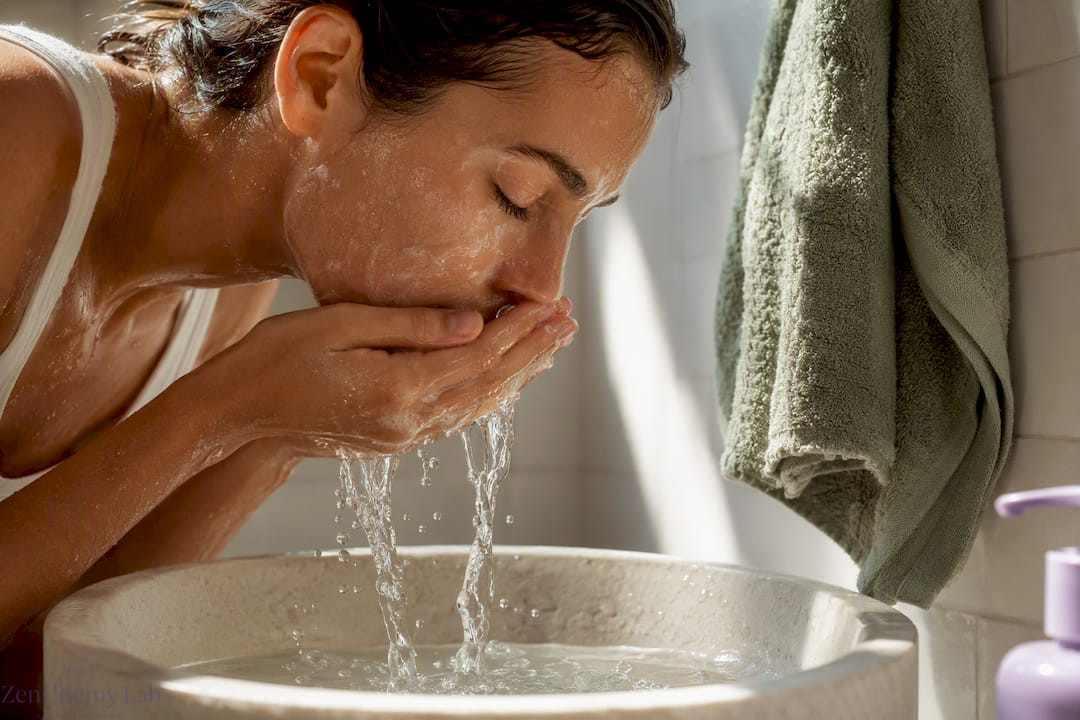
- Rinse thoroughly with lukewarm water, then run a clean washcloth over your cheek. If it comes away with a filmy residue, rinse again or reconsider the formula.
- Apply treatment actives to slightly damp skin, then follow with a moisturizer while skin is still receptive, which supports barrier repair rather than fighting against a stripped surface.
For a broader look at technique, our guide to gentle cleansing methods walks through the full routine step by step.
Pro Tip: If your skin feels tight within ten minutes of washing, that’s your cleanser talking. Gentle formulas shouldn’t leave any trace of that sensation.
What the research and reporting actually say
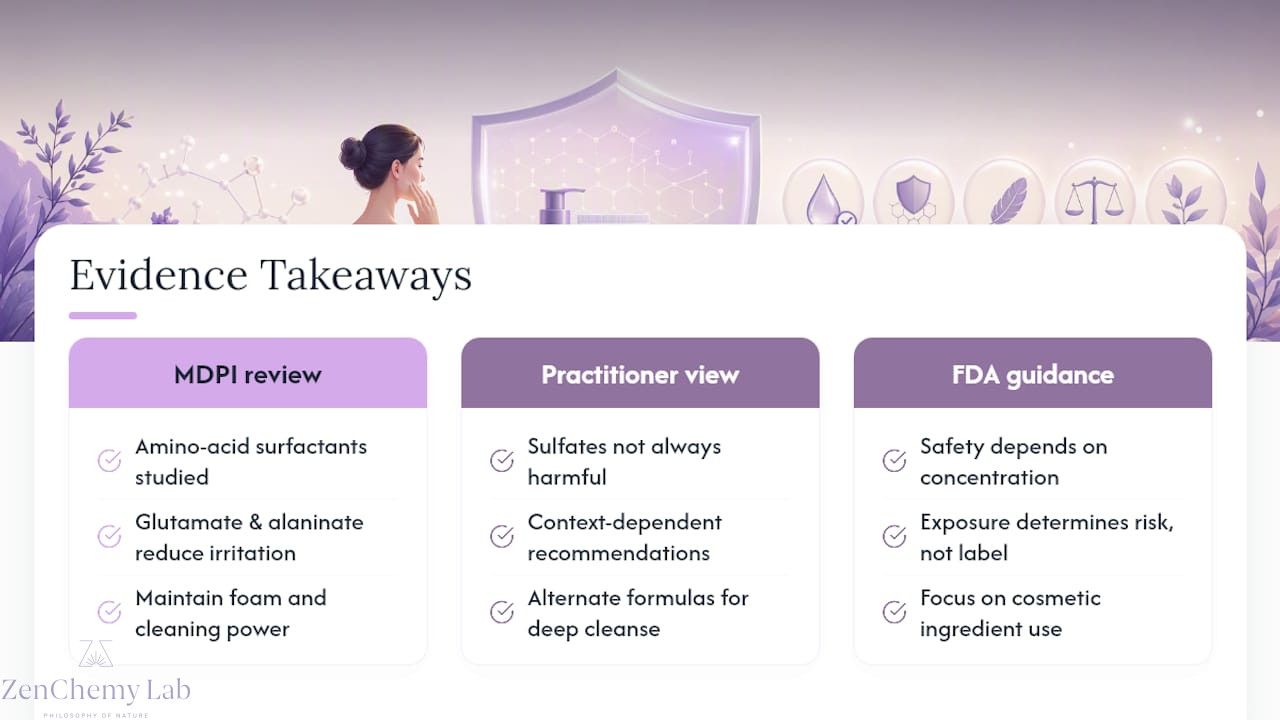
The MDPI review of amino-acid surfactants is the strongest technical backing here, showing that glutamate and alaninate systems reduce irritation while holding their own on foam and cleaning power. Vogue’s practitioner interviews add useful nuance: sulfates aren’t villains in every context, and some experts suggest alternating formulas when a deeper cleanse is occasionally needed. The FDA’s guidance on cosmetic ingredients reinforces a broader point: concentration and exposure determine safety, not a single marketing word on a bottle.
An editor’s take on switching cleansers
Start with a gentle sulfate-free formula if you’re dealing with sensitivity, dryness, or a barrier that’s clearly unhappy, but don’t stop reading after the front label. Check the full ingredient panel and, if it’s listed, the pH. The biggest mistake I see is treating “sulfate-free” as a finished decision instead of a starting filter. Run a real trial, watch how your skin responds over three to four weeks, and let that evidence, not the packaging, make the call.
— Alex
Try a gentler cleanser: ZenChemy Lab’s face wash options
Everything in the checklist above, gentle surfactants, attention to rinsability, a formula that doesn’t rely on a single buzzword, is exactly what this approach builds around. Our intimate and gentle face wash is formulated and produced in Canada with the same barrier-first thinking covered in this article, and our artisan soap collection gives you a solid-bar alternative if you prefer that format for daily cleansing.
If you’re ready to trial something gentler, start with a smaller size, give it the three-to-four-week test outlined earlier, and pay attention to how your skin actually responds. For more on building out the rest of your routine around a gentle cleanser, our natural beauty tips for 2026 page is a useful next stop before you check out.
Sources
- Beyond sulfate-free personal cleansing technology — MDPI
- Sulfates in shampoo — Healthline
- Are sulfate-free shampoos actually better? Vogue investigates
- Fact check: Are sulfate-free cleansers better for acne? — Acne Advocate
- Parabens and cosmetics — U.S. Food and Drug Administration
FAQ
Is sulfate-free face wash good for your skin?
For sensitive, dry, mature, or barrier-compromised skin, yes, a well-formulated sulfate-free wash is generally gentler, provided the pH and surfactant blend are sound rather than just the label.
What is the healthiest way to wash your face?
A cleanser with a pH close to skin’s natural 4.5 to 5.5, built on mild surfactants like amino-acid glutamates or alkyl polyglucosides, paired with lukewarm water and a thorough rinse, supports skin health better than a high-foam, high-pH formula.
Why avoid sulfates in skincare?
Sulfates like SLS are strong anionic surfactants that can strip natural oils quickly. One clinical observation found 2% SLS reduced hydration and compromised barrier function after just 15 minutes of exposure.
What are the benefits of sulfate-free cleansers?
The main benefits are reduced irritation, better preservation of the skin barrier, less post-wash tightness, and formulas that don’t undermine acne treatments the way harsher surfactants can.
Can sulfate-free cleansers clear acne on their own?
Not reliably. Individual tolerance, pH, and rinsability determine the outcome, so a sulfate-free switch helps some people with acne but isn’t a guaranteed fix by itself.