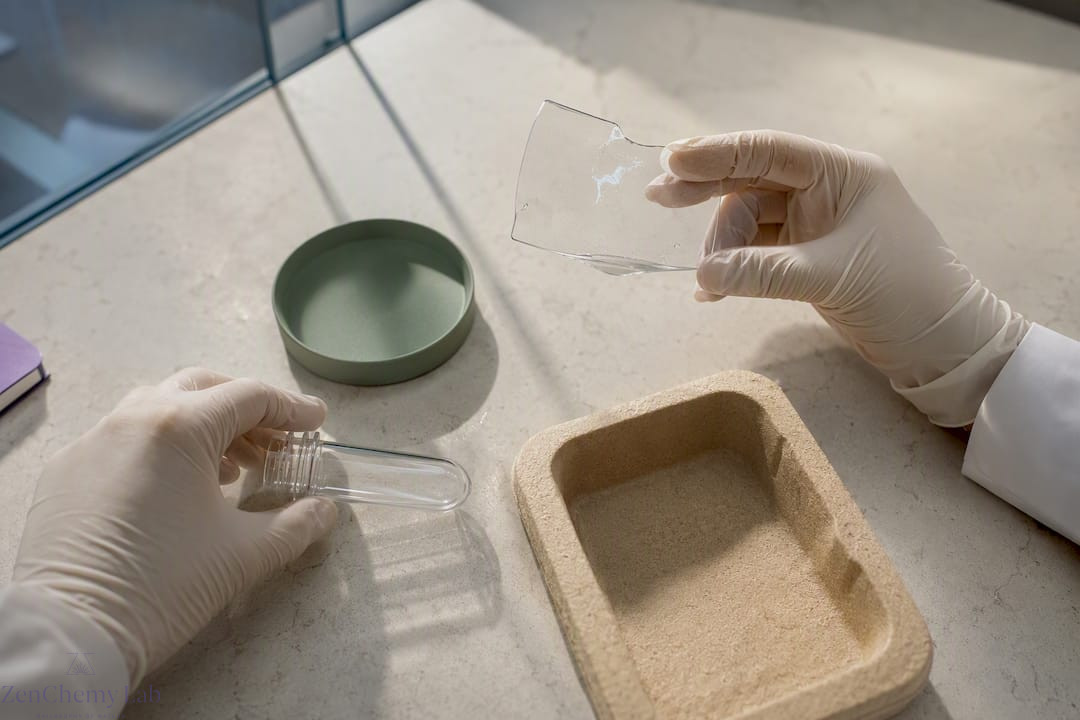
Eliminate packaging first, wherever a product allows it. Where you can’t, choose mono-material designs built on high post-consumer recycled (PCR) content or well-validated bio-based resins, and back that choice with proof: How2Recycle or RecyClass verification, an explicit PCR percentage, and an ASTM D6400 or EN 13432 compostable certificate where relevant. The trade-offs around barrier performance, cost, and recycling infrastructure follow below.
TL;DR:
- High-recycled-content mono-material packaging, especially PCR PET or PCR PP, remains the most recyclable choice for most municipalities.
- Industrial compostable materials like PLA and PHA require specific conditions and are not suitable for home composting or landfills.
- Designing packages with all recyclable components and avoiding contamination sources such as metallization, black pigments, or mixed materials significantly improves actual recyclability.
- Refill and reuse strategies only deliver network-wide environmental benefits when reuse rates are high and logistical challenges, like breakage risk, are managed effectively.
- Verification through recognized certificates and assessments (such as RecyClass, ASTM D6400, or EN 13432) is essential to substantiate sustainability claims and avoid greenwashing.
Table of Contents
- What is sustainable skincare packaging, really?
- Material categories that work for skincare packaging
- Design for recyclability and realistic end-of-life outcomes
- Refill, reuse and source-reduction strategies
- Barrier finishes, coatings and emerging innovations
- Practical checklist for brands and product teams
- ZenChemy Lab: real-world application and quick examples
- Where the industry is headed and red flags to watch
- Low-packaging options worth a look
- Where to verify packaging claims
- Sources
- FAQ
What is sustainable skincare packaging, really?
Skincare brands throw around “eco-friendly” constantly, but the term with actual teeth is design for recyclability, paired with life cycle assessment (LCA). LCA measures the environmental cost of a package from raw material extraction through manufacturing, transport, use, and disposal. It’s the only honest way to compare a glass jar against a PCR PET bottle against a moulded fibre compact, because each carries a different footprint depending on weight, transport distance, and what actually happens to it after your customer tosses it.
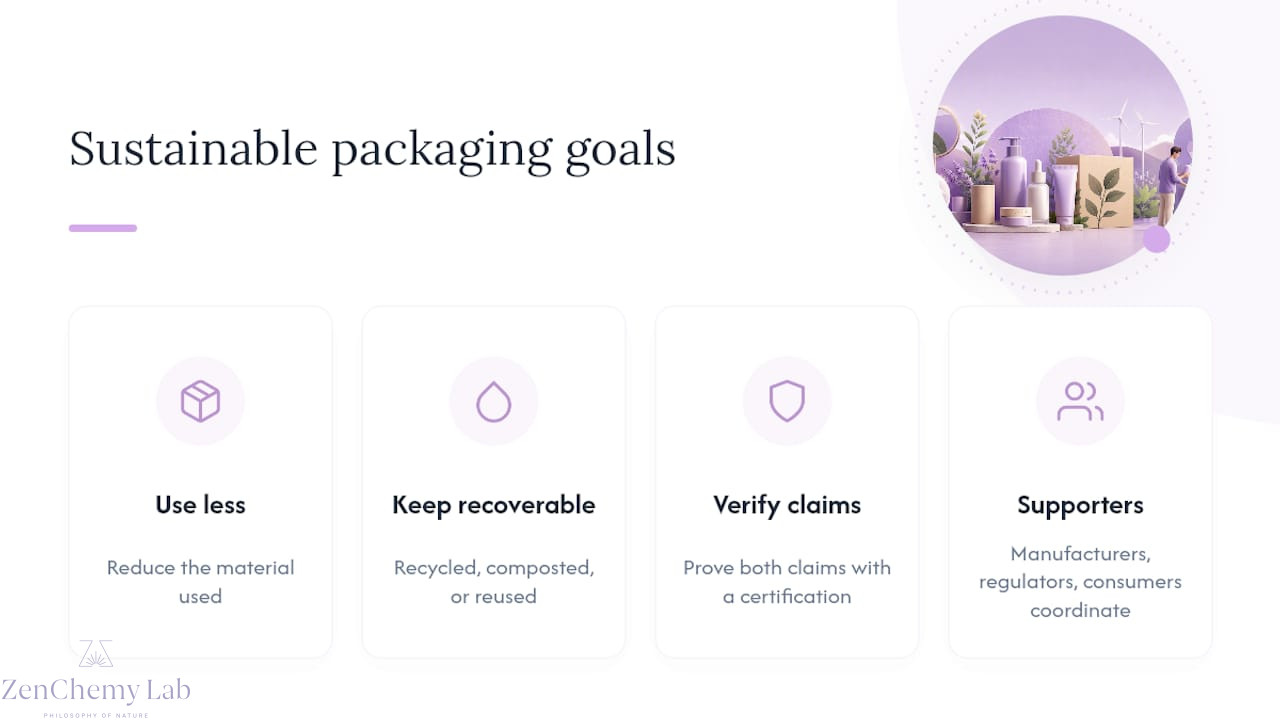
Sustainable skincare packaging, in practice, means three overlapping goals: reduce the material used, keep what remains recoverable (recycled, composted, or reused), and prove both claims with a certification a reader can actually check. A 2025 review of cosmetic packaging materials frames this as a coordinated shift involving manufacturers, regulators, and consumers together, not a problem one clever resin solves on its own. That coordination point matters, because most of the packaging failures on shelf come from one party assuming another handled the end-of-life step.
Material categories that work for skincare packaging
Not every eco-material suits every format. Here’s how the main categories perform for jars, bottles, tubes, and solid products.
- PCR PET and PCR PP: The most curbside-compatible option in most municipalities today. PCR PET holds structural integrity well for bottles and pumps; PCR PP works for closures and jars. Pick it when your product needs standard recycling stream compatibility and moderate barrier protection.
- PLA (polylactic acid) and PHA (polyhydroxyalkanoates): Both are compostable, but only under industrial conditions most municipalities don’t operate. PLA struggles with oily, high-lipid formulas because heat and oil can distort it; PHA tolerates a bit more but is pricier and still not home-compostable in most regions.
- WPC (wood plastic composites) and cellulose-based polymers: These blend wood fibre or plant cellulose with a polymer binder, giving decent rigidity for jars and caps. The 2025 packaging review lists both alongside PLA and PHA as promising transitional materials for cosmetics, though supply consistency still varies by manufacturer.
- Moulded fibre: Excellent for compacts, trays, and outer packaging. It fails fast for wet or creamy formulas since fibre absorbs moisture and loses shape, and it can cost 30 to 50 percent more than virgin plastic rigid formats according to one brand’s pilot with moulded fibre.
Design for recyclability and realistic end-of-life outcomes
A package labelled recyclable and a package that actually gets recycled are two different things. Material recovery facilities (MRFs) sort by optical scanners and float/sink tests, and several common cosmetic packaging choices confuse both.
- Build mono-material where you can. A single-resin bottle and cap sail through sortation; a PET bottle with a PP pump and metal spring gets rejected as contamination.
- Skip metallization and carbon black. Metallic finishes block infrared sorting, and carbon black pigment is often invisible to optical scanners, so both routes send otherwise-recyclable plastic to landfill.
- Treat pumps and airless dispensers as a known weak point. Mixed-material dispensers are one of the most common contamination sources cited in design-for-recycling guidance for skincare packaging; label them clearly as “cap off before recycling” if the body is recyclable but the pump isn’t.
- Check local MRF acceptance before printing a recyclable claim. Curbside programs vary block to block; a claim true in one city can be false two towns over.
Pro Tip: Before finalizing packaging, ask your supplier for a RecyClass or APR (Association of Plastic Recyclers) design guidance assessment specific to your exact component stack, not a generic resin data sheet.
Refill, reuse and source-reduction strategies
Refill systems only deliver a real environmental win when return and reuse rates stay high enough to offset the extra manufacturing and logistics involved in a durable outer vessel. Market analysis on refill and reuse growth in beauty emphasizes that success is category-specific and depends on modelling breakeven reuse cycles before launch, not after.
- Refill pouches and pods cut plastic mass per use but need a durable outer vessel customers actually reuse dozens of times to pay off their manufacturing footprint.
- Solid bars and concentrates are the most conservative, highest-impact choice: no water weight to ship, minimal primary packaging, and no reuse behaviour required from the customer at all.
- Naked or minimally wrapped products work well for bar soaps and solid cleansers but face real constraints around shipping damage, breakage, and fill-line retooling that brands underestimate.
Shipping and breakage risk deserve real weight in this decision. A refill pilot that looks brilliant on a spreadsheet can collapse commercially if a third of pouches arrive punctured.
Barrier finishes, coatings and emerging innovations
Creams, oils, and active-ingredient serums need real barrier protection against oxygen and moisture. A face oil in a coating that fails after eight weeks isn’t sustainable. It’s a returns problem.
- Barrier coatings that stay compatible with recycling include water-based dispersion coatings and certain compostable-approved coatings; wax and fossil-plastic laminate coatings usually compromise recyclability.
- Seaweed-based coatings are moving toward industrial-scale readiness, with one company reporting it is weeks away from launching seaweed coating applications for sachets and paper packaging, offering water resistance without fossil-derived polymers.
- Nanotech barrier claims circulate widely in trade press but rarely come with public independent test data yet, so treat them as promising rather than proven.
- Demand lab compatibility and accelerated shelf-life testing against your actual formula before committing to any new coating at scale, seaweed-based or otherwise.
Practical checklist for brands and product teams
Run every packaging decision through three filters: eliminate, simplify, prove. Eliminate the component if the product doesn’t need it. Simplify to a single resin family if you can’t eliminate it. Prove the claim with documentation before you print it on a label.
- Request resin type and exact PCR percentage in writing, not a marketing range.
- Ask for coating chemistry disclosure, especially on any “eco” coated paper or fibre component.
- Request independent test reports. One commercial bio-composite cosmetic jar made from agricultural byproducts passed TÜV SÜD bio-based carbon verification alongside compression and drop testing, which is the calibre of proof to ask for.
- Confirm fill-line compatibility and return logistics if any component involves refill or reuse.
- Collect the actual certificate numbers: ASTM D6400 or EN 13432 for compostables, RecyClass or APR assessment reports, and an LCA summary if one exists.
Pro Tip: Ask suppliers for a component-level claim, not a package-level one: “Bottle: 100% PCR PET; Cap: virgin PP” tells you far more than “made with recycled content.”
ZenChemy Lab: real-world application and quick examples
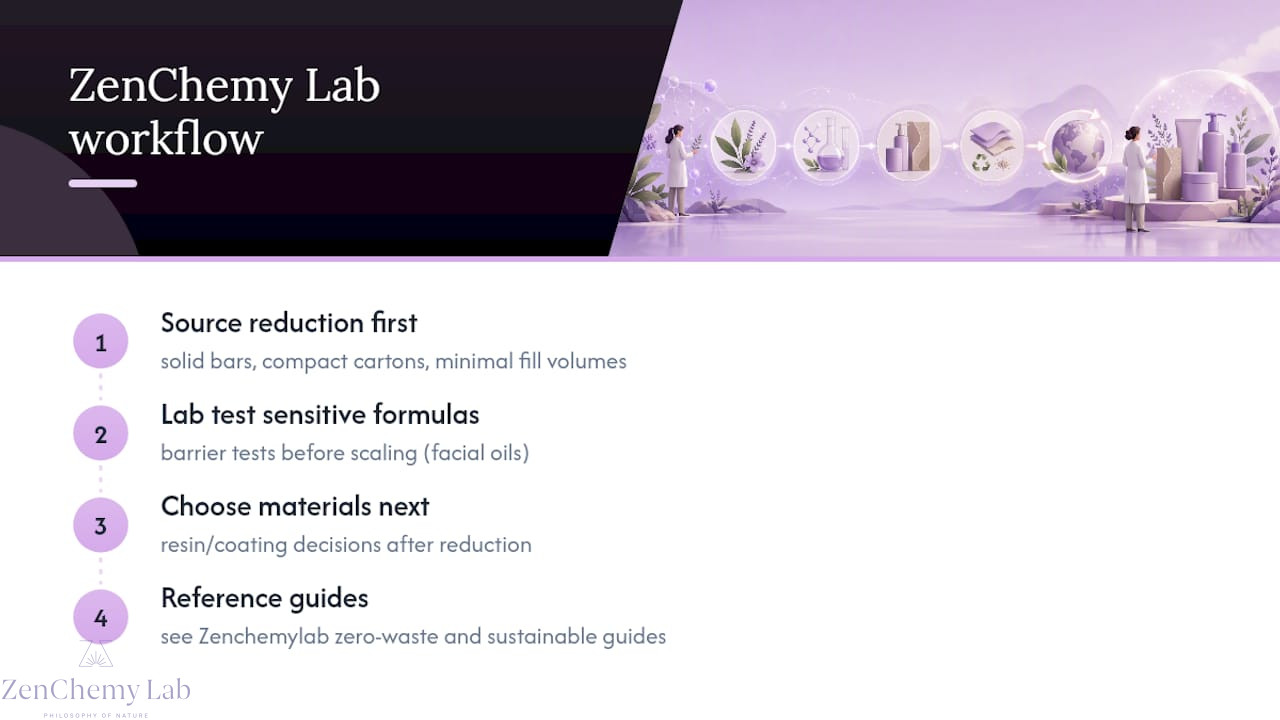
Some brands apply the eliminate-first principle directly: solid bars, compact outer cartons, and minimal fill volumes reduce primary packaging before any resin decision even comes into play. That approach mirrors the guidance in Zenchemylab’s zero-waste skincare guide, which walks through source reduction as a first move rather than a marketing afterthought. For barrier-sensitive formulas like facial oils, lab testing before scaling any new coating remains non-negotiable. Zenchemylab’s broader sustainable skincare guide covers the wider product-design angle in more depth.
Where the industry is headed and red flags to watch
Expect more bio-composite jars and coating breakthroughs over the next few years, but verify performance claims against real test reports, not press releases. Regulators are tightening rules on vague eco-labels, which raises the transparency bar for everyone. Watch closely for “compostable” claims resting on industrial infrastructure your municipality doesn’t actually operate.
— Alex
Low-packaging options worth a look
If solid formats and minimal wrapping are what you’re after, some brands focus on artisan soap bars, solid body balms, and compact outer cartons that skip the plastic pump, the airless dispenser, and the extra resin layer entirely. Less primary packaging means fewer components to sort, less material to manufacture, and an easier end-of-life outcome for whoever’s tossing the box.

These choices map directly onto the checklist above: eliminate what you can, simplify what remains. Browse the current natural skin product line to see how bars, balms, and botanical formulas translate that principle into an actual shelf. If you’re formulating your own line and have questions about how a specific active or oil behaves against a particular packaging format, Zenchemylab’s botanical body care guide is a solid starting reference before you contact the team directly.
Where to verify packaging claims
Check claims directly against RecyClass, the APR, How2Recycle, and ASTM/EN compostable standards, alongside the 2025 cosmetics packaging review for material-level context. For ingredient-side quality documentation that pairs with packaging decisions, certificate of analysis practices for cosmetic ingredients offer a useful parallel model for what verification should look like.
Sources
- The new generation of cosmetics packaging: A paradigm shift
- Sustainable skincare packaging: what works vs. what’s hype
- Seaweed beauty packaging innovation is only weeks away from launching, on an industrial scale
- Skincare packaging from natural fiber materials | Agropak
FAQ
What is the most sustainable skincare packaging material?
There’s no single winner across every format, but mono-material PCR PET or PCR PP with a high, verified recycled content generally beats mixed-material alternatives for recyclability, while solid bars beat any packaged liquid on raw material reduction.
Is PLA packaging actually biodegradable?
PLA is compostable only under industrial composting conditions with controlled heat and humidity, and it will not break down meaningfully in a backyard compost bin or a landfill.
What does How2Recycle certification actually verify?
How2Recycle assesses whether a package’s specific materials and design are accepted in most curbside recycling programs, giving brands a standardized label rather than a vague recyclability claim.
Does B Corp certification cover packaging sustainability?
No. B Corp certification verifies a company’s overall social and environmental practices, not the technical recyclability or compostability of any specific packaging component.
Are seaweed-based packaging coatings available now?
Seaweed coatings are close to industrial-scale commercial launch for paper and fibre packaging like sachets, but they remain a newer innovation, so brands should confirm shelf-life and barrier compatibility before switching a full product line.