
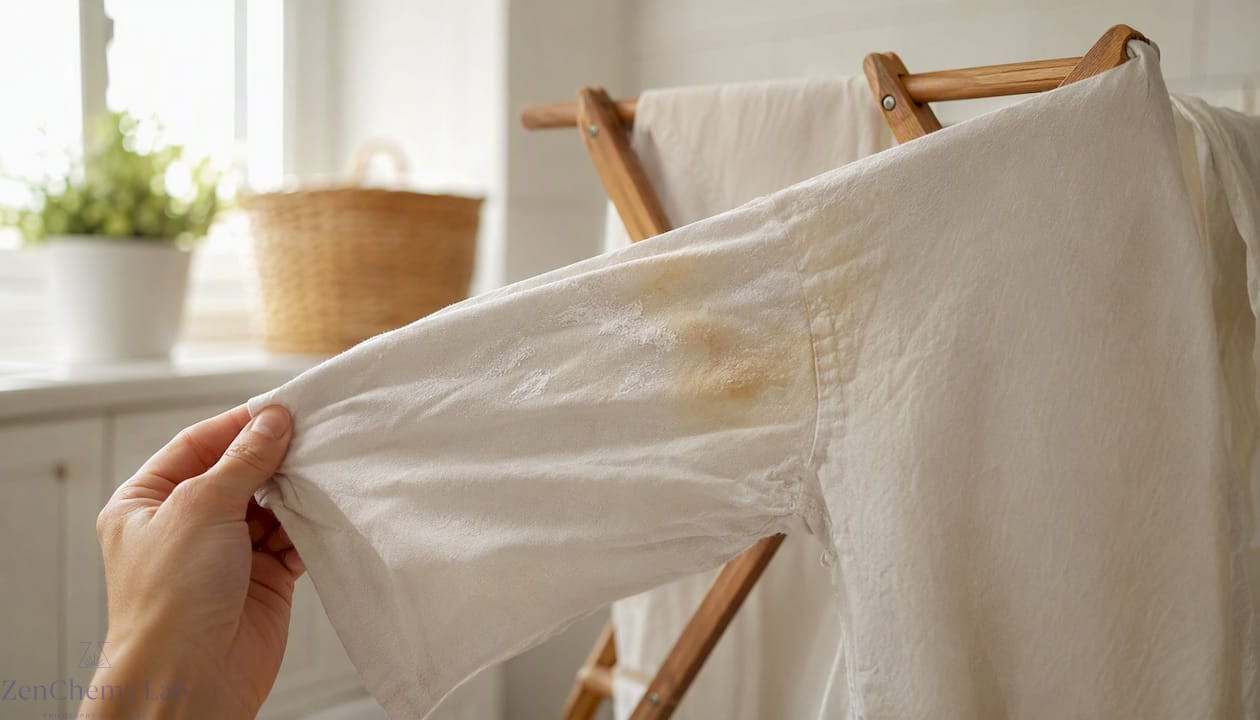
Yes, both deodorants and antiperspirants can stain your clothes. White chalky streaks on dark fabrics and yellow armpit rings on light shirts are the two most common results. The good news: most marks respond well to treatment when you act quickly and avoid heat.
If you have a fresh mark right now, do these three things first:
- ✅ Brush or blot off any dry, powdery residue with a clean cloth or used dryer sheet. Do not rub it in.
- ✅ Rinse the area with cold water from the back of the fabric to push the residue out.
- ✅ Keep the item away from the dryer and iron until the stain is fully gone. Heat sets these marks permanently.
Pro Tip: Letting your deodorant dry completely before getting dressed, even just one to two minutes, is the single fastest way to prevent transfer. Apply sparingly and rub in well.
Key takeaways
Preventing deodorant stains comes down to three habits: apply less product, let it dry before dressing, and pre-treat underarm areas before every wash.
| Point | Details |
|---|---|
| Identify the stain type first | White residue, yellow rings, and greasy marks each need a different treatment approach. |
| Treat gently, in order | Start with dish soap and cold water; escalate to baking soda, vinegar, then oxygen bleach only if needed. |
| Never use heat on a stain | The dryer and iron set deodorant stains permanently; always air dry and check before machine drying. |
| Prevention beats treatment | Applying sparingly, waiting to dry, and using enzyme detergent regularly stops most stains from forming. |
| Zenchemylab natural deodorant | Handcrafted in Canada without aluminium salts, formulated for low fabric transfer and sensitive skin. |
Table of Contents
- How do deodorant stains actually look on fabric?
- What causes deodorant stains on clothes?
- How to prevent deodorant stains before they start
- Step-by-step: how to remove deodorant stains from clothes
- Fabric- and colour-specific advice
- When is a deodorant stain likely permanent?
- Why natural deodorants sometimes stain and how to reduce marks
- The prevention-first case most people overlook
- Zenchemylab’s low-residue natural deodorant, made in Canada
- Sources
How do deodorant stains actually look on fabric?
Knowing what you are dealing with changes everything about how you treat it. Deodorant marks on fabric fall into a few distinct categories, and mixing them up leads to the wrong fix.
White or chalky streaks are the most immediate and visible type. They show up on dark or black clothing right after dressing and are usually dry, powdery residue from solid or stick formulas sitting on the surface of the fabric. These are the easiest to remove when fresh.
Yellow armpit stains are a different problem entirely. They develop over time on white or light-coloured shirts and are the result of a chemical reaction between antiperspirant ingredients and sweat proteins. They tend to look dingy, stiff, and slightly waxy.
Greasy or oily rings often appear with oil-based or butter-heavy natural deodorants. The fabric looks darker or translucent in the underarm area, similar to a cooking oil splash.
Here is how to quickly identify which type you have:
- 🔍 Rub the mark gently with a dry cloth. If it smears or lifts as a white powder, it is surface residue.
- 🔍 Check the texture. A stiff, yellowed patch that has survived a wash is a set chemical stain.
- 🔍 Smell and feel the fabric. A greasy, slightly slick patch points to oil or wax transfer from a natural formula.
- 🔍 Think about the product used. Aluminium-based antiperspirants cause yellowing; oil-rich natural deodorants cause greasy marks; baking-soda formulas can leave white residue on dark fabrics.
⚠️ Heat warning: If the garment has already been through a hot dryer or pressed with an iron, the stain may be heat-set. Heat-set stains are significantly harder to reverse, which is why identification before laundering matters so much.
What causes deodorant stains on clothes?
The chemistry is simpler than it sounds. Two main mechanisms are at work, and understanding them helps you pick the right treatment.
Aluminium salts and sweat proteins are the primary culprits behind yellow armpit stains. Antiperspirants use aluminium compounds to temporarily block sweat ducts. When those compounds mix with the proteins and amino acids naturally present in sweat, they form a yellowish residue that bonds to fabric fibres over time. The Mayo Clinic notes that sweat itself is largely odourless; it is the interaction with bacteria on the skin and with product ingredients that creates the visible and olfactory effects we associate with underarm staining. Aluminium-containing antiperspirants can also be mildly acidic, and textile-extension research confirms that this acidity can alter fabric dye over repeated exposure.
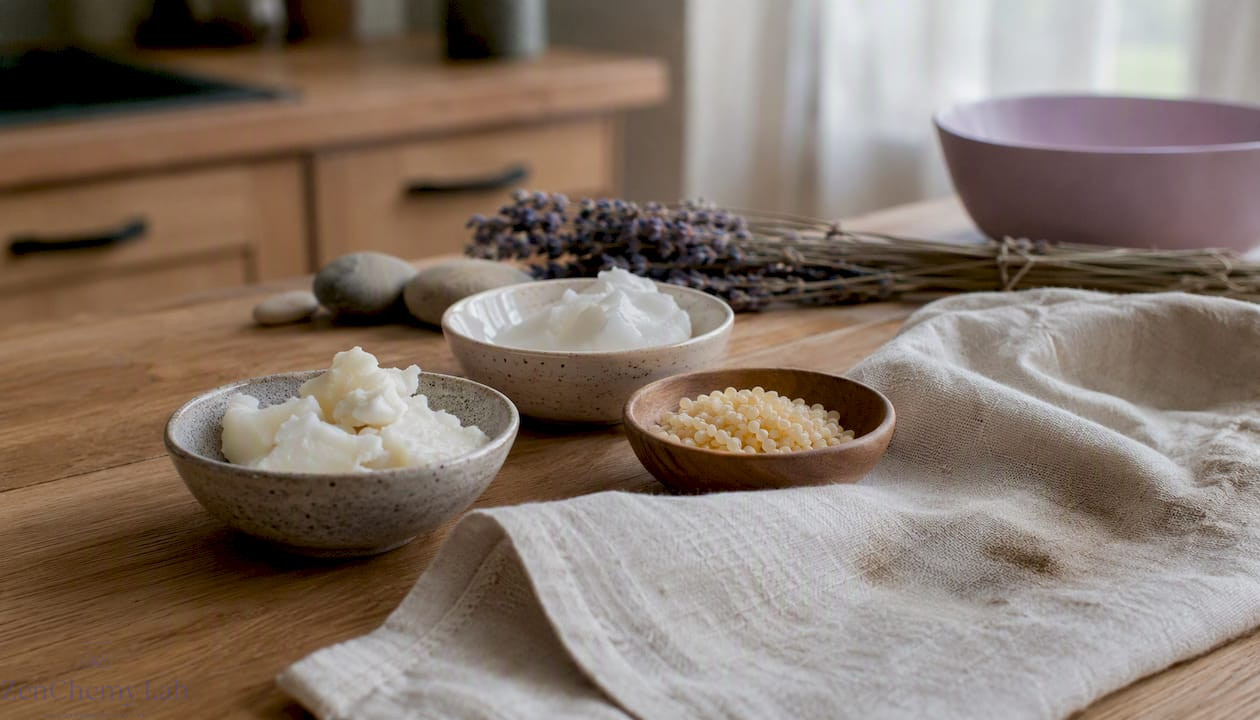
Oils, waxes, and natural-deodorant ingredients create a different type of mark. Shea butter, coconut oil, beeswax, and similar carriers transfer directly onto fabric and attract airborne particles, leaving greasy rings or dark patches. Baking soda, a common active ingredient in natural formulas, can leave white powdery residue on dark fabrics.
Fabric type also plays a role. Synthetic fibres like polyester and nylon tend to hold onto oily residue more stubbornly than natural fibres like cotton or linen, because their tighter weave structure traps product rather than absorbing and releasing it cleanly.
Pro Tip: Waiting for your deodorant to dry fully before dressing is not just about comfort. It gives the formula time to absorb or set on the skin rather than transferring wet product directly onto fabric.
How to prevent deodorant stains before they start
Prevention is genuinely the most effective strategy here. Laundry experts consistently point out that small, consistent habits beat heavy-duty treatments every time.
Application habits:
- ✅ Apply a thin, even layer. More product does not mean better protection; it means more residue.
- ✅ Rub the product in well so it contacts skin rather than sitting on top.
- ✅ Wait one to two minutes before putting on your shirt. This one step prevents the majority of white marks.
- ✅ For natural deodorants with oils or butters, blot any visible excess with a tissue before dressing.
Product choices that reduce transfer:
Clear gel or liquid formulas leave far less visible residue on dark fabrics than solid sticks. If you prefer a natural deodorant, look for formulations that use arrowroot powder or cornstarch as a base rather than heavy butters alone, as these absorb more readily. Switching to an aluminium-free formula is one of the most reliable ways to prevent yellow armpit stains from forming over time.
Laundry habits that stop buildup:
- ✅ Wash underarm areas promptly after wearing; do not let worn items sit in a hamper for days.
- ✅ Use an enzyme-based laundry detergent regularly. Enzymes break down protein-based residue before it bonds permanently.
- ✅ Pre-treat the underarm area of frequently worn shirts before each wash, even when no visible stain is present.
Clothing choices: Looser-fitting garments reduce friction and contact between fabric and underarm product. Natural fibres like cotton and linen tend to release residue more easily in the wash than polyester blends. If you wear delicate garments regularly, consider a thin cotton underlayer to protect them. For advice on building a product routine that minimises skin and fabric irritation, Zenchemylab’s guide on building a clean beauty routine covers daily habits worth adopting.
Pro Tip: For a fresh white mark on a dark shirt, rub it gently with a used dryer sheet or a piece of nylon stocking. The slightly abrasive texture buffs away the powdery residue without water or chemicals.
Step-by-step: how to remove deodorant stains from clothes
Work through these steps in order, from gentlest to strongest. Stop as soon as the stain lifts.
Fresh mark (same day)
- Brush off dry residue. Use a clean cloth, soft brush, or used dryer sheet. Work gently; do not press residue deeper into the weave.
- Rinse with cold water from the reverse side of the fabric to flush residue out rather than in.
- Apply liquid dish soap directly to the damp area. Work it in with your fingers for 30 seconds, then rinse. Dish soap cuts through oily and waxy residue effectively.
- Air dry and check. Never put the item in the dryer until you are certain the mark is gone.
Set stain (survived one or more washes)
- Liquid dish soap pre-treat. Apply, work in, leave for 10–15 minutes, rinse. This handles light oil and wax residue.
- Baking-soda paste. Mix baking soda (sodium bicarbonate) with just enough water to form a thick paste. Apply to the stain, leave for 30–60 minutes, then brush off and rinse. Baking soda is mildly abrasive and alkaline, which helps lift both protein-based and oily residue.
- White vinegar soak. Submerge the underarm area in undiluted white vinegar for one hour. The acetic acid helps dissolve mineral deposits from aluminium-based products. Rinse thoroughly before washing.
- Enzymatic detergent or oxygen-based bleach (sodium percarbonate). Apply an enzyme laundry detergent directly to the stain and leave for 20–30 minutes before washing. For stubborn yellow stains on colour-safe fabrics, an oxygen bleach soak (follow the product’s instructions) can break down the protein-dye bond.
- Hydrogen peroxide for whites only. Apply a small amount of 3% hydrogen peroxide to white fabric, leave for 30 minutes, then rinse and wash. Whirlpool’s laundry guidance confirms hydrogen peroxide is effective on whites but can discolour dark or coloured fabrics, so use it only where appropriate.
Safety cautions:
- ⚠️ Always pretest any agent on a hidden seam or inner hem first.
- ⚠️ Never mix bleach with ammonia-based cleaners. Ventilate the area and wear gloves when using stronger agents.
- ⚠️ Check the care label before any wet treatment. “Dry clean only” means exactly that.
- ⚠️ Never apply heat until the stain is fully gone. The dryer is the most common reason a treatable stain becomes permanent.
Pro Tip: Textile-extension guidance recommends checking the care label before any treatment and repeating gentle steps two or three times rather than jumping straight to stronger agents.
Fabric- and colour-specific advice
| Fabric / colour | Safe first-line treatment | What to avoid |
|---|---|---|
| White cotton | Hydrogen peroxide (3%), oxygen bleach, baking-soda paste | Chlorine bleach on protein stains (can worsen yellowing) |
| Dark / black fabric | White vinegar soak, baking-soda paste, dry-brush with dryer sheet | Hydrogen peroxide, any bleaching agent |
| Silk or cashmere | Cold-water spot clean, mild dish soap, minimal agitation | Hot water, vigorous rubbing, machine wash |
| Wool | Cold-water sponge, wool-safe detergent | Soaking, heat, strong alkalis |
| Polyester / synthetics | White vinegar flush, enzyme detergent | Alcohol in high concentration (can damage some finishes) |
| Leather / suede | Mild sudsy wipe with barely damp cloth | Soaking, vinegar, any liquid saturation |
Whites: Yellow armpit stains on white cotton respond well to a hydrogen peroxide soak followed by an oxygen bleach wash. Avoid chlorine bleach on protein-based stains; it can react with the proteins and deepen the discolouration rather than removing it.
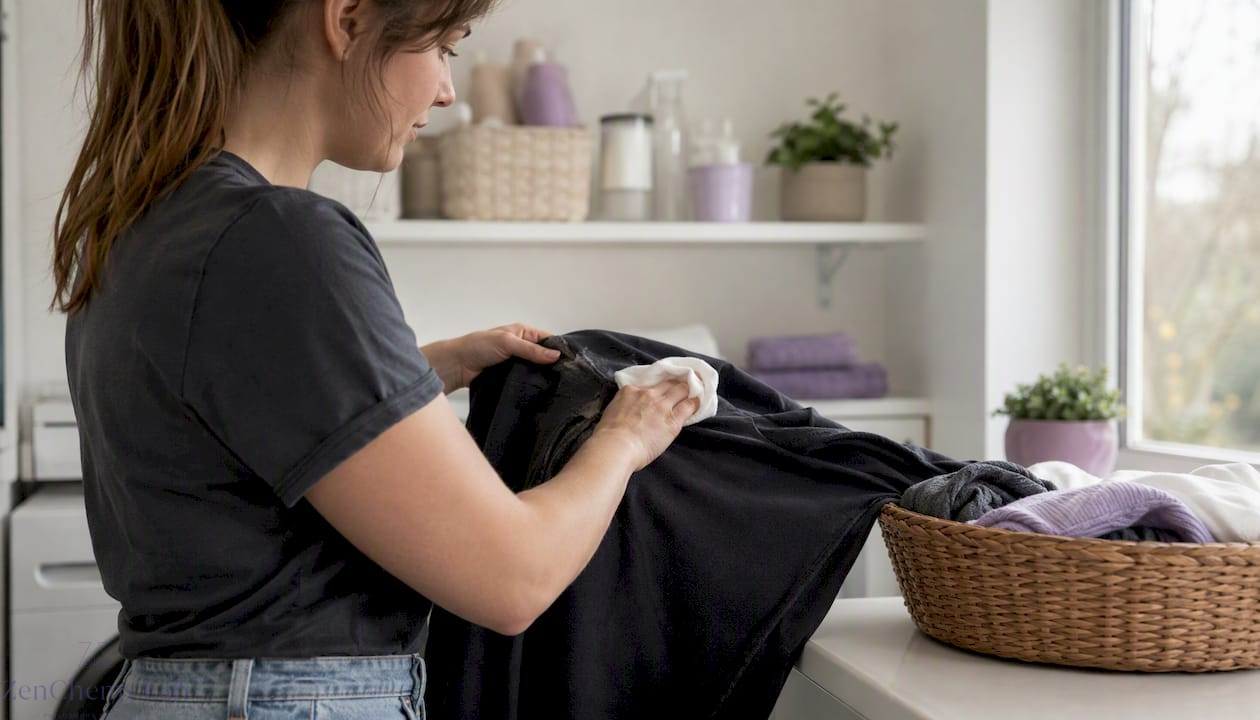
Darks and black: Bleaching agents are off the table entirely. White vinegar is your best friend here, as is a baking-soda paste left on for up to an hour. Always test for colourfastness on an inner seam before treating the visible area. For deodorant marks on black shirts specifically, a dry-brush with a used dryer sheet before any wet treatment often removes the visible white residue without any chemistry at all.
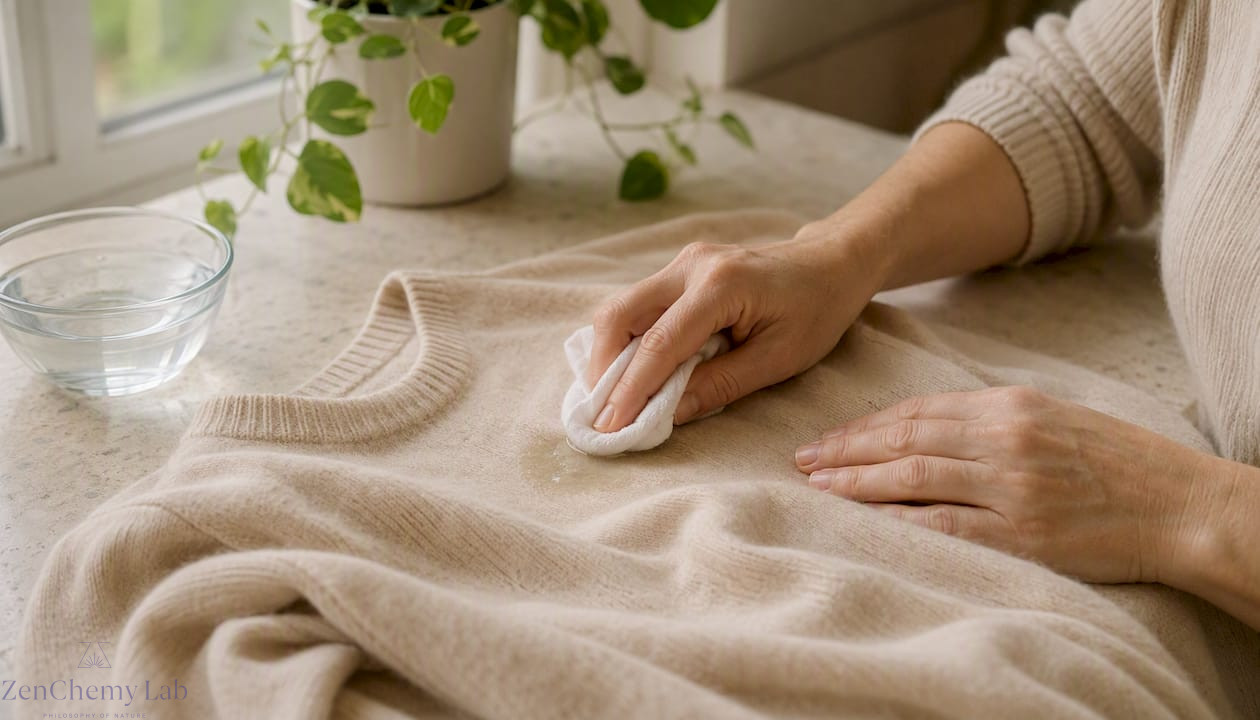
Delicates (silk, wool, cashmere): These fibres are genuinely fragile. Spot clean with cold water and a drop of mild dish soap, using the lightest possible touch. If the stain has set, professional dry cleaning is the safer choice. For guidance on caring for specialised garments, the approach used for protecting delicate fabrics in other sensitive-care contexts applies here too: gentle handling and cold water preserve fibre integrity.
Synthetics: Polyester and blended fabrics trap oily residue in their tight weave. A white vinegar flush followed by an enzyme detergent soak tends to work well. Avoid high heat in the dryer even after treatment.
Leather and suede: Never soak these materials. Wipe the surface gently with a barely damp cloth and a tiny amount of mild soap, then let it air dry away from direct heat. For set stains, consult a leather specialist.
Pro Tip: Cotton tolerates stronger agitation and slightly warmer water than most other fibres, making it the most forgiving fabric for stain removal. Silk and wool need the opposite: cold, calm, and minimal contact.
When is a deodorant stain likely permanent?
Not every stain can be saved. Knowing when to stop treating and call a professional saves you from damaging the garment further.
Signs a stain may be permanent:
- The item has been through a hot dryer or ironed over the stained area. Heat bonds the chemical residue to the fibre at a molecular level.
- The stain has survived three or more treatment cycles without improvement.
- The fabric shows visible colour change, stiffness, or fibre damage in the stained area.
- The garment is a delicate or structured piece (tailored jacket, silk blouse) that has already been wet-treated without success.
Before calling a professional, try once more:
- Soak in an enzyme detergent solution overnight.
- Follow with an oxygen bleach soak (colour-safe fabrics) or hydrogen peroxide (whites only).
- Air dry and assess honestly.
| Situation | Realistic outcome | When to stop DIY |
|---|---|---|
| Fresh stain, no heat exposure | High likelihood of full removal | Only if fabric is delicate |
| Set stain, no dryer exposure | Partial to full removal with repeated treatment | After 3 failed cycles |
| Heat-set stain, colour unchanged | Partial improvement possible | After 2 careful attempts |
| Heat-set stain with colour change | Likely permanent; dye altered | Immediately; consult a pro |
| Structured or tailored garment | Risk of distortion with wet treatment | Before any soaking |
Professional dry cleaners and textile restoration specialists have access to solvents and techniques not available at home. For garments with sentimental or high monetary value, the cost of a professional assessment is almost always worth it.
Why natural deodorants sometimes stain and how to reduce marks
Natural deodorants work differently from conventional antiperspirants, and their staining patterns reflect that difference. Understanding the ingredients helps you manage the risk.
Ingredients that commonly transfer to fabric:
- 🌿 Coconut oil and shea butter are highly effective skin conditioners but transfer easily onto fabric, especially when body heat keeps them semi-liquid throughout the day.
- 🌿 Baking soda (sodium bicarbonate) is a popular odour neutraliser but leaves white powdery residue on dark fabrics and can be alkaline enough to affect some dyes with prolonged contact.
- 🌿 Zinc ricinoleate and zinc oxide are gentler actives that tend to leave less residue than baking soda, but can still mark fabric if applied heavily.
- 🌿 Arrowroot powder and cornstarch absorb moisture and reduce transfer; formulas that use these as a base tend to be the most fabric-friendly.
Practical routines for natural-deodorant users:
- ✅ Apply in a thin, even layer. A pea-sized amount per side is usually sufficient.
- ✅ Blot any visible excess with a tissue before dressing.
- ✅ Wear a thin cotton underlayer when wearing delicate or dark garments.
- ✅ Add a daily underarm rinse to your laundry routine: a quick pre-treat with dish soap or enzyme detergent before each wash prevents oil buildup.
🌱 The key insight for natural-deodorant users: the staining risk is not about the deodorant being “worse” than a conventional product. It is about ingredient behaviour on fabric. Oil-based formulas need a moment to absorb; baking-soda formulas need a light hand. Matching your application technique to your formula’s base is what keeps your clothes clean.
Zenchemylab’s natural deodorant is handcrafted in Canada with a focus on low-residue formulation, using ingredients chosen for both skin compatibility and minimal fabric transfer. The ingredient sourcing approach reflects a commitment to non-toxic, cruelty-free materials that work with your skin rather than against your wardrobe.
Pro Tip: If your current natural deodorant consistently marks your clothing despite careful application, try switching to a clear or gel-style aluminium-free formula. These tend to absorb faster and leave less visible residue on both light and dark fabrics.
The prevention-first case most people overlook
Most stain-removal advice focuses on the treatment ladder, and that is useful. But the more interesting observation is how rarely people connect their laundry frustration to a single upstream habit: applying too much product.
The average stick deodorant delivers far more formula per swipe than the underarm actually needs. The excess sits on the surface of the skin, transfers to fabric on contact, and accumulates wash after wash into the stiff, yellowed buildup that resists even aggressive treatment. Switching to a lighter hand, combined with a quick enzyme pre-treat before each wash, eliminates most of the problem before it starts.
There is also a tendency to reach for stronger agents too quickly. Hydrogen peroxide and oxygen bleach are genuinely effective, but they are not the first step. Dish soap and a cold rinse handle a surprising number of marks that people assume require something stronger. Saving the heavy chemistry for stains that genuinely need it also protects fabric integrity over the long term.
The practical upshot: treat your underarm area as a laundry zone that needs regular light attention, not occasional emergency intervention. That shift in thinking is what actually keeps garments looking clean.
Zenchemylab’s low-residue natural deodorant, made in Canada
If you have been dealing with persistent marks from a conventional antiperspirant, the most direct fix is switching to a formula that does not contain aluminium salts. That removes the primary cause of yellow armpit stains at the source.

Zenchemylab’s handcrafted natural deodorant is formulated and produced in Canada with non-toxic, cruelty-free ingredients chosen for both skin gentleness and low fabric transfer. No aluminium compounds, no synthetic fragrances, no heavy waxes that cling to fibres. The formula is designed to absorb cleanly, which means less residue on your clothes and fewer laundry headaches over time. For readers who want to explore the full range of clean beauty body care options, the Zenchemylab shop is a practical starting point. Read the product page for application guidance, and if you are trying a natural deodorant for the first time, a small wear trial over a few days will tell you quickly how your skin and your wardrobe respond.
Sources
The methods and safety cautions in this article draw on the following authoritative sources. Always check your garment’s care label before treating, and consult a professional dry cleaner for structured, tailored, or high-value items.
- How to Remove Deodorant Stains From Black Shirts—Quickly
- Remove Stains From Antiperspirant, Deodorant | Textiles
- How to Remove Deodorant Stains From Clothes, According to Experts
- How to Get Deodorant Stains Out of Shirts
- Sweating and body odor: Symptoms & causes | Mayo Clinic
📋 A note on care labels: the treatments above are general guidelines. Garment care labels carry the manufacturer’s specific instructions for that fabric construction and dye. When in doubt, a professional dry cleaner’s assessment protects both the garment and your time.


1 Comments