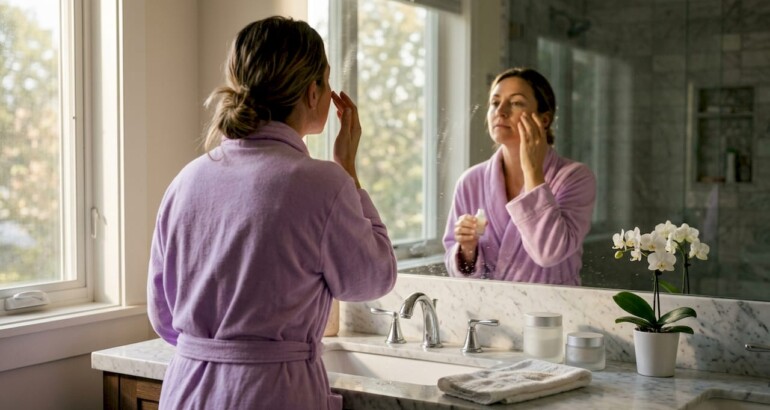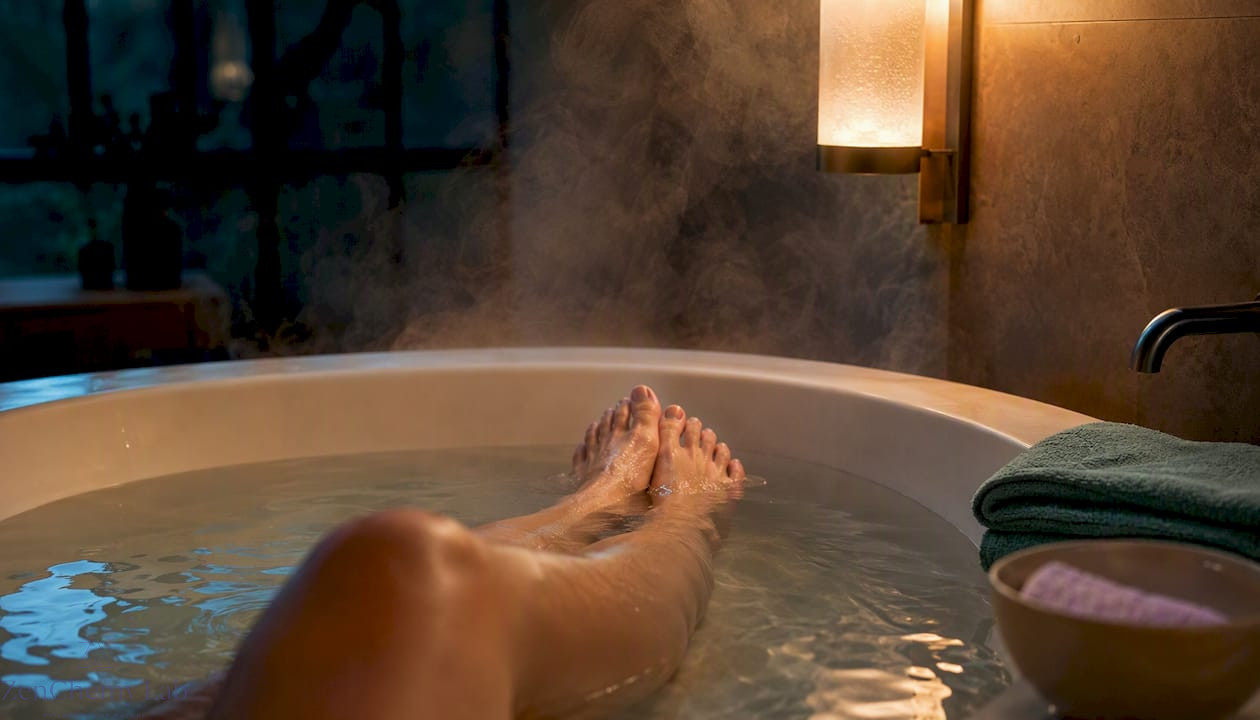
Warm immersion bathing with the right additives measurably reduces stress, eases sore muscles, and supports better sleep. A randomized crossover trial found daily 40°C soaks improved fatigue, stress, and pain scores over showering. Skin benefits depend on your skin’s condition and the additive you choose. Keep soaks to a safe temperature and duration, and skip them if you have open wounds or certain heart conditions.
TL;DR:
- Immersion bathing with hot water and additives like Epsom salt can reduce fatigue, stress, and pain more effectively than showering, based on several small but consistent studies.
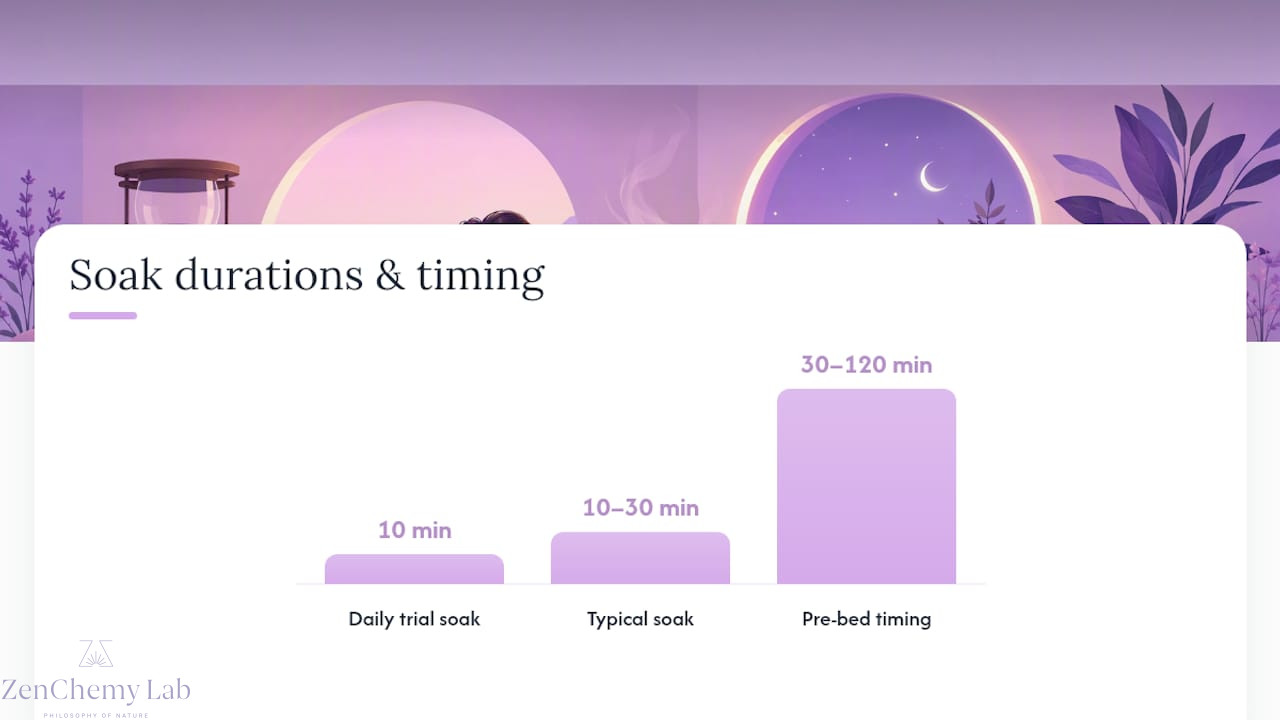
- Soaking at 40°C for 10 to 30 minutes before sleep promotes better sleep quality by mimicking the natural body temperature decline, especially in older adults.
- Salt baths can soothe some skin conditions like psoriasis if the skin barrier is intact, but they may irritate open wounds or active eczema; patch testing is recommended.
- People with open wounds, unstable heart conditions, or during pregnancy should avoid hot baths or consult a healthcare provider before soaking.
- Well-formulated bath products with gentle ingredients like baking soda often outperform trendy but unproven additives in safety and effectiveness.
Table of Contents
- The science-backed benefits of a bath soak
- How to take a bath soak for your specific goal
- What the research actually shows (and where it falls short)
- Who should skip the soak (and how to soak safely)
- Why formulation choices matter more than marketing claims
- A ready-made soak that skips the guesswork
- Where to read more on the research
- Sources
- FAQ
The science-backed benefits of a bath soak
Your nervous system responds to warm water almost immediately. Heat triggers vasodilation, widening blood vessels near the skin’s surface, which shifts your body out of a stress response and into parasympathetic mode, the “rest and digest” state your muscles and mind need to unwind. This isn’t guesswork. A randomized intervention study comparing two weeks of immersion bathing against two weeks of showering found lower fatigue, stress, and pain scores, plus measurable improvements on the SF-8 and POMS mood scales, during the bathing phase.
A 38-person crossover trial found that just 10 minutes in 40°C water daily produced significant drops in self-reported fatigue and stress compared to showering — a small sample, but a consistent signal across multiple outcome measures.
Sleep is where warm immersion earns its reputation. Japanese-style bathing research shows that soaking at 40 to 41°C for 10 to 30 minutes, roughly half an hour to two hours before bed, shortens the time it takes to fall asleep and improves overall sleep quality, especially in older adults and during colder months. The mechanism is almost elegant: your core temperature rises during the soak, then drops once you’re out, and that cooldown mimics the natural temperature dip your body uses to signal bedtime.
Muscle and joint relief comes from three forces working together:
- Heat loosens tight tissue and increases blood flow to fatigued muscles.
- Buoyancy takes weight off joints, which is why arthritis sufferers and athletes recovering from a hard training block both find relief in the tub.
- Vasodilation speeds the clearance of metabolic byproducts that build up after exertion.
Skin effects split into two camps. Salt baths can soothe scaling and itching linked to psoriasis and certain dry-skin conditions when the skin barrier is intact. But that same salt will sting and aggravate open wounds, cracked skin, or an active eczema flare. Know which category your skin falls into before you reach for the salts.
Beyond the physical, there’s a mood component that’s easy to underestimate. The ritual itself, dim lighting, quiet time, a scent you associate with calm, appears to amplify the physiological relaxation response rather than sit separate from it.
How to take a bath soak for your specific goal
The right soak depends on what you’re solving for. Here’s how to build one.
- Set the water temperature. Aim for roughly 40°C, warm enough to trigger vasodilation without scalding. A bath thermometer takes the guesswork out of this.
- Time it to your goal. For sleep, soak 30 minutes to two hours before bed so your body has time to cool down afterward. For muscle recovery, timing matters less than consistency after exertion.
- Choose your additive by need. Epsom salt (magnesium sulfate), roughly 1 to 2 cups per standard tub, is the classic choice for muscle soreness. Sea salt in similar quantities supports skin barrier comfort. Baking soda (sodium bicarbonate), around half a cup, is a gentler option for sensitive or irritated skin.
- Dilute essential oils properly. Never pour essential oils directly into bathwater. Mix roughly 10 to 12 drops into 5 to 10 mL of a carrier oil first to prevent a concentrated film from irritating skin.
- Stay in for 10 to 30 minutes. Longer isn’t better; past that window, the water cools and the skin can start to dry out.
- Rinse or don’t, then moisturise. Pat skin dry rather than rubbing, and apply a moisturiser within minutes to lock in hydration.
No bathtub? A foot soak with the same additives, scaled down proportionally, delivers real relaxation and circulation benefits in a fraction of the space. A warm shower with a salt scrub is a reasonable substitute for the skin-focused benefits, though you lose the buoyancy and full-body vasodilation effect.
Pro Tip: Limit full soaks to three or four times a week if you have naturally dry skin. Daily soaking, especially with salt, can strip the skin barrier faster than it can recover.
What the research actually shows (and where it falls short)
The strongest evidence for bath soak benefits comes from a small but well-designed randomized crossover trial: 38 participants, 40°C water, 10 minutes daily, outcomes tracked with validated scales (VAS, SF-8, POMS). Bathing beat showering on fatigue, stress, and pain. The catch is the sample size. Thirty-eight people is enough to detect a real effect, not enough to generalize confidently across ages, health conditions, or climates.
One claim deserves more scrutiny than it usually gets: transdermal magnesium absorption from Epsom salts. The evidence for meaningful systemic magnesium uptake through skin is thin. The relaxation you feel after an Epsom salt bath is more plausibly explained by heat, vasodilation, and the ritual of soaking than by magnesium crossing your skin barrier in clinically relevant amounts. That doesn’t make Epsom salt useless. It makes the mechanism different from what the marketing usually implies.
| Study | Intervention | Main outcome | Limitation |
|---|---|---|---|
| PubMed immersion trial | 40°C immersion, 10 min daily | Reduced fatigue, stress, pain vs. showering | Small sample (n=38) |
| PMC randomised intervention | 2 weeks immersion vs. 2 weeks showering | Improved VAS, SF-8, POMS scores | Crossover design, authors call for larger trials |
| PMC transdermal magnesium review | Epsom salt bathing | Limited evidence of systemic absorption | Mechanistic uncertainty, few direct trials |
Taken together, the research supports bath soaks as a legitimate, low-risk tool for stress and muscle relief. It doesn’t support every claim you’ll see attached to specific salts online.
Who should skip the soak (and how to soak safely)
Bath soaks are low-risk for most healthy adults, but a few situations call for caution:
- Open wounds, cuts, or active skin infections. Salt and heat both aggravate broken skin.
- Unstable cardiovascular disease or a history of fainting, since hot water lowers blood pressure and can trigger dizziness.
- Pregnancy, particularly in the first trimester. Check with a healthcare provider about safe water temperature.
- Active eczema or psoriasis flares. Test any new additive on a small skin patch first.
Keep water at or below 40°C and limit soaks to 30 minutes. Drink water before and after to offset fluid loss, and stand up slowly to avoid a head rush from the drop in blood pressure. Older adults face a particular risk in winter: sudden temperature extremes combined with a hot bath raise the chance of fainting or falls, so a bath thermometer and a shorter soak time are worth the extra minute.
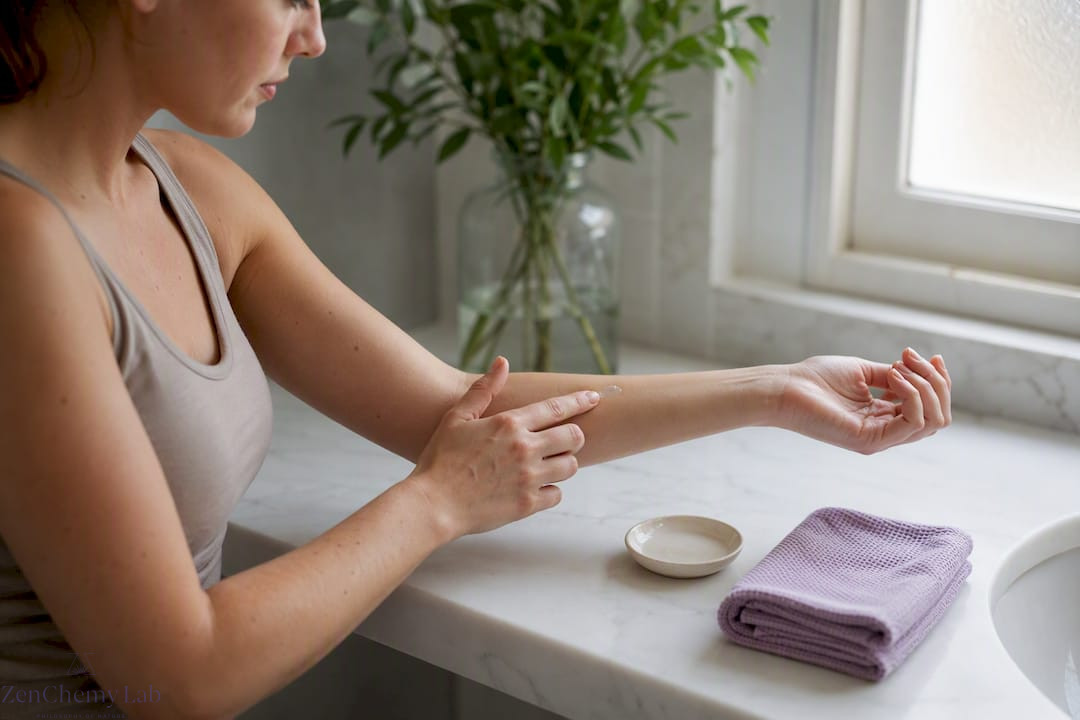
Pro Tip: If you’re unsure whether a skin condition will react well to a salt or oil additive, patch-test it on your inner forearm for 24 hours before adding it to a full bath.
Children and elderly family members should never soak unsupervised in water above lukewarm, and anyone on blood pressure medication should ask a clinician before making hot baths a regular habit.
Why formulation choices matter more than marketing claims
Working through this research reinforced a formulation baseline: gentler, well-understood ingredients like sodium bicarbonate often do more good with less risk than trendy additives with thin evidence behind them. That’s the thinking behind the Luxurious Calming Bath Soak, which leans on ingredient purity over unproven claims. Everyone’s skin responds differently, though, so patch-test anything new before a full soak.
— Alex
A ready-made soak that skips the guesswork
Measuring Epsom salt, diluting essential oils, and getting the ratios right every time is more work than most people want after a long day. Zenchemylab’s Luxurious Calming Bath Soak is formulated and produced with those dosages already worked out, so you get the temperature and additive guidance covered above without weighing anything yourself.
Choosing a pre-formulated soak over a DIY mix means consistent sourcing and measured ingredient ratios batch after batch, backed by hands-on formulation experience rather than a recipe pieced together from search results. Browse the full bath soak collection or head to the Zenchemylab shop to see the current lineup. Draw a bath around 40°C, soak for 10 to 30 minutes, and moisturise once you’re out.
Where to read more on the research
For readers who want to check the primary evidence: the immersion bathing randomized trial covers the core stress and fatigue findings, the PMC intervention study details the mood and health-scale results, and Cleveland Clinic’s bathing guide offers practical, clinician-reviewed usage tips. For a broader look at how water therapy affects circulation, see this overview of hydromassage benefits.
This article is general information, not a substitute for advice from a qualified doctor. Consult a qualified healthcare professional about your own circumstances before acting on anything here.
Sources
- PubMed: immersion bathing study (2018)
- Physical and mental effects of bathing: randomised intervention study (PMC)
- Discussion of transdermal magnesium and topical therapies (PMC)
- Taking the plunge: 5 reasons baths are good for you (Cleveland Clinic)
FAQ
Is soaking in a bath healthy?
Yes, for most healthy adults. Research shows regular warm immersion bathing reduces stress, fatigue, and pain compared to showering, with the main precautions being water temperature, soak duration, and certain medical conditions.
What is a bath soak used for?
A bath soak, typically salts, baking soda, or oils dissolved in bathwater, is used to ease muscle soreness, calm the nervous system, support sleep, and in some cases soothe dry or scaling skin conditions.
What is the healthiest bath soak?
There’s no single “healthiest” formula since it depends on your goal: Epsom salt suits muscle recovery, sea salt supports skin barrier comfort, and baking soda works well for sensitive skin. A well-formulated option like Zenchemylab’s Luxurious Calming Bath Soak combines gentle, purpose-chosen ingredients rather than relying on one additive alone.
What are the benefits of taking a bath?
Warm baths can reduce stress and fatigue, improve sleep quality, ease sore muscles and joints, soothe certain skin conditions, support circulation through vasodilation, and offer a mental-health lift through relaxation and ritual, according to clinical summaries and controlled research.
Is a bath soak different from a bubble bath?
Yes. A bath soak typically uses dissolvable minerals or salts chosen for therapeutic effect, while bubble bath is formulated mainly for foam and scent and offers little of the muscle or skin benefit associated with salts like Epsom or sea salt.