Glycerin (glycerol) is a widely used, plant-friendly humectant that safely boosts skin hydration when formulated in proper concentrations. The Cosmetic Ingredient Review has assessed it as safe for cosmetic use, and dermatologists quoted in Vogue call it one of the most reliable moisture binders available. Vegetable glycerin is treated as a workhorse ingredient and commonly used in soap and cream formulations.
TL;DR:
- Glycerin is most effective at concentrations around 3 to 10 percent in skincare, with higher levels serving therapeutic needs but increasing tackiness.
- Applying glycerin to damp skin and sealing it with an emollient enhances hydration, especially in low-humidity environments or dry climates.
- Undiluted or high-concentration glycerin may pull moisture from skin in dry conditions, and patch tests are recommended for sensitive or compromised skin types.
- The ingredient’s source, concentration, and formulation pairings influence its performance and safety, making label reading essential.
- Zenchemylab offers glycerin-based products formulated with vegetable glycerin, including glycerites, soaps, creams, and serums, suitable for sensitive skin.
Table of Contents
- Glycerin in natural skincare: what it is and why formulators reach for it
- What the safety research and dermatologists actually say
- How to use glycerin in your natural skincare routine
- Where glycerin turns up in natural skincare and what to check on the label
- How to choose a glycerin-containing natural skincare product
- A formulator’s take on working with glycerin
- Ready-made glycerin formulas from Zenchemylab
- Sources
- FAQ
Glycerin in natural skincare: what it is and why formulators reach for it
Glycerin is a simple, sugar-alcohol compound naturally present in plant oils and animal fats, and produced synthetically as a byproduct of soap-making and biodiesel refining. “Vegetable glycerin” specifically refers to the plant-derived version, typically extracted from coconut, palm, or soy oils during saponification. If you’re checking labels for plant-based or vegan formulas, this is the term to look for.
The reason glycerin shows up in so many formulas comes down to one mechanism: it’s a humectant, meaning it pulls water molecules from the air and from deeper skin layers and holds them at the surface of the stratum corneum. That’s a different job from an emollient (which smooths and softens) or an occlusive (which seals moisture in). Glycerin’s role is to attract and retain water in the first place.
Prevalence backs this up. A 2014 Cosmetic Ingredient Review summary counted glycerin in 15,654 cosmetic products spanning leave-on creams and rinse-off cleansers. Few ingredients earn that kind of ubiquity without doing real work.
Glycerin also plays well with others. Formulators lean on it as:
- A solvent that helps dissolve other active ingredients evenly through a formula
- A viscosity modifier that gives lotions and serums their slip and spreadability
- A stabilizer for water-based mixtures, keeping textures consistent over time
- A compatible partner for actives like niacinamide and hyaluronic acid, often used side by side rather than one replacing the other
That last point matters if you’re comparing glycerin vs hyaluronic acid. They’re not competitors. Hyaluronic acid holds far more water per molecule, but glycerin is smaller, cheaper to stabilize, and less prone to breaking down in a formula, which is why you’ll often see both listed together rather than one standing in for the other. For a deeper look at how humectants function generally, our piece on the role of humectants in skincare covers the broader category.
What the safety research and dermatologists actually say
The Cosmetic Ingredient Review Expert Panel reviewed animal and human data and concluded that glycerin is safe for cosmetic use at the concentrations and product types typically sold. That’s not a marketing claim. It’s a formal safety assessment, the same kind regulators and formulators refer to when deciding what belongs in a product.
Dermatologists interviewed by Vogue describe glycerin as a “time-tested” humectant that binds water at the skin’s surface and buffers harsher actives, meaning it can soften the sting of exfoliating acids or retinoids when included in the same formula. That buffering effect is part of why glycerin shows up in sensitive-skin lines as often as in anti-aging ones.
Here’s the prevalence point worth remembering: glycerin appeared in a very large number of cosmetic products as of the 2014 CIR count, one of the highest usage figures of any cosmetic ingredient tracked.
None of that means glycerin is risk-free in every form. Documented issues include:
- Undiluted glycerin applied directly to skin can pull moisture from deeper layers rather than the air, particularly in dry or low-humidity conditions, according to guidance from Healthline.
- High-concentration formulas without emollients can feel sticky or tacky on the skin, a common complaint with poorly balanced DIY recipes.
- Sensitive or compromised skin may react to glycerin used at high percentages without a buffering base, so patch-testing on the inner forearm before facial use is worth the extra day.
If you’ve ever mixed pure glycerin from a pharmacy with water at home and found your skin felt tighter by evening, that’s the low-humidity pull at work, not a formulation failure.
How to use glycerin in your natural skincare routine
Getting good results from glycerin has less to do with the ingredient and more to do with the sequence you apply it in. Follow this order for the best outcome:
- Cleanse first. Use a gentle wash to remove the day’s buildup without stripping the skin barrier.
- Apply to slightly damp skin. Mist your face or apply right after a shower, while skin still holds surface moisture. Glycerin needs water nearby to draw from, so bone-dry skin gives it less to work with.
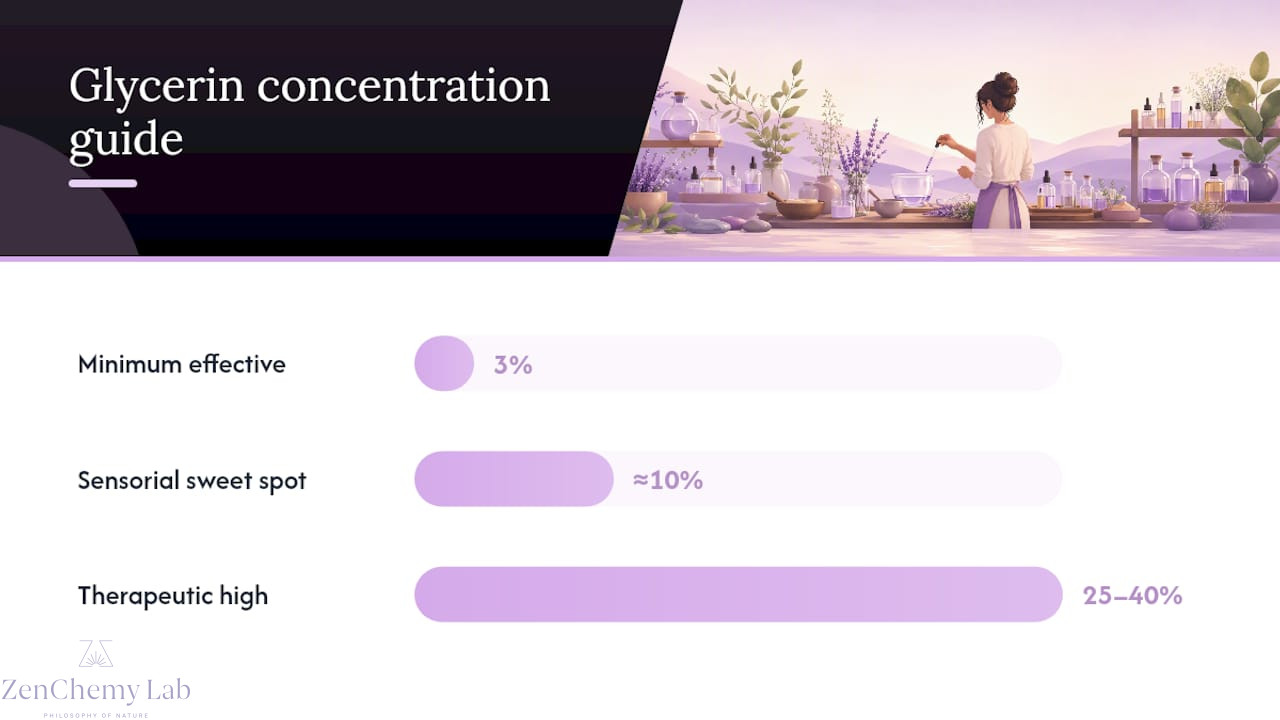
- Choose the right concentration for your skin type. Effective hydration starts around 3%, with roughly 10% considered the sensorial sweet spot for daily leave-on products. Therapeutic formulas for very dry skin sometimes push to 25–40%, and studies on high-glycerin moisturizers show stronger hydration results at that range, though the tradeoff is a heavier, sometimes tackier feel.
- Layer an emollient or occlusive on top. A face oil, balm, or cream locks in what the glycerin has drawn to the surface, which matters most in dry climates or heated indoor air where humidity is low.
- Patch-test anything new. Apply a small amount to your inner arm for 24 hours before introducing a new glycerin serum or cream to your face, especially if you have reactive or compromised skin.
Pro Tip: Never apply glycerin straight from the bottle onto bare, dry skin. Mist your face first, then apply your glycerin serum, then seal with a cream or oil. That three-step sequence is the difference between plump skin and a tight, dehydrated feeling by evening.
Sensitive skin, eczema-prone skin, or anyone on prescription retinoids should check in with a dermatologist before adding a new high-percentage humectant to their routine, since combined actives can compound irritation.
Where glycerin turns up in natural skincare and what to check on the label
Glycerin isn’t a single product. It’s an ingredient that changes function depending on what it’s formulated into, and reading labels closely tells you what you’re actually buying.
Common product types include:
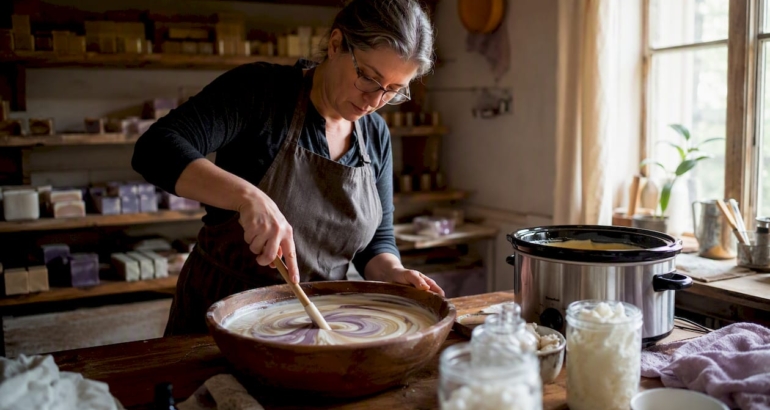
- Glycerin soap, a cleanser where glycerin is retained during cold processing rather than removed, leaving a bar that cleanses without the stripped, squeaky-tight finish typical of harsher bars. Our glycerin soap benefits piece breaks down why this matters for dry and sensitive skin.
- Leave-on serums and creams, where glycerin is one humectant among several, often paired with hyaluronic acid or aloe for layered hydration.
- Glycerites, which are glycerin-based botanical extracts. Glycerin pulls plant compounds out of herbs or flowers the way alcohol or oil would in a tincture, but without the drying or greasy result, making glycerites especially useful in alcohol-free, watery botanical preparations.
On the label, look for “glycerin,” “vegetable glycerin,” or “glycerites” in the ingredient list, along with cues like “cosmetic grade” or “plant-derived,” which signal it isn’t the industrial-grade version used in other manufacturing. Formulators also manage tackiness by keeping glycerin percentages moderate and pairing it with co-humectants or emollients rather than relying on it alone. If you want to see how botanical glycerites work in practice, our rose glycerites and glycerinates collections show the range, alongside hibiscus glycerites for a lighter, floral-forward option.
How to choose a glycerin-containing natural skincare product
Not every bottle labelled “with glycerin” is made the same way, so a quick label check saves you from guesswork at the shelf or checkout.
Start here:
- Confirm the source. Vegetable glycerin or plant-derived glycerin on the ingredient list signals a formula aligned with vegan or natural priorities, versus the animal-derived version some manufacturers still use.
- Check for a supporting cast. A well-made product pairs glycerin with an emollient (like shea butter or plant oils) or an occlusive, rather than relying on glycerin alone to do the moisturizing.
- Look for sourcing transparency. Brands that explain how their glycerin is derived, and note manufacturing details on the product page, tend to be more trustworthy than those listing bare ingredient names with no context.
- Scan the concentration cues. If the brand states an approximate glycerin percentage or describes the product as “lightweight” versus “rich,” that tells you where it sits on the 3% to 40% spectrum.
- Ask whether it’s cosmetic grade. This distinguishes skincare-formulated glycerin from industrial-grade versions meant for other uses entirely.
A few minutes of label reading here saves a lot of trial and error later.
A formulator’s take on working with glycerin
Working with glycerin day to day teaches you its personality fast: generous with hydration, unforgiving if you overdo the percentage. Balancing a glycerite against oils and butters in a bar of soap is a different exercise than balancing it in a leave-on serum, and the ratio that feels luxurious in one format feels sticky in another.
Our formulas prioritize vegetable-derived, cosmetic-grade glycerin to enhance performance and suitability for sensitive skin.
— Alex
Ready-made glycerin formulas from Zenchemylab
Ready-made glycerin products are available that are balanced with emollients and formulated to avoid tackiness associated with high glycerin concentrations in DIY batches.

If you’re new to glycerin, start with a face-appropriate product rather than pure glycerin from a pharmacy shelf. Our Artisan Soap Collection retains glycerin naturally through cold processing, and our full shop carries the rose and hibiscus glycerites alongside creams and serums formulated to pair glycerin with the right occlusive. Browse the collection, check the ingredient notes on each product page, and pick the format that matches how dry or reactive your skin runs this season.
Sources
- Glycerin safety / Cosmetic Ingredient Review summary (2014)
- Glycerin for skin: why dermatologists recommend it — Vogue
- Cosmetic Ingredient Review / safety overview (PubMed index)
- Glycerin for face: benefits and precautions — Healthline
FAQ
Is glycerin natural or synthetic?
Glycerin can be either. Vegetable glycerin comes from plant oils like coconut or soy, while other versions are synthetically produced or derived from animal fat, so checking the label for “vegetable glycerin” confirms the plant-based source.
Is glycerin safe for skin?
Yes, according to the Cosmetic Ingredient Review, which found it safe at typical cosmetic use concentrations, though undiluted glycerin applied directly to skin can cause irritation or dehydration in low-humidity conditions.
What’s the difference between glycerin and hyaluronic acid?
Glycerin is a smaller molecule that draws moisture from the air and deeper skin layers, while hyaluronic acid holds significantly more water per molecule. Many formulas use both together rather than choosing one over the other.
How much glycerin should be in a skincare product?
Effective hydration starts around 3%, with about 10% considered ideal for daily comfort, while therapeutic formulas for very dry skin can reach 25% to 40% with a heavier, richer texture.
Does Zenchemylab use glycerin in its products?
Yes. Zenchemylab formulates with vegetable, cosmetic-grade glycerin across glycerinates, rose and hibiscus glycerites, glycerin soaps, and select creams, available through our shop.