Melt-and-pour (glycerin) soap is best when you want a fast, decorative project you can finish in an afternoon. Cold process soap is best when you want full control over the formula and a bar that holds up over months of daily use. The trade-off comes down to speed and creativity versus transparency and durability. Neither wins outright. Your goal decides.
TL;DR:
- Glycerin soap is ideal for quick, decorative projects and needs to be stored in low humidity to prevent sweating and deterioration.
- Cold process soap provides ingredient control, longer-lasting durability, and requires a curing period of four to six weeks for optimal hardness and pH balance.
- Glycerin bases often include added solvents and humectants, making them more sensitive to environmental moisture and easier to customize visually.
- Fully cured cold process bars tend to be gentler, with more predictable aging and less skin irritation, especially when made with high-quality, known oils.
- For daily use, handcrafted cold process soap generally offers better longevity, ingredient transparency, and skin benefits compared to melt-and-pour glycerin soap.
Table of Contents
- Glycerin soap vs cold process: the quick comparison
- How cold process soap is made and why curing matters
- What is glycerin soap, and how is the base made?
- Performance, skin effects, and what the evidence actually shows
- How to choose between glycerin soap and cold process
- Storage tips that stop bars from sweating or wearing out early
- Why trust this guide
- A practical take on picking your first bar
- Ready to try a cold-process bar for yourself?
- Sources
- FAQ
Glycerin soap vs cold process: the quick comparison
The two methods start from opposite ends of the soap making process, and that origin point explains almost every difference you will notice on the shelf or in your bathtub.
Cold process soap is built from scratch: oils and sodium hydroxide react together inside the mould, and the maker controls every gram that goes in. Cold-process soap is formed by active saponification in the mould and requires curing, typically four to six weeks, while melt-and-pour uses a pre-saponified base that simply gets remelted and recast. Glycerin soap, by contrast, starts as a commercial base that has already gone through saponification somewhere else. You are not making soap in the chemical sense. You are reheating and reshaping a base someone else formulated.
That single difference in origin cascades into everything else:
- Ingredient control: Cold process lets you choose every oil, additive, and fragrance level. Glycerin bases arrive with the formulation locked in, so you are decorating rather than formulating.
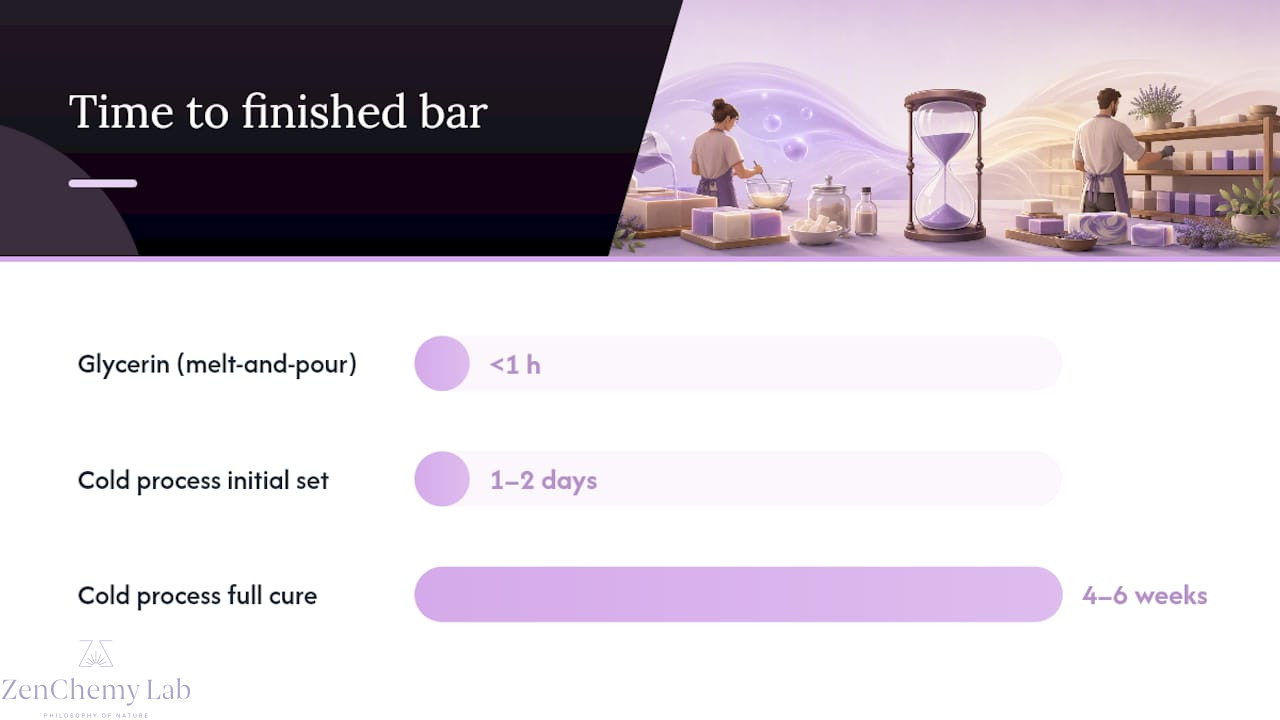
- Time to finished bar: Melt-and-pour can go from block to wrapped bar in under an hour. Cold process needs an initial set over one or two days, then weeks of curing before it is ready to sell or gift.
- Humidity behaviour: Glycerin bars are humectants by nature, which means they pull moisture from the air and can “sweat” in a steamy bathroom. Properly cured cold-process bars are far more stable in the same conditions.
- Best audience: Glycerin suits crafters, kids’ projects, and anyone making quick decorative gifts. Cold process suits buyers and makers who want an everyday bar with real lasting power.
If you are shopping rather than making, this comparison still applies. A glycerin bar bought at a craft fair behaves the same way as one you’d melt at home, and a cold-process bar from a small producer follows the same cure logic as one made in your own kitchen.
How cold process soap is made and why curing matters
Cold process soap making is a controlled chemical reaction, not a recipe you can rush. Oils, whether olive, coconut, palm alternatives, or shea, are mixed with a lye solution (sodium hydroxide dissolved in water). The mixture is stirred until it reaches “trace,” the point where it thickens enough to hold a shape, then poured into moulds.
The saponification reaction happens inside the bar itself over the following 24 to 48 hours, converting oils and lye into soap and glycerin as natural byproducts. That is where cold process gets an advantage glycerin soap cannot claim: the glycerin stays in the bar because the maker never extracts it.
- Mix and pour: Oils and lye combine, then the batter is poured into moulds within a narrow working window.
- Initial set (24 to 48 hours): The bar hardens enough to unmould and cut into individual pieces.
- Cure (4 to 6 weeks): Water evaporates slowly, the pH mellows, and the bar hardens further. Practitioners note that skipping or shortening this stage leaves the bar softer and shortens its usable life, since evaporation and hardness development are not optional steps.
- Superfat adjustment: Most makers leave a small percentage of the oils unreacted, called superfatting, which softens the bar on skin and reduces the risk of residual lye.
Oil selection during step one is where formulation control really shows. Olive oil produces a conditioning, slower-lathering bar. Coconut oil boosts cleansing and bubbly lather but can dry skin at high percentages. A well-balanced recipe blends several oils to hit a target hardness, lather, and mildness all at once, and that balance is exactly what a buyer is paying for when they choose a handcrafted cold-process bar over a mass-market one.
Pro Tip: Check the ingredient list before you buy. If it reads “sodium olivate, sodium cocoate, sodium shea butterate,” you are looking at a true cold-process bar, because those names describe the saponified oils themselves rather than a generic base.
What is glycerin soap, and how is the base made?
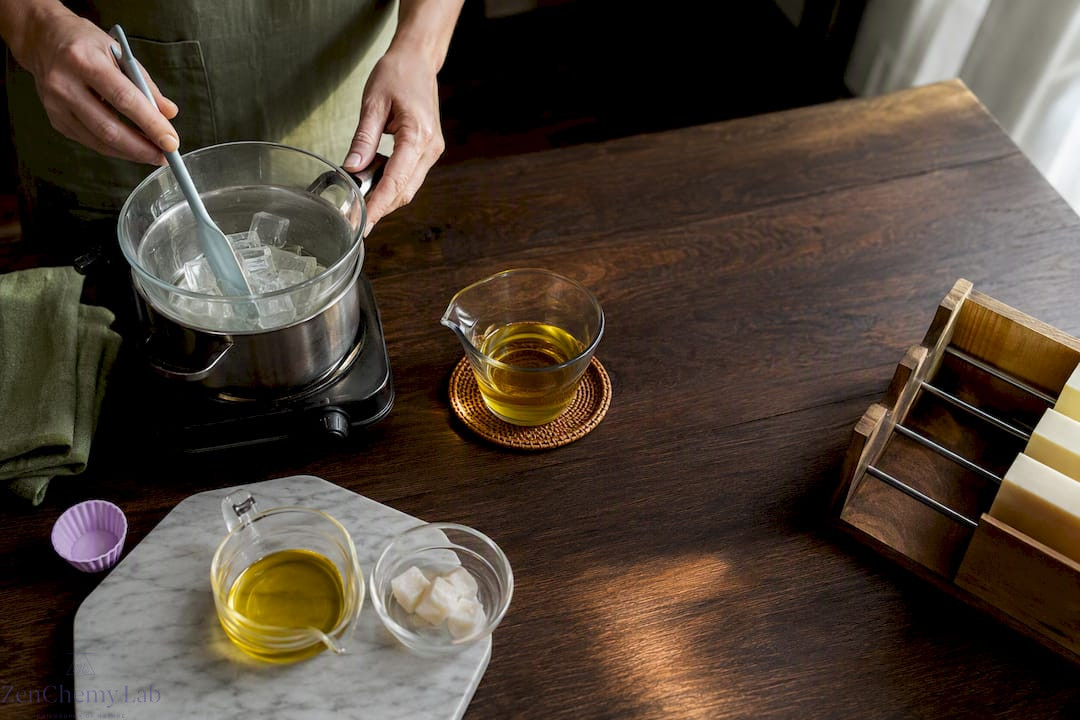
Glycerin soap, also called melt-and-pour soap, starts life as a pre-manufactured block produced in bulk by a soap base manufacturer. Small-batch makers and hobbyists buy that block, cut it into chunks, melt it in a double boiler or microwave, then pour it into moulds with added colour, fragrance, or embeds. No saponification happens at this stage. It already happened at the factory.
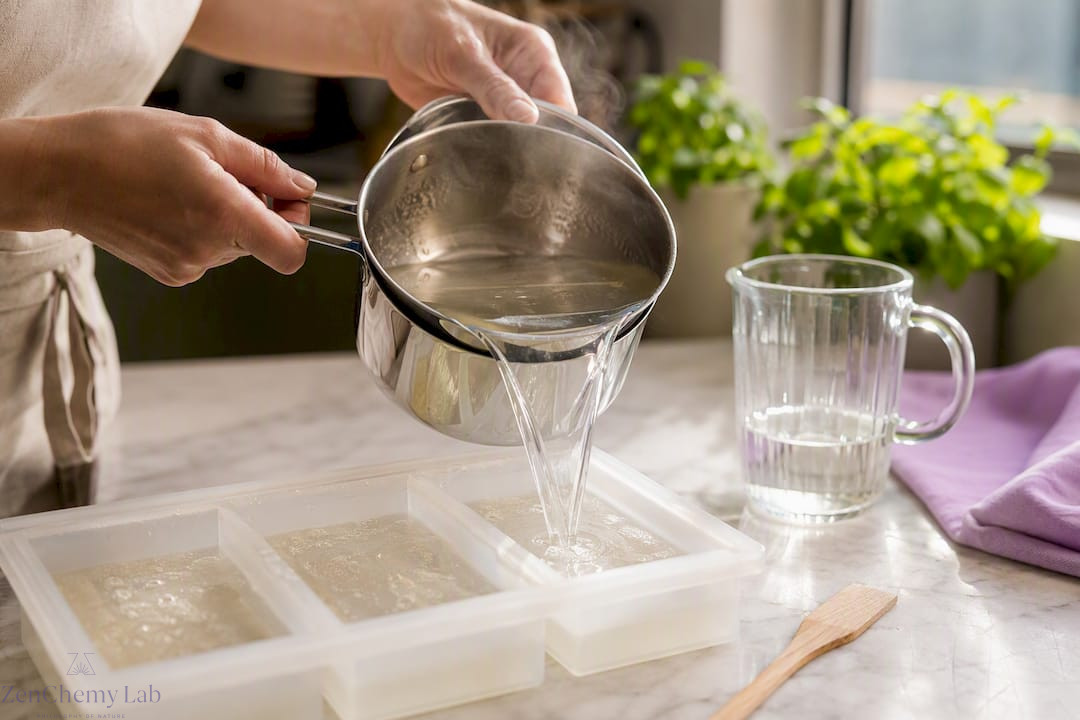
Melt-and-pour bases commonly include added solvents and humectants, often extra glycerin, sugar alcohols, or propylene glycol, to keep the base clear and let it remelt cleanly without turning grainy or cloudy. That clarity is the entire appeal of glycerin soap. You can suspend flower petals, layer colours, or embed toys inside a bar in a way cold process cannot easily replicate.
The same additives that create that glass-like clarity also make the bar more sensitive to its environment.
- Extra humectants pull ambient moisture toward the bar’s surface, which is why glycerin soap left in a steamy shower often develops a slick, sweaty film.
- Bases labelled simply “soap base” or “glycerin melt-and-pour base” rarely disclose the individual oils used, which limits how much a buyer can verify about the formula.
- Design flexibility is real and genuine: swirls, suspended botanicals, and gradient colours are far easier to achieve with a remeltable base than with a cold-process batter that sets within minutes.
- Storage in a cool, dry, low-humidity spot slows sweating noticeably compared to leaving bars in an open dish near a shower.
If you are buying glycerin soap as a gift, ask how it has been stored before it reached the shelf. A bar that has already sweated once tends to keep doing it.
Performance, skin effects, and what the evidence actually shows
Glycerin’s reputation as a skin-friendly ingredient is grounded in real chemistry. Glycerin is a humectant that draws and holds moisture in the skin’s outer layer, which is why glycerin-heavy bars often feel less drying than a standard alkaline bar straight out of the box.
That said, the effect has limits worth knowing before you assume a glycerin bar solves dry skin on its own.
The wash-off ceiling: Medical sources note that glycerin’s moisturising effect in a wash-off product like soap is modest compared to a leave-on moisturizer, so pairing any soap with a proper moisturizer afterward still matters for genuinely dry or sensitive skin.
Cure quality affects mildness just as much as glycerin content does. A cold-process bar that finished its full four to six week cure has a gentler, more balanced pH than one sold underdone, and its fatty-acid profile (how much olive versus coconut versus castor oil went in) determines how fast it wears down in daily use. Cold-process bars tend to age predictably and hold their shape longer, while melt-and-pour bars, engineered for clarity rather than density, often lose mass faster with regular use.
Irritation risk in either method usually traces back to what got added, not the base method itself. Synthetic fragrance load, certain dyes, and some concentrated botanical extracts are the most common triggers, regardless of whether the bar started as oils and lye or a remelted base. Commercial manufacturers often strip glycerin out of mass-market bars to sell it separately for cosmetics, which is one reason handcrafted bars of either type frequently feel more moisturising than a drugstore bar.
How to choose between glycerin soap and cold process
Matching the method to your actual goal beats chasing whichever one sounds more impressive.
- Define your priority first. Speed and decoration point to glycerin. Ingredient control, skin sensitivity, and longevity point to cold process.
- Read the ingredient label like a detective. Names like sodium tallowate or sodium olivate confirm cold-process origin through saponified oil naming, while a short list ending in “soap base” signals melt-and-pour.
- Check for cure or pH notes. A label or product description mentioning a curing period is a strong cold-process signal; melt-and-pour products rarely mention cure time because there isn’t one.
- Run a simple home test. Weigh a bar, use it for two weeks, and weigh it again. A cold-process bar that has fully cured typically loses less mass than a comparable melt-and-pour bar under the same use pattern.
- Test both if you are new to this. Buy or make one of each before committing to a favourite; skin response and lather preference vary enough between people that reading about it only gets you partway there.
Pro Tip: If a sensitive-skin reader has to pick just one label clue, it’s the fragrance line. “Fragrance” or “parfum” with no further detail is a bigger irritation wildcard than the base method itself.
Storage tips that stop bars from sweating or wearing out early
Small habits extend the life of either type of bar considerably.
- Use a draining soap dish and let bars dry fully between uses. Standing water is the single biggest driver of premature softening.
- Keep glycerin bars away from warm, steamy corners of the bathroom, since high humidity is the main practical cause of melt-and-pour sweating.
- Store spares and gift bars in a cool, dry cupboard rather than a bathroom cabinet that traps steam.
- Wrap or box bars intended as gifts to limit humidity exposure before they even reach the recipient.
Why trust this guide
Zenchemylab has spent years formulating handcrafted cold-process soap with full ingredient disclosure, from oil selection through the full cure. That maker-level experience shapes every claim in this guide, not just general research.
If you want to go deeper on the making side, our guides on soap curing and making natural soap at home walk through the technical details this article only summarizes. This piece was prepared with input from Alex, drawing on formulation practice and the cited research above.
A practical take on picking your first bar
If you’re a hobbyist wanting a weekend project, start with melt-and-pour. It’s forgiving and fast. If you’re shopping for a bar you’ll actually use every day, cold process wins on longevity and transparency. Either way, execution matters more than method. A sloppy cold-process batch beats nothing, but a well-cured one beats both. Try a small melt-and-pour project first, then sample a properly cured cold-process bar and compare.
— Alex
Ready to try a cold-process bar for yourself?
If ingredient control and a bar that lasts are what matter most to you, Zenchemylab’s cold-process approach gives you both without asking you to guess what’s inside. Every bar in our Artisan Soap Collection is formulated with named oils, a full cure, and no hidden “soap base” shortcuts, priced from $10 to $16 for individual handmade bars.

If you’re stocking a shop, spa, or gift line, our Cold Processed Handmade Soap Bulk option runs $80 to $220 per order and follows the same full-cure standard as our individual bars — consider our Skincare Startup Guide: Build a Standout Brand for expert tips on launching and scaling your soap brand successfully. Curious how handmade stacks up against what you’d find on a drugstore shelf? Our breakdown of handmade versus commercially made soap covers exactly why glycerin retention and oil choice matter. Browse the full handmade soap range and pick the bar that matches the priorities you just read about.
Sources
- Glycerin soap acts as a humectant and is often gentler than some traditional soaps
- Cold process vs melt-and-pour: definitions, cure times and trade-offs
- Cold process soap vs melt & pour: structural origin and performance behaviour
- Commercial soaps typically remove glycerin for shelf stability; handcrafted soaps retain glycerin and may feel more moisturising
FAQ
What are the disadvantages of glycerin soap?
Glycerin soap can sometimes develop surface moisture in humid bathrooms and tends to wear down faster than a fully cured cold-process bar. It also usually offers less ingredient transparency since most bases are labelled generically as “soap base” rather than listing individual oils.
What is the healthiest soap you can use?
There’s no single “healthiest” soap. It depends on your skin type and what’s in the formula, since glycerin content, oil choice, and additives all affect how a bar feels on skin. A cured, additive-light cold-process bar with named oils, like those in Zenchemylab’s handmade soap collection, is a reasonable default for sensitive skin because you know exactly what went in.
Why is it hard to find true glycerin soap?
Many commercial manufacturers extract glycerin from mass-produced bars to sell separately for cosmetics, leaving mainstream bars drier than handcrafted alternatives. Genuine high-glycerin bars mostly come from smaller producers or melt-and-pour crafters rather than big commercial brands.
Is it safe to use glycerin soap every day?
Yes, for most skin types. Glycerin is generally non-comedogenic, but its moisturising effect in a wash-off product is modest, so following up with a leave-on moisturizer is still worth doing for dry or sensitive skin.