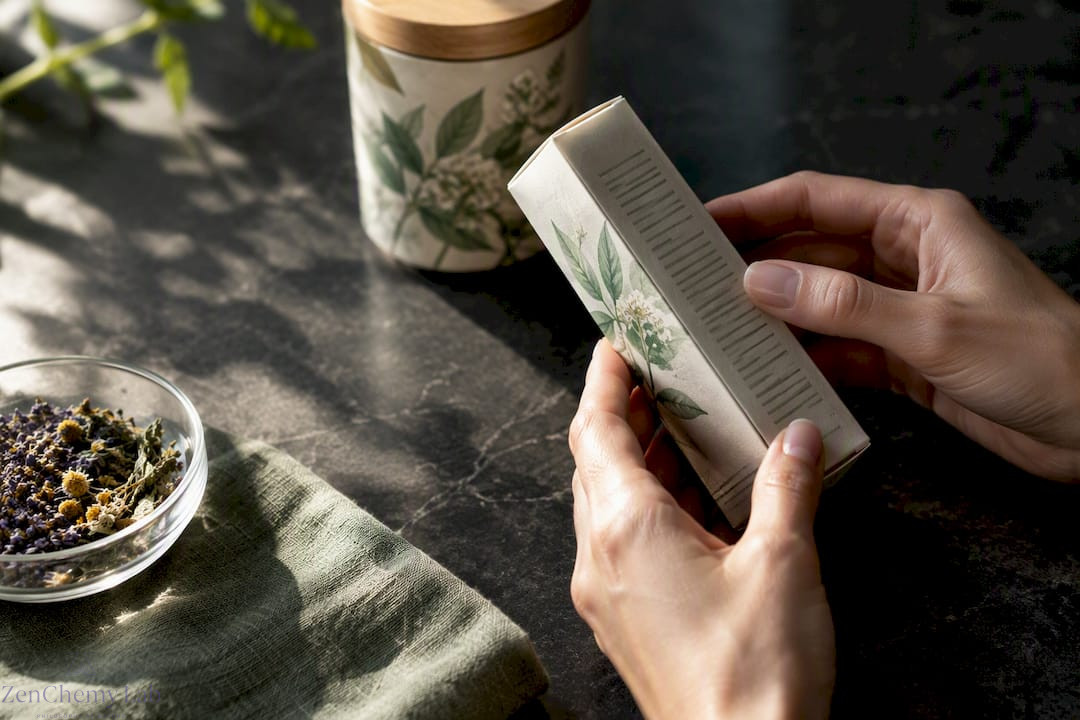
Cruelty-free describes a product’s testing history: no animal testing on the finished product or its ingredients. Vegan describes what’s inside the bottle: no animal-derived ingredients or by-products. A product can carry one label without the other, which is why certifications like the Vegan Trademark and Leaping Bunny exist. The safest move is checking for a real logo, not a marketing phrase.
TL;DR:
- A product can be vegan without being cruelty-free if it has animal-derived ingredients but no animal testing, or vice versa.
- Certifications like the Vegan Trademark verify both no animal ingredients and no animal testing, while Leaping Bunny only confirms testing practices.
- Supply chain complexities often cause brands to have different formulations or certifications for different markets, affecting their cruelty-free or vegan status.
- Many brands rely on independent audits or verified policies, rather than claims on packaging, to substantiate cruelty-free and vegan claims.
- Checking ingredient lists for Latin names or CI numbers and verifying brand policies or registries ensures more accurate verification beyond marketing claims.
Table of Contents
- Cruelty-free vs vegan: the definitions that actually matter
- Where cruelty-free and vegan overlap, and where they split
- Certifications and logos: what each one is really telling you
- How to check a vegan or cruelty-free claim yourself
- Marketing traps that make claims sound stronger than they are
- Why the label you choose affects more than your bathroom shelf
- Regulatory differences shoppers should know about
- How brands actually make the switch to cruelty-free or vegan
- What ZenChemy Lab has learned about honest labelling
- Where to find ZenChemy Lab’s vegan and cruelty-aware picks
- Where to verify claims yourself
- Sources
- FAQ
Cruelty-free vs vegan: the definitions that actually matter
Cruelty-free is a promise about process. It means no animal testing was carried out on the finished product, and ideally not on the individual raw ingredients either, at any stage of manufacturing. That second part matters more than most shoppers realize: a brand can test nothing on its final cream while still relying on a raw-material supplier that tested an ingredient years earlier. PETA’s own definition draws that supply-chain distinction because it’s where most grey areas live.
Vegan is a promise about composition. A vegan product contains zero animal-derived ingredients or by-products, full stop, regardless of whether anything involved was ever tested on an animal.
Here’s where it gets interesting for your bathroom shelf:
- A lip balm made entirely from plant waxes and oils could still have been tested on animals to meet a regulatory requirement in another country. Vegan, not cruelty-free.
- A soap bar might never touch a lab animal but still contain goat’s milk or honey. Cruelty-free, not vegan.
- A serum with no animal ingredients and a signed no-testing pledge, backed by an audit, hits both marks.
None of this is a technicality. Once you understand cruelty-free addresses testing and vegan addresses formulation, every confusing label on a shelf starts making sense.
Where cruelty-free and vegan overlap, and where they split
Shoppers usually fall into one of three practical categories, and figuring out which one describes you changes what you should actually be reading on a label.
- Vegan-only shoppers. These consumers care about ingredient sourcing, not testing history. A product loaded with plant butters and free of beeswax, lanolin, or carmine satisfies them, even if the brand hasn’t published a cruelty-free pledge. This group tends to be motivated by environmental or dietary ethics rather than animal-testing concerns specifically.
- Cruelty-free-only shoppers. These consumers will happily use a balm containing honey or shea with a touch of beeswax, as long as the brand can prove no animal testing occurred anywhere in production. Their priority is the lab, not the ingredient deck.
- Both-focused shoppers. This group wants a single product that clears both bars, which is exactly the market the Vegan Trademark was built to serve, since it checks composition and testing history under one mark.
It’s worth knowing that a product can be vegan but not cruelty-free, and the reverse is just as common. Supply chains explain most of the split: a supplier might reformulate to remove animal ingredients faster than it can complete an independent testing audit, or vice versa. Brands selling internationally sometimes end up with one region’s cruelty-free version and a separate vegan-certified line, simply because ingredient sourcing differs by market.
Certifications and logos: what each one is really telling you
Logos exist because self-declared claims aren’t reliable enough on their own, and ingredient lists are genuinely hard to decode on a store shelf. A consumer sample surveyed by The Vegan Society found that many shoppers can’t identify animal-derived ingredients just by reading a label, which is exactly the gap certification is meant to close.
Vegan Trademark (The Vegan Society). This is the most comprehensive of the three marks discussed here, because it verifies two things at once: no animal-derived ingredients or by-products, and no animal testing on the product or its ingredients. It’s currently attached to more than 35,000 registered cosmetic products, which tells you it’s a mainstream, well-adopted standard rather than a niche seal. If you want one logo that answers both questions, this is the one to look for.
Leaping Bunny. This certification is testing-focused, not ingredient-focused. Brands sign a formal commitment and go through independent audits of their supply chain, and Leaping Bunny commonly applies a fixed cut-off date to verify no testing has happened since that date. It says nothing about whether the product contains honey, lanolin, or gelatin, so a Leaping Bunny logo alone doesn’t tell you a product is vegan.
PETA Beauty Without Bunnies. PETA maintains a searchable database built primarily on brand-submitted statements of compliance rather than PETA’s own independent lab audits, though it does distinguish companies that also carry third-party certification. It offers separate vegan and cruelty-free designations, so check which one (or both) applies to the specific product you’re holding.
A few practical habits to build:
- Flip the product over before you buy it, not after. Logos are almost always on the back or bottom of packaging, not the front.
- If no logo appears anywhere, check the brand’s own policy page. A firm, global no-testing policy carries more weight than a single line of ad copy.
- Treat the absence of a logo as a question mark, not an automatic red flag. Some genuinely ethical small brands simply haven’t paid for certification yet.
Pro Tip: Don’t assume a “cruelty-free” sticker on the front of a box means vegan too. Flip it over and look for a second mark, or check the brand’s ingredient list yourself, because the two claims are verified completely differently.
How to check a vegan or cruelty-free claim yourself
You don’t need to memorize a chemistry textbook to decode an ingredient list, but a handful of Latin names and CI numbers do the heavy lifting.
- Cera alba is beeswax. It shows up constantly in lip products and balms.
- Lanolin comes from sheep’s wool grease and appears in many moisturizers.
- CI 75470, also labelled carmine or cochineal, is a red pigment derived from crushed insects, common in blushes and some lipsticks.
- Squalane can be plant-derived (usually from olives or sugarcane now) or shark-derived, so it needs a brand check if the source isn’t specified.
The Vegan Society’s own guidance leans on exactly this kind of decode list, because ingredient names in Latin or CI numbering routinely hide animal sources that a plain-English label wouldn’t reveal.
Beyond the ingredient panel, three sources are worth checking before you trust a claim:
- The brand’s own policy page. Look for language about a global testing ban, not a regional one. PETA recommends prioritizing a firm worldwide policy over a single market’s claim, since a brand can be cruelty-free in Canada and still test elsewhere.
- Searchable registries. The Vegan Trademark database, the Leaping Bunny compliant-company list, and PETA’s Beauty Without Bunnies search tool all let you type in a brand name and get a direct answer.
- Direct outreach. If nothing turns up, email or message the brand with three specific questions: Do you or your suppliers test any ingredient on animals, anywhere in the world? Is your product formulated without animal-derived ingredients or by-products? Do you hold third-party certification, or is this a self-declared claim?
That last question is the one that separates a serious brand from a marketing slogan.
Marketing traps that make claims sound stronger than they are
A “not tested since 2010” claim and a “never tested” claim are not the same promise, even though they read almost identically on a label. Fixed cut-off dates are how testing-focused certifications like Leaping Bunny verify current behaviour rather than the entire testing history of every raw material a brand has ever sourced. It’s an auditable compromise, not a loophole, but shoppers should understand what it does and doesn’t cover.
Selling into a market that has historically required animal testing for certain product categories can also undercut a cruelty-free claim, even when a brand’s home-market policy is genuinely testing-free. That’s exactly why a global policy matters more than a regional one.
And then there’s vocabulary that sounds meaningful but isn’t. Words like:
- “Natural”
- “Clean”
- “Plant-based”
None of these terms carry a legal definition in most markets, so they can appear on a product that’s neither vegan nor cruelty-free. A logo tells you something verifiable. A buzzword tells you what a copywriter chose that day.
Why the label you choose affects more than your bathroom shelf
Cruelty-free purchasing decisions reduce demand for animal testing across an entire supply chain, not just the bottle in your hand. Every brand that switches to a signed no-testing policy and independent audits shifts pressure onto suppliers and regulators to keep offering non-animal testing methods as the industry default rather than the exception.
Vegan purchasing decisions carry a different kind of weight. Removing animal-derived ingredients from a formula often means removing byproducts tied to livestock farming, which has its own environmental footprint through land use, water consumption, and emissions. That doesn’t mean every vegan product is automatically lower-impact. Palm oil derivatives, synthetic fragrance loads, and packaging waste can offset the gains, so vegan and “environmentally lighter” aren’t interchangeable claims either.
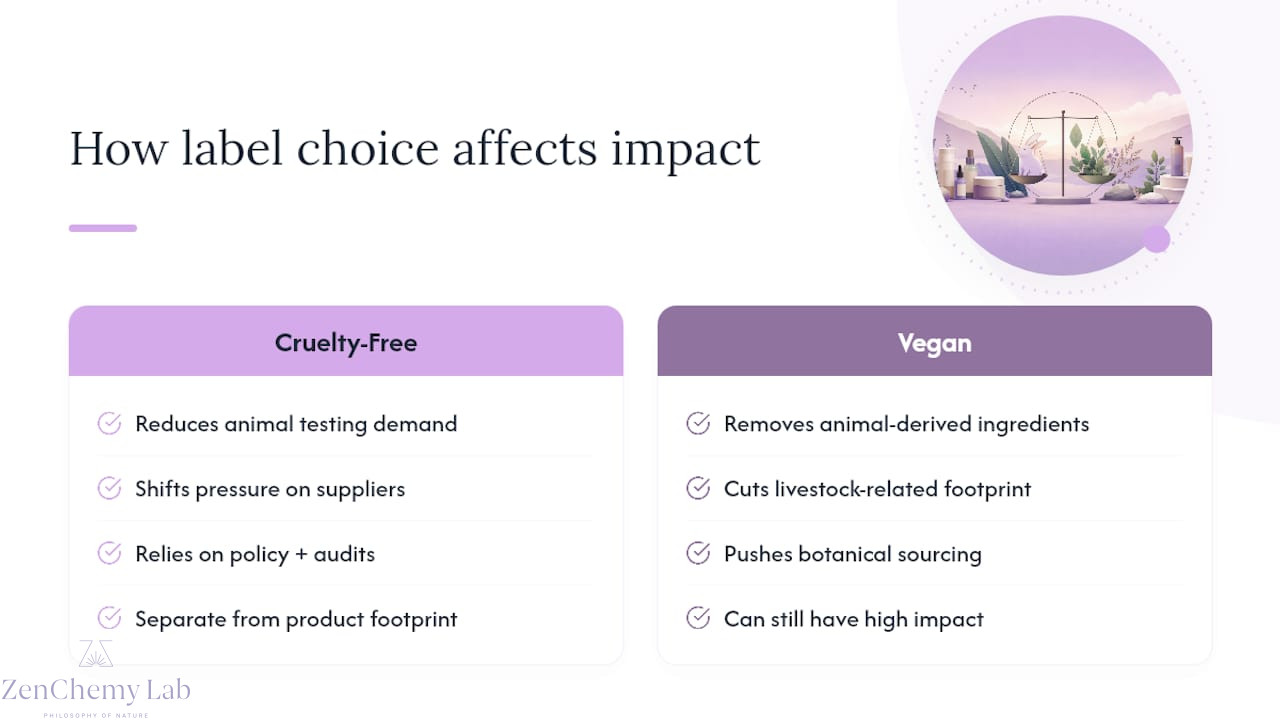
The two issues intersect most visibly in ingredient sourcing. A brand that commits to both vegan formulation and cruelty-free testing tends to lean harder on traceable botanical suppliers, because animal-derived shortcuts (collagen, certain waxes, gelatin) get eliminated as options. That pushes formulators toward plant oils, butters, and clays, which is part of why so many ethically positioned skincare brands describe themselves as botanical first.
None of this makes either choice a complete solution on its own. Treat cruelty-free and vegan as two separate levers you can pull, each with its own kind of impact, rather than a single ethical checkbox.
— Alex
Regulatory differences shoppers should know about
Regulatory frameworks for both claims vary sharply by market, and that variation is exactly why global brands sometimes carry different formulations in different countries.
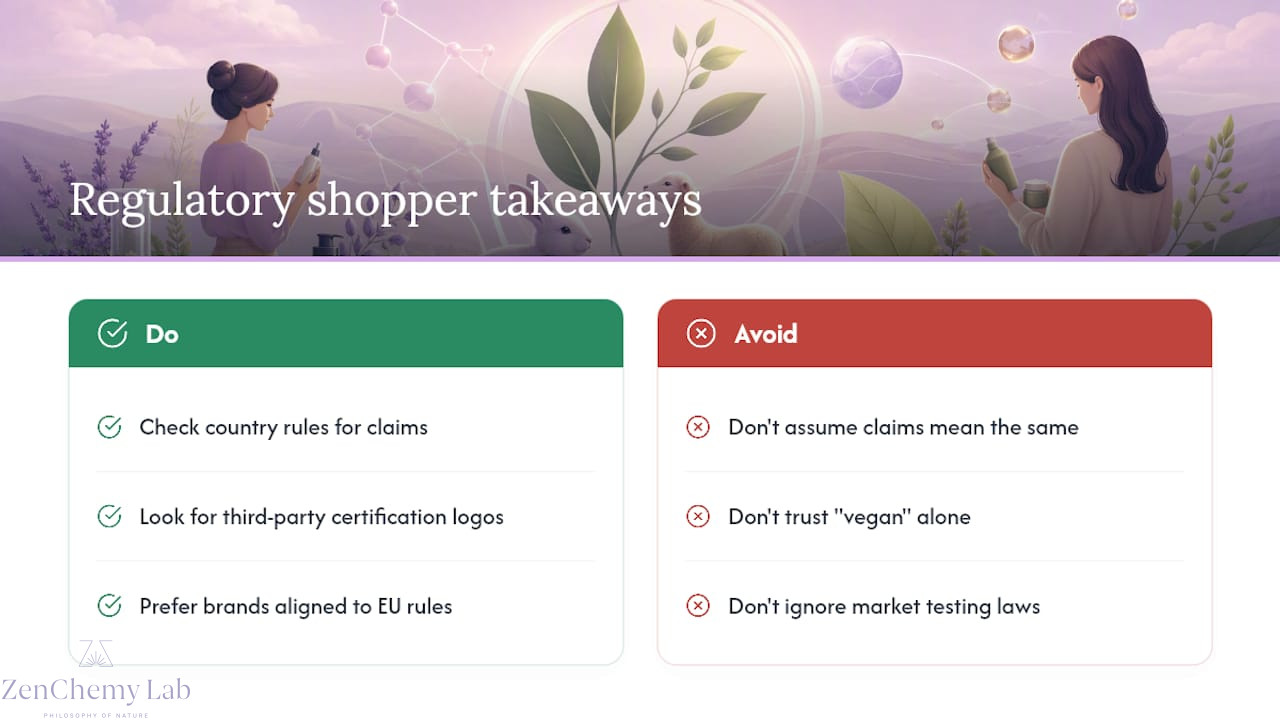
The European Union has banned animal testing for cosmetics and their ingredients, and it prohibits marketing cosmetics that were tested on animals elsewhere, which is one reason many international brands align their global policy to EU rules rather than maintain multiple standards. Other jurisdictions have moved more slowly, and some historically required animal testing for specific ingredient categories or first-time market entry, which is precisely the nuance that undermines a brand’s “cruelty-free” claim if it still sells into those markets under those rules.
“Vegan” carries even less regulatory weight than “cruelty-free” in most places. In Canada and the United States, there’s no government body that legally defines or polices the word “vegan” on a cosmetics label, which is exactly why third-party certifiers like The Vegan Society stepped into that gap. That’s also why a certification logo carries more practical authority than the label term itself; it’s backed by an actual verification process rather than a legal definition regulators are actively enforcing.
For shoppers, the takeaway is simple: don’t assume a claim means the same thing everywhere. A brand’s home market rules shape what “vegan” or “cruelty-free” is even allowed to mean on that specific bottle.
How brands actually make the switch to cruelty-free or vegan
Reformulating an existing product line is rarely as simple as swapping one ingredient for another. A brand moving away from animal-derived ingredients has to re-source every affected raw material, then re-test texture, shelf stability, and scent, because plant-based substitutes (candelilla wax instead of beeswax, for example) behave differently in a formula.
Supply-chain verification is the slower, less visible half of the transition. Earning independent certification, whether that’s an audit-based mark like Leaping Bunny or a dual-verification mark like the Vegan Trademark, means tracing every ingredient back through suppliers who may themselves need to confirm their own sourcing and testing practices. That process can take considerably longer than the reformulation itself, especially for brands with dozens of suppliers feeding a single product line.
Cost is the other real barrier. Certification fees, reformulation R&D, and potential repackaging all land on a brand’s bottom line before a single unit sells under the new claim. Smaller, handmade producers often manage this transition more easily than large manufacturers, precisely because they’re formulating in smaller batches with fewer suppliers to audit in the first place.
What ZenChemy Lab has learned about honest labelling
Handcrafting soaps and botanical skincare in small batches means tracing where every raw ingredient comes from, which is a habit we’ve built into how ZenChemy Lab formulates rather than something bolted on for a label. That’s the same instinct behind our vegan skincare explainer, which breaks down exactly which animal-derived ingredients tend to hide in conventional cosmetics.
Our take, after sitting with this topic for a while: shoppers don’t need more marketing language, they need a way to verify what a brand is actually claiming. If you want the fuller picture on how certification signals work across the wider ethical skincare space, our ethical skincare guide covers the standards worth trusting versus the ones worth ignoring.
Where to find ZenChemy Lab’s vegan and cruelty-aware picks
ZenChemy Lab formulates handcrafted botanical skincare, soaps, and body care with a deliberate focus on ingredient transparency, so you’re never guessing what’s in the jar. Our vegan balm collection is built entirely from plant oils and butters, with no animal-derived fillers hiding under an unfamiliar Latin name.
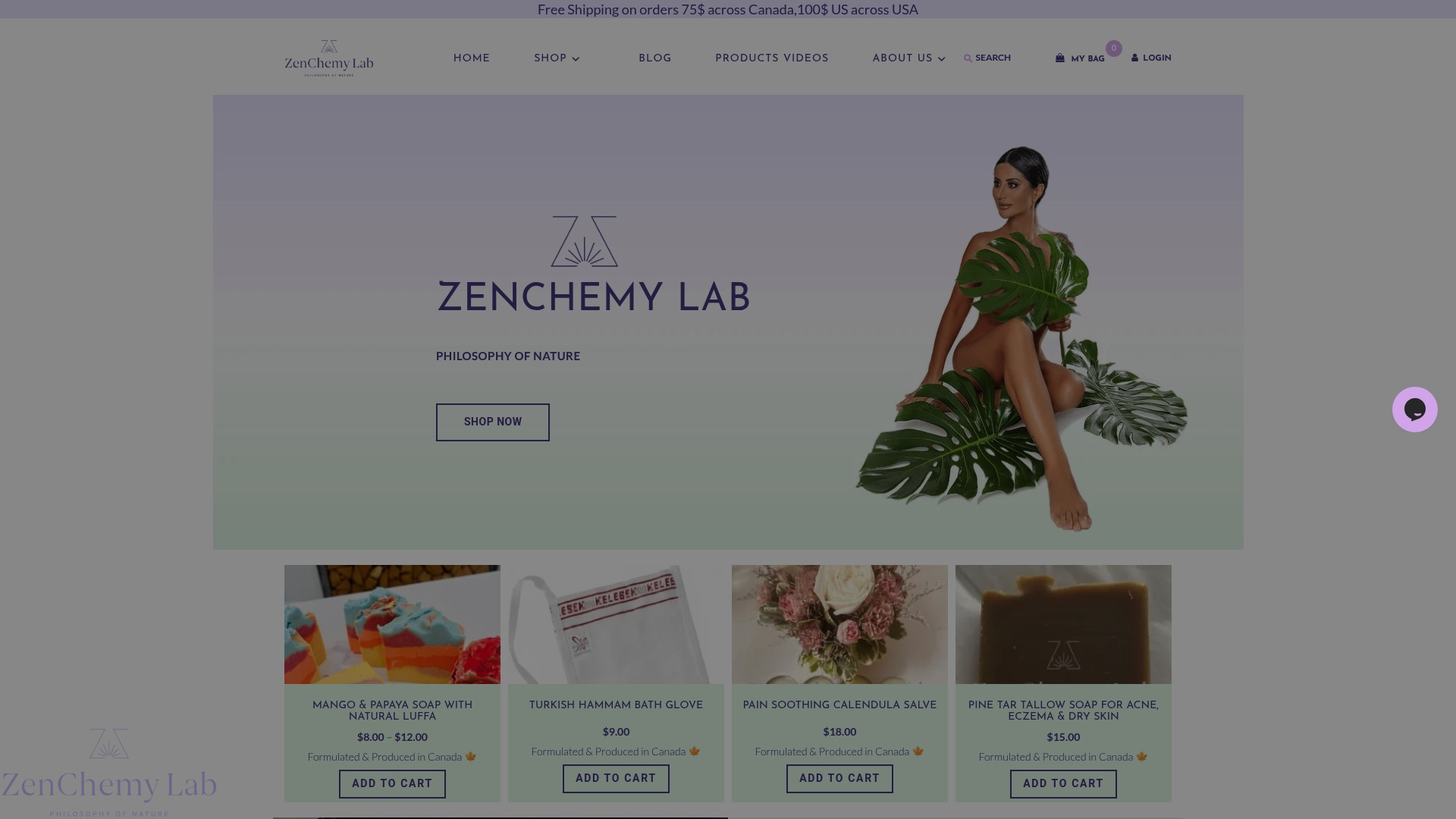
Every product page lists the full ingredient deck up front, so you can run the exact same checks this article walked through: scan for Latin names like Cera alba, look for lanolin or carmine substitutes, and confirm sourcing before you commit to a purchase. Our Artisan Soap Collection includes bars handmade in small cold-processed batches rather than mass-produced lines, which is part of why we can speak plainly about what’s inside each one. Browse the shop, check a product page’s ingredient list against the decoding tips above, and pick the bar or balm that matches what you’re actually looking for.
Where to verify claims yourself
- The Vegan Trademark registry lets you search by brand or product to confirm dual vegan and no-testing status.
- Leaping Bunny publishes a compliant-company list showing which brands have passed its signed commitment and independent audit process.
- PETA’s Beauty Without Bunnies database lets you search by brand and see whether a company has declared vegan status, cruelty-free status, or both.
Sources
- Cruelty-Free vs Vegan: Why the Vegan Trademark is the gold standard in beauty — The Vegan Society
- VeganBrief — Is cruelty-free the same as vegan? What labels mean
FAQ
Can a product be vegan but not cruelty-free?
Yes. A product can contain zero animal-derived ingredients and still have been tested on animals at some stage, which is why vegan and cruelty-free are two separate claims that need separate verification. Checking for a dual-verification mark like the Vegan Trademark is the simplest way to confirm both at once.
Is Taylor Swift a vegan?
There’s no verified public record confirming Taylor Swift follows a vegan diet or lifestyle, and this question falls outside what beauty and skincare labelling standards can answer. It’s worth separating celebrity dietary choices from product certification questions, since one has nothing to do with the other.
Is Dove actually cruelty-free?
Dove is not currently certified cruelty-free by Leaping Bunny or PETA’s Beauty Without Bunnies program, largely because its parent company sells in markets with animal-testing requirements for certain products. A missing certification doesn’t automatically mean a brand tests on animals everywhere, but it does mean the claim isn’t independently verified.
Is Starbucks animal cruelty-free?
Starbucks is a food and beverage company, not a cosmetics brand, so cruelty-free cosmetics certification doesn’t apply to it in the same way. Animal welfare questions around Starbucks typically concern dairy sourcing and menu ingredients rather than product testing, which is a different ethical framework entirely from what this article covers.
What’s the fastest way to check if a skincare product is vegan?
Flip the packaging over and look for a Vegan Trademark logo first, since it verifies both ingredients and testing history in one mark. If there’s no logo, scan the ingredient list for Cera alba, lanolin, or carmine (CI 75470), or search the brand name directly in the Vegan Trademark’s public registry.