
TL;DR:
- Optimal soap ingredients balance cleansing with skin hydration through natural components like glycerin, shea butter, and oils tailored to skin type. Cold process soap preserves glycerin and utilizes superfatting techniques, making it gentler and more nourishing for sensitive or dry skin. Targeted actives such as tea tree, salicylic acid, or colloidal oatmeal can address specific concerns like bacteria or eczema if formulated correctly.
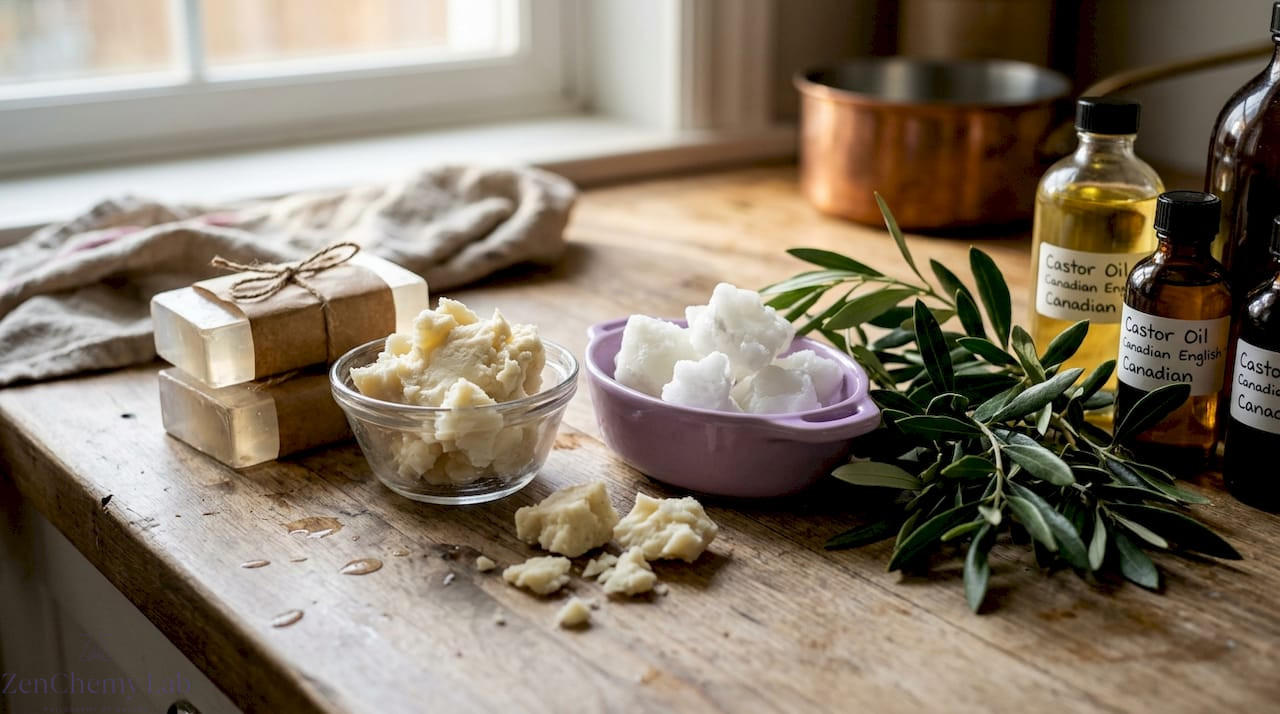
The best soap ingredients are those that balance cleansing power with skin hydration, using natural components like glycerin, plant-based oils, and minimal irritants suited to your specific skin type. In the world of personal care, ingredient selection is the single most important factor separating a soap that nourishes from one that strips your skin bare. The industry term for this selection process is formulation, and understanding it means reading beyond the marketing copy on the label. Whether you have dry, oily, sensitive, or acne-prone skin, the right soap components make a measurable difference in your skin’s comfort and health every single day.
1. Glycerin: the gold standard humectant
Glycerin is the most effective humectant in soap formulation, attracting water molecules from the air directly into your skin. It works by drawing moisture into the outer layers of the epidermis, reducing transepidermal water loss (TEWL) and leaving skin feeling soft rather than tight after washing. Glycerin constitutes roughly 10% of soap weight and directly influences how moisturising a bar feels. That 10% is the difference between a bar that conditions and one that dries.
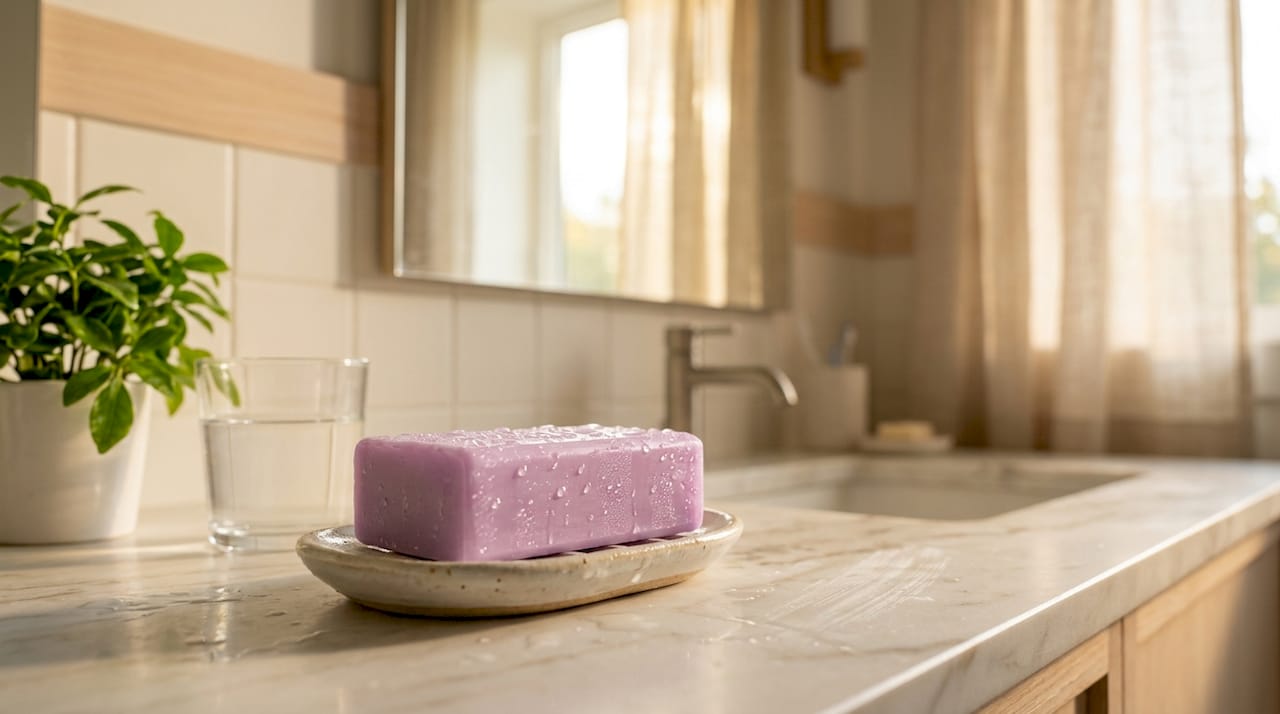
Cold process soap naturally retains glycerin as a byproduct of saponification, the chemical reaction between oils and lye. Many commercial producers extract this glycerin separately to sell it as a higher-value ingredient, leaving behind a drier, harsher bar. If moisturisation is your priority, glycerin content is the first thing to check.
2. Shea butter: deep emollient for dry skin
Shea butter is an emollient, meaning it fills the gaps between skin cells and softens the surface rather than just sitting on top of it. It is rich in oleic acid, stearic acid, and vitamins A and E, all of which support the skin’s lipid barrier. For dry or mature skin, shea butter in a soap formula slows moisture loss and leaves a perceptible silkiness after rinsing.
The key distinction between shea butter and a simple oil is its high unsaponifiable fraction, the portion that does not convert to soap during saponification. This fraction remains active on the skin even after the bar has been processed, delivering conditioning benefits directly. Shea butter pairs particularly well with glycerin-rich cold process bars.
3. Coconut oil: cleansing power and lather
Coconut oil is the primary driver of lather and bar hardness in soap making, producing a dense, bubbly foam that rinses cleanly. It is high in lauric acid, a fatty acid with strong cleansing properties that effectively lifts oils and debris from the skin’s surface. The trade-off is that coconut oil can be drying at high concentrations, particularly for sensitive or eczema-prone skin.
The standard recommendation among formulators is to keep coconut oil at 20 to 30 percent of the total oil blend. Above that threshold, the cleansing action becomes aggressive enough to disrupt the skin barrier. Balancing coconut oil with more emollient oils like olive or sunflower oil is one of the foundational principles of best oils for soap making.
4. Olive oil: mild cleanser with a creamy lather
Olive oil produces a gentle, creamy lather and is one of the most skin-compatible oils in soap formulation. It is high in oleic acid, which closely mirrors the fatty acid profile of human sebum, making it exceptionally well tolerated by most skin types. Castile soap, the traditional soap made almost entirely from olive oil, has been used for centuries precisely because of this compatibility.
The lather from olive oil is less voluminous than coconut oil but far more conditioning. For sensitive or dry skin, a soap with a high olive oil content delivers cleansing without the stripping effect that high-surfactant commercial bars produce. Olive oil also contributes to bar longevity when cured properly.
5. Castor oil: the lather booster
Castor oil is used in small amounts (typically 5 to 10 percent of the oil blend) specifically to stabilise and boost lather. It is high in ricinoleic acid, a unique fatty acid that creates a thick, conditioning foam and helps bind the bubbles produced by other oils. Without castor oil, a soap made from olive and coconut oil alone produces lather that dissipates quickly.
Beyond lather, castor oil adds a slight humectant quality to the finished bar. It draws moisture to the skin’s surface in a similar way to glycerin, though less potently. The superfatting principle, where a small percentage of oils is left unreacted to condition the skin, works particularly well when castor oil is part of the blend.
| Oil | Primary function | Best for |
|---|---|---|
| Coconut oil | Cleansing, hardness, lather | All skin types (use at 20–30%) |
| Olive oil | Conditioning, creamy lather | Dry, sensitive skin |
| Castor oil | Lather stabilisation, humectant | All skin types (use at 5–10%) |
| Shea butter | Emollient, barrier support | Dry, mature skin |
6. Tea tree and lemongrass essential oils: natural antibacterials
Tea tree oil and lemongrass (Cymbopogon citratus) essential oil are the two most studied natural antibacterial additives in soap formulation. Research confirms that lemongrass essential oil at 0.5 to 2.5% concentration in glycerin soap formulations completely inhibited bacterial growth at higher doses. That finding matters because it sets a clear, evidence-based dosing range rather than relying on vague “natural antibacterial” claims.
The caution here is pH. The same glycerin soap formulations showed a pH range of 9.0 to 12.1, which is alkaline enough to disrupt the skin barrier in sensitive or eczema-prone individuals. Antibacterial soaps with essential oils are best reserved for oily or acne-prone skin, used as a targeted treatment rather than a daily all-over wash.
Pro Tip: If you want antibacterial benefits without the pH risk, look for formulations that combine tea tree or lemongrass oil with a conditioning base of olive oil and glycerin, and check that the finished bar has been pH-tested before purchase.
Essential oils also carry allergen risk. Fragrance compounds in lemongrass, lavender, and citrus oils are among the most common contact allergens in personal care products. Concentration and skin sensitivity both determine tolerability, so patch testing is non-negotiable before committing to daily use.
7. Niacinamide and salicylic acid: targeted actives for acne-prone skin
Niacinamide (vitamin B3) and salicylic acid are the two most effective targeted actives for acne-prone skin in a soap context. Niacinamide reduces sebum production, minimises pore appearance, and supports the skin barrier without irritation. Salicylic acid is a beta-hydroxy acid (BHA) that penetrates pores and dissolves the keratin plugs that cause blackheads and breakouts.
The limitation of both actives in bar soap is contact time. Rinse-off products leave actives on the skin for seconds, not minutes, which reduces their efficacy compared to leave-on serums or toners. That said, a salicylic acid soap used consistently still delivers a meaningful reduction in surface congestion, particularly when paired with a non-comedogenic moisturiser afterward.
8. Colloidal oatmeal: soothing for eczema-prone skin
Colloidal oatmeal is finely milled oat flour that disperses in water and forms a protective film on the skin’s surface. It is one of the few natural ingredients with formal recognition as a skin protectant, and it is a core component in soaps formulated for eczema and psoriasis. Its beta-glucan content reduces inflammation and itching, while its lipid and protein content reinforces the skin barrier.
For eczema-prone skin, ingredient minimalism focusing on fragrance-free, SLS-free formulas reduces irritation risk significantly. Colloidal oatmeal fits naturally into this approach because it adds function without adding potential allergens. Zenchemylab’s eczema-focused soap range follows exactly this principle.
9. How to choose soap ingredients based on your skin type
Best soap ingredients vary by skin type. No single formula works for everyone, and choosing the wrong ingredients can worsen the very conditions you are trying to address. Here is a practical framework:
- Dry skin: Prioritise glycerin, shea butter, olive oil, and squalane. Avoid high coconut oil concentrations and any mechanical exfoliants.
- Oily or acne-prone skin: Look for salicylic acid, tea tree oil, and kaolin clay. Avoid heavy butters that can clog pores.
- Sensitive skin: Choose fragrance-free, SLS-free, and dye-free formulas. Colloidal oatmeal and ceramides are your best allies.
- Eczema-prone skin: Stick to minimal ingredient lists. Fragrance is the most common trigger. Patch test every new product before full use.
“Hypoallergenic labels alone do not guarantee suitability. Low-allergen ingredient formulas and formal patch testing are the only reliable tools for allergy sufferers.” — Bolt Pharmacy, NHS-aligned guidance
The repeated open application test (ROAT) is a useful home method: apply a small amount of the product to the inner forearm twice daily for one to two weeks and watch for any reaction. It does not replace dermatological patch testing, but it is a practical first screen before committing to a new soap.
Understanding soap pH levels is equally important. Your skin’s natural pH sits around 4.5 to 5.5. Soaps with a pH above 9 can disrupt the acid mantle and trigger dryness, irritation, or breakouts, particularly in sensitive skin types.
10. Cold process soap versus mass-produced bars
Cold process soap retains natural glycerin, a powerful humectant that most commercial producers extract and sell separately. The result is a commercial bar that cleans effectively but leaves skin feeling dry and tight. Cold process bars, by contrast, preserve the full glycerin content produced during saponification, which is why consumers consistently report less dryness and more nourishment with artisanal bars.
| Feature | Cold process soap | Mass-produced bar |
|---|---|---|
| Glycerin content | Retained naturally | Typically extracted |
| Surfactants | Natural soap salts only | Often synthetic detergents added |
| Customisation | High (oil blend, superfatting) | Standardised formula |
| Skin feel | Conditioning, nourishing | Can be drying |
| Suitability for sensitive skin | Generally higher | Variable |
Superfatting is a cold process technique where 5 to 8 percent of the oils are left unreacted, meaning they remain as free conditioning agents in the finished bar. This is not possible in mass-produced soap, where formulas are standardised for cost efficiency. Handmade versus commercial soaps is a comparison worth understanding before your next purchase.
Key takeaways
The best soap ingredients combine humectants like glycerin, emollients like shea butter and olive oil, and targeted actives matched to your skin type, with cold process formulation preserving the most skin-beneficial properties.
| Point | Details |
|---|---|
| Glycerin is non-negotiable | It retains moisture and is the clearest marker of a conditioning soap bar. |
| Oil balance determines skin feel | Coconut oil cleanses; olive and castor oil condition. Use all three in proportion. |
| Antibacterials need dosing discipline | Lemongrass and tea tree oils work, but only at the right concentration and pH. |
| Skin type drives ingredient choice | Dry skin needs emollients; sensitive skin needs fragrance-free, minimal formulas. |
| Cold process preserves what matters | Retained glycerin and superfatting make cold process bars gentler than commercial alternatives. |
What I have learned from years of working with soap ingredients
I have tested hundreds of soap formulations, and the single most common mistake I see is over-relying on the word “natural” as a proxy for safe or effective. Poison ivy is natural. So is lye. What actually matters is the specific ingredient, its concentration, and whether it matches your skin’s needs.
My preference is always for cold process bars with a short ingredient list. When I see a soap with 20-plus ingredients, I get sceptical. Each addition is another potential irritant, another variable to troubleshoot if your skin reacts. The soaps that have performed best for sensitive and dry skin in my experience are the ones built around three or four well-chosen oils, a solid glycerin base, and nothing else.
I also think the skincare industry undersells the importance of pH. Most people never think about it, but a bar sitting at pH 10 is genuinely disruptive to your skin barrier, regardless of how many botanical extracts it contains. If you are buying from a small producer, ask whether they pH-test their finished bars. The ones who do are the ones who take formulation seriously.
One more thing: patch testing is not just for people with known allergies. Anyone switching to a new soap, especially one with essential oils or botanical additives, should test on the inner forearm for a week before using it on the face or body. It takes ten seconds and saves a lot of discomfort.
— Alex
Discover natural soap ingredients at Zenchemylab
At Zenchemylab, every bar is formulated with the same principles this article covers: retained glycerin, balanced oil blends, and minimal irritants chosen for specific skin needs.

Zenchemylab’s natural skin care range includes cold process bars built around olive oil, shea butter, and glycerin, with targeted options for dry, sensitive, and eczema-prone skin. Each formula is transparent about its ingredient list because you deserve to know exactly what you are putting on your skin. For a broader look at how these ingredients perform in a full routine, the natural skincare routine guide is a practical next step. If you are looking for glowing skin solutions backed by real formulation science, Zenchemylab is where to start.
FAQ
What are the best soap ingredients for dry skin?
Glycerin, shea butter, and olive oil are the top ingredients for dry skin, as they provide humectant, emollient, and barrier-supporting benefits. Cold process soaps that retain natural glycerin are particularly effective for reducing tightness after washing.
Are natural soap ingredients always safe for sensitive skin?
Not always. Natural ingredients like essential oils and botanical extracts can trigger contact dermatitis in sensitive individuals. Fragrance-free, SLS-free formulas with minimal ingredient lists are the safest choice, and patch testing is always recommended.
What is superfatting in cold process soap?
Superfatting means leaving 5 to 8 percent of oils unreacted during saponification, so they remain as free conditioning agents in the finished bar. This technique makes cold process soap noticeably more nourishing than standard commercial bars.
How do I know if a soap’s pH is safe for my skin?
Your skin’s natural pH is approximately 4.5 to 5.5. Soaps with a pH above 9 can disrupt the acid mantle and cause irritation, especially for sensitive or eczema-prone skin. Ask your soap maker whether they pH-test finished bars, or look for brands that publish this information openly.
Can antibacterial soap ingredients irritate skin?
Yes. Essential oils like tea tree and lemongrass (Cymbopogon citratus) are effective antibacterials, but high-concentration formulations can be irritating, particularly at the alkaline pH levels common in soap. Use antibacterial soaps as a targeted treatment rather than a daily cleanser.
7 Comments