TL;DR:
- Natural body butters are plant-based, nutrient-dense emollients that hydrate skin more effectively and last longer than most water-based lotions. They form a physical occlusive barrier, seal in moisture, and support skin barrier repair through fatty acids, vitamins, and antioxidants. Clinical evidence demonstrates their efficacy in improving skin conditions like dermatitis, especially with consistent daily use over several weeks.
Natural body butters are plant-derived, nutrient-dense emollients that hydrate skin more deeply and lastingly than most water-based moisturisers. Products like shea butter and cocoa butter deliver concentrated fatty acids, vitamins, and antioxidants directly to the skin’s surface, where they reinforce the barrier, reduce moisture loss, and calm irritation. If you have been wondering why use natural body butters instead of conventional lotions, the answer lies in their unique composition and the science behind how they interact with your skin. This article breaks down the biology, the clinical evidence, and the practical choices so you can moisturise smarter.
Why natural body butters moisturise better than lotions
Body butters work differently from standard lotions at a fundamental level. Body butters are oil and butter based with little to no water content, which means they engage with the epidermis rather than simply sitting on the surface and evaporating. A typical lotion is 60 to 80 percent water, so much of what you apply disappears within minutes. A natural body butter stays put, forming a physical occlusive layer that slows transepidermal water loss (TEWL).
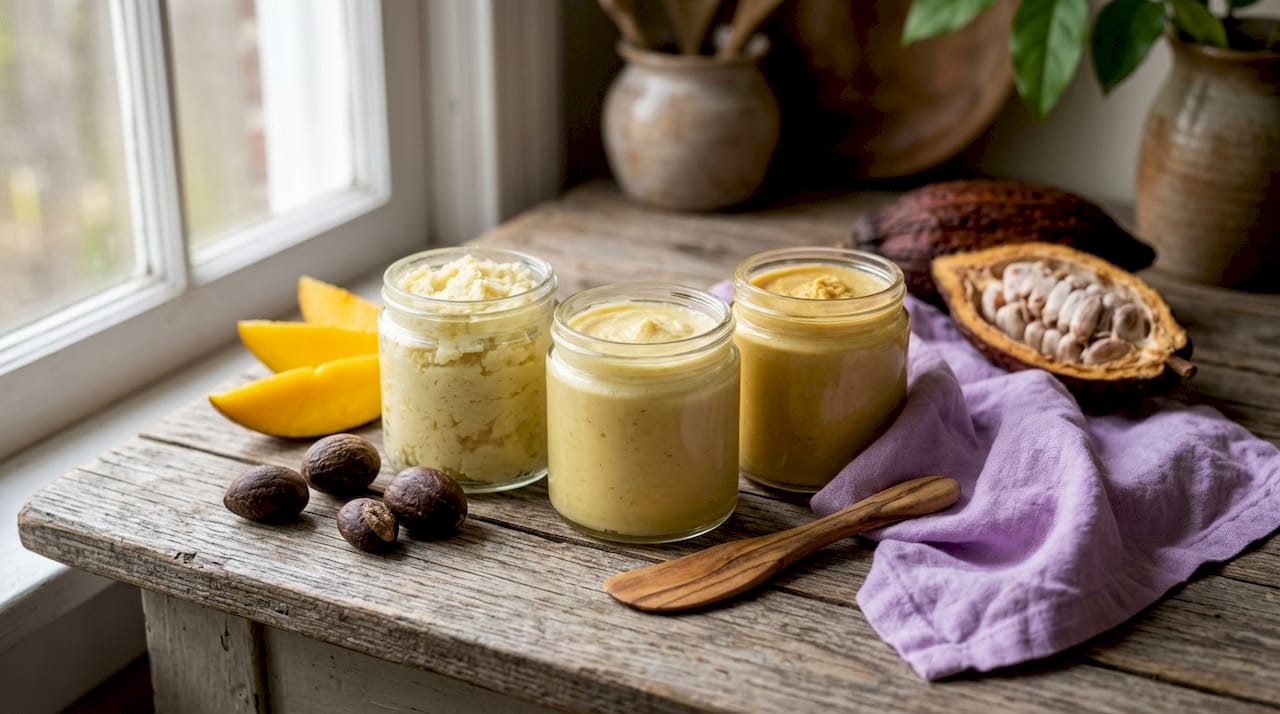
The fatty acids inside these butters do more than seal. They act as emollients, filling the microscopic gaps between skin cells the way mortar fills the spaces between bricks. Linoleic and oleic acids in shea butter, for example, soften the skin and support hydration well beyond the surface feel. This is why skin treated with a quality body butter stays supple hours after application, rather than requiring reapplication every few hours as many lotions do.
Here is what makes the moisturising mechanism of natural body butters so effective:
- ✅ Occlusivity: The butter layer physically slows water evaporation from the skin surface.
- ✅ Emolliency: Fatty acids fill intercellular spaces, smoothing rough texture and softening the feel.
- ✅ Ceramide-like action: Shea butter reduces TEWL and supports barrier repair in a way that mimics the skin’s own ceramides.
- ✅ Antioxidant protection: Vitamin E in shea butter neutralises free radicals that degrade skin cells and accelerate ageing.
- ✅ Anti-inflammatory effect: Shea butter’s triterpene compounds soothe redness and irritation, making it suitable for sensitive or reactive skin.
Formulators note that natural butters work primarily by occlusivity, creating a physical barrier rather than absorbing quickly like a lightweight oil. This is not a flaw. For dry or compromised skin, that sustained barrier effect is precisely what accelerates recovery.
Pro Tip: Apply your body butter within three minutes of stepping out of the shower, while skin is still slightly damp. The butter seals in that residual moisture, amplifying the hydrating effect significantly.
What does the clinical evidence say about natural body butters?
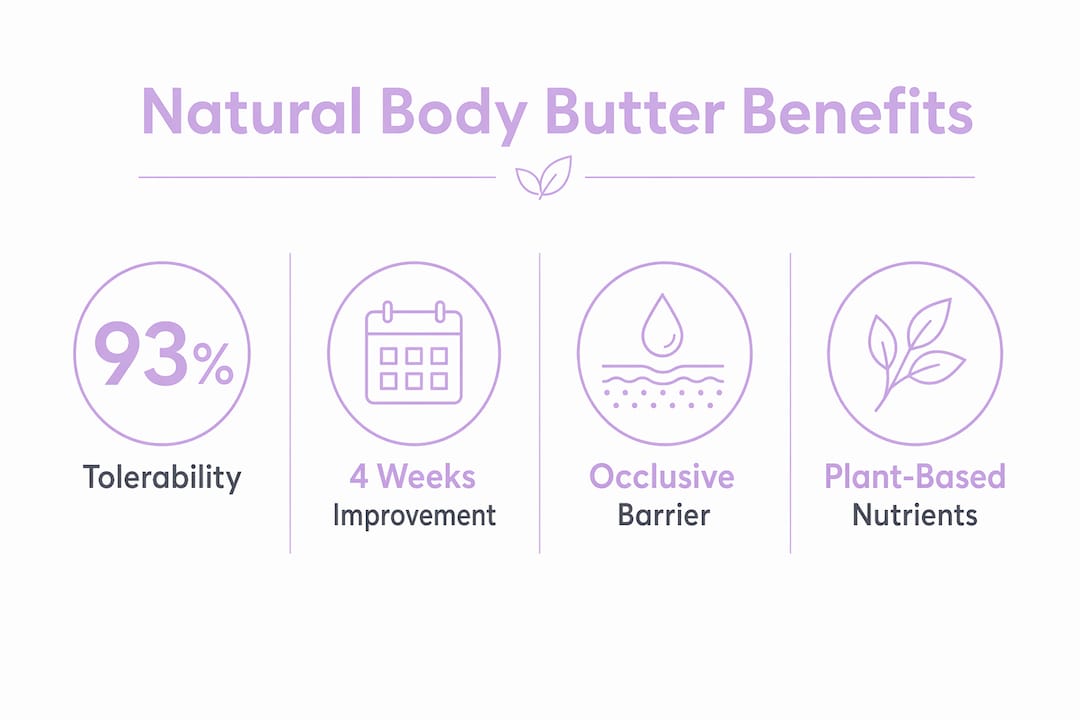
The benefits of natural body butters are not just anecdotal. A 2026 clinical trial on shea butter cream demonstrated a 68.2% reduction in atopic dermatitis severity over four weeks of consistent use. That figure places shea butter formulations in direct competition with synthetic emollients that have been the standard of care for decades.
“93% of patients in the shea butter trial reported improvement or remission of atopic dermatitis symptoms, with tolerability rated as excellent across the study group.” — Clinical trial, 2026
The tolerability finding matters as much as the efficacy number. Many synthetic emollients contain preservatives, emulsifiers, or fragrance compounds that trigger reactions in sensitive skin. The shea butter formulation produced no significant adverse events, which makes it a credible option for eczema-prone skin and other reactive conditions.
Dermatologist Whitney Bowe recommends shea butter specifically for supporting the skin microbiome, noting that a balanced microbial environment is central to long-term barrier health. This adds another layer to the clinical picture: natural butters do not just hydrate, they create conditions in which the skin can regulate itself more effectively.
One nuance worth understanding is that skin barrier repair requires consistent use over several weeks before measurable improvements accumulate. The four-week timeline from the atopic dermatitis trial reflects how the stratum corneum gradually rebuilds its lipid matrix. Research into nanostructured lipid carriers confirms this: the dense outer layer of skin resists rapid lipid penetration, so repeated daily application is what drives lasting change. Patience and consistency are the active ingredients here.
Shea, mango, and cocoa butter: which one suits your skin?
Not all natural body butters behave the same way on skin. Understanding the differences helps you choose the right product for your skin type, climate, and specific concerns.
| Butter | Key fatty acids | Texture and feel | Best for |
|---|---|---|---|
| Shea butter | Oleic, stearic, linoleic | Creamy, medium absorption | Dry, sensitive, eczema-prone skin |
| Mango butter | Stearic, oleic, palmitic | Lighter, less greasy | Normal to oily skin, warm climates |
| Cocoa butter | Stearic, palmitic, oleic | Firm, highly occlusive | Cracked, very dry, or mature skin |
Shea butter is the most studied of the three and the most versatile. Its melting point sits close to body temperature, so it softens on contact and absorbs without leaving a heavy residue. Mango butter has a higher melting point and a lighter skin feel, which makes it a practical choice in warmer climates where heavier butters can feel suffocating. Cocoa butter’s saturated fatty acid content makes it the most occlusive of the three, forming a firm physical barrier that is particularly effective for cracked heels, dry elbows, and mature skin that has lost elasticity.
The refined versus unrefined distinction also shapes your experience significantly. Unrefined shea butter retains more nutrients and natural compounds than its refined counterpart, including higher levels of vitamin E and triterpenes. The trade-off is a stronger, nuttier scent that not everyone prefers. Refined shea butter is processed to remove colour and odour, making it better suited to scent-neutral formulations or products where a clean aesthetic matters. If maximum skin benefit is your priority, unrefined is the better choice. If you are blending with essential oils or prefer a neutral base, refined works well.
You can explore how these butters compare to body oils in terms of absorption and barrier function, since combining the two in a layered routine often produces better results than using either alone.
How to choose and use natural body butters effectively
Choosing the right body butter starts with an honest assessment of your skin’s current condition and what you need most from a moisturiser.
-
Identify your skin type and concern. Dry, flaky skin benefits most from highly occlusive options like cocoa butter or unrefined shea. Sensitive or reactive skin does better with shea butter’s anti-inflammatory properties. Oily or combination skin responds well to mango butter’s lighter texture.
-
Read the ingredient label carefully. A quality natural body butter should list a plant butter as the first or second ingredient. Watch for synthetic fragrance (listed as “parfum” or “fragrance”), which is a common irritant. Look for vitamin E oil (tocopherol) as a natural antioxidant and preservative.
-
Apply to damp skin after bathing. This is the single most effective application technique for maximising hydration. Water on the skin surface gives the butter something to seal in, amplifying the occlusive effect.
-
Use a small amount and warm it first. Butters are concentrated. A pea-sized amount warmed between your palms spreads easily and absorbs without leaving a greasy film. Over-applying is the most common reason people find body butters too heavy.
-
Commit to daily use for at least four weeks. As the clinical evidence confirms, consistent daily use over several weeks is required to see measurable improvements in skin hydration and barrier function. One application will not transform your skin. A daily habit will.
Pro Tip: If you are new to natural body butters and have sensitive skin, patch test on the inner forearm for 24 hours before applying widely. Even natural ingredients can cause reactions in highly reactive skin types.
Pay attention to shelf life as well. Unrefined butters contain natural compounds that can oxidise over time, particularly if stored in warm or bright conditions. Keep your butter in a cool, dark location and use it within 12 to 18 months of opening for best results.
Key takeaways
Natural body butters deliver superior, lasting hydration because their occlusive fatty acid profiles seal moisture, repair the skin barrier, and reduce inflammation in ways that water-based lotions cannot replicate.
| Point | Details |
|---|---|
| Occlusivity over surface hydration | Body butters form a physical barrier that reduces TEWL, unlike water-based lotions that evaporate quickly. |
| Clinical proof of efficacy | A 2026 trial showed shea butter cream reduced atopic dermatitis severity by 68.2% over four weeks. |
| Butter type matters | Shea suits sensitive skin, mango suits warmer climates, and cocoa suits very dry or mature skin. |
| Unrefined retains more nutrients | Unrefined shea butter preserves higher levels of vitamin E and anti-inflammatory triterpenes than refined versions. |
| Consistency drives results | Daily application over at least four weeks is required for measurable improvements in skin hydration and barrier health. |
Why I think natural body butters are underrated in skincare
I have worked with natural skincare formulations long enough to notice a pattern: people try a body butter once, find it too rich, and go back to their lotion. That is almost always a technique problem, not a product problem. A small amount on damp skin feels entirely different from a large amount applied to dry skin. Once you get the application right, the difference in how long your skin stays hydrated is genuinely striking.
What I find most compelling about natural body butters is not just the hydration. It is the ingredient simplicity. A well-made shea or mango butter product can contain three to five ingredients and outperform a lotion with thirty. That ratio tells you something important about formulation philosophy. More ingredients rarely means better results. It often means more opportunities for irritation, more synthetic fillers, and a shorter effective lifespan on the skin.
The clinical evidence from 2026 reinforces what formulators have observed for years: when you give the skin the right lipids in the right concentration, it responds. The natural body care ingredients that have been used for centuries in West Africa and South America are not popular because of marketing. They are popular because they work. That is a distinction worth holding onto when you are standing in a skincare aisle surrounded by products making extraordinary claims with ordinary ingredients.
— Alex
Explore natural body butters from Zenchemylab
At Zenchemylab, every body butter starts with raw, plant-derived ingredients chosen for their skin health benefits, not their cost efficiency. The formulations are built around unrefined shea, mango, and cocoa butter, with no synthetic fragrance and no unnecessary fillers.

If you are ready to experience the difference that concentrated, natural moisturising can make, browse the full range of natural skin care products at Zenchemylab. You will also find the complete body care collection alongside educational resources to help you build a skincare routine that actually works for your skin type. For a broader foundation, the natural skincare routine guide is a practical next step.
FAQ
Is body butter better than lotion for dry skin?
Body butter is more effective than lotion for dry skin because it contains concentrated oils and butters with no water content, forming an occlusive layer that significantly reduces moisture loss. Lotions are 60 to 80 percent water and provide shorter-lasting hydration by comparison.
How long does it take for body butter to improve skin condition?
Clinical evidence shows that measurable skin improvements require consistent daily use over approximately four weeks. The skin barrier rebuilds its lipid matrix gradually, so results accumulate with regular application rather than appearing after a single use.
What are the benefits of homemade body butter?
Homemade body butter allows you to control every ingredient, avoiding synthetic fragrances, preservatives, and fillers that can irritate sensitive skin. Using unrefined shea or cocoa butter as a base preserves the highest concentration of vitamins, fatty acids, and anti-inflammatory compounds. You can learn the basics of formulating at home to get started safely.
Can natural body butter be used on sensitive or eczema-prone skin?
Shea butter is well tolerated by sensitive and eczema-prone skin. A 2026 clinical trial reported 93% of atopic dermatitis patients experienced improvement or remission with a shea butter cream, with excellent tolerability and no significant adverse events.
What should I look for on a body butter ingredient label?
Look for a plant butter listed as the first or second ingredient, tocopherol (vitamin E) as a natural antioxidant, and the absence of “parfum” or “fragrance,” which are common irritants. Unrefined butters listed without “hydrogenated” or “fractionated” prefixes retain the most skin-beneficial nutrients.