

TL;DR:
- Reading skincare labels helps identify product ingredients and their concentrations for effectiveness. The first five to seven ingredients usually make up most of the formula, with ingredients after the 1% line present in trace amounts. Front claims are unregulated marketing, so always check the ingredient list for accurate information.
Reading skincare labels is a fundamental skill that reveals the true contents and potential efficacy of your beauty products. The system behind every ingredient list is called INCI, which stands for International Nomenclature of Cosmetic Ingredients. This standardised naming system is used across regulated markets including Canada, the US, the EU, Japan, and Korea, making ingredient disclosure consistent globally. Ingredients above 1% concentration must appear in descending order by weight. Marketing claims on the front of the package, like “dermatologist-tested” or “natural,” are largely unregulated and tell you very little about what is actually inside.
How to read skincare labels: understanding ingredient order
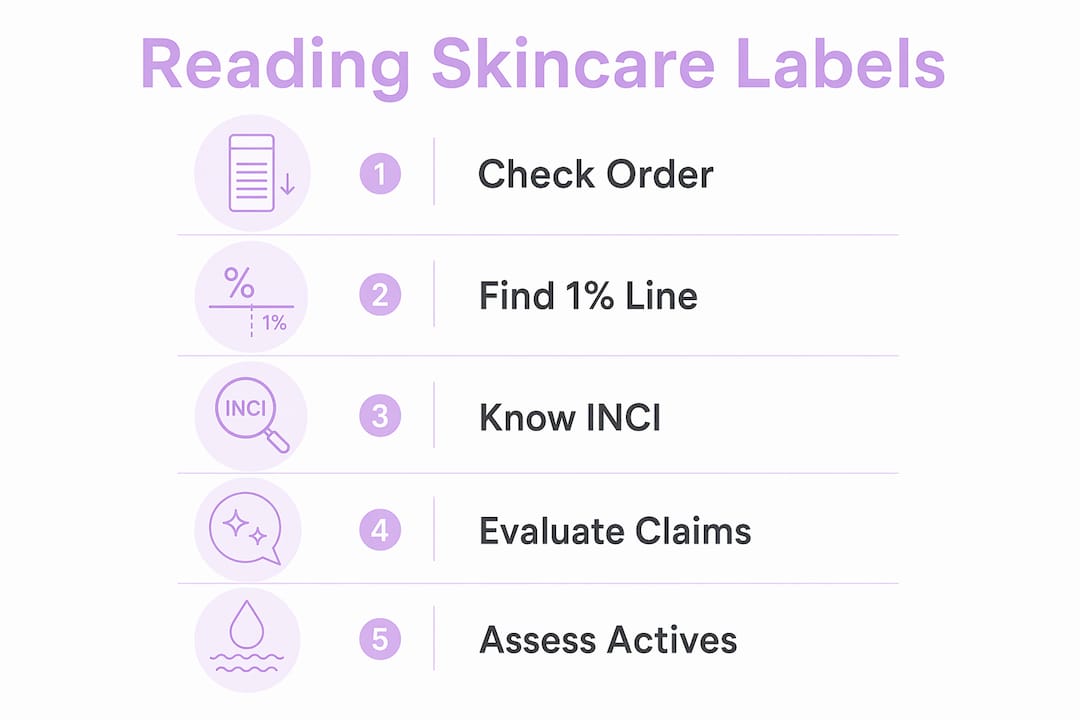
The ingredient list is the most honest part of any skincare product. Regulations require that every ingredient present above 1% concentration be listed in descending order by weight. That means the first ingredient is the most abundant, and the list works its way down from there.
The first five to seven ingredients matter most
The first 5–7 ingredients on any label typically make up 70–90% of the product’s total volume. This is the zone where the real formula lives. If water (Aqua) is first and glycerin is second, you are holding a water-based, humectant-rich product. If a plant oil appears in position two or three, the formula leans emollient and nourishing.
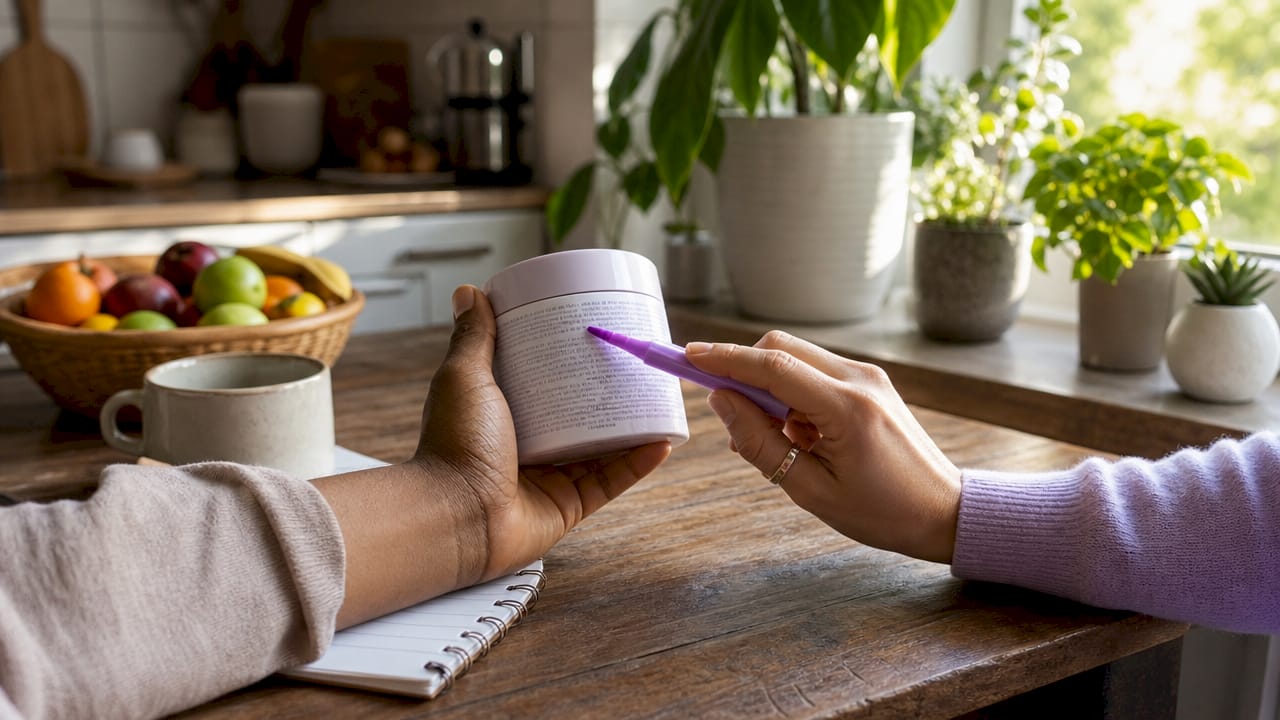
Knowing this helps you compare products quickly. Two moisturisers may both list niacinamide, but if one places it at position four and the other at position fourteen, they are very different products in terms of actual concentration.
Finding the 1% line
Below the top ingredients, there is a critical boundary called the 1% line. Everything listed after this point is present at 1% or less, and ingredients at or below 1% can appear in any order the brand chooses. Brands sometimes use this zone to list appealing “hero” ingredients that are present only in trace amounts.
You can locate the 1% line by spotting known marker ingredients. Phenoxyethanol (a preservative used at 0.5–1%), tocopherol (vitamin E, used at 0.1–0.5%), and disodium EDTA (a chelating agent at 0.01–0.2%) almost always appear at or near the 1% threshold. Once you spot these markers, everything listed after them is likely present in trace amounts with minimal clinical effect.
- ✅ Above the 1% line: Ingredients in meaningful concentrations that drive product function
- ✅ At the 1% line: Preservatives like phenoxyethanol, tocopherol, sodium benzoate
- ✅ Below the 1% line: Fragrances, botanical extracts, and trace actives with limited efficacy
- ✅ Free-for-all zone: Brands may list these in any order, regardless of concentration
Pro Tip: Scan for phenoxyethanol on your next product. Every ingredient listed after it is present at less than 1% of the formula, regardless of how prominently it is featured in the product name.
What do INCI names actually mean?
INCI names look intimidating, but they follow a logical system. The INCI naming system standardises ingredient names globally, which actually provides more transparency than common names once you learn the basics. “Butyrospermum Parkii” is simply shea butter. “Helianthus Annuus Seed Oil” is sunflower oil.
The table below translates the most common INCI names you will encounter on labels:
| INCI Name | Common Name | Function |
|---|---|---|
| Aqua | Water | Solvent, base ingredient |
| Butyrospermum Parkii | Shea butter | Emollient, skin softener |
| Glycerin | Glycerol | Humectant, moisture-binding |
| Niacinamide | Vitamin B3 | Brightening, barrier support |
| Tocopherol | Vitamin E | Antioxidant, preservative aid |
| Phenoxyethanol | Phenoxyethanol | Preservative (1% line marker) |
| Sodium Hyaluronate | Hyaluronic acid salt | Humectant, plumping |
| Cetearyl Alcohol | Fatty alcohol | Emollient, emulsifier |
Understanding ingredient function by category helps you read any label with confidence. Humectants (glycerin, sodium hyaluronate) draw moisture into the skin. Emollients (shea butter, cetearyl alcohol) soften and smooth. Surfactants (sodium lauryl sulphate, cocamidopropyl betaine) cleanse by lifting oil and debris. Preservatives (phenoxyethanol, sodium benzoate) keep the formula stable and safe.
The category an ingredient belongs to tells you what the product is designed to do. A cleanser dominated by surfactants will strip more than one where a fatty alcohol appears in position three. For readers curious about how natural and synthetic ingredients compare on labels, the distinction often comes down to INCI origin, not ingredient complexity.
Pro Tip: Download a free INCI decoder reference or bookmark a reliable cosmetic ingredient database. Cross-referencing three or four unfamiliar names per product builds your vocabulary quickly.
Are front-of-pack claims actually regulated?
Front-of-pack claims are marketing, not science. Terms like “dermatologist-tested,” “natural,” and “non-comedogenic” lack standardised global definitions and are not verified by any regulatory body before a product reaches shelves. A product can be “dermatologist-tested” after a single dermatologist reviewed it once, with no requirement for clinical results.
The ingredient list, by contrast, is a legal document. Regulators require it to be accurate and complete. This is why skincare label decoding always starts at the back of the bottle, not the front.
Common front-of-pack claims to treat with scepticism:
- “Natural” — No legal definition in Canada, the US, or the EU. A product with one plant extract and twelve synthetic ingredients can use this term.
- “Non-comedogenic” — No standardised test exists. Brands self-declare this claim.
- “Hypoallergenic” — Means only that the brand believes the formula is less likely to cause reactions. No clinical threshold is required.
- “Clinically proven” — The study behind this claim may involve very few participants or be funded entirely by the brand.
- “With 10% Vitamin C” — Percentage claims on the front label can be more reliable than guessing from list position, but brands sometimes highlight low-dose actives in marketing while the formula concentration remains insufficient for clinical effect.
The practical rule: read the INCI list first. Use front claims only to confirm what the ingredient list already tells you.
How to assess whether active ingredients are effective
Active ingredient concentration determines whether a product actually delivers results. Knowing the clinically studied ranges for popular actives lets you evaluate a product before you buy it.
-
Niacinamide (Vitamin B3): Effective at 2–5% concentration. If niacinamide appears in the top five ingredients of a serum, it is likely within this range. If it appears after phenoxyethanol, it is almost certainly below 1% and unlikely to brighten or support your skin barrier meaningfully.
-
Salicylic acid: Works at 0.5–2% for exfoliation and acne control. Salicylic acid listed near the bottom of a cleanser formula is rinsed off quickly and present in a low dose, which limits its effect significantly.
-
Vitamin C (L-ascorbic acid): Requires 8–20% to produce antioxidant and brightening effects. Active placement high in the list correlates with clinically meaningful concentrations. Vitamin C listed after tocopherol is almost certainly decorative.
-
Retinol: Effective at 0.025–1%. Because retinol is potent, even lower concentrations can be active. Position in the list still matters, but retinol is one case where a small amount can produce real results if the formula is well-designed.
-
Cross-check with the 1% line: Once you locate the 1% marker ingredients, you can estimate whether your target active falls above or below that threshold. An active above the line has a realistic chance of being effective. An active below it is likely present for label appeal rather than skin benefit.
For readers with sensitive or reactive skin, this step is especially valuable. Identifying ingredients for sensitive skin by position and concentration helps you avoid both ineffective products and potential irritants hiding in the lower half of the list.
Key takeaways
Reading skincare labels accurately requires understanding INCI order, locating the 1% concentration line, and separating regulated ingredient facts from unregulated marketing claims.
| Point | Details |
|---|---|
| Ingredient order reveals concentration | The first 5–7 ingredients make up 70–90% of the formula by volume. |
| The 1% line is the key boundary | Ingredients after phenoxyethanol or tocopherol are present in trace amounts only. |
| INCI names are standardised globally | “Butyrospermum Parkii” always means shea butter across all regulated markets. |
| Front-of-pack claims are unregulated | Terms like “natural” and “non-comedogenic” have no legal definition in Canada or the EU. |
| Active position signals efficacy | Niacinamide at 2–5% and Vitamin C at 8–20% must appear high on the list to be effective. |
What I have learned from years of reading labels
The single most useful skill I have developed in skincare is finding the 1% line. It takes about thirty seconds per product and immediately tells you whether the formula matches the marketing. Most people skip this step entirely. They read the front of the bottle, see a promising claim, and buy based on that alone.
The “unscented” versus “fragrance-free” distinction is one that catches people off guard. “Unscented” products may contain masking fragrances added to neutralise the smell of other ingredients. “Fragrance-free” means no fragrance compounds are present at all. For anyone with sensitive or allergy-prone skin, this difference matters enormously. I always recommend choosing “fragrance-free” over “unscented” when irritation is a concern.
The other mistake I see constantly is trusting percentage claims on the front label without checking list position. A brand can print “with hyaluronic acid” on the front while listing sodium hyaluronate at position twenty-two. The claim is technically true. The concentration is almost certainly irrelevant. Cross-referencing front claims with the science behind ingredient formulation gives you a much clearer picture of what you are actually buying.
My honest advice: flip the bottle over first, every time. The ingredient list is the only part of the label that regulators require to be accurate.
— Alex
Zenchemylab’s approach to ingredient transparency
At Zenchemylab, ingredient transparency is not a marketing claim. It is the foundation of every formula.
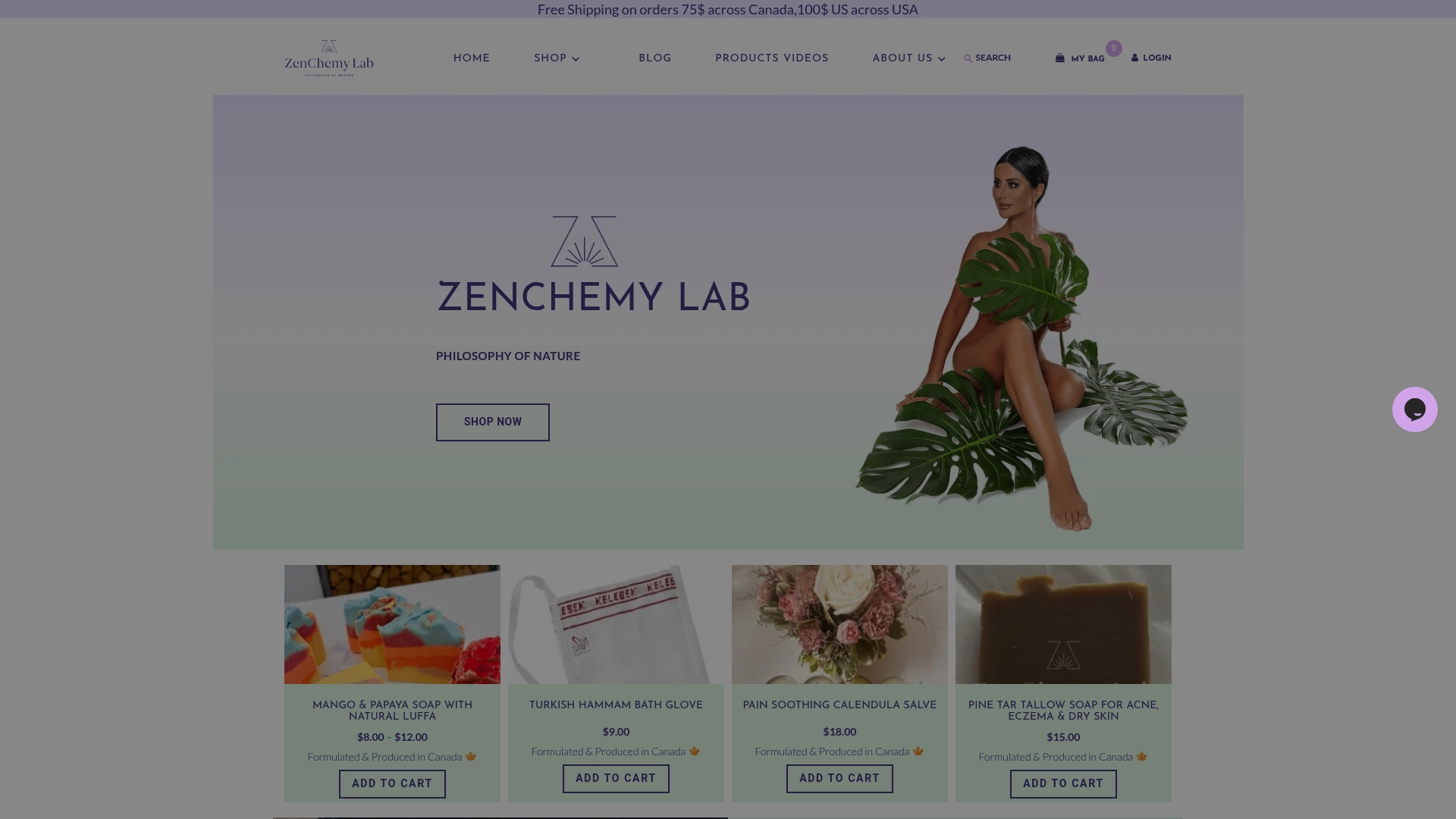
Zenchemylab crafts artisanal soaps, botanical cosmetics, and body care products from raw, natural ingredients. Every product reflects a commitment to purity that you can verify directly on the label. If you want to put your new label-reading skills to work right away, the natural beauty guide for 2026 is a strong starting point. It covers ingredient science alongside sustainable sourcing practices. For readers ready to explore products built around clean, clearly labelled formulas, the natural skin collection offers a curated range where what you see on the label is exactly what you get.
FAQ
What does INCI stand for in skincare?
INCI stands for International Nomenclature of Cosmetic Ingredients. It is the standardised system used globally to name cosmetic ingredients on product labels, making it easier to identify the same ingredient across different brands and countries.
How do I find the 1% line on a skincare label?
Look for marker ingredients like phenoxyethanol, tocopherol, or disodium EDTA. These are typically used at concentrations at or below 1%, so everything listed after them is present in trace amounts.
Are terms like “natural” and “non-comedogenic” regulated in Canada?
No. Terms like “natural,” “non-comedogenic,” and “dermatologist-tested” lack standardised definitions in Canada and most other regulated markets. They are marketing claims, not verified certifications.
What is the difference between “fragrance-free” and “unscented”?
“Fragrance-free” means no fragrance compounds are present in the formula. “Unscented” products may still contain masking fragrances used to neutralise the smell of other ingredients, making them a risk for sensitive skin.
How can I tell if an active ingredient is present at an effective concentration?
Check its position on the ingredient list relative to the 1% line markers. Niacinamide needs to appear in the top five or six ingredients to reach its effective range of 2–5%, and Vitamin C requires 8–20% to produce visible results.

6 Comments