TL;DR:
- Upcycled skincare transforms food industry by-products into high-value cosmetic ingredients through controlled processing and extraction.
- This practice is scientifically validated, emphasizing quality controls, traceability, and reproducibility to ensure efficacy and safety.
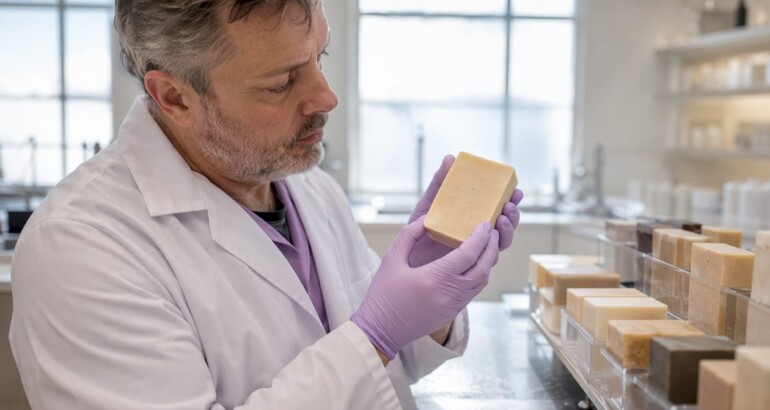
Every year, the global food industry generates millions of tonnes of peels, seeds, pulp, and grounds that get discarded as waste. What is upcycled skincare? It is the practice of transforming those discarded materials into high-performance cosmetic ingredients, a process the industry formally refers to as cosmetic upcycling. Far from being a trend built on good intentions alone, upcycled beauty products are backed by extraction science, clinical testing, and industrial quality controls. At Zenchemylab, we believe understanding what goes into your products matters as much as how they feel on your skin.
Table of Contents
- Key takeaways
- What upcycled skincare really means
- Raw materials and how they are processed
- Benefits of upcycled skincare for your skin
- How to choose upcycled products wisely
- Industry trends shaping upcycled beauty
- My take on upcycled skincare’s real value
- Discover Zenchemylab’s natural skincare collection
- FAQ
Key takeaways
| Point | Details |
|---|---|
| Upcycling is not recycling | Upcycled skincare transforms by-products into higher-value ingredients, not simply reusing or degrading materials. |
| Quality controls are non-negotiable | Traceability, reproducibility, and controlled extraction methods define genuine upcycled ingredients in cosmetics. |
| Performance is scientifically supported | Ingredients like spent coffee grounds and citrus peels show measurable antioxidant, hydrating, and protective skin benefits. |
| Sustainability and efficacy go together | Choosing upcycled beauty products supports circular economy goals without sacrificing product performance. |
| Consumer awareness shapes adoption | Knowing what to look for in ingredient sourcing and labelling helps you select products that truly deliver. |
What upcycled skincare really means
The term gets used loosely in beauty marketing, so it is worth being precise. Upcycled skincare uses ingredients derived from co-products or by-products of food production, agriculture, or other industries, materials that would otherwise be discarded, and transforms them into functional cosmetic ingredients through deliberate, controlled processing.
That last part matters. Upcycling is fundamentally different from recycling or downcycling, and the distinction is not semantic. Recycling typically breaks materials down into a neutral or lower-grade form for reuse. Downcycling degrades value further, turning something functional into something less so. Upcycling creates products of higher value than the original waste stream. A coffee bean spent after brewing still holds oils, antioxidants, and bioactive compounds. Extracting and concentrating those compounds into a cosmetic-grade ingredient is upcycling. Grinding them loosely into a scrub and calling it sustainable is something far less rigorous.
What genuinely qualifies as an upcycled cosmetic ingredient requires four industrial standards:
- ✅ Traceability — You can track the material from its source industry to the finished cosmetic ingredient.
- ✅ Quality control — Every batch meets defined chemical and microbiological specifications.
- ✅ Reproducibility — The ingredient performs consistently across production runs, not just in a single lab trial.
- ✅ Scalability — The extraction and processing can happen at commercial volumes without compromising quality.
Without these four pillars, a brand can call almost anything “upcycled.” With them, you have a category of ingredients that genuinely earns that label.
Pro Tip: When evaluating an upcycled product, look for brands that name the source material, the origin industry, and the extraction method. Vague language like “derived from natural by-products” tells you very little about actual quality.
Raw materials and how they are processed
The most common source materials in cosmetic upcycling come from agro-food side streams. These are the parts of fruits, grains, and plants that the food industry removes during processing and that would otherwise go to landfill or composting. Common examples include citrus peels from juice production, grape seeds and skins from winemaking, coffee grounds from brewing, tomato seeds from sauce manufacturing, and berry pomace from juice pressing.
Each of these materials carries a distinct profile of bioactive compounds. The table below captures a few key examples:
| Raw material | Source industry | Key bioactives | Potential skin benefit |
|---|---|---|---|
| Spent coffee grounds | Beverage | Linoleic acid, palmitic acid, polyphenols | Hydration, antioxidant protection, collagen support |
| Citrus peel (lemon) | Food and juice | Monoterpenes, flavonoids | Antioxidant, antimicrobial, anti-ageing |
| Grape seeds | Wine | Proanthocyanidins, tocopherols | UV protection, barrier support |
| Tomato seeds | Sauce and canning | Lycopene, carotenoids | Brightening, antioxidant |
Processing method makes or breaks the quality of these ingredients. Supercritical CO₂ extraction is the gold standard for upcycled cosmetic ingredients because it is completely solvent-free, operates at moderate temperatures, and preserves heat-sensitive compounds like terpenes, polyphenols, and carotenoids that would otherwise degrade. The CO₂ acts as the solvent under pressure, then returns to gas form at normal pressure, leaving behind a clean, concentrated extract with no residual solvent.
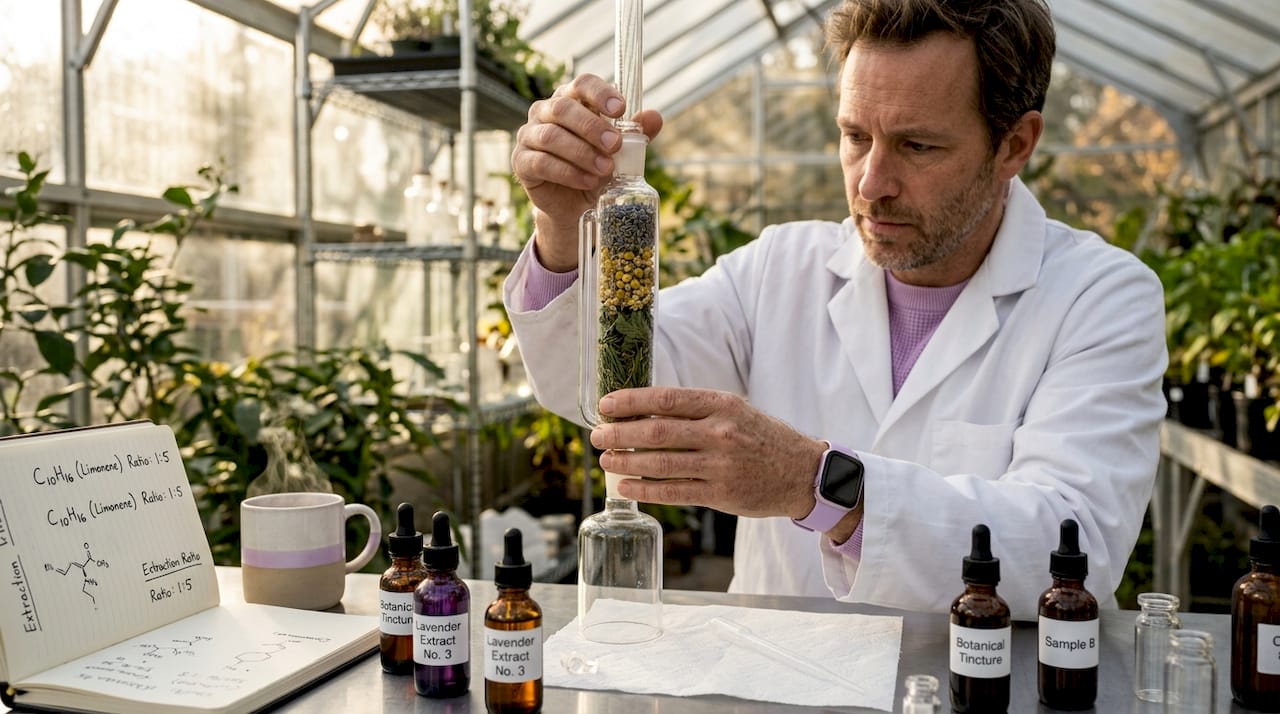
Temperature and oxygen exposure during extraction critically determine whether sensitive compounds survive intact. This is why extraction conditions are specified in quality documentation for compliant upcycled ingredients. A lemon peel extract processed at high heat with oxygen present will have a very different antioxidant activity compared to one extracted under controlled, low-oxygen supercritical CO₂ conditions.
Research on lemon peel extracts from limoncello production confirms this: monoterpene-rich extracts showed antioxidant, antimicrobial, and skin-hydrating properties in cell studies and early human trials, with no irritation observed on skin cells. That profile does not arise from poor processing. It depends entirely on the method.
Pro Tip: The extraction method directly changes the chemical composition of the ingredient. Supercritical CO₂ versus solvent extraction of the same coffee grounds produces significantly different chemical profiles with different stability and skin benefit outcomes. Ask your brand which method they use.
Benefits of upcycled skincare for your skin
This is where consumer scepticism often surfaces. Can ingredients from food waste genuinely perform at the level of traditionally sourced cosmetic actives? The short answer is yes, and the science supports it clearly.
The benefits of upcycled skincare are well-documented for several key ingredient categories:
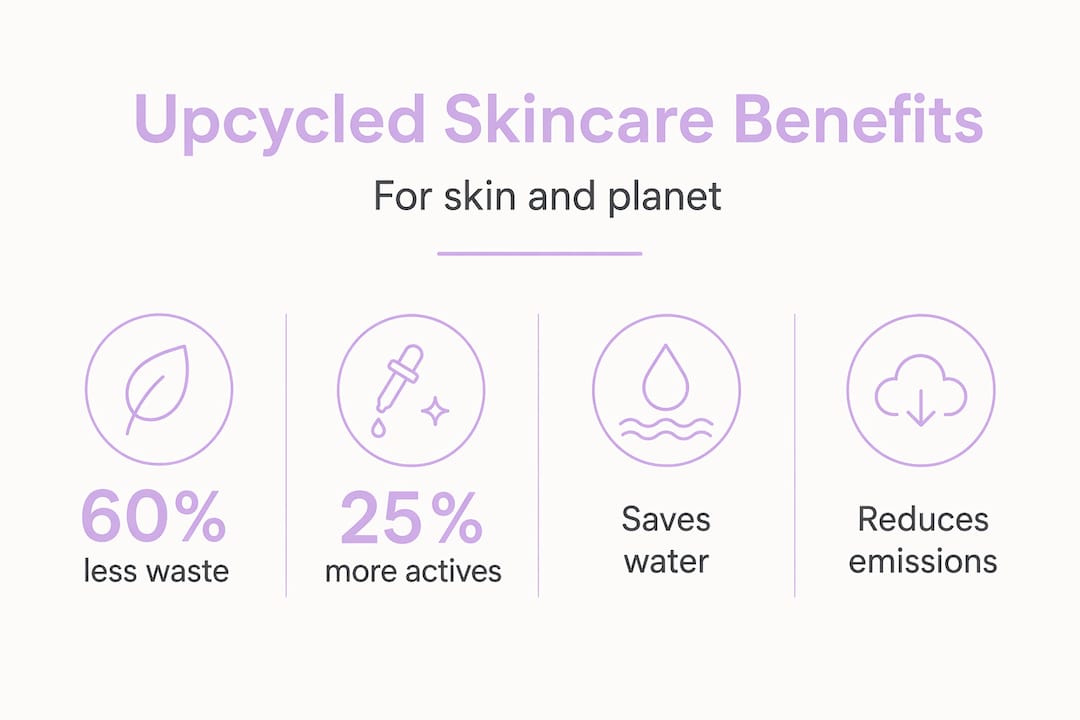
- Hydration — Spent coffee ground (SCG) oil extract creams were found to be non-irritating and significantly improved skin hydration in consumer studies, with pleasing texture and aroma noted as secondary benefits.
- Antioxidant protection — SCG lipid fractions are rich in linoleic and palmitic acids. The extracted oil shows high antioxidant activity that supports collagen production and may reduce wrinkle formation.
- UV protection — Polyphenols concentrated from spent coffee grounds have demonstrated UV-protective activity, adding a secondary layer of photoprotection when used in creams and serums.
- Microbiome support — Some upcycled fermented ingredients from fruit pomace support the skin’s natural bacterial balance rather than disrupting it.
- Anti-ageing activity — Citrus peel monoterpenes show potential for reducing pigmentation and supporting skin cell renewal in early-stage research.
The consistency of these benefits across batches depends on the quality controls already discussed. Controlled extraction and fraction selection produce reproducible, technically sound ingredients that deliver the same results whether you purchase a product in March or September. This is precisely why industrial upcycling is more than a sustainability narrative. It is a technical discipline.
Sustainable skincare options that use upcycled actives also reduce the demand for virgin raw material cultivation, which carries its own environmental footprint in land use, water, and pesticide application. The ingredient arriving in your moisturiser can have a measurably lower carbon and water footprint than one grown and harvested specifically for cosmetic use.
How to choose upcycled products wisely
Not every product labelled “upcycled” or “sustainable” meets the standards described above. Here is a practical framework for evaluating what you purchase:
-
Look for named source materials. A brand confident in its sourcing will tell you the ingredient came from spent coffee grounds after cold-brew production, not simply “coffee-derived.” Specificity signals credibility.
-
Check for extraction method disclosure. Brands using supercritical CO₂ or other controlled green chemistry methods will typically highlight this. Vague language around “natural extraction” is a red flag.
-
Seek quality certifications or third-party testing. Upcycled Food Association certification, ISO-aligned ingredient specifications, or published safety data all indicate a brand has gone beyond narrative. Read more about what those standards mean in practice in this guide to handmade cosmetic quality standards.
-
Start with a single product. If you are new to upcycled beauty products, begin with a cleanser or body scrub containing a well-studied ingredient like coffee grounds or citrus peel extract before committing to a full routine swap.
-
Fit upcycled choices into your broader routine intentionally. Upcycled products work best when selected for their functional role, not just their sustainability story. An exfoliating scrub with coffee grounds serves a different purpose than a serum rich in citrus polyphenols. Consider the zero-waste skincare principles that frame upcycled choices within a larger sustainable beauty approach.
Industry trends shaping upcycled beauty
The commercial adoption of cosmetic upcycling is accelerating, and the examples are increasingly concrete. Empiria Group partnered with Auraskin to launch a line of upcycled coffee by-product skincare products across Greek hotels in 2026, formulated to support the skin microbiome while advancing circular economy goals. This is not a small artisan experiment. It is a hospitality-scale deployment of science-backed upcycled actives.
The shift from niche to mainstream is visible in how brands are now framing upcycling as a strategic sourcing lever rather than a marketing story. Below is a quick comparison of where the category stands:
| Aspect | 2020 position | 2026 position |
|---|---|---|
| Brand adoption | Niche indie brands only | Mid-size and large brands entering |
| Consumer awareness | Low and sceptical | Growing and more informed |
| Scientific validation | Early-stage studies | Multiple peer-reviewed confirmations |
| Regulatory framework | Largely undefined | Certifications and standards emerging |
| Ingredient variety | Coffee, citrus, grape | Expanding to tomato, berry, grain, and more |
Ongoing research is exploring upcycled ingredients from olive mill waste, spent grain from brewing, and even seaweed processing residues. The science of sustainable cosmetic formulation is expanding faster than most consumers realise, and the ingredients arriving in mainstream products over the next five years will largely come from today’s waste streams.
My take on upcycled skincare’s real value
I want to be direct about something that often gets glossed over in conversations about upcycled beauty: the sustainability story is genuinely worthless without the technical rigour behind it.
I have reviewed formulations and ingredient documentation from brands claiming upcycled status, and the range in quality is striking. Some producers apply the same extraction discipline used in pharmaceutical ingredient manufacturing. Others are essentially grinding food scraps and putting them in packaging with earthy colour palettes. Those two products are not comparable, even if both carry the word “upcycled” on the label.
What I have come to believe, based on working closely with natural ingredient sourcing and formulation, is that consumers actually hold more power here than they realise. Asking a brand for the Certificate of Analysis on their upcycled ingredient is not a strange or demanding request. It is the same question a responsible formulator asks before accepting a supply. When enough consumers ask those questions, brands lift their standards.
The other thing I would caution against is assuming that “upcycled” automatically means gentle or safe for sensitive skin. The same antioxidant-rich coffee oil that improves hydration for most skin types can be a concern in fragrance-sensitive formulations if terpene fractions are not isolated correctly. Ingredient quality and context always matter. This is why I keep coming back to the same point: the method is everything.
My honest view is that upcycled skincare, done properly, represents one of the most coherent responses to both environmental pressure and consumer demand for high-performance natural products. The ingredients are real, the benefits are measurable, and the sourcing is genuinely more responsible. We just need to hold brands to the standard that makes all of that true.
— Alex
Discover Zenchemylab’s natural skincare collection
If you have been exploring sustainable skincare options and want products that reflect genuine ingredient quality, Zenchemylab is a natural place to start.
At Zenchemylab, we craft natural skin products using thoughtfully sourced botanical and upcycled-inspired ingredients, formulated in small batches for consistent quality and real skin results. Our coffee body scrubs bring together upcycled coffee grounds and nourishing oils for an exfoliating experience that supports hydration and circulation at the same time. For those building a more intentional routine, our body care collection spans cleansers, scrubs, and moisturisers made with purity and performance in mind. Explore what clean, artisanal skincare looks like when the ingredients actually do the work.
FAQ
What exactly is upcycled skincare?
Upcycled skincare uses ingredients derived from food or agricultural by-products, such as coffee grounds, citrus peels, or seeds, that are processed through controlled extraction into functional cosmetic actives. The key distinction from recycling is that upcycling creates ingredients of higher value than the original waste material.
Are upcycled skincare ingredients safe to use?
Yes, when produced with proper quality controls. Compliant upcycled ingredients undergo traceability documentation, chemical specification testing, and safety assessments equivalent to traditionally sourced cosmetic actives. Vague sourcing claims without technical backing are the concern, not upcycled ingredients as a category.
How does upcycled skincare work for the skin?
The bioactive compounds concentrated from by-products, such as polyphenols, fatty acids, and antioxidants, interact with skin the same way those compounds do in any high-quality botanical ingredient. Coffee ground extracts have demonstrated measurable hydration improvement, antioxidant activity, and potential collagen support in clinical observations.
What should I look for on an upcycled beauty product label?
Look for the named source material and origin industry, the extraction method used, and any third-party quality certification. Specificity is the strongest indicator of a genuinely upcycled product rather than a marketing-led claim.
Do upcycled ingredients perform as well as conventional cosmetic actives?
Evidence supports comparable and in some cases superior performance for well-studied upcycled actives. Lemon peel extracts from limoncello production, for example, showed antioxidant, antimicrobial, and hydrating properties validated through cell studies, meeting the same evidence standards applied to conventional cosmetic ingredients.