
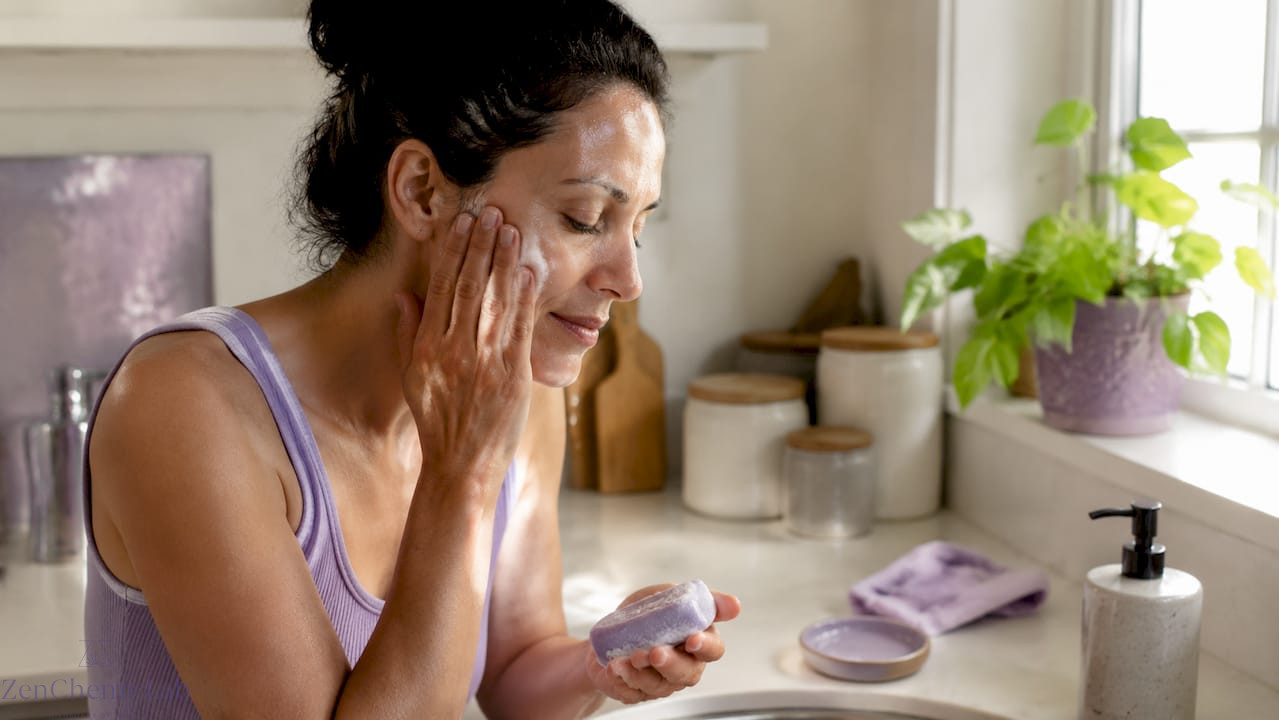
TL;DR:
- pH balanced soap matches your skin’s natural acidity, helping preserve the skin’s barrier and moisture. Syndet bars use synthetic surfactants to control pH and avoid disruption of the acid mantle. Choosing a true pH balanced cleanser supports skin health and is especially beneficial for sensitive or reactive skin.
pH balanced soap is a cleanser formulated to match your skin’s natural acidic pH range of 4.5–6.5, unlike traditional soaps that sit at an alkaline pH of 9–10. The difference sounds small, but it has a direct impact on your skin barrier, moisture levels, and long-term skin health. Traditional soaps are alkaline by chemistry, not by accident. The saponification process that creates them fixes their pH at a level your skin actively has to recover from after every wash. If you have sensitive, dry, or reactive skin, that recovery cost adds up fast.
What is pH balanced soap, exactly?
pH balanced cleansers are formulations designed to stay within the 4.5–6.5 range that mirrors your skin’s natural acidity. The industry term for the most reliable version of this product is a syndet bar, short for synthetic detergent bar. Syndet bars use synthetic surfactants instead of saponified oils, which gives manufacturers precise control over pH. Traditional soap cannot achieve this. Saponification chemistry locks traditional soap into an alkaline state, making it fundamentally incompatible with your skin’s acidic environment.
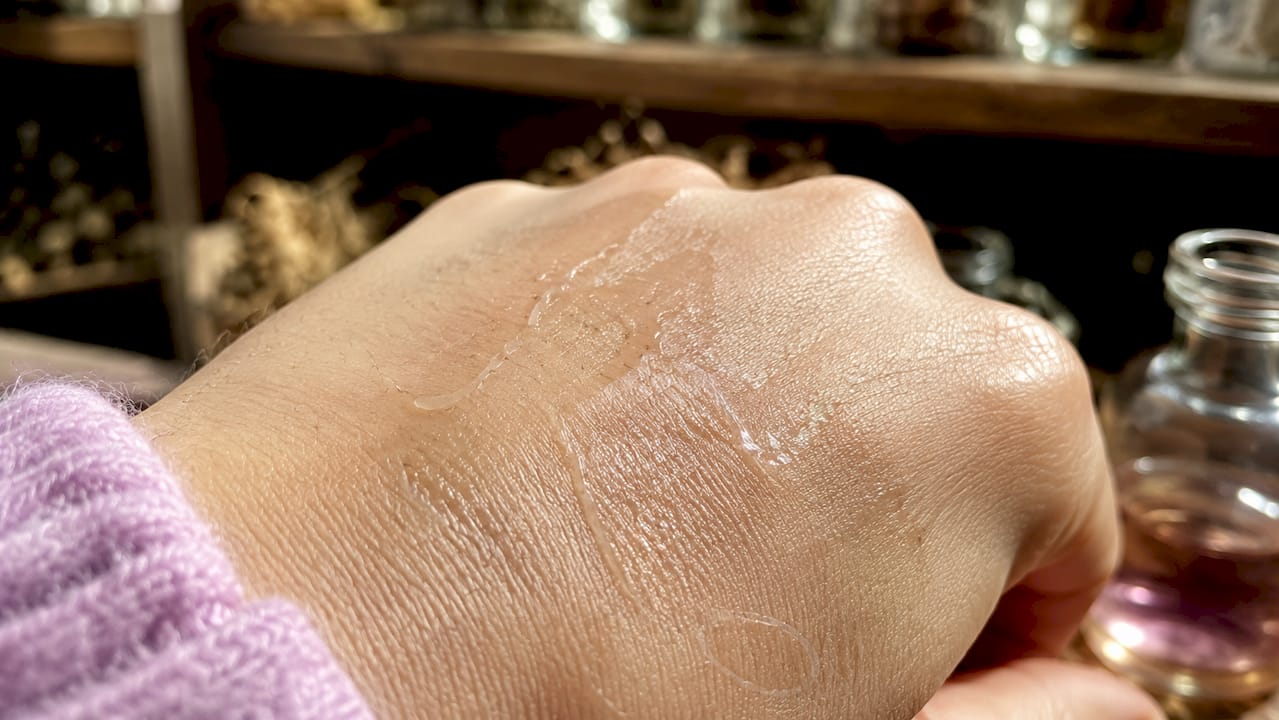
Your skin’s outermost layer carries what dermatologists call the acid mantle, a thin film of sebum, sweat, and natural moisturising factors. This film sits at roughly pH 4.5–5.5 and acts as your first line of defence against bacteria, irritants, and moisture loss. Washing with an alkaline soap disrupts that film every single time. A pH balanced cleanser, by contrast, preserves it.
Why does skin pH matter so much?
Your skin’s natural acidity is not cosmetic preference. It is a biological requirement. The acid mantle functions like the mortar in a brick-and-mortar wall, holding skin cells together and keeping irritants out. When you wash with an alkaline product, you dissolve that mortar temporarily.
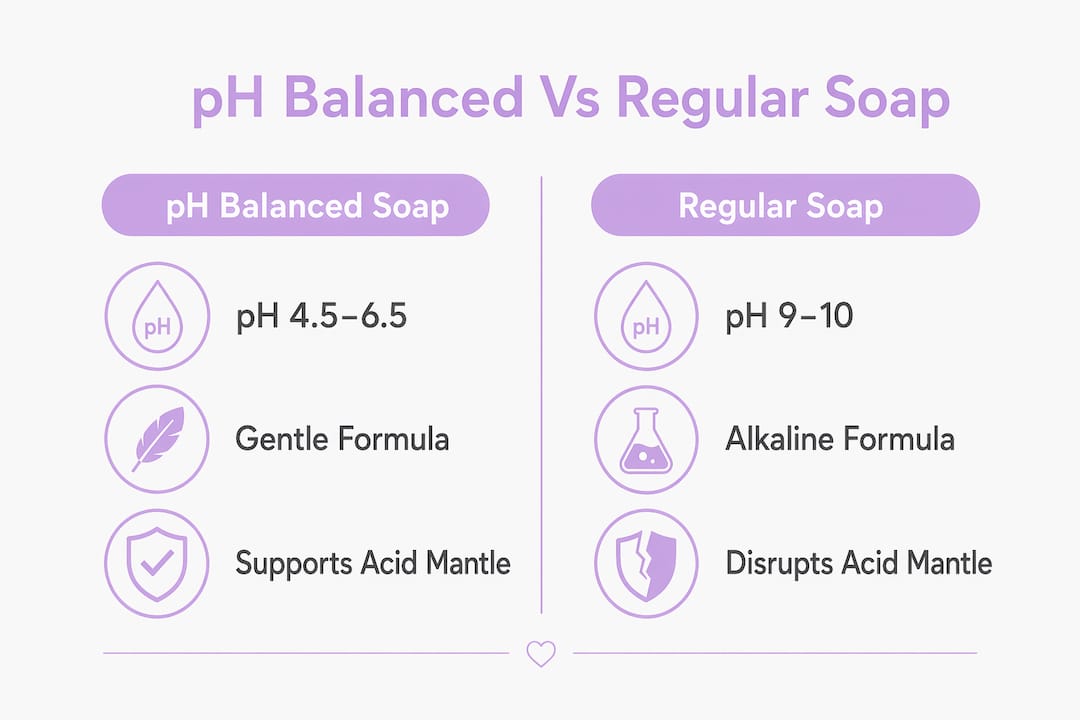
Alkaline soap disrupts the acid mantle and forces it into a repair cycle that takes 4–6 hours to complete after each wash. That means if you shower in the morning and again at night, your skin may never fully recover between washes. Over months and years, this contributes to chronic sensitivity, tightness, and a weakened lipid barrier.
The consequences go beyond dryness:
- ✔ Increased transepidermal water loss (TEWL): A disrupted barrier lets moisture escape faster, leaving skin feeling tight and dehydrated.
- ✔ Microbiome imbalance: Your skin hosts beneficial bacteria that thrive in an acidic environment. Alkaline cleansers shift that balance toward harmful strains.
- ✔ Heightened irritant sensitivity: A compromised barrier lets allergens and irritants penetrate more easily, triggering redness and reactions.
- ✔ Accelerated skin ageing: Chronic barrier disruption contributes to cumulative damage over time, particularly for mature skin.
Pro Tip: If your skin feels tight or “squeaky clean” after washing, that sensation is not cleanliness. It is a sign your acid mantle has been stripped.
pH balanced soap vs regular soap: what is the real difference?
The core difference comes down to chemistry and formulation control. Traditional soap’s alkaline pH is a direct result of saponification, the chemical reaction between fats or oils and a strong alkali like sodium hydroxide. That reaction produces soap and glycerin, but it also fixes the pH at 9–10 with no way to lower it without changing what the product fundamentally is.
Syndet bars, by contrast, are built from synthetic surfactants such as sodium cocoyl isethionate (SCI) or sodium lauroyl sarcosinate. These ingredients clean effectively without requiring an alkaline base. Manufacturers can set the pH to around 5.5, right in the skin’s comfort zone.
The label “pH balanced” is a different matter entirely. That term is unregulated, meaning any brand can print it on packaging without verification. A product labelled “pH balanced” may still contain harsh surfactants or sit outside the ideal range. This is why ingredient scrutiny matters more than label claims.
| Feature | Syndet bar | Traditional soap |
|---|---|---|
| pH range | 4.5–6.5 | 9–10 |
| Formulation base | Synthetic surfactants (SCI, sarcosinate) | Saponified oils |
| pH control | Precise, manufacturer-set | Fixed by saponification chemistry |
| Foam level | Low to moderate | High |
| Skin barrier impact | Minimal disruption | Disrupts acid mantle |
| Best for | Sensitive, dry, reactive, eczema-prone skin | General use on resilient skin |
Pro Tip: Look for the words “syndet” or “soap-free” on the label. These terms are more reliable indicators of pH control than the phrase “pH balanced” alone.
What are the benefits of pH balanced soap for your skin?
The benefits of pH balanced soap are most visible over time, not just after one wash. Consistent use preserves the acid mantle, reduces barrier disruption, and supports the skin’s natural repair processes. For people with sensitive, dry, or eczema-prone skin, switching to a syndet bar is often the single most impactful change they can make to their cleansing routine.
Here is what the science supports:
- ✔ Reduced irritation and redness: Maintaining skin pH prevents the inflammatory response triggered by alkaline exposure.
- ✔ Better moisture retention: A preserved lipid barrier reduces TEWL, keeping skin hydrated between washes.
- ✔ Healthier skin microbiome: Acidic conditions favour Lactobacillus and other beneficial bacteria that protect against pathogens.
- ✔ Improved tolerance to other skincare products: A healthy barrier makes skin less reactive to actives like retinol or vitamin C.
- ✔ Preventative for all skin types: pH balanced cleansing benefits every skin type, not just reactive skin, and is especially protective for ageing skin facing cumulative barrier damage.
Effective pH balanced formulations often include supporting ingredients like glycerin, ceramides, hyaluronic acid, and sodium cocoyl isethionate. These humectants and barrier-builders work alongside the balanced pH to actively nourish skin rather than simply cleanse it.
Dermatologist Dr. Azadeh Shirazi notes that syndet bars are equally effective and gentler than liquid cleansers for maintaining pH balance and skin integrity. This challenges the common assumption that bar soap is inherently harsher than liquid formats.
How to choose a truly pH balanced soap
Choosing a genuinely pH balanced cleanser requires looking past marketing language and into the formulation itself. Follow these steps to make a confident choice:
- Look for “syndet” or “soap-free” on the label. These terms indicate the product uses synthetic surfactants with controllable pH, unlike saponified soap.
- Check the ingredient list for mild surfactants. Sodium cocoyl isethionate (SCI), sodium lauroyl sarcosinate, and cocamidopropyl betaine are gentle options. Avoid sodium lauryl sulfate (SLS) as a primary surfactant, particularly for sensitive skin.
- Verify pH with test strips at home. pH test strips remain the only reliable consumer method to confirm a product’s actual pH. Dissolve a small amount in water and test. You are looking for a reading between 4.5 and 7.0.
- Match the formulation to your skin type. Dry or eczema-prone skin benefits from syndet bars with added ceramides and glycerin. Oily or acne-prone skin does well with low-foam, pH balanced gel cleansers containing salicylic acid at a controlled pH.
- Be sceptical of foaming claims. Foamy cleansers with harsh surfactants can irritate skin even when labelled pH balanced. Low-foam formulations are generally safer for reactive skin.
Pro Tip: Wet a pH strip and press it directly against a damp syndet bar for 30 seconds. A reading of 5.0–6.0 confirms you have a genuinely skin-friendly product.
You can also learn more about selecting gentle soap ingredients to build a cleansing routine that supports your skin’s specific needs.
Common misconceptions about pH balanced soap
Several persistent myths make it harder for people to choose the right cleanser. Clearing them up saves you time, money, and skin stress.
- “All liquid soaps are pH balanced.” This is false. Liquid cleansers are not automatically pH balanced. Formulation specifics matter far more than format. Many liquid body washes contain SLS and sit at an alkaline pH.
- “If it foams well, it cleans better.” Foam is a cosmetic effect, not a measure of cleansing power. High-foam products often rely on harsh surfactants that strip the barrier.
- “Natural soaps are pH balanced.” Traditional handmade soaps, however lovingly crafted, are still saponified. Their pH sits at 9–10 by chemistry. “Natural” does not mean pH balanced. You can read more about handmade versus commercial soaps to understand the full picture.
- “pH balanced soap is only for sensitive skin.” pH balanced cleansing is preventative and beneficial for every skin type. Resilient skin simply shows the damage later.
- “One alkaline wash won’t hurt.” Skin takes 4–6 hours to restore its acid mantle after alkaline exposure. Repeated disruption compounds over time into chronic sensitivity.
Key takeaways
pH balanced soap, specifically syndet bars formulated to pH 4.5–6.5, is the most reliable way to cleanse skin without disrupting the acid mantle or triggering long-term barrier damage.
| Point | Details |
|---|---|
| Syndet bars are the gold standard | Only syndet or soap-free formulations offer reliable pH control around 5.5. |
| “pH balanced” labels are unregulated | Verify with pH test strips at home; look for syndet or soap-free on packaging instead. |
| Alkaline soap causes cumulative damage | Skin takes 4–6 hours to recover from each alkaline wash, compounding over time. |
| Benefits extend to all skin types | pH balanced cleansing is preventative, not just therapeutic for sensitive or reactive skin. |
| Ingredients matter as much as pH | Look for SCI, ceramides, glycerin, and hyaluronic acid for barrier-supportive cleansing. |
Why I think pH is the most underrated step in skincare
Most skincare conversations focus on serums, actives, and moisturisers. The cleanser gets treated as a throwaway step. After years of working with skin formulations and watching people troubleshoot persistent sensitivity, I am convinced that the cleanser is where most routines quietly fail.
The logic is straightforward. You can apply the most carefully chosen ceramide serum in the world, but if you are washing with a pH 10 bar soap twice a day, you are undoing that work before it starts. The acid mantle is not a luxury feature. It is the foundation everything else builds on.
What I find most useful in practice is the test strip approach. People are often genuinely surprised when they test their “gentle” drugstore bar and see a reading of 9 or higher. That moment of seeing the number shifts the conversation from abstract skincare advice to something concrete and personal.
I also caution against assuming that switching to a liquid cleanser solves the problem. The format is irrelevant if the formulation is wrong. A syndet bar from a brand that understands skin chemistry will outperform a liquid cleanser loaded with SLS every time. The role of pH in skincare is one of those topics where a small amount of knowledge pays off in years of better skin.
— Alex
Zenchemylab’s approach to pH balanced natural skincare
Zenchemylab was built on the belief that natural ingredients and sound skin science are not opposites. They work best together.
The Zenchemylab body care collection includes syndet-style and soap-free formulations crafted from botanical ingredients, designed to cleanse without stripping the acid mantle. Each product reflects Zenchemylab’s commitment to purity and skin health, using ingredients like SCI, glycerin, and plant-based extracts chosen for both their gentleness and efficacy. For readers ready to build a cleansing routine grounded in both nature and science, the natural beauty tips guide is a practical starting point. Healthy skin begins with what you wash it with.
FAQ
What pH should a balanced soap have?
A pH balanced soap should fall between 4.5 and 6.5 to match the skin’s natural acidity. The ideal target for daily use is around 5.5, which preserves the acid mantle without disrupting the skin barrier.
Is syndet bar the same as pH balanced soap?
A syndet bar is the most reliable form of pH balanced soap. Unlike traditional saponified soaps fixed at pH 9–10, syndet bars use synthetic surfactants that allow manufacturers to set the pH precisely around 5.5.
How can I test if my soap is pH balanced?
Dissolve a small amount of soap in water and dip a pH test strip into the solution. A reading between 4.5 and 7.0 confirms the product is within a skin-friendly range. This is the only reliable consumer method, as “pH balanced” labelling is unregulated.
Is pH balanced soap better for sensitive skin?
Yes. pH balanced soap reduces acid mantle disruption, lowers irritation risk, and supports the skin microbiome, all of which are critical for sensitive, dry, or eczema-prone skin. Dermatologists recommend syndet bars specifically for reactive skin types.
Can natural or handmade soap be pH balanced?
Traditional handmade soap made through saponification cannot be truly pH balanced. The chemistry fixes its pH at 9–10 regardless of the ingredients used. A natural syndet bar, however, can be both plant-derived and pH balanced.


2 Comments