
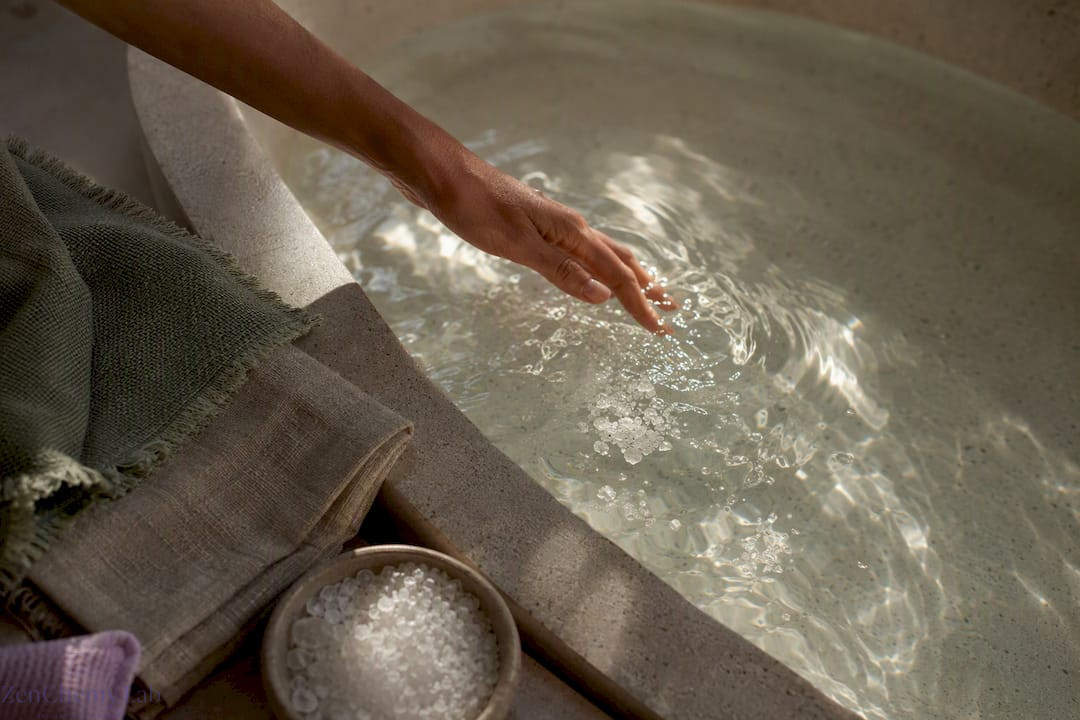
Yes, and the clinical evidence backs it up: soaking in Dead Sea salt improves skin hydration and reduces surface inflammation for many people with dry or reactive skin, including those with mild atopic dermatitis. Bathing studies and dermatology reviews confirm measurable changes in barrier function after regular soaks. At home, a modest amount of Dead Sea salt dissolved in a full tub, soaked for a short duration, is recommended.
TL;DR:
- Consistent 15-minute soaks in a 5% Dead Sea salt solution over weeks improve skin barrier function and reduce surface redness and roughness.
- The primary minerals responsible for benefits include magnesium, potassium, bromide, and calcium, which support hydration and barrier repair.
- Home use should involve dissolving about one cup of salt in warm water and applying a moisturizer within five minutes of drying to maximize hydration.
- Salt baths are not suitable for broken skin, infections, or post-surgical wounds due to the risk of stinging and irritation.
- Aftercare is essential; applying an emollient promptly after soaking reinforces the skin’s barrier and sustains the benefits.
Table of Contents
- What clinical studies actually show about Dead Sea salt bath benefits
- How Dead Sea minerals support your skin barrier
- How to prepare a Dead Sea salt bath at home
- Dead Sea salt vs Epsom salt: which one should you use?
- Who should skip the salt bath, and how to test it safely
- Pairing your soak with the right aftercare
- Our take: the science supports this, but only with the right routine
- Where to find Dead Sea salt bath soaks that are made right
- Sources
What clinical studies actually show about Dead Sea salt bath benefits
The strongest evidence comes from a controlled bathing trial where participants with atopic dry skin soaked their forearms in a Dead Sea salt solution at a controlled concentration for a defined time. The results, published research on Dead Sea salt bathing shows, were consistent across several measures:
- Transepidermal water loss (TEWL) dropped, meaning skin held onto moisture better after treatment.
- Skin hydration scores rose compared to plain tap water soaks.
- Roughness and redness both decreased over the treatment period.
A separate dermatology review of Dead Sea water’s biological effects reaches a similar conclusion from a wider angle, pulling together in vitro, animal, and clinical data. It reports consistent signals for moisturization, barrier repair, and anti-inflammatory activity, with some early evidence pointing toward anti-aging effects as well.
Here’s the catch: these results come from controlled conditions using a 5% concentration, applied repeatedly over weeks, not a single weekend soak. Sample sizes in bathing trials tend to be modest, and much of the psoriasis-specific research is drawn from Dead Sea climate therapy programs that combine bathing with supervised sunlight exposure and a change in climate altogether. Isolating the salt water’s contribution from those other variables is difficult, which is why WebMD’s overview of Dead Sea salt is careful to frame it as symptom relief rather than a cure.
What the numbers tell you: a 15-minute soak, repeated over time, produced measurable barrier improvement in a controlled trial. An occasional bath likely offers comfort and softening, but reproducing study-level results takes consistency, not a single indulgent evening.
How Dead Sea minerals support your skin barrier
Dead Sea water carries a mineral profile unlike ordinary sea salt, and that difference is where its skin-care reputation actually comes from.
- Magnesium may help calm pro-inflammatory signalling in skin cells and support healthier epidermal turnover.
- Potassium helps regulate cell hydration at a basic level.
- Bromide is associated with soothing properties in topical use.
- Calcium plays a role in cell renewal and barrier structure.
The review noted above proposes two plausible mechanisms behind these effects: direct mineral ion penetration into the skin, and activation of osmotic stress pathways that prompt skin cells to reinforce their own barrier function. Neither mechanism is fully mapped in humans, so treat the biochemistry as a reasonable explanation, not settled fact. What’s well supported is the outcome. What’s still catching up is the precise “why.”
Pro Tip: Look for magnesium chloride as a named ingredient if you’re comparing bath products. It’s one of the more research-backed minerals in this category, and it shows up in the same family of compounds studied in Dead Sea bathing trials.
How to prepare a Dead Sea salt bath at home
Clinical trials use a controlled concentration salt solution, but at home you can approximate this with measured salt amounts. Here’s a routine that mirrors the research while staying practical:
- Fill your tub with warm water, ideally around 35°C (95°F). Hot water strips natural oils and can undo the hydration benefit you’re after.
- Dissolve about one cup of Dead Sea salt into the water, stirring until it’s fully mixed.
- Soak for 15 to 20 minutes, matching the duration used in the clinical trial referenced above.
- Skip the vigorous rinse. A light mineral film left on your skin can extend ion contact time, so pat yourself dry instead of scrubbing off.
- Apply a fragrance-free emollient within three to five minutes of stepping out. This window matters. Waiting too long lets that hydration evaporate right back out.
For general wellness, two or three soaks a week is a reasonable starting point. During an active eczema flare, daily bathing can help if your skin tolerates it, but check with a clinician first, especially if the skin is broken or actively irritated. One quality cue worth knowing: genuine Dead Sea salt tends to feel slightly damp rather than bone-dry, a result of its naturally hygroscopic minerals. A follow-up balm from something like a lotion bar formulated for dry skin locks that moisture in before it has a chance to escape.
Dead Sea salt vs Epsom salt: which one should you use?
These two get lumped together constantly, but they’re not interchangeable. Dead Sea salt carries a broad mineral mix, magnesium, potassium, bromide, and calcium together, which is why the clinical signal for skin benefits leans in its favour. Epsom salt is magnesium sulfate, plain and simple, and it’s the one most commonly reached for when muscles are sore rather than skin is dry.
- Choose Dead Sea salt if your priority is skin hydration, barrier repair, or calming redness.
- Choose Epsom salt if you’re dealing with muscle soreness or general post-workout stiffness. Our Epsom salt bath benefits guide breaks down that use case in more detail.
- A 50/50 blend works well when you want both effects in one soak, and neither salt is so concentrated that combining them causes problems.
Who should skip the salt bath, and how to test it safely
Salt baths aren’t right for everyone, and skipping the caution step is where most bad experiences start.
- Avoid salt baths if you have open wounds, actively infected skin, recently had surgery, or severely broken eczema. Salt stings on compromised skin, sometimes intensely.
- Check with a clinician first if you’re on immunosuppressive medication or have a condition where skin infection risk is elevated.
- Patch-test on a small area of forearm skin before a full bath, watching for stinging or excess redness over the following hour.
- Reduce concentration if you feel any burning. Half a cup instead of a full one is a reasonable adjustment.
What the research flags: even the clinical trial behind these benefits used a modest 5% concentration on healthy-enough skin capable of tolerating repeated exposure, not broken or acutely inflamed tissue. Over-soaking, going longer than 20 minutes or bathing daily without a moisturizing follow-up, can leave skin drier than when you started, which defeats the entire purpose.
Pairing your soak with the right aftercare
At Zenchemylab, we build our bath soaks and body care line around the same principle the research points to: minerals do their best work when they’re followed by something that seals moisture in. A soak alone, without proper aftercare, only gets you halfway to the benefit.
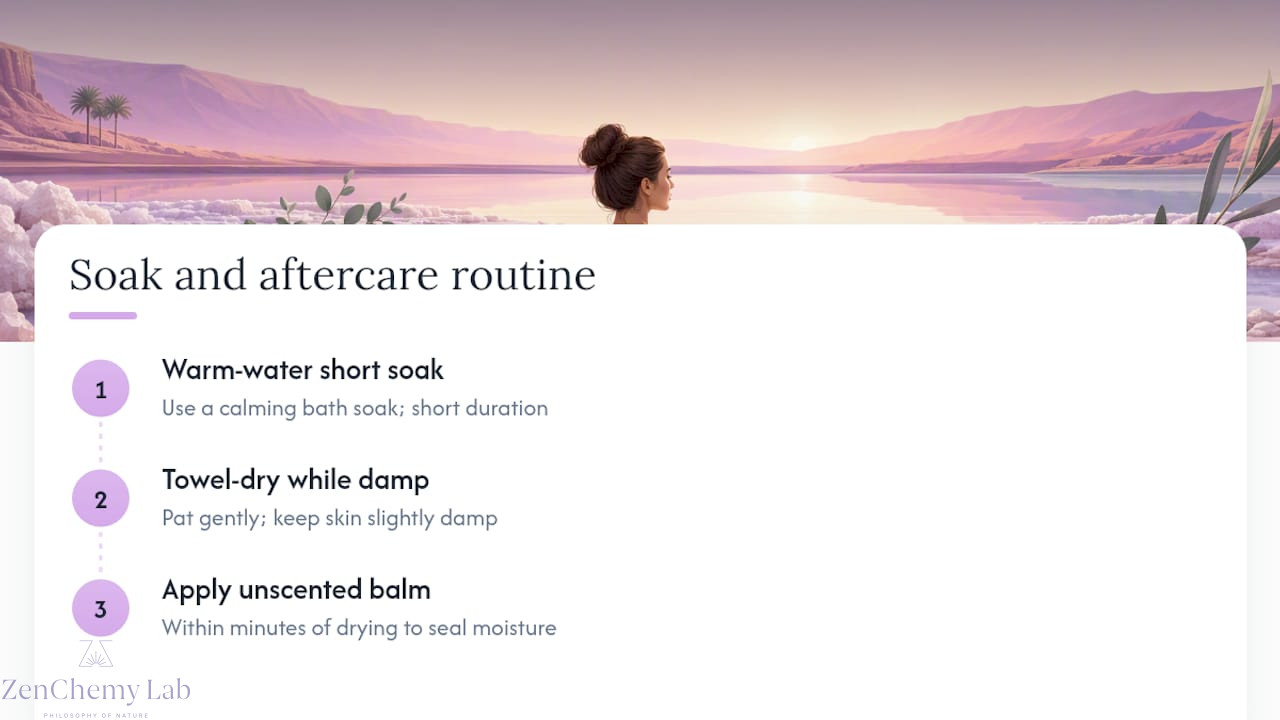
If you’re testing a routine at home, timing matters as much as the ingredients. Apply an unscented balm or lotion bar within minutes of towel-drying, while skin is still slightly damp, rather than waiting until it’s fully dry. Pair that with a calming bath soak for the soak itself, and you’re following the same warm-water, short-duration, immediate-moisturize sequence that clinical bathing studies used. It’s a small window, but it’s the one that separates a soak that helps from one that just feels nice for twenty minutes.
Our take: the science supports this, but only with the right routine
The evidence for Dead Sea salt is genuinely better than most bath-time wellness claims you’ll come across. That’s worth saying plainly, because the wellness industry has spent years attaching “clinically proven” to things that aren’t. This one has a real trial behind it, with measured TEWL and hydration outcomes, not just anecdotal glow.
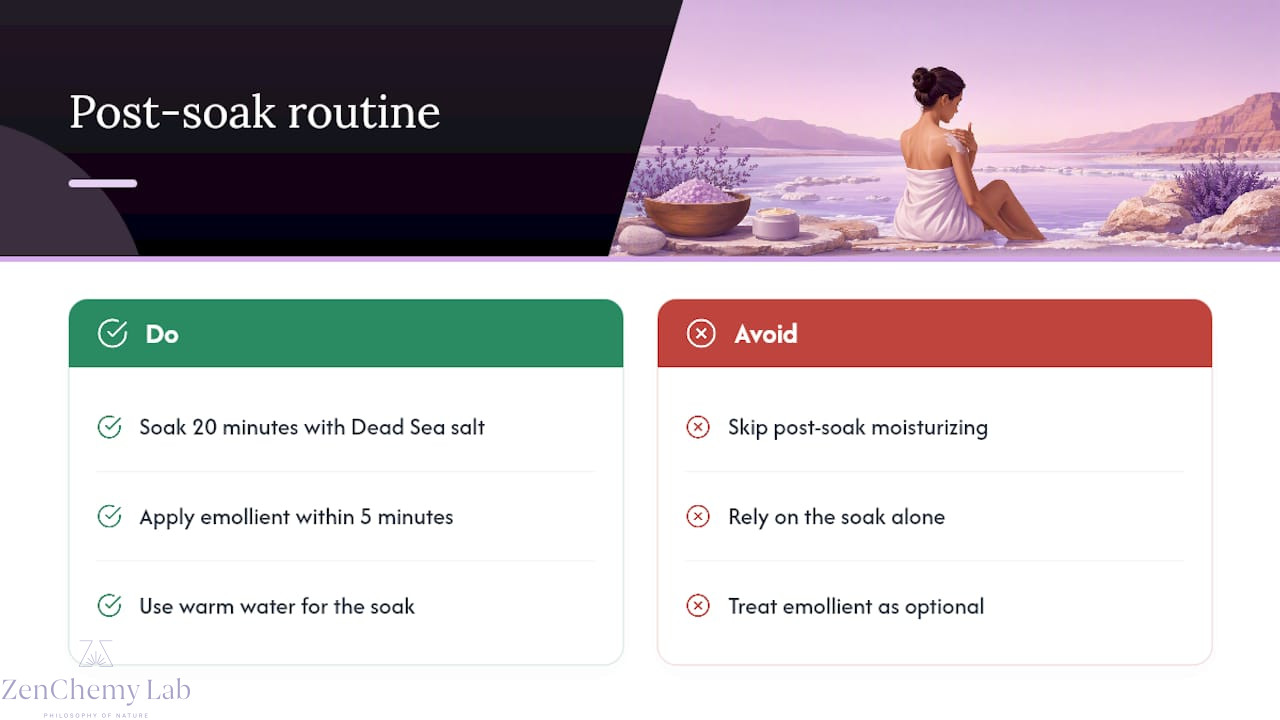
Where conventional advice falls short is the aftercare gap. Most articles on this topic stop at “soak for 20 minutes” and leave you there, as if the mineral bath does all the work on its own. It doesn’t. The research this article draws from treats moisturizing after the bath as part of the same intervention, not an optional add-on. Skip that step and you’re working against the very barrier repair you soaked for.
If you take one thing from this, prioritize the follow-through over the soak itself. Warm water and a cup of salt matter, but the emollient applied in the five minutes after you towel off is doing just as much of the job.
— Alex
Where to find Dead Sea salt bath soaks that are made right
Some companies make handcrafted bath soaks and body balms using non-toxic, cruelty-free ingredients, designed for the routine outlined above: a mineral-rich soak followed by an emollient that locks hydration in before it escapes. If you’ve been buying mass-market bath salts that feel bone-dry and smell more like a candle aisle than an actual mineral bath, that’s often a sign of heavy processing rather than genuine Dead Sea salt.

Our natural skin product line is built for readers who want the science-backed routine without guessing at ratios or ingredient lists. Whether you’re managing occasional dryness or just want a soak that actually does something, start with a soak-and-balm pairing designed to work together, then adjust frequency to what your skin tells you. Browse the current bath soak collection and pick one to try this week.
This article is general information, not a substitute for advice from a qualified doctor. Consult a qualified healthcare professional about your own circumstances before acting on anything here.
Sources
- Bathing in a magnesium-rich Dead Sea salt solution improves skin barrier function, enhances skin hydration, and reduces inflammation in atopic dry skin
- The biological role of Dead Sea water in skin health: a review
- Dead Sea salt: Health benefits, uses and safety
1 Comments