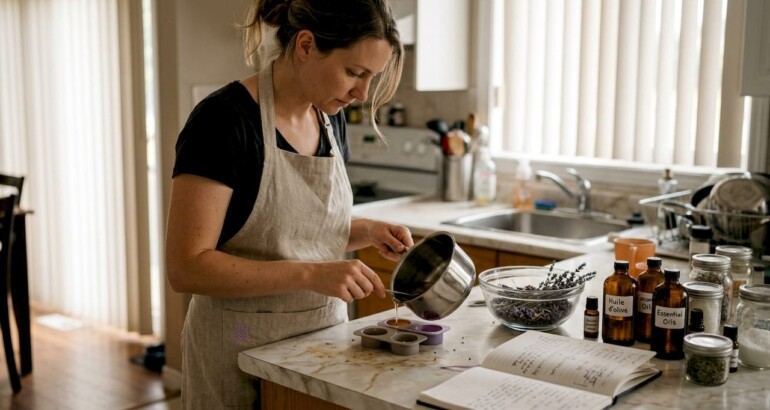
Sodium hydroxide is the alkali that turns fat into soap through a reaction called saponification and it is required for the process to work at all. When a recipe is measured correctly and the bar is given enough time to cure, that caustic ingredient is fully consumed, leaving no active lye behind. Two checks confirm this: a stable pH reading and a proper cure period.
TL;DR:
- Properly measured sodium hydroxide fully reacts during soapMaking, leaving no active lye in finished bars if the recipe and curing process are correct.
- Sodium hydroxide purity and precise calculation based on oil-specific saponification values are critical to ensure safety and expected results.
- Handling NaOH requires equipped PPE, careful addition to water, and immediate rinsing in case of contact, as it is highly caustic with a pH of 14.
- Superfatting or applying a lye discount creates a safety margin by leaving excess oil, which prevents active lye from remaining in the final soap.
- Proper disposal involves neutralizing dilute residual lye with water and avoiding pouring undiluted or concentrated NaOH directly into drains or soil.
Table of Contents
- What sodium hydroxide is and its role in soap making
- How saponification actually works in your soap pot
- Sodium hydroxide versus potassium hydroxide: which one do you need?
- Handling sodium hydroxide safely: PPE and first aid
- Superfatting and lye discount: your safety margin, built in
- Buying, storing, and handling sodium hydroxide at home
- Fixing soap problems and confirming your bar is safe to use
- Environmental considerations and disposal of sodium hydroxide solutions
- Why ZenChemy Lab treats lye chemistry as non-negotiable
- The gap between “lye soap” fear and lye soap reality
- Sources
What sodium hydroxide is and its role in soap making
Sodium hydroxide (NaOH) is a white, crystalline alkali sold as flakes, pellets, or beads. You may know it better as lye or caustic soda, and it’s the same compound used industrially to make paper and clean drains. In soap making, it’s the reagent that unlocks saponification.
Here’s the chemistry in plain terms: oils and butters are made of triglycerides, molecules built from glycerol and three fatty acid chains. When NaOH dissolves in water and meets those triglycerides, it splits each one apart. The fatty acids bond with sodium to form soap salts (the cleansing molecules you actually want), while glycerol is released as a natural byproduct that helps moisturize skin. PubChem’s compound record for sodium hydroxide documents the properties that make this reaction possible, including its high pH and strong reactivity with fats.
Purity matters here. Reagent-grade NaOH (typically 98 to 99% pure) gives you predictable, repeatable results. Cheaper, lower-purity lye throws off your calculations in ways that are hard to diagnose later.
How saponification actually works in your soap pot
Saponification isn’t guesswork. It runs on a documented formula: every oil has a saponification value (SAP value), which tells you exactly how much NaOH is needed to convert one gram of that oil into soap. Olive oil, coconut oil, and shea butter each carry a different SAP value because their fatty acid profiles differ.
Here’s how the process typically unfolds in a cold process batch:
- Weigh your oils and water precisely. Recipe accuracy starts on the scale, not in the pot.
- Add lye to water, never water to lye. Reversing this order can cause a violent, splattering reaction as the caustic dissolves.
- Let the lye solution cool while your oils warm to a compatible temperature, usually somewhere between 35°C and 50°C.
- Combine and mix to “trace,” the point where the batter thickens enough to leave a visible trail when drizzled.
- Pour into moulds and let saponification finish over the following 24 to 48 hours as the mixture hardens.
Cold process soap saponifies gradually at room temperature and needs weeks to fully cure. Hot process soap uses external heat to drive the reaction to completion within hours, which shortens the wait but changes the final texture. Either way, the ratio of water to lye affects how fast trace happens and how the bar ultimately handles moisture.
Sodium hydroxide versus potassium hydroxide: which one do you need?
You cannot swap one alkali for the other without rebuilding the recipe. NaOH and KOH saponify oils through the same basic mechanism, but the soap salts they create behave completely differently.
- NaOH produces hard, solid bars. It’s the standard choice for the bar soaps most people picture when they think of handmade soap.
- KOH produces soft, soluble soap. That’s why it’s the alkali used for liquid soap formulations like castile washes and liquid hand soaps.
- NaOH is generally used in smaller quantities for a given batch of hard-bar oils, and it tends to cost less per batch than KOH.
- KOH is more hygroscopic, meaning it pulls moisture from the air more aggressively, which is part of why it produces a softer result.
If your interest is liquid formulations rather than bars, it’s worth exploring potassium hydroxide resources built specifically around that chemistry rather than trying to force a bar recipe into liquid form.
Handling sodium hydroxide safely: PPE and first aid
Raw sodium hydroxide carries a pH of around 14, among the most caustic substances a home maker will ever handle, and it demands respect every single time you open the container.
Before you measure a single gram, gear up:
- Chemical-resistant gloves (nitrile, not latex)
- Safety goggles that seal against splashes, not just glasses
- Long sleeves and closed-toe shoes
- Good ventilation, ideally near an open window or fan
Always add lye to water, stirring gently as it dissolves, since reversing the order risks a violent, heat-driven splatter. Mix in a well-ventilated space and never lean directly over the container while it dissolves. That first minute of mixing releases the most heat and the strongest fumes.
📊 Key safety fact: Poison that raw sodium hydroxide’s pH of 14 makes it genuinely hazardous, and that skin or eye contact calls for immediate rinsing with cool water for 15 to 20 minutes.
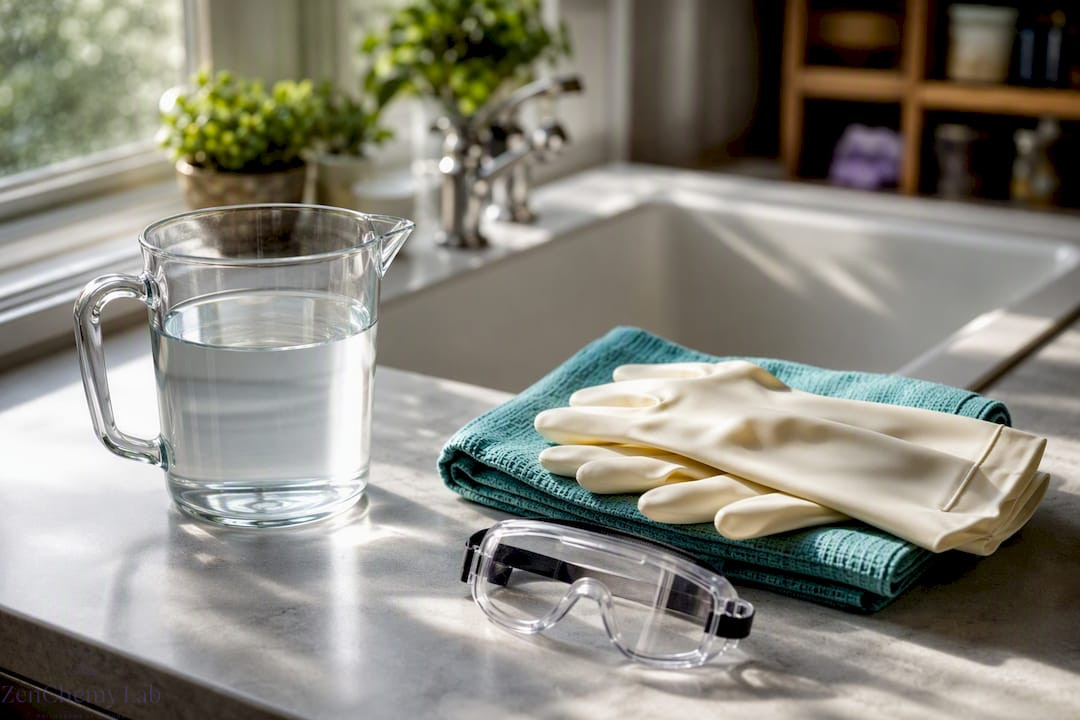
If contact happens, don’t wait to see how it feels. Flush the area right away and call a poison control centre if irritation persists or if lye reaches the eyes.
Pro Tip: Keep a dedicated jug of plain water within arm’s reach every time you mix lye, so you’re never scrambling to find a tap mid-reaction.
Superfatting and lye discount: your safety margin, built in
Superfatting means intentionally leaving a small percentage of oil unreacted, so there’s extra fat left over once saponification finishes. A lye discount achieves the same outcome from the other direction: you calculate the full amount of NaOH the recipe would need, then reduce it by a set percentage. Either method guarantees an excess of oil over alkali, which is your built-in insurance against active lye surviving into the finished bar.
Most everyday bathing bars use a superfat around 5%, though recipes range anywhere from 1% to 20% depending on the oils used and the feel you’re after. Here’s the logic in practice:
- Calculate the full lye amount required for your oil blend using each oil’s SAP value.
- Multiply that figure by your chosen discount, for instance 0.95 for a 5% superfat.
- Use the reduced number as your actual lye weight in the recipe.
A higher superfat leaves a softer, more moisturizing bar but can shorten shelf life since excess oil is more prone to going rancid over time. A lower superfat produces a firmer, longer-lasting bar with a cleaner rinse.
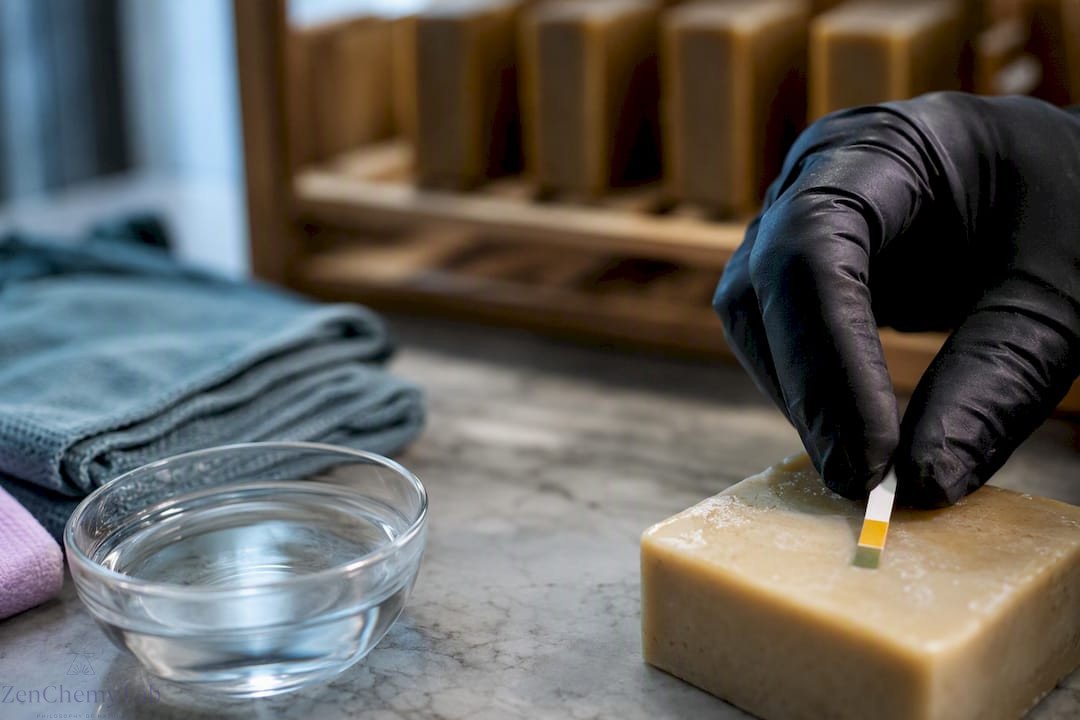
Pro Tip: Test a new recipe’s superfat with a pH strip after full cure. A reading between 8 and 10 is the range most cured bar soap settles into.
Buying, storing, and handling sodium hydroxide at home
Source your NaOH from a reputable chemical supplier or soap-making retailer rather than an unlabelled bulk source. Reagent-grade purity, usually stated on the packaging, is what keeps your SAP calculations accurate batch after batch.
Once it’s in your workshop, storage matters more than most beginners expect:
- Keep NaOH in an airtight, high-density polyethylene (HDPE) container, never metal or glass with a loose lid.
- Store it in a cool, dry spot away from direct sunlight and away from children or pets.
- Watch for clumping. Hygroscopic NaOH absorbs moisture from the air and loses potency by weight as it does, which can throw off your recipe math without you noticing.
- Expect roughly a year of reliable shelf life if kept dry and sealed; beyond that, weigh a test batch carefully or replace it.
For disposal of small leftover amounts, dilute heavily with water before pouring down a drain, and contact a hazardous waste program for anything beyond a household quantity.
Fixing soap problems and confirming your bar is safe to use
A sticky or soft bar usually points to too much water or a lye shortfall. Separation or an oily layer on top often means the batch never fully emulsified at trace. Both are recipe or process errors, not failures of the chemistry itself.
To confirm a finished bar is safe:
- Use pH strips on a dampened bar; a reading of 8 to 10 is normal for cured soap.
- Treat the old zap test (touching soap to your tongue to check for a lye “sting”) as a rough, outdated shortcut, not a reliable safety check.
- Give cold process soap a full 4 to 6 weeks to cure before regular use.
- If a bar still feels greasy, crumbly, or unusually harsh after curing, set it aside rather than using or gifting it.
Environmental considerations and disposal of sodium hydroxide solutions
Sodium hydroxide is manufactured industrially through the chlor-alkali process, and while the finished soap it produces is biodegradable, the raw alkali itself is not something to treat casually before it reacts. Undiluted lye solution is highly alkaline and can disrupt aquatic ecosystems and damage septic systems if poured down a drain in concentrated form.
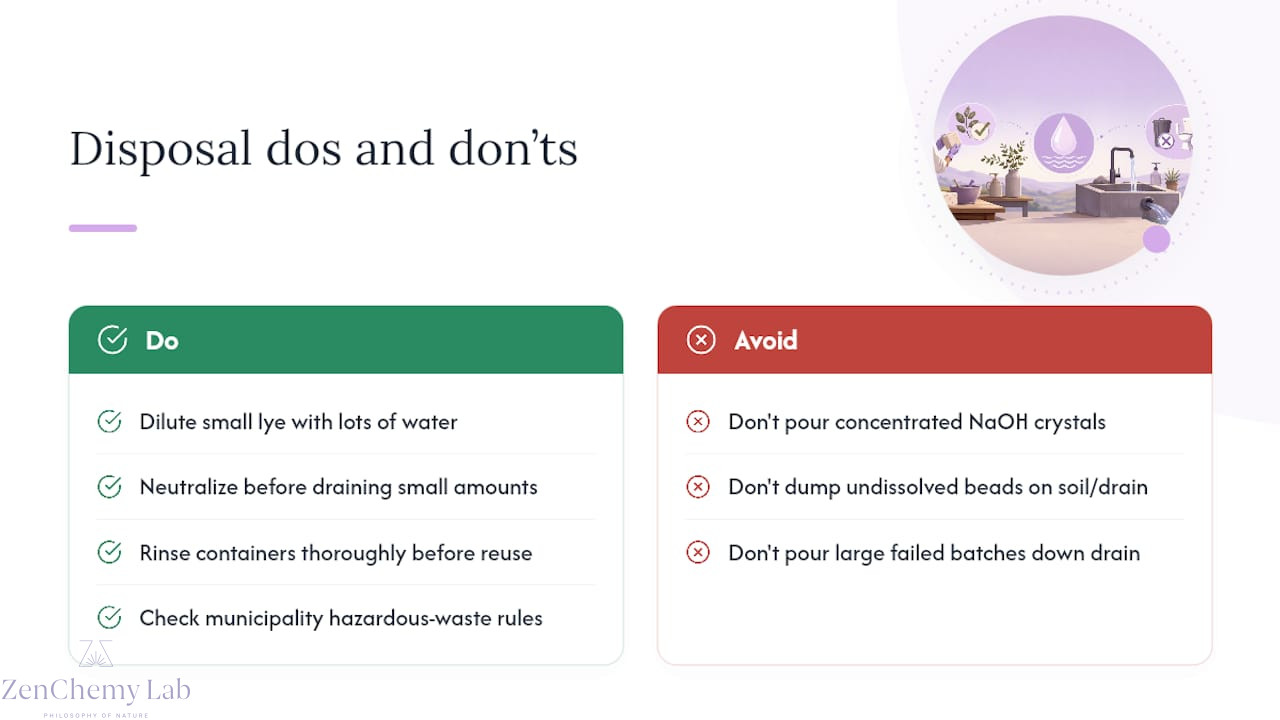
For a soap maker, the practical concern is usually small residual amounts: leftover mixed lye water, a rinsed mixing container, or a failed batch that never saponified properly. Small quantities of dilute lye solution, once neutralized with a large volume of water, can typically go down a household drain, since municipal wastewater treatment is designed to handle mild alkalinity. What you should never do is pour concentrated, undissolved NaOH crystals or beads directly into a drain or onto soil, where they can burn pipes, plants, and soil microorganisms alike.
If you’re dealing with a larger failed batch, or you’re unsure whether a solution has fully reacted, treat it the same way you’d treat other household chemicals: dilute generously, dispose of gradually, and check with your municipality’s hazardous waste guidelines if quantities are beyond a small kitchen batch. Rinse containers thoroughly before recycling or reuse, since dried lye residue remains caustic even after the liquid has evaporated.
The upside is that once saponification actually completes, the environmental story flips. Properly cured soap is biodegradable and far gentler on waterways than most synthetic detergents, which is part of why traditional bar soap remains a favourite among people trying to reduce their household chemical footprint.
Why ZenChemy Lab treats lye chemistry as non-negotiable
Getting sodium hydroxide right is the difference between a bar that nourishes skin and one that damages it, and that’s the standard we hold every formulation to. Our approach leans on documented SAP values for each oil in a blend, a deliberate superfat built into the recipe rather than added as an afterthought, and pH verification before any bar leaves our workshop for cure.
We don’t publish exact formulas, since that’s the craft side of what we do, but the discipline behind it is the same chemistry outlined above: precise measurement, patient cure, and verification before anything reaches you. If you’d rather skip the mixing and PPE altogether, our artisan soap collection is built on exactly this process, handcrafted, superfatted, and cured before it ever reaches your bathroom shelf.
The gap between “lye soap” fear and lye soap reality
People hear “lye” and picture drain cleaner, and honestly, that instinct isn’t wrong; raw sodium hydroxide really is that caustic. Where the fear goes sideways is in assuming that danger survives into the finished bar. It doesn’t, not if the maker did the math.
What gets underestimated is how much of “natural soap” marketing dodges this topic entirely. Brands love to say a soap is “lye-free,” which is a bit like saying bread is “yeast-free” after it’s baked. Real bar soap cannot exist without saponification, and saponification cannot happen without an alkali. What matters isn’t whether lye touched the batch. It’s whether the batch was measured correctly and cured long enough to consume it completely.
If there’s a genuine blind spot in how home soap makers talk about safety, it’s overconfidence in the zap test and underconfidence in pH strips and patience. A tongue test tells you almost nothing reliable. A calibrated strip and a six-week cure tell you almost everything you need to know. That’s not a glamorous answer, but it’s the honest one, and it’s why the makers who get consistently good results are usually the ones who trust the numbers over the folklore.
— Alex
Sources
- Poison
- Saponification — the soap‑making reaction explained (ScienceNotes)
- Sodium hydroxide — PubChem
- What is superfatting? (Learn Soapmaking)