

Yes, oil cleansing works, and it does specific things well: it dissolves waterproof sunscreen and long-wear makeup, it preserves your skin barrier better than most foaming cleansers, and it tends to leave dry and sensitive skin more comfortable, not tighter.
- Removes oil-based buildup that water-based cleansers often miss (sunscreen, sebum, pollution)
- Supports barrier function by cleansing without stripping natural lipids
- One clear limit: it’s not a fix-all for active acne, and the wrong oil can clog pores on oily skin
Keep reading for the exact steps, the oils worth using, and how to tell if it’s working for your skin type.
Key Takeaways
Oil cleansing removes oil-based impurities and supports barrier hydration best in dry and sensitive skin, while oily or acne-prone skin needs careful oil selection and monitoring.
| Point | Details |
|---|---|
| Mechanism is straightforward | Oil binds oil-soluble debris like sebum, sunscreen, and makeup, then rinses away once emulsified. |
| Dry and sensitive skin benefits fastest | Comfort and hydration improvements are typically most noticeable within 2 to 4 weeks. |
| Emulsification prevents residue | Non-emulsifying oils need thorough wiping or a follow-up cleanse to avoid leftover film. |
| Oil choice matters for acne-prone skin | Lighter, higher-linoleic oils like grapeseed or sunflower carry lower comedogenic risk than heavier oils. |
| Zenchemylab supports the follow-up step | Its gentle, fragrance-free face washes are formulated to rinse clean after an oil-based first cleanse. |
Table of Contents
- What is the oil cleansing method?
- How does oil cleansing actually work?
- What are the real benefits of oil cleansing?
- Which oils and ingredients should you look for?
- How do you oil cleanse step by step?
- How often should you oil cleanse?
- What side effects should you watch for?
- What does the research and dermatology community actually say?
- A measured way to trial oil cleansing
- Where a gentle cleansing routine fits in
- Sources
What is the oil cleansing method?
Oil cleansing means using an oil-based product to dissolve oil-soluble debris on your skin, then rinsing it away or following with a water-based cleanser. That second step is where “double cleansing” comes in: oil first, water second. The method isn’t a single product category. It shows up in a few different textures, and knowing which one you’re using matters for technique.
- Cleansing oil: a lightweight, pourable oil blend, often the base for a full oil cleanse
- Cleansing balm: a solid or semi-solid formula that melts into oil on contact with warm hands
- Pump oil: a dispensed, pre-measured cleansing oil for daily convenience
- Micellar oil: a hybrid formula that blends oil with micelle technology for a lighter finish
Double cleansing uses oil as step one; a standalone oil cleanse can be the entire routine on a lighter day.
How does oil cleansing actually work?
The mechanism comes down to a simple chemistry rule: like dissolves like. Sebum, waterproof sunscreen, long-wear makeup, and pollution particles are oil-soluble, so they bind to a cleansing oil far more readily than they bind to water. Oil cleansing uses this exact principle to break down impurities that water alone tends to bead off rather than dissolve.
What happens next depends on the formula. Emulsifying oils turn milky when mixed with water, which lets everything rinse away cleanly. Non-emulsifying oils stay oily and need to be wiped off with a cloth, which raises the risk of leftover residue if you’re not thorough.
Why this matters: a non-emulsifying oil left half-rinsed is one of the most common reasons people blame “oil cleansing” for breakouts that were actually caused by incomplete removal.
- Sebum and excess oil: dissolved and lifted
- Waterproof sunscreen and long-wear makeup: broken down where water-based cleansers often fail
- Airborne pollutants: bound and removed alongside the oil
What are the real benefits of oil cleansing?
The benefit list is genuinely strong, but it’s not universal, and knowing where the edges are matters as much as knowing the upside.
- Thorough removal of oil-based impurities: makeup, SPF, and sebum lift more completely than with many foaming cleansers
- Barrier preservation: oil cleansers clean without stripping the skin’s natural lipids, which helps limit transepidermal water loss (TEWL)
- Improved hydration: plant oils can support hydration and barrier function, though the effect varies by oil composition
- A gentler option for dry or sensitive skin, since there’s no harsh surfactant stripping the surface
- Reduced visible congestion, when paired with the right follow-up cleanser and consistent, full removal
None of that makes oil cleansing a cure for active acne. Residue is the real risk if a formula isn’t emulsified or rinsed properly, and oily or acne-prone skin needs a more careful oil selection than dry skin does.
Dry and sensitive skin types tend to see the fastest, most noticeable comfort improvement. Oily and acne-prone skin can benefit too, but the timeline is slower and the oil choice matters more.
Which oils and ingredients should you look for?
Fatty acid balance decides how an oil behaves on your face. Oils higher in linoleic acid tend to support barrier repair, while oils higher in oleic acid can feel heavier and, on already compromised or acne-prone skin, more irritating.

For dry or sensitive skin: argan, olive, and jojoba oils bring antioxidant and anti-inflammatory properties along with a comfortable, cushioning texture. Sunflower oil works well here too.
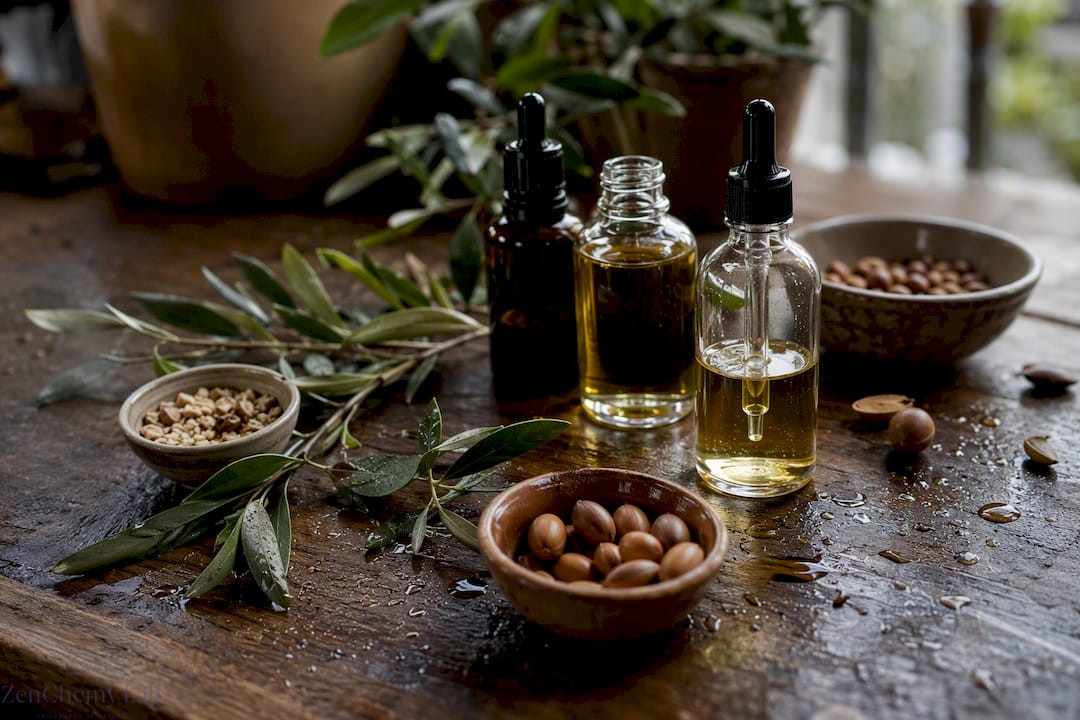
For oilier or breakout-prone skin: lighter, linoleic-rich oils like grapeseed, sunflower, and safflower tend to feel less occlusive. Be cautious with heavier oils, including some coconut oil formulations, which carry a higher comedogenic reputation.
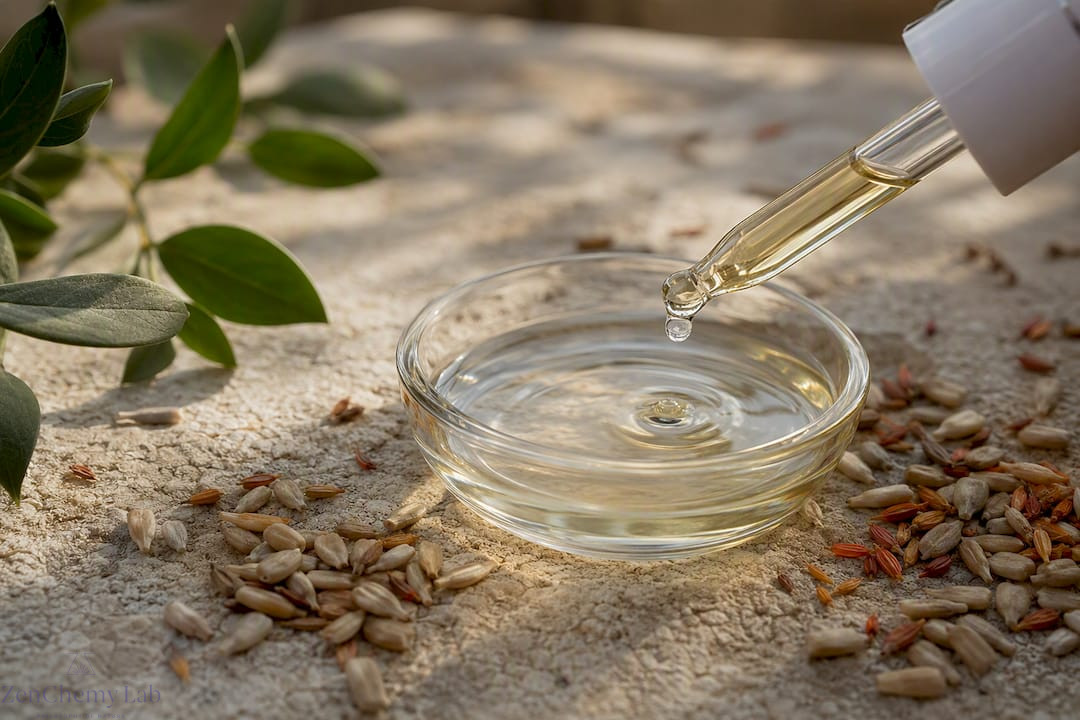
Favour fragrance-free formulas and emulsifiers that rinse fully clean; skip heavy synthetic fragrance and any ingredient list padded with known pore-cloggers if you’re acne-prone.
Pro Tip: Check an oil’s linoleic-to-oleic ratio before buying if you’re acne-prone. A higher linoleic percentage usually means a lighter, less pore-clogging feel on the skin.
How do you oil cleanse step by step?
Basic oil cleanse:
- Apply a dime to nickel-sized amount of oil to completely dry skin (damp skin undermines emulsification)
- Massage gently for about 60 seconds, just long enough to dissolve makeup and sebum
- Add a small amount of lukewarm water and continue massaging until the oil turns milky
- Rinse thoroughly with lukewarm water
- Pat, don’t rub, dry with a clean towel
Double-cleanse variant:
- Evening: oil cleanse first to dissolve SPF and makeup, then follow with a gentle water-based cleanser
- Morning: usually one gentle cleanse is enough unless you woke up with heavy overnight sebum
Avoid rubbing oil directly into the eye area, and rinse your cloth or hands thoroughly between uses to limit bacterial transfer. Wash microfiber cleansing cloths after every one or two uses.
Pro Tip: If your skin still feels slick or coated after rinsing, that’s your sign the oil didn’t fully emulsify. Go back in with a little more water and massage again before moving to your next step.
How often should you oil cleanse?
- Dry or normal skin: most evenings, especially after makeup or sunscreen
- Combination skin: most evenings, lighter touch in the morning
- Oily or acne-prone skin: a few evenings a week, paired with a compatible follow-up cleanser
- Double cleansing earns its place on days with heavy SPF, waterproof makeup, or high pollution exposure
- Skip it on bare-faced mornings, or right after exfoliating, when your barrier needs a break rather than another cleansing step
What side effects should you watch for?
Breakouts, leftover residue, and irritation are the three complaints that come up most, and over-cleansing can genuinely damage the skin barrier, particularly for anyone using retinoids or exfoliating acids alongside it. Fragranced oils can also aggravate rosacea or eczema.
Patch test first:
- Apply a small amount to your inner forearm
- Wait 24 to 48 hours and check for redness, itching, or bumps
- If clear, trial the oil on your face for 2 to 4 weeks before judging results
If something’s off: reduce frequency, switch oils (try a lighter, higher-linoleic option), double-check you’re emulsifying fully, or space out active ingredients. Persistent breakouts or irritation beyond a few weeks are worth bringing to a dermatologist.
What does the research and dermatology community actually say?
“An effective oil cleanser should leave your skin feeling comfortable and soft, not tight,” dermatologists note — tightness is the tell that a product or method is stripping rather than cleansing.
- Healthline on the “like dissolves like” mechanism and what it removes
- Medical News Today on hydration claims and where evidence is still limited
- Cleveland Clinic on double cleansing suitability and over-washing risk
- Clinical summaries in peer-reviewed literature tie oil-based regimes to measurable hydration and TEWL improvements over several weeks
A measured way to trial oil cleansing
Start slow: one evening oil cleanse for two to four weeks, tracking comfort, breakouts, and how your skin feels the next morning, not just that night. If your skin gets tighter or more congested rather than calmer, that’s your signal to switch oils or scale back, and a dermatologist is worth consulting if irritation persists beyond that window.
Where a gentle cleansing routine fits in
If dry or reactive skin is your main concern, the priority isn’t finding the fanciest oil, it’s finding one that rinses clean and doesn’t leave your barrier working overtime. Zenchemylab’s gentle, non-fragranced face washes are built for exactly that pairing: a soft second cleanse after an oil-based first step, without harsh surfactants undoing the barrier benefits you just worked for.

They’re formulated to rinse fully clean, so there’s no oily film left behind, which matters most for dry, sensitive, or barrier-compromised skin. Pair that with the essential natural skincare routine tips on the Zenchemylab site to build out a full routine, then browse the shop to pick the wash that fits your skin type.
Sources
- Oil Cleansing Method: Acne, Recipe, Blackheads & Purging — Healthline
- The oil cleansing method — Medical News Today
- How to use an oil cleanser, according to dermatologists — Glamour
- Double cleansing explained — Cleveland Clinic
- PMC article related to skin/dermatology (PMC9963692)


1 Comments