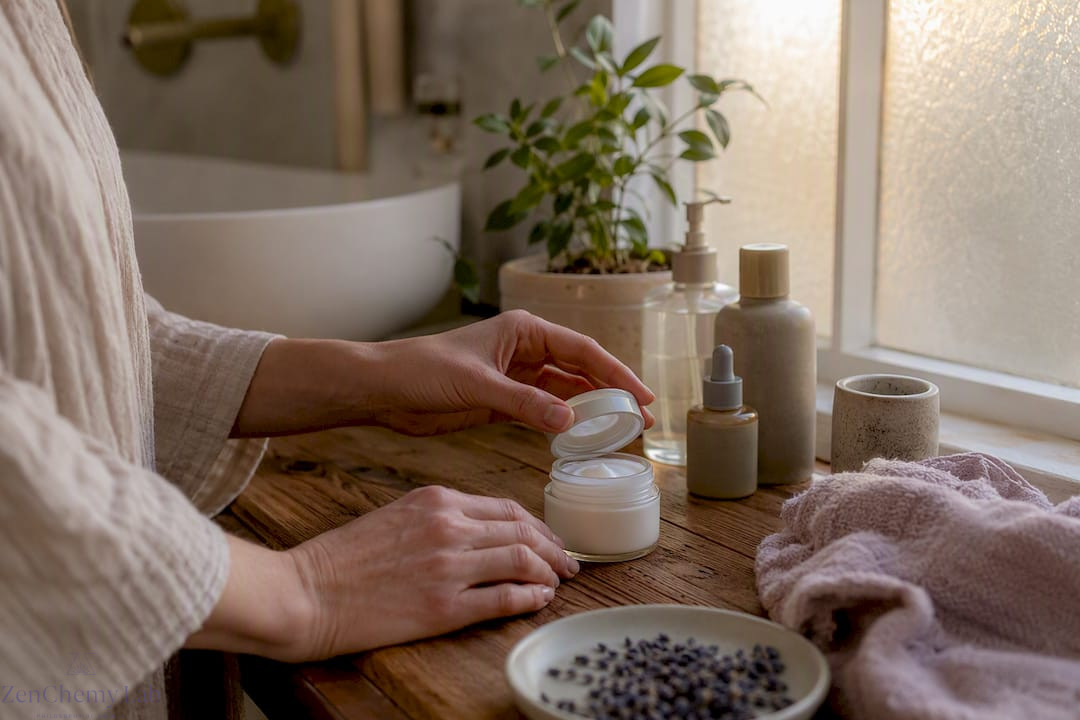
Most unopened skincare generally lasts a couple of years, and once you break the seal, the usable time reduces to several months up to around two years depending on the formula. The one thing to do right now: grab a fine-tip marker and write the date you opened each product on its packaging, then check it against the little open-jar icon printed nearby.
That icon is the Period-After-Opening (PAO) symbol, and it’s your fastest read on whether a product is still safe. The FDA defines shelf life as the window during which a product still looks, smells, and performs the way it’s supposed to. Past that window, preservatives break down and bacteria find room to grow, according to a cosmetic chemist Allure interviewed on the topic. Environmental exposure, not the calendar alone, is usually what pushes a product over the edge.
- Unopened products: roughly two to three years in most cases.
- Opened products: six months to two years, depending on formula and packaging.
- Action item: label the open date the day you first use a jar, tube, or bottle.
Pro Tip: Keep a strip of masking tape and a permanent marker in your bathroom drawer. The second you crack open a new product, write the month and year on it. It takes ten seconds and saves you from guessing six months later.
Key Takeaways
Skincare shelf life depends far more on how a product is opened, handled, and stored than on the date printed on the box.
| Point | Details |
|---|---|
| Label your open date | Write the date on every product the day you start using it, since PAO timers begin at first use. |
| Follow the PAO symbol | The open-jar icon with “12M” or “24M” tells you the safe window after opening, not from manufacture. |
| Watch for spoilage signs | Separation, odour change, graininess, or mould mean toss it immediately, regardless of the printed date. |
| Store away from heat and humidity | Bathrooms and hot cars degrade preservatives faster than almost any other storage mistake. |
| Choose fresher, small-batch options | Zenchemylab dates its small-batch, preservative-conscious formulas so freshness matches real usage windows. |
Table of Contents
- What do expiry labels and PAO symbols actually mean?
- How long do specific skincare products last?
- How can you tell if a skincare product has expired?
- Where and how should you store skincare products?
- Small daily habits that stretch shelf life further
- Do natural and handmade skincare products expire faster?
- When should you toss skincare and how should you dispose of it?
- Sources
What do expiry labels and PAO symbols actually mean?
The open-jar symbol with a number inside, like “12M” or “24M,” tells you how many months a product stays safe after opening, not from the date it was made. CosmeticsInfo explains that the EU requires PAO labelling on products with a lifespan of at least 30 months, while items with a shorter lifespan need a “best before the end of” (BBE) date printed directly on the packaging instead.
In the United States, the picture is looser. The FDA doesn’t generally require printed expiry dates on cosmetics, though manufacturers are still expected to determine shelf life through their own testing. That means a product without a visible date isn’t necessarily indefinite. It just wasn’t legally required to say so.
- PAO (“12M,” “24M,” etc.): months of safe use after first opening.
- BBE: a fixed calendar date, common on shorter-lived formulas.
- No symbol at all: assume 12 months after opening unless otherwise noted.
Pro Tip: When a product carries no PAO or expiry date, use general rule-of-thumb timelines by category (see the cheat sheet below) and start your own open-date labelling habit immediately. Reading the full ingredient and label conventions on a product helps you spot which skin care ingredients are more prone to breaking down early.
How long do specific skincare products last?
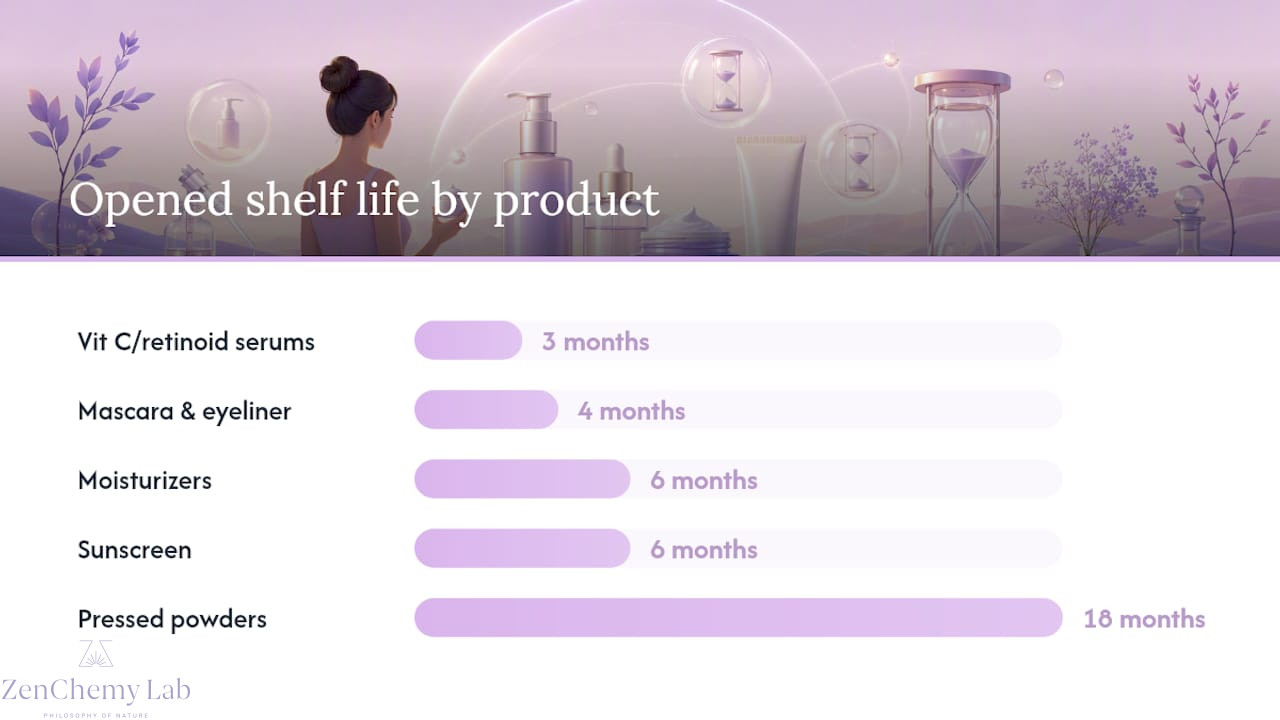
Shelf life varies a lot by category, and packaging plays almost as big a role as the formula itself. Dermatologists interviewed by CNBC recommend replacing mascara within several months and most creams, cleansers, and sunscreens within about half a year to a year of opening, largely because water-based products carry higher contamination risk once air and fingers get involved.
| Product type | Unopened | Opened |
|---|---|---|
| Mascara & liquid eyeliner | 2–3 years | 4 months |
| Vitamin C / retinoid serums | 1–2 years | 3 months |
| Moisturizers (cream/lotion) | 2–3 years | 6 months |
| Sunscreen | 2–3 years | 6 months (or printed date) |
| Cleansers & toners | 2–3 years | 6 months |
| Facial oils | 1–2 years | 6 months |
| Pressed powders | 2–3 years | 12–24 months |
| Exfoliants & acid treatments | 1–2 years | 6 months |
| Single-use ampoules | 2–3 years | Use immediately once opened |
Sunscreens and acne treatments classified as over-the-counter drugs often carry a printed expiry date, and that date isn’t a suggestion. Once expired, the active ingredients can no longer be trusted to perform at the labelled SPF or strength, which is a safety issue, not just an efficacy one. Eye-area products deserve the shortest leash on this whole list. They sit closest to a mucous membrane, and any bacterial growth there escalates fast.
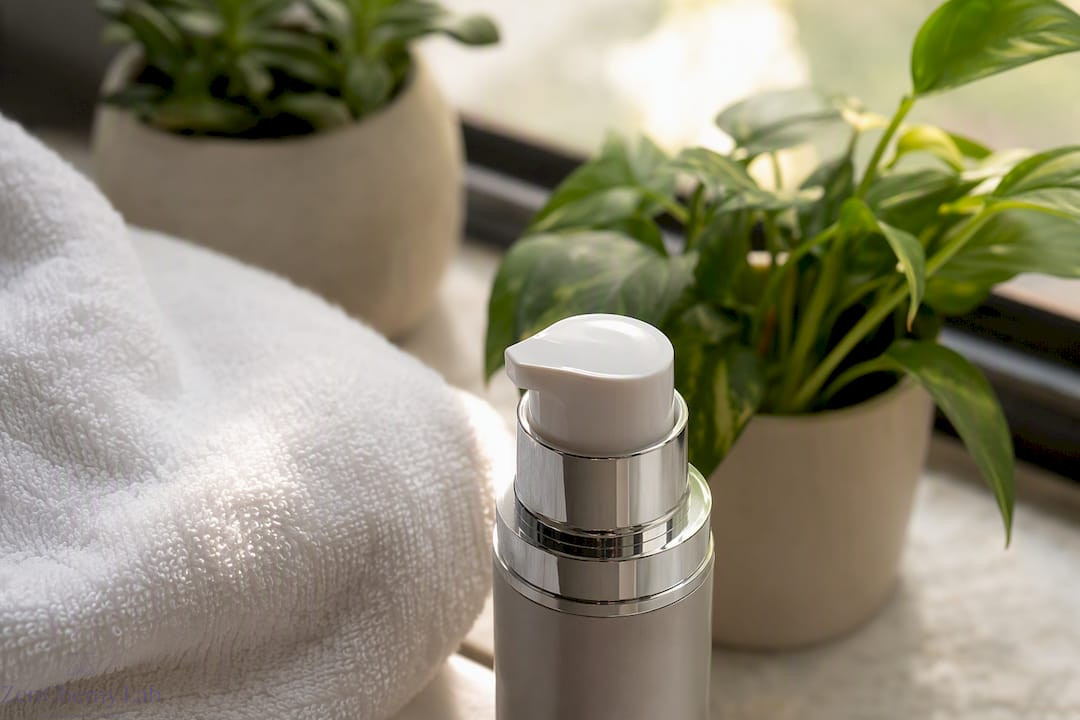
Packaging shifts these numbers too. A pump or airless dispenser slows oxidation and keeps fingers out of the formula, which can push the upper end of a range. A jar you dip into daily, especially an oil-based one, tends to land at the shorter end no matter what the label says.
How can you tell if a skincare product has expired?
Trust your senses before you trust the calendar. A product that’s turned usually announces itself through smell, texture, or appearance well before any printed date arrives, and those changes are the more reliable signal.
Watch for:
- Separation, with oil pooling on top of a cream or serum.
- A sour, rancid, or otherwise “off” smell compared to when you bought it.
- Colour shift, unusual graininess, or clumping in a formula that used to be smooth.
- Visible mould, usually a fuzzy spot near the cap or applicator.
- Sudden irritation, stinging, or breakouts you can’t otherwise explain.
Contamination often traces back to habits, not time. Dipping fingers into an open jar repeatedly, storing products in a steamy bathroom, or reusing an applicator introduces bacteria that a sealed pump would have kept out.
“The clock really starts the moment you open the package,” a cosmetic chemist noted, and how you handle that package afterward, whether you leave the lid off or dip fingers straight in, shortens practical shelf life far more than the calendar does on its own.
If a product touches your eyes and starts causing redness, swelling, or crustiness, stop using it and see a clinician. Eye infections from expired mascara or liner are common enough that dermatologists flag this category specifically.
Where and how should you store skincare products?
Storage conditions can add months to a product’s usable life, or strip them away just as easily. The FDA notes that manufacturers stability-test products under heat and humidity stress specifically because poor storage shortens shelf life dramatically compared to lab conditions.
- Keep products somewhere cool, dry, and out of direct light. A bedroom drawer beats a windowsill.
- Skip the bathroom cabinet if you can. Repeated heat and humidity cycles from showers degrade preservative systems and encourage microbial growth faster than almost any other storage mistake.
- Choose pumps, tubes, and airless dispensers over open jars whenever you have the option. If a jar is all you’ve got, use a small spatula instead of a finger.
- Never leave products in a hot car. Even a short summer drive can push internal temperatures high enough to break down actives within weeks.
- Refrigerate selectively. Some vitamin C serums and natural, preservative-light formulas benefit from a cool fridge shelf, but check the label first. Refrigeration can thicken oil-heavy formulas or cause some emulsions to separate.
Pro Tip: Rotate seasonal products (heavier winter creams, lighter summer sunscreens) into the back of a drawer rather than the bathroom shelf, and keep travel-size versions separate from your bulk containers so the smaller ones get used up before they age out.
Small daily habits that stretch shelf life further
Extending a product’s usable window isn’t about hoarding. It’s about matching purchase size and handling to how quickly you’ll realistically finish the bottle.
- Write the open date on every new product the day you start using it.
- Buy smaller sizes of fast-degrading actives like vitamin C serums and retinoids, since they lose potency faster than a basic moisturizer.
- Use a spatula or single-use applicator for jars instead of fingers, every time.
- Decant carefully if you split a product into a travel container, and clean the new container first.
- Prioritize finishing active-ingredient products (acids, retinoids, vitamin C) before worrying about your moisturizer, which generally holds up longer.
Do natural and handmade skincare products expire faster?
Yes, often. Natural oils, butters, and botanical extracts oxidize and spoil faster than many synthetic ingredients when they aren’t formulated with the right stabilizers, according to Allure’s reporting on ingredient stability. Preservative-minimal formulas simply have less of a buffer against air, light, and microbial exposure.
Byrdie’s research on skincare longevity notes that preservative-free or naturally formulated products tend to spoil faster than conventional counterparts, which is exactly why artisan skincare calls for tighter handling.
That’s a big part of why Zenchemylab batches products in smaller runs and dates them accordingly, so freshness lines up with how the formula actually behaves rather than an arbitrary shelf number.
- Store botanical serums and facial oils away from direct light and heat without exception.
- Treat any preservative-light formula as a shorter-window product, generally closer to six months once opened.
- Consider refrigeration for delicate extracts if the label allows it.
- Read more on keeping natural skincare fresh for handling specifics by product type.
When should you toss skincare and how should you dispose of it?
Some triggers are non-negotiable. Toss a product the moment its PAO window closes, if you see visible mould or separation, if an eye-area product causes any sign of infection, or once an OTC sunscreen or acne treatment passes its printed expiry date.
- Small household amounts can go into regular trash; follow your municipality’s waste guidelines for anything larger.
- Rinse and recycle glass or plastic containers once they’re empty and clean.
- Avoid pouring concentrated actives, like strong acids, straight down the drain where you can help it.
- Never add water or saliva to revive dried-out mascara or cream. That introduces bacteria rather than restoring the product, per FDA guidance.
A simple rule of thumb worth keeping
If you remember one habit from all of this, make it labelling your open date and respecting the PAO number next to it. Eye-area products deserve an even shorter leash than the label suggests, because the cost of guessing wrong is an infection, not just a wasted purchase. Balancing safety and reducing waste isn’t complicated once the labelling habit sticks.
How Zenchemylab designs products to stay fresh longer
Handcrafted doesn’t have to mean short-lived, and that’s the balance Zenchemylab designs around from the first batch to the bottle in your hands. Small-batch production means every run is dated at the point of creation, so you’re never guessing how long a jar has been sitting on a shelf before it reached you. Formulas favour stable, non-toxic ingredients suited to their intended shelf window, and where a product benefits from airless or pump-style packaging over an open jar, that’s the format Zenchemylab reaches for first.

That’s a real advantage over mass-produced lines that batch in bulk months or years ahead of sale, with far less visibility into how long a jar sat in a warehouse before reaching a shelf. If you want to build a routine around products designed with freshness in mind from the start, browse essential natural skincare routine tips and shop the current small-batch lineup while it’s fresh.
Sources
- Shelf Life and Expiration Dating of Cosmetics | FDA
- Do Skin-Care Products Expire? When and Why You Should Throw Out Certain Serums and Creams | Allure
- How Long Do Skincare Products Last? Experts Let Us Know
- Dermatologist: When to replace your skincare and makeup products
This article is general information, not a substitute for advice from a qualified doctor. Consult a qualified healthcare professional about your own circumstances before acting on anything here.