
“Non-toxic skincare” means a product’s maker has left out ingredients widely flagged as concerning, such as parabens, phthalates, or formaldehyde releasers. It’s a marketing description, not a legal category. No regulator in Canada issues a “non-toxic” certification, and there’s no ingredient checklist that automatically earns a brand that label.
Here’s the honest verdict: a non-toxic claim usually signals a brand is thinking about ingredient safety. It does not guarantee an allergen-free formula, a contamination-free batch, or a product that’s better for your specific skin. Organizations like Health Canada, the Environmental Working Group (EWG), and Consumer Reports all track cosmetic ingredients, but none of them police the word “non-toxic” itself.
What to check before you trust the label:
- Does the brand publish a full INCI ingredient list, not just a marketing summary?
- Is “fragrance” or “parfum” the only vague entry, or does the brand disclose what’s in it?
- Does the company explain why it avoids specific ingredients, with sources?
- Is there a real third-party seal, or just a self-designed leaf icon?
Key takeaways
Non-toxic skincare is a self-declared marketing claim, not a government-verified safety standard, so full ingredient disclosure matters more than the word on the label.
| Point | Details |
|---|---|
| No legal definition | “Non-toxic” carries no regulated standard in Canada; brands self-declare the claim. |
| Fragrance is the biggest gap | “Parfum” can legally hide undisclosed chemicals, including phthalates. |
| Prioritize daily-contact products | Swap cleanser, moisturizer, and deodorant first when transitioning your routine. |
| Certification beats badges | A recognized third-party seal carries more weight than a brand’s own icon. |
| Zenchemylab’s approach | Handcrafted, small-batch formulas with disclosed botanical ingredients built around non-toxic principles. |
Table of Contents
- What is non-toxic skincare, really, versus clean, natural, or organic?
- Is non-toxic a regulated term in Canada?
- Toxic ingredients to avoid: a prioritized checklist
- How do you evaluate non-toxic claims and spot greenwashing?
- What non-toxic skincare can and can’t do for your skin
- Building a safer routine without wasting money or wrecking your skin
- What ingredient-conscious shoppers get wrong about “non-toxic”
- Where to find skincare formulated around this exact standard
- FAQ: non-toxic skincare meaning
- Sources
What is non-toxic skincare, really, versus clean, natural, or organic?
Shoppers use these four words like synonyms. They’re not.
Non-toxic is safety-oriented marketing: a brand saying it avoided ingredients tied to health concerns. Clean is broader and vaguer, often implying both safety and ethics (cruelty-free, sustainably sourced) with even less consistency than non-toxic. Natural describes ingredient origin, not effect. Organic is the only one of the four with a certification system behind it in some contexts, tied to how a crop was grown.

The confusion causes real mistakes. A common one: assuming “natural” means gentle. Poison ivy is natural. Certain essential oils, including citrus and cinnamon bark, are natural and can still irritate or sensitize skin. Healthline notes that “natural” isn’t legally defined and gets used inconsistently from brand to brand, so it can’t be trusted as a stand-in for “safe.”
Where the terms overlap and where they split:
- A botanical face oil can be natural, non-toxic by most definitions, and still cause a reaction in someone with a plant allergy.
- A synthetic preservative can be non-natural but included specifically because it’s been reviewed for safety at low concentrations, something a “natural” alternative may lack.
- Organic certification says nothing about whether a formula is free of synthetic fragrance.
Is non-toxic a regulated term in Canada?
No. “Non-toxic” carries no legal definition in Canada or the United States, and brands self-declare the claim. This is the single fact that reframes everything else in this article: nobody is checking the label before it ships.
Health Canada does regulate cosmetics, but its oversight focuses on specific areas: a Cosmetic Notification requirement, a list of prohibited and restricted ingredients (the Cosmetic Ingredient Hotlist), and rules around adverse-event reporting. The Competition Bureau separately polices misleading advertising, which covers false claims but doesn’t pre-approve wording like “non-toxic” or “clean.” Neither body issues or verifies that specific claim.
Manufacturers self-affirm safety claims, and enforcement in Canada and the US tends to focus on catching misleading advertising after the fact rather than verifying every label before a product reaches shelves. That gap is exactly why third-party certification and full ingredient transparency matter more than the word printed on the front of a bottle.
The manufacturer carries the responsibility for the safety of what’s inside the bottle. Voluntary certifications, such as third-party ingredient audits, exist precisely because government oversight stops short of verifying marketing language. A seal from an independent verifier means a lot more than a self-designed badge.
Toxic ingredients to avoid: a prioritized checklist
Not every ingredient on a “watch list” carries the same weight. Here’s a rough order of concern, from ingredients that show up most often in safety discussions to those worth a lower-priority glance.
Highest concern:
- Parabens (methylparaben, propylparaben, and similar): preservatives found in lotions, cleansers, and makeup. EWG links parabens to hormone disruption because of their weak estrogen-mimicking activity.
- Phthalates: plasticizers often hidden inside “fragrance,” used in nail polish, hairspray, and scented lotions. They’re associated with reproductive and hormonal effects.
- PFAS (“forever chemicals”): used in some long-wear foundations and waterproof mascaras for slip and durability. They persist in the body and environment for years.
- Formaldehyde and formaldehyde releasers: preservatives like DMDM hydantoin, quaternium-15, and imidazolidinyl urea, common in shampoos and some nail treatments. They’re tied to skin sensitization and, at higher exposure, classified as a carcinogen.
Moderate concern:
- Synthetic fragrance (“parfum”): a single word on a label can represent dozens of undisclosed chemicals, sometimes including phthalates, as explained in detail by avoiding synthetic fragrance chemicals. This is the biggest labelling loophole in cosmetics.
- Mercury: banned in most cosmetics but still occasionally found in some imported skin-lightening creams.
- Certain solvents and contaminants: including 1,4-dioxane, a byproduct that can form during manufacturing rather than an added ingredient, making it invisible on ingredient lists.
Consumer Reports flags parabens, phthalates, PFAS, and formaldehyde releasers as the categories worth prioritizing when you’re deciding what to swap first. The trickiest pattern to catch is the “fragrance” loophole: because it’s protected as proprietary information, a brand can legally list “fragrance” without disclosing a single one of the compounds inside it.
How do you evaluate non-toxic claims and spot greenwashing?
A badge on the front of a bottle tells you almost nothing on its own. The ingredient list on the back tells you almost everything.
Run through this sequence before buying:
- Read the full INCI list, not the marketing bullet points on the front of the package.
- Check whether “fragrance” appears with no further explanation. If so, that’s a real transparency gap.
- Search for PFAS-related terms (anything with “fluoro” or “perfluoro” in the name) and formaldehyde-releaser names.
- Look for a recognized third-party seal rather than a brand’s own icon, and confirm it independently if you’re unsure.
- Visit the brand’s ingredient policy page directly. A company with nothing to hide usually explains its sourcing and exclusions in detail.
The EWG Skin Deep database lets you search individual ingredients by name if a label leaves you guessing, and a good guide to reading skincare labels walks through how to decode INCI naming conventions. As the David Suzuki Foundation points out, unregulated terms like “natural” or “sustainable” can create a false sense of safety without a reputable ecolabel behind them.
Pro Tip: If a brand can’t tell you what’s in its “fragrance,” email and ask directly. A company confident in its formulation will answer with specifics; one that stalls or deflects has told you everything you need to know.
What non-toxic skincare can and can’t do for your skin
Choosing non-toxic-labelled products realistically reduces your exposure to specific chemicals that researchers have flagged for hormone disruption or sensitization, particularly if you’re swapping out products used daily, like moisturizer or deodorant. For people managing sensitive skin, that reduction in synthetic fragrance and preservative load often means fewer flare-ups.
What it won’t do is guarantee zero risk. Botanical ingredients can still trigger allergic reactions, and manufacturing residues or contamination can occur in any product line regardless of its label. Because “non-toxic” has no fixed standard, one brand’s version of the claim may be far more rigorous than another’s.
Prioritize non-toxic labelling heavily during pregnancy, for chronic skin sensitivity, or when you’re trying to reduce long-term cumulative exposure. For a product you use twice a year, like a special-occasion body scrub, it matters far less.
Building a safer routine without wasting money or wrecking your skin
You don’t need to replace your entire bathroom shelf overnight. A staged approach protects both your wallet and your skin barrier.
- Start with your highest-contact products first: cleanser, moisturizer, and deodorant touch your skin daily and absorb longer than a once-a-week mask.
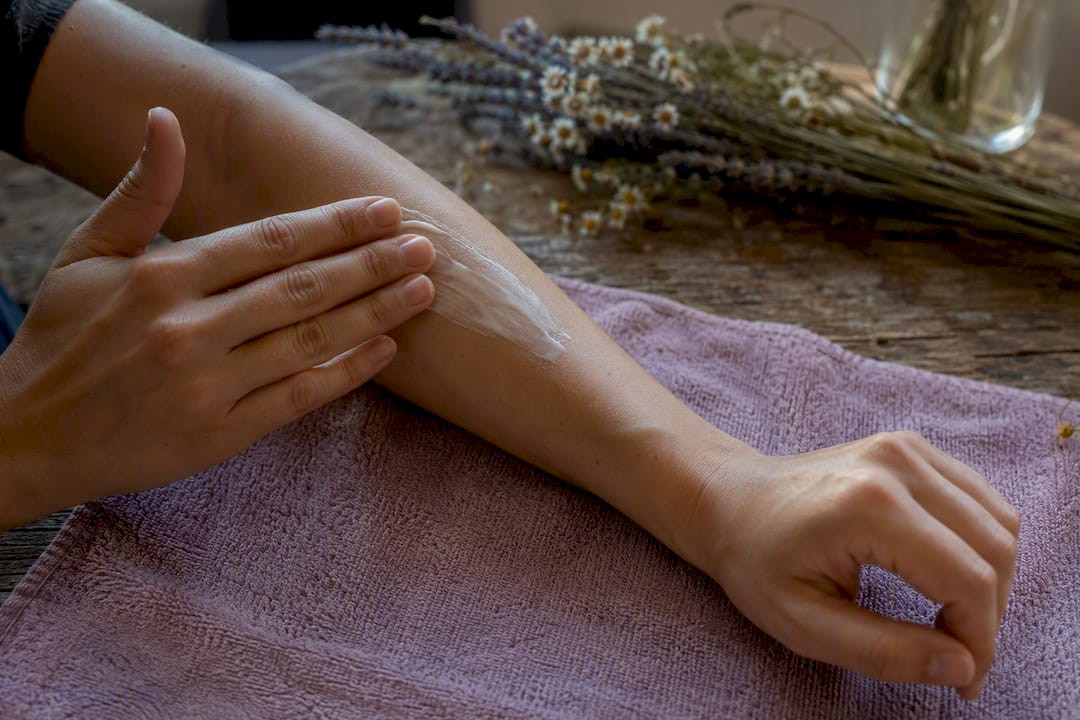
- Patch test every new product: apply a small amount to your inner forearm, wait 24 to 48 hours, and watch for redness, itching, or bumps before applying it to your face.
- Change one product at a time: this makes it obvious which item caused a reaction if one shows up.
- Keep the rest of your routine stable while testing, so you’re not troubleshooting three variables at once.
This gradual swap approach keeps both cost and irritation risk low, according to guidance from Consumer Reports, and a clean beauty routine guide can help you sequence the swap in the right order.
Why transparency in formulation matters

Alex, editorial contributor at Zenchemylab, has spent years examining how ingredient claims translate, or fail to translate, into real safety. The pattern that stands out: brands willing to publish full ingredient reasoning tend to hold themselves to higher standards than the label alone requires.
Zenchemylab’s approach reflects that philosophy directly. Every product is handcrafted in small batches, formulated with disclosed botanical ingredients, and built around the same non-toxic principles this guide describes, not as a marketing afterthought but as the starting point for how the products are made. If you want to see what that looks like in practice, browse the natural skin product collection for examples formulated with full transparency in mind.
What ingredient-conscious shoppers get wrong about “non-toxic”
The conventional advice tells you to hunt for a “non-toxic” badge and call it done. That’s backwards. The badge is the least useful piece of information on the entire package, because anyone can print it without a standard behind it.
What actually matters is disclosure. A brand that lists every fragrance component, names its preservative system, and explains why it chose one ingredient over another is giving you real information. A badge is giving you a feeling.
I’d argue the biggest blind spot in how people shop for “clean” products is treating certification as a finish line rather than a starting point. Third-party seals help, but they’re not infallible, and plenty of genuinely careful small formulators can’t afford certification fees despite doing the work. Read the ingredient list. Ask the brand direct questions. Prioritize the products that touch your skin every single day over the ones you use twice a month. That’s where your attention actually pays off.
Where to find skincare formulated around this exact standard
Reading labels and hunting down INCI lists takes real effort, and most big-box skincare brands make that effort deliberately harder. Zenchemylab exists as the alternative: every product is formulated in small batches with a disclosed ingredient list from the start, so you’re not decoding vague “fragrance” entries or chasing down a brand’s policy page to get an answer.

That’s the practical difference for a reader who just spent this guide learning what to watch for: instead of vetting a dozen labels against a mental checklist, you’re starting from a shorter list of handcrafted soaps, botanical serums, and body balms built around the same non-toxic principles covered above. If you’re transitioning your routine one product at a time, the natural beauty tips collection is a practical place to see which swaps make sense first, and the essential routine guide walks through sequencing so you’re not testing five new products at once. Browse the current lineup and pick one high-contact product, a cleanser or a body balm, to start your own swap this week.
FAQ: non-toxic skincare meaning
Does “non-toxic” mean a product is hypoallergenic?
No. Non-toxic refers to the avoidance of specific chemicals of concern, not allergen content. A fully non-toxic, all-natural product can still trigger a reaction in someone sensitive to a specific botanical ingredient.
Is “natural skincare” the same as “non-toxic skincare”?
Not necessarily. Natural describes ingredient origin, and Healthline points out that the term isn’t legally defined. A natural ingredient can still irritate skin, while a synthetic one might be included precisely because it’s been safety-reviewed.
What ingredients should I avoid first if I’m just starting to switch?
Start with parabens, phthalates (often hidden inside “fragrance”), and formaldehyde-releasing preservatives. These three categories show up most often in ingredient-safety discussions and are the easiest to spot once you know their INCI names.
How can I tell if a “non-toxic” claim is genuine?
Look for a full, disclosed ingredient list rather than a marketing badge alone. A brand willing to explain what “fragrance” actually contains, and why it excluded certain preservatives, is showing you real transparency instead of a slogan.
Sources
- Environmental Working Group — the toxic twelve chemicals and contaminants in cosmetics
- Consumer Reports — concerning ingredients in cosmetics and beauty products
- David Suzuki Foundation — Dirty dozen toxic chemicals to avoid