
Yes, an Epsom salt bath is worth trying for tired muscles and frayed nerves, and yes, it’s safe for most adults when used as directed. The catch: the strongest evidence points to warm water itself doing most of the work, not the magnesium sulfate dissolved in it. If you have open wounds, advanced kidney disease, or you’re pregnant with complications, skip it or check with your doctor first.
- Best for: post-workout soreness, stress, mild stiffness
- Evidence strength: convincing for warm-water immersion; limited for transdermal magnesium absorption
- Skip it if: you have open wounds, severe kidney disease, or certain pregnancy complications
Key Takeaways
Epsom salt baths deliver most of their felt benefit through warm-water immersion, with the strongest clinical support existing for knee osteoarthritis pain relief.
| Point | Details |
|---|---|
| Verdict | Safe and worth trying for relaxation and mild soreness, with warm water doing most of the work. |
| Best-supported use | A randomised trial found real pain relief for knee osteoarthritis with short-course soaks or compresses. |
| Standard dosage | About 2 cups (475 grams) per bath, soaked for 15 to 20 minutes, water below 40.5°C. |
| Who should avoid it | Open wounds, advanced kidney disease, uncontrolled heart disease, and complicated pregnancies. |
| Product option | Zenchemylab’s Luxurious Calming Bath Soak offers the same mineral soak with added botanical ingredients. |
This article is general information, not a substitute for advice from a qualified doctor. Consult a qualified healthcare professional about your own circumstances before acting on anything here.
Table of Contents
- What is Epsom salt, and how is it different from other bath salts?
- Which benefits does an Epsom salt bath actually deliver?
- What does the research actually show about magnesium absorption?
- How much Epsom salt should you use in a bath?
- Who should avoid Epsom salt baths?
- Sources
What is Epsom salt, and how is it different from other bath salts?
Epsom salt is magnesium sulfate, a mineral compound named after a spring in Epsom, England, where it was first discovered in spring water. It looks like coarse table salt but has a distinct bitter taste and dissolves readily in warm water, which is why it’s sold specifically as a soaking product rather than a food seasoning.
It’s not the same thing as sea salt, Himalayan pink salt, or magnesium chloride flakes. Sea salt and Himalayan salt are primarily sodium chloride with trace minerals, prized more for texture and scent than any magnesium content. Magnesium chloride flakes, sometimes marketed as “magnesium flakes,” are a different compound some brands claim absorbs more readily through skin, though the same absorption question marks apply there too.
- Epsom salt (magnesium sulfate): the standard drugstore soak, unscented, inexpensive
- Sea salt: sodium-based, often used for exfoliation and mineral spa blends
- Magnesium chloride flakes: a different magnesium compound, sometimes used in foot soaks or magnesium oil sprays
You’ll find it in pharmacies, grocery stores, and online, usually labelled “USP” for pharmaceutical grade, which confirms it meets purity standards for external use.
Which benefits does an Epsom salt bath actually deliver?
Reported benefits range from muscle relief to better sleep, but the evidence backing each one varies quite a bit. Here’s how the common claims stack up.
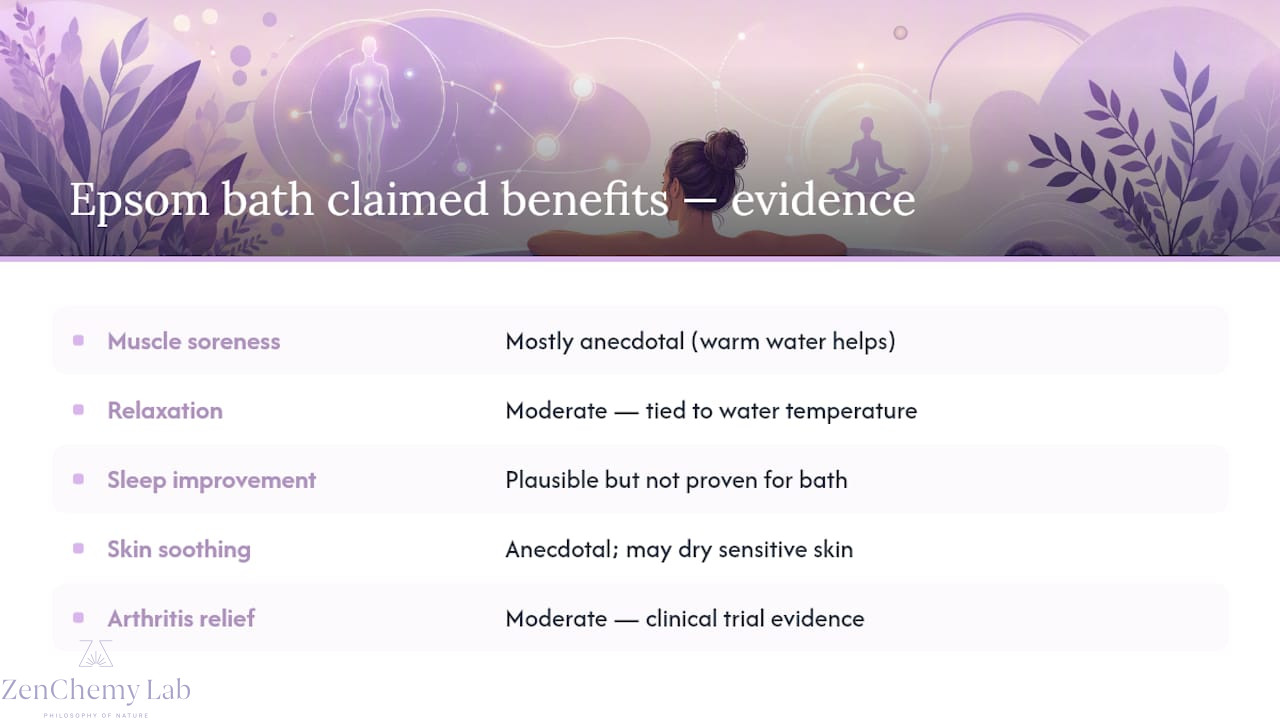
Muscle soreness and recovery. This is the most common reason people reach for an epsom salt bath for sore muscles. WebMD notes that people commonly use it for this purpose, though the scientific evidence for many specific claims stays thin. Evidence level: mostly anecdotal, though warm water’s effect on blood flow is well established.
Relaxation and stress reduction. Warm water lowers muscle tension and can nudge the nervous system into a calmer state regardless of what’s dissolved in it. Evidence level: moderate, tied more to water temperature than mineral content.
Sleep improvement. The pathway here is indirect: a relaxing pre-bed ritual plus adequate dietary magnesium (which supports nerve and muscle function, according to the National Institutes of Health) may help some people wind down. Evidence level: plausible but not proven for the bath itself.
Skin soothing. Some people with mild psoriasis or eczema report short-term comfort from a soak, though salts can also dry sensitive skin if overused. Evidence level: anecdotal.
Arthritis and joint pain. This is where the data gets genuinely interesting. A randomised controlled trial found that Epsom salt baths or compresses reduced pain and improved daily activity scores in older adults with knee osteoarthritis, with statistically significant differences compared to the control group. Evidence level: moderate, backed by an actual clinical trial rather than testimonials.
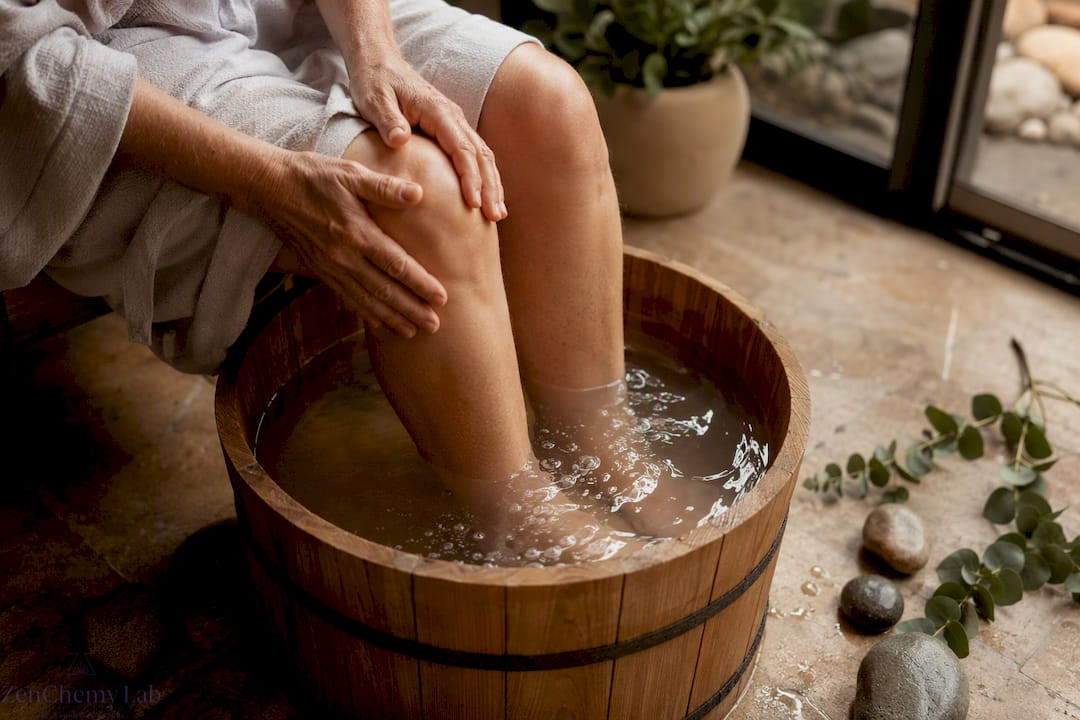
Other uses. Foot soaks for tired feet, warm compresses for minor sprains, and softening softened skin around ingrown toenails are all common practical applications, each relying on the same warmth-plus-salt logic.
Pro Tip: If your main goal is muscle recovery after a hard workout, timing matters more than the brand of salt. Soak within a few hours of activity while blood flow is still elevated, rather than the next day.
What does the research actually show about magnesium absorption?
The honest answer is that scientists still aren’t sure how much magnesium, if any, crosses the skin during a bath. Reviews of the transdermal magnesium literature describe the evidence as limited, mixed, or low quality, with many researchers calling for better-designed studies before anyone can say bath salts meaningfully raise magnesium levels in the body.
What’s better supported is the knee osteoarthritis trial mentioned earlier, and the general physiological benefit of warm-water immersion itself: increased blood flow and muscle relaxation. National Geographic’s review of the science points to this mechanism as the likely explanation for most of what people feel after a soak.
- A large, well-designed randomised trial (like the osteoarthritis study) carries more weight than a handful of small pilot studies.
- Small pilot studies suggest possible effects but need replication before they count as settled science.
- Personal anecdotes are useful for deciding if something feels good, but they can’t tell you why it works or whether it will work for you.
How much Epsom salt should you use in a bath?
Amounts vary slightly by brand and use case, but the consumer guidance is fairly consistent across sources.
- Fill the tub with warm water, keeping the temperature below about 40.5°C (105°F) to avoid drying out your skin.
- Add roughly 2 cups (about 475 grams) of Epsom salt under the running water so it dissolves evenly, a dosage echoed by both Healthline and product labelling on DailyMed.
- Soak for 15 to 20 minutes. Longer isn’t necessarily better, and prolonged hot-water exposure can leave skin feeling stripped.
- Rinse with plain water afterward if you have sensitive skin, since mineral residue can feel itchy once you towel off.
- Hydrate before and after, since warm baths can mildly dehydrate you the same way a hot shower does.
For a targeted compress instead of a full bath, dissolve about 1 cup of Epsom salt per quart of warm water, soak a cloth, and apply it to the sore area for 15 to 30 minutes. A foot soak follows the same ratio in a smaller basin, which is handy if a full tub isn’t practical.
Pro Tip: Never add Epsom salt to a jetted or whirlpool tub unless the manufacturer’s manual explicitly says it’s safe. Undissolved salt can damage the motor or clog the jets over time.
Who should avoid Epsom salt baths?
Most healthy adults tolerate Epsom salt baths well, but a few groups should be more cautious or skip them entirely.
- Open wounds, severe burns, or active skin infections: salts can sting and may interfere with healing.
- Advanced kidney disease: impaired kidneys may struggle to regulate mineral levels, even with the modest exposure from a topical soak.
- Uncontrolled heart disease: hot-water immersion itself can strain circulation regardless of the salt.
- Pregnancy: are Epsom salt baths safe during pregnancy is one of the most common questions we hear, and the general answer is that a short, warm (not hot) soak is typically fine, but anyone with pregnancy complications should ask their doctor first. Choosing pregnancy safe bath salts often just means sticking to moderate temperatures and skipping added fragrances.
- Young children: use smaller amounts and shorter soak times, and check with a pediatrician for infants.
Common, milder side effects include skin dryness or irritation, and occasional lightheadedness if the water runs too hot for too long. Verywell Health notes the baths are generally safe when used appropriately, but flags the same wound and skin-condition cautions above. Call a clinician if you notice signs of infection, swelling that doesn’t ease, or any reaction that feels more severe than mild dryness.
A realistic way to fold this into your week
Two or three soaks a week is a reasonable rhythm for most people chasing relaxation or mild muscle relief, more isn’t automatically better once your skin starts feeling dry. Pair the bath with something equally unhurried, dim lighting, a book, no phone, and treat it as the closing ritual of your day rather than a quick fix squeezed in before bed.
A mineral soak worth keeping in your self-care rotation
If you like the idea of an Epsom salt bath but want something a little more indulgent than a plain drugstore bag, Zenchemylab’s Luxurious Calming Bath Soak is formulated and produced in Canada using natural mineral salts blended with skin-friendly botanicals, so you get the same warm-water relaxation without the bare, clinical feel of an unscented bag from the pharmacy aisle.
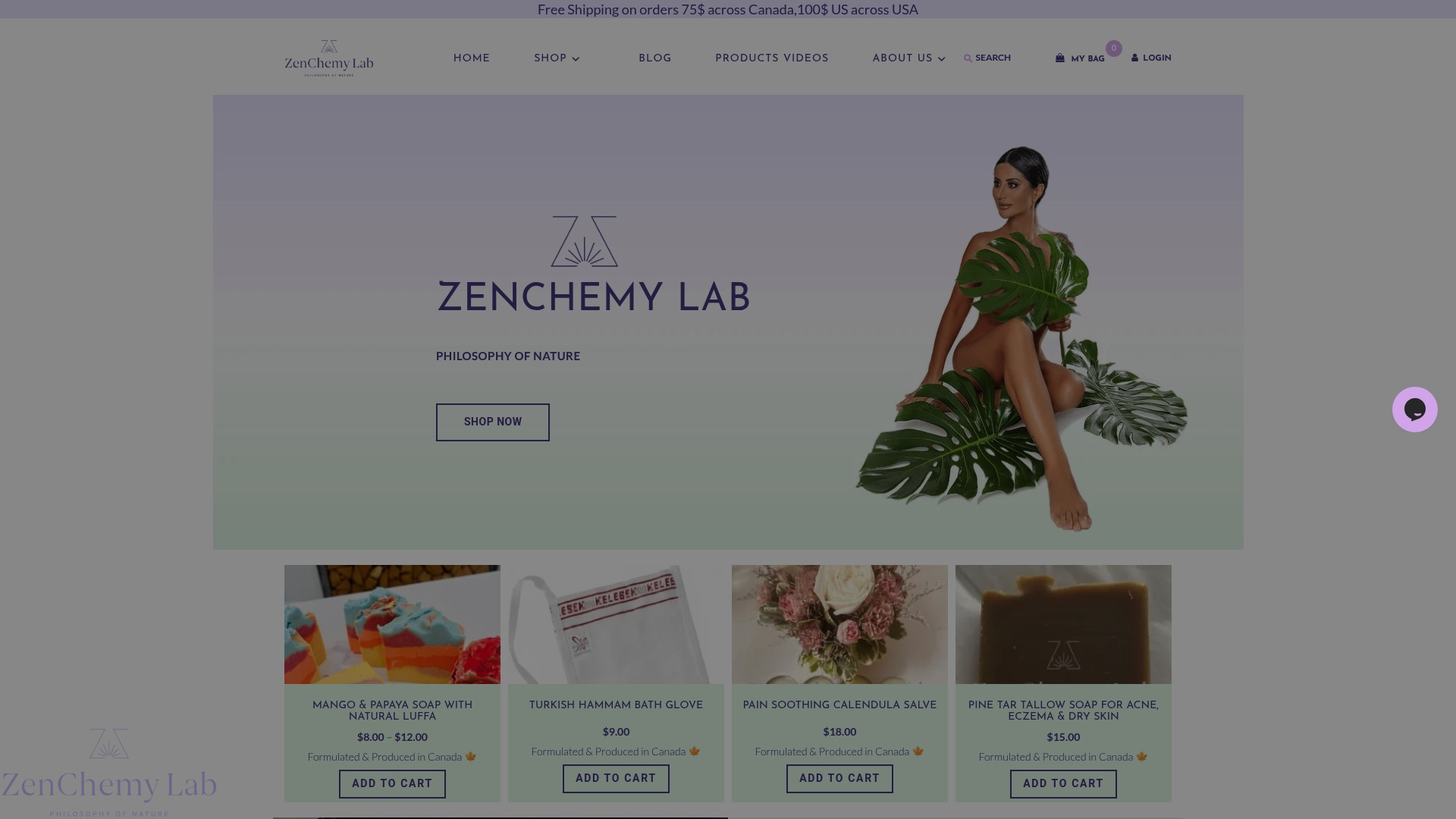
Use it the same way you’d use plain Epsom salt: a couple of cups under warm running water, soak for 15 to 20 minutes, then rinse if your skin runs sensitive. It’s handmade in small batches, so you’re getting the mineral benefits without synthetic fillers. Have a look at the product page to check current stock and add one to your next self-care evening.
Sources
- Love Epsom salt baths? Here’s how they affect your body, according to science | National Geographic
- Epsom Salts Bath: How to Take One, What It Does | WebMD
- Exploring the therapeutic potential of epsom salt bath on pain and intensity of knee osteoarthritis: Randomized controlled trial – PMC
- Magnesium Sulfate USP (Epsom Salts) | DailyMed
- Magnesium — Health Professional Fact Sheet | NIH ODS
2 Comments