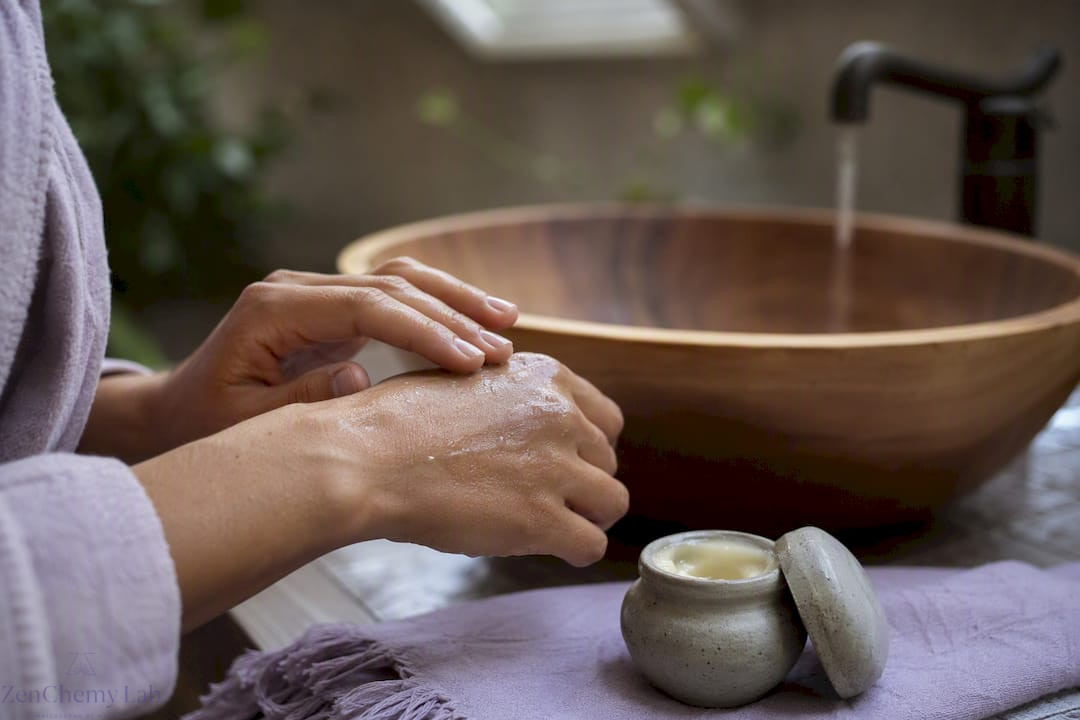
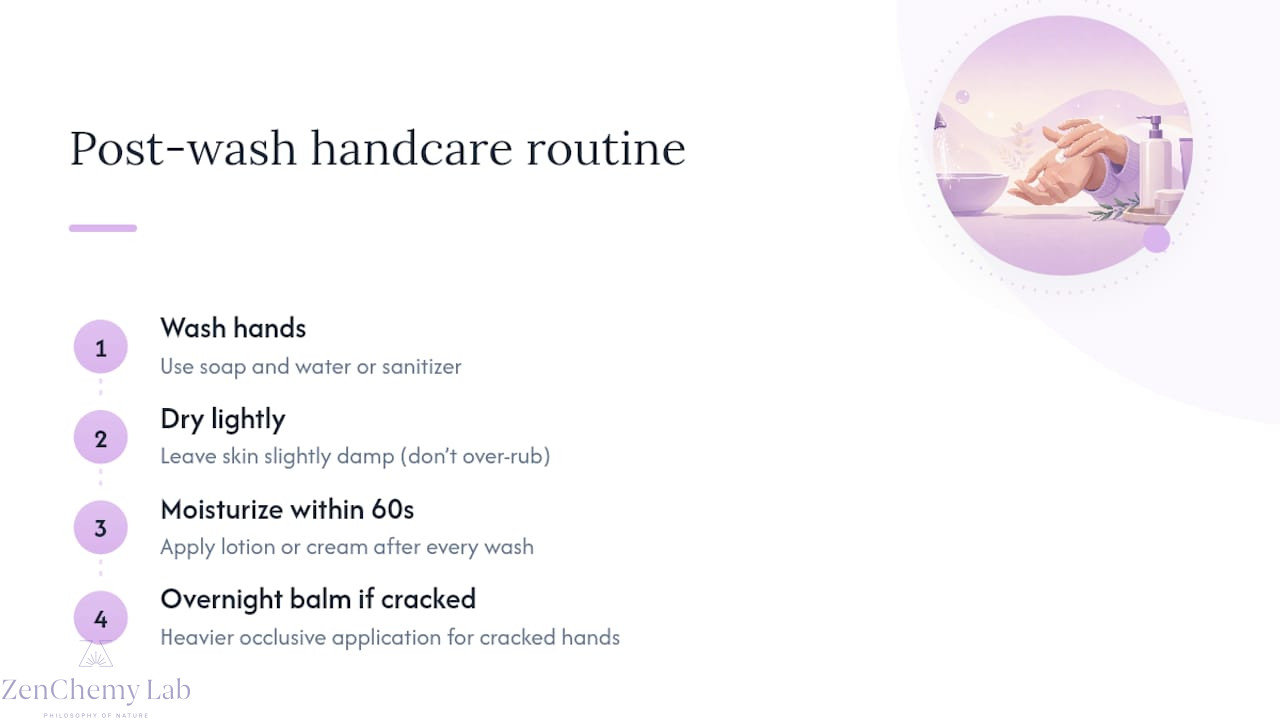
Wash with lukewarm water for at least 20 seconds. Pat your hands so they stay slightly damp. Apply a thick, occlusive moisturizer within about 60 seconds. That sequence, backed by dermatology guidance from the American Academy of Dermatology, is the fastest way to stop handwashing dry skin from getting worse and start reversing it.
Here’s the short version, broken down:
- Wash smart: Lukewarm water, 20 seconds, gentle non-sulfate cleanser.
- Dry smart: Pat, don’t rub. Leave a bit of dampness behind.
- Seal fast: Rich cream or ointment within a minute, while skin is still damp.
Pro Tip: Keep a hand cream by every sink in your house, not just the bathroom. The moisturizing window closes fast, and a cream you have to go hunting for is a cream you’ll skip.
For anyone dealing with cracking, peeling, or persistent redness, add nightly occlusion with a heavier balm. We’ll walk through exactly why this works and how to build it into a routine that actually sticks.
Key Takeaways
Reversing handwashing dry skin depends on washing with lukewarm water, patting hands dry, and sealing in moisture with an occlusive cream within 60 seconds.
| Point | Details |
|---|---|
| Wash temperature and timing | Use lukewarm water for at least 20 seconds; avoid hot water, which strips lipids faster. |
| The 60-second seal window | Apply a rich cream or ointment while hands are still slightly damp, not fully dry. |
| Pat, never rub | Gentle patting preserves surface moisture that helps moisturizer absorb effectively. |
| Overnight rescue for severe cracking | Apply a thick ointment and wear cotton gloves overnight to speed barrier repair. |
| Escalate persistent symptoms | See a dermatologist for bleeding cracks, spreading rash, or signs of infection. |
| Natural product pairing | Zenchemylab’s gentle washes and balms support the same cleanse, hydrate, seal routine dermatologists recommend. |
Table of Contents
- Why frequent handwashing causes dry skin
- How to treat cracked hands right after washing
- What to do every day to prevent dry hands from returning
- When dry hands need a dermatologist
- Where natural skincare fits into a dermatologist-backed routine
- A note on sticking with the routine
- Build your handwashing dry skin routine with Zenchemylab
- Frequently asked questions about handwashing dry skin
- Sources
Why frequent handwashing causes dry skin
Skin holds moisture because of a lipid layer that works like mortar between bricks of skin cells. Soap and water are designed to break down oils, which is exactly why they clean effectively and exactly why they strip your skin’s natural barrier along with the germs. Every wash removes a little more of that lipid mortar.

The AAD points to transepidermal water loss, or TEWL, as the main mechanism at play. Once the lipid barrier thins out, water escapes from deeper skin layers faster than your body can replace it. Hands wash and re-wash all day, so they lose that race constantly.
Three factors make this worse:
- Hot water: It feels more thorough but strips oils far more aggressively than lukewarm water.
- Harsh surfactants: Ingredients like sodium lauryl sulfate dissolve lipids efficiently, which is great for grease and terrible for your skin barrier.
- Mechanical stress: Vigorous scrubbing and rough paper towels create micro-tears that let moisture escape even faster.
Alcohol-based hand sanitizers add another layer of dryness. They’re necessary when soap and water aren’t available, and effective at 60% ethanol or higher, but the alcohol evaporates lipids right along with germs. If you already have eczema or psoriasis, this cycle compounds fast: a damaged barrier lets irritants penetrate deeper, which triggers more inflammation, which damages the barrier further.
How to treat cracked hands right after washing
The gap between washing and moisturizing matters more than most people realize. Dermatologists at the AAD describe a window of roughly 30 to 60 seconds after washing where residual surface water helps a moisturizer seal in hydration. Wait until your hands are bone dry, and you lose that advantage.
Here’s the sequence to follow every time:
- Pat, don’t rub. Use a clean towel and press gently. A small amount of dampness left on the skin is exactly what you want.
- Apply an occlusive product immediately. Petrolatum, mineral oil, or a dense balm creates a physical seal over the skin. Harvard Health specifically recommends this class of ingredient for hands that get washed often.
- Layer for severe cases. A lighter cream first, followed by a thicker ointment on top, gives you both fast absorption and a lasting seal.
- Cover the spots people forget. Between fingers, around nails, and across the wrists crack just as easily as the backs of your hands.
For hands that are already fissured or bleeding, an overnight “soak and seal” routine works better than daytime moisturizing alone. Apply a thick ointment before bed and cover with cotton gloves. Harvard Health notes that this prevents the product from rubbing off and gives it hours to penetrate deeply, which speeds up barrier recovery considerably compared to daytime application alone.
Pro Tip: If a crack is open or bleeding, avoid alcohol-based antiseptics or strong essential oils directly on the wound. Clean gently, apply a bland occlusive ointment, and cover overnight instead.
What to do every day to prevent dry hands from returning
Fixing dry hands once is easy. Keeping them from cracking again requires changing a few habits permanently, not just during a flare-up.
Start with what’s in your soap dispenser. Ingredients like sodium lauryl sulfate and unnecessary alcohols strip lipids fast, while glycerin, botanical oils, shea butter, and colloidal oats clean effectively without the same damage. Reading labels sounds tedious, but it’s the single biggest lever you control:
- Avoid: Sulfates (SLS/SLES), synthetic fragrance, drying alcohols like denatured or isopropyl in high concentrations.
- Look for: Glycerin, ceramides, hyaluronic acid, shea butter, and plant oils such as jojoba or sweet almond.
- Water temperature: Lukewarm, never hot, for the full 20 second wash.
- Drying: Pat with a soft towel and moisturize while still slightly damp.
Hand sanitizer has its place, particularly when you’re out and soap isn’t handy, but it shouldn’t replace washing as your default. When you do use it, let it dry fully, then apply moisturizer right after, the same seal-in principle applies whether the barrier was stripped by soap or by alcohol.
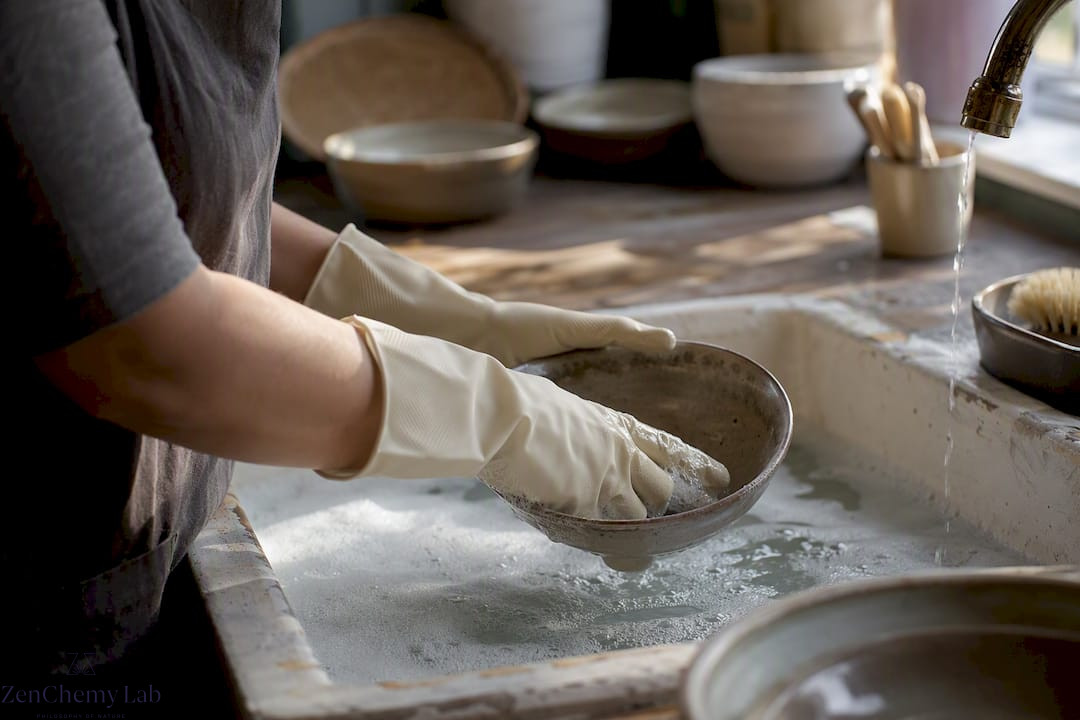
A few environmental changes pay off fast. Wear gloves for dishwashing, gardening, or cleaning with harsh chemicals; the water and detergent exposure there is often worse than a normal handwash. A humidifier in dry indoor air, especially through winter heating season, reduces how much moisture your skin loses passively. And don’t ignore your cuticles: dry, cracked cuticles are an early warning sign that your hand care routine needs adjusting before the problem spreads to your palms and knuckles.
When dry hands need a dermatologist
Most handwashing-related dryness responds to the routine above within a week or two. Some cases don’t, and pushing through with more moisturizer isn’t the answer at that point.
See a dermatologist if you notice:
- Cracks that are deep, bleeding, or won’t close after several days of consistent care
- A rash that spreads beyond the hands or changes appearance
- Signs of infection: warmth, swelling, pus, or increasing pain
- Dryness that persists despite proper washing technique and regular moisturizing
Persistent symptoms despite good technique can point to contact dermatitis or atopic dermatitis, conditions that often need a prescription-strength corticosteroid or barrier repair cream a drugstore product can’t match. Teledermatology has made this easier to access. Many platforms let you send photos and a symptom history without an in-person visit. Before your appointment, note when the dryness started, what products you’ve tried, and whether it worsens with specific soaps, gloves, or seasons.
Where natural skincare fits into a dermatologist-backed routine
Everything above still applies. Natural doesn’t mean optional; it means choosing formulations that support the same barrier repair dermatologists recommend, without unnecessary synthetic additives. What matters is the ingredient list, not the marketing.
Look for gentle cleansers built around glycerin and botanical oils instead of sulfates, and moisturizers with occlusive, natural bases like shea butter or plant waxes rather than thin, water-heavy lotions. Zenchemylab’s approach to formulation follows this same logic, cleanse gently, hydrate with humectants, seal with occlusives:
- Daytime: A gentle wash followed by a lightweight cream you can reapply between tasks.
- Overnight repair: A dense hand cream or balm under cotton gloves for the soak-and-seal method.
- Guardrail: Natural products support maintenance and repair. They don’t replace a dermatologist for cracked, bleeding, or infected skin.
Pro Tip: Rotate a lighter cream for daytime use with a heavier balm at night. Your skin needs different things while you’re active versus while it’s healing.
A note on sticking with the routine
Most people know moisturizing helps. The gap is consistency, not knowledge. What actually works is removing friction: put a cream within arm’s reach of every sink, not just one bottle in the bathroom you’ll forget about by dinner. A cheap trick that works surprisingly well is a phone reminder timed to your worst handwashing stretch of the day, whether that’s post-workout, after dishes, or mid-shift for healthcare and food service workers.
Repair is realistic within a couple of weeks for most people. If cracking or pain persists past that, don’t keep layering on more product. That’s your cue to get it looked at.
Build your handwashing dry skin routine with Zenchemylab
Zenchemylab makes the dermatologist-backed routine easier to actually follow, because the product line is built around the same three steps: gentle cleanse, humectant hydration, occlusive seal, all in botanical, non-toxic formulations instead of synthetic filler ingredients.

For daytime protection, pair a gentle wash with a lighter cream you can reapply throughout the day without feeling greasy at your desk or during chores. For overnight repair, a dense lotion bar or balm formulated for winter-level dryness gives you the occlusive base the soak-and-seal method needs. If you’re not sure where to start, the essential natural skincare routine guide walks through how to sequence products for hands that get washed a dozen times a day. Browse the shop, pick a daytime and nighttime pairing, and give your skin two weeks to show you the difference.
Frequently asked questions about handwashing dry skin
How often should I moisturize if I wash my hands a lot?
Apply moisturizer after every wash, ideally within 60 seconds while skin is still slightly damp. For hands that crack easily, add a heavier overnight application as well.
Is hand sanitizer worse for skin than soap and water?
Both can dry skin, but through different mechanisms: soap strips lipids, alcohol evaporates them. Moisturizing right after either one addresses the same underlying problem.
Can dry, cracked hands from handwashing heal on their own?
Mild dryness often improves within days once you adjust technique and moisturize consistently. Deep cracks, bleeding, or spreading rash need a dermatologist rather than more waiting.
What ingredients should I avoid in hand soap if I have dry skin?
Skip sulfates like sodium lauryl sulfate, synthetic fragrance, and high concentrations of drying alcohols. Choose formulas with glycerin, botanical oils, or shea butter instead.
This article is general information, not a substitute for advice from a qualified doctor. Consult a qualified healthcare professional about your own circumstances before acting on anything here.
Sources
- Dry skin relief from handwashing — American Academy of Dermatology (AAD)
- Scrubbing your hands dry? Soaps, moisturizers, and tips to help keep skin healthy — Harvard Health