TL;DR:
- Palm oil free soap is made without palm oil or its derivatives and uses alternative plant oils like olive and coconut oil. Many consumers avoid palm oil to prevent deforestation and support ethical sourcing, while seeking gentler skins due to fewer synthetic additives. Proper formulation and longer curing improve the durability and performance of these soaps compared to mass-market options.
Palm oil free soap is defined as a cleansing bar made without palm oil or any of its derivatives, relying instead on plant-based oils like olive oil, coconut oil, and shea butter to achieve lather, hardness, and skin nourishment. The global demand for palm oil has driven widespread deforestation across Southeast Asia, making it one of the most environmentally contested ingredients in personal care. Certifications like the Roundtable on Sustainable Palm Oil (RSPO) exist to address this, but enforcement gaps have pushed many consumers and makers to remove palm oil entirely. Zenchemylab formulates its artisanal soaps without palm oil, prioritising ingredient transparency and skin health in every bar.
What is palm oil free soap and why does it matter?
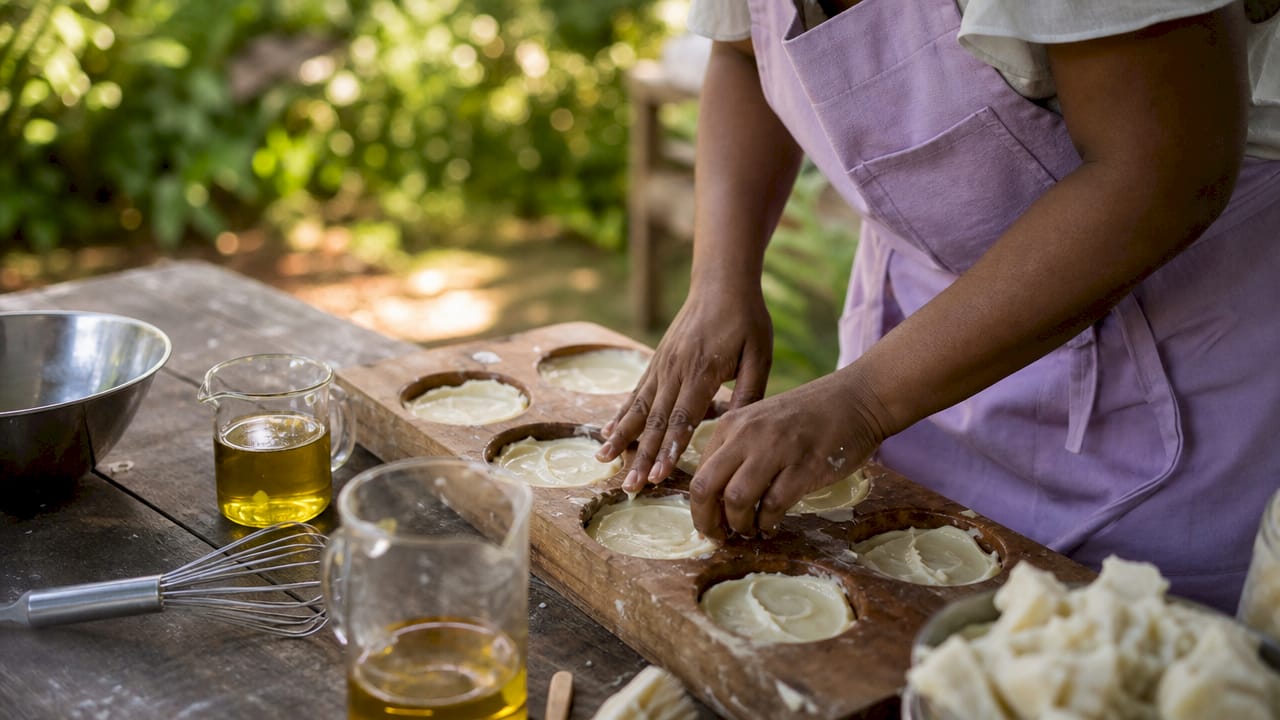
Palm oil free soap is the industry’s term for bars formulated through saponification using only non-palm lipids. Saponification is the chemical reaction between oils and an alkali (typically sodium hydroxide) that produces soap and glycerin. When palm oil is removed from that equation, makers must select alternative fats that collectively deliver the same cleansing, lather, and bar hardness.
Palm oil is the world’s most widely used vegetable oil, and its production is directly linked to rainforest destruction, habitat loss for orangutans and Sumatran tigers, and significant carbon emissions. The RSPO was created to certify more responsible sourcing, but RSPO certification faces criticism over enforcement and standards. That gap motivates many consumers to avoid palm oil entirely rather than rely on a certification they cannot fully verify.
For your skin, the difference is also real. Palm oil contributes hardness and a stable lather to commercial bars, but it does not offer meaningful moisturisation. Palm-free formulations built around olive oil and shea butter retain more natural glycerin, which enhances softness and reduces moisture loss after washing.
Why do consumers and makers avoid palm oil in soaps?
The reasons for going palm-free span environmental ethics, certification scepticism, and skin care quality. They are worth understanding separately.
Environmental and ethical concerns
- Deforestation: Palm oil farming is a leading driver of tropical forest clearance, destroying biodiversity-rich ecosystems at scale.
- Habitat destruction: Orangutans, pygmy elephants, and Sumatran tigers lose critical habitat when plantations replace rainforest.
- Carbon emissions: Draining peatlands for palm cultivation releases stored carbon, accelerating climate change.
- ✅ RSPO limitations: Complete removal of palm oil is seen by zero-waste advocates as the most direct way to reduce rainforest destruction, since RSPO enforcement remains inconsistent.
Skin and product quality concerns
Commercial palm oil soaps often contain sulfates (SLS), parabens, and synthetic fragrances alongside palm derivatives. Handmade palm-free soaps use natural preservatives like essential oils and vitamins instead, which benefits sensitive and reactive skin types. The absence of synthetic additives also means fewer potential irritants for people with eczema, rosacea, or contact dermatitis.
Pro Tip: If you have sensitive skin, look for soaps that list every oil by its botanical name (e.g., Olea europaea for olive oil). Vague terms like “vegetable oil” are a red flag for hidden palm derivatives.
Consumer demand is shifting too. Switching to palm-free soap reflects a broader lifestyle commitment to small-scale, transparent manufacturing and better consumer trust. Buying palm-free is not just a skincare choice. It is a vote for a different kind of supply chain.
What ingredients are used in palm oil free soap?
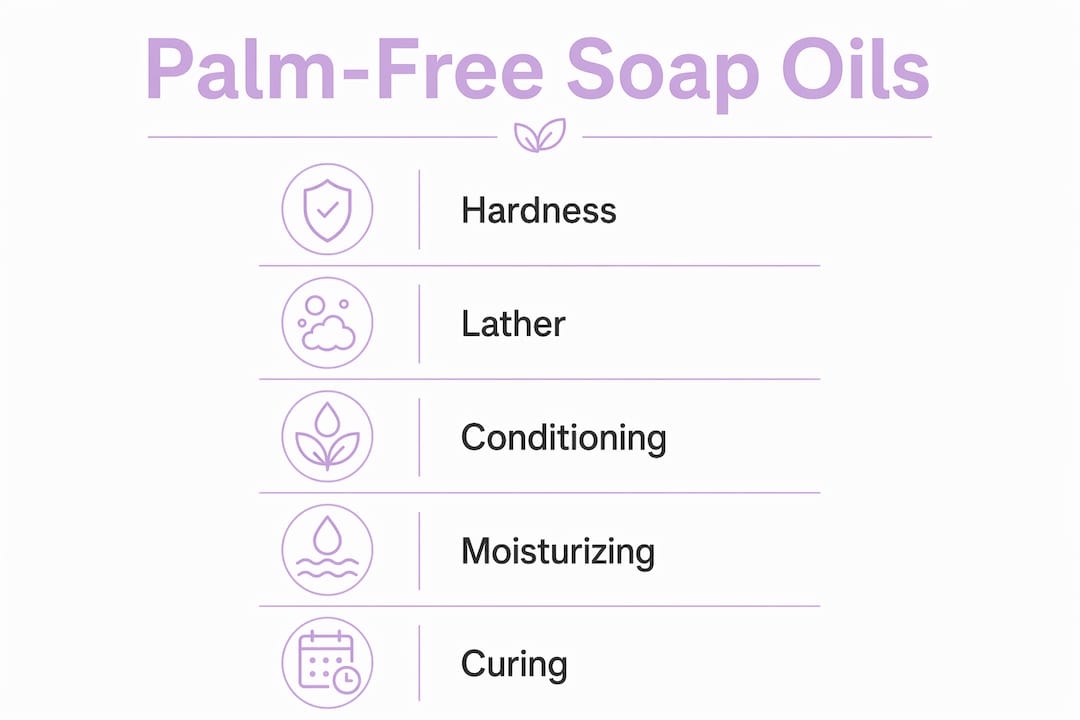
The best palm oil free soap ingredients work together to replace the three functions palm oil performs: hardness, lather, and skin conditioning. No single oil does all three, so formulation is about balance.
Key oils and their roles
| Oil or Butter | Primary Function | Skin Benefit |
|---|---|---|
| Olive oil | Conditioning, softness | Moisturising, gentle on sensitive skin |
| Coconut oil | Hardness, bubbly lather | Cleansing, antimicrobial |
| Shea butter | Conditioning, creaminess | Nourishing, reduces TEWL (transepidermal water loss) |
| Castor oil | Stable foam, lather boost | Humectant, draws moisture to skin |
| Rice bran oil | Mild conditioning | Antioxidant-rich, suits mature skin |
A beginner-friendly palm-free recipe uses 75% olive oil and 25% coconut oil for balanced cleansing and moisturising. That ratio gives you a gentle, nourishing bar without the drying effect that pure coconut oil bars can produce.
Coconut oil is the workhorse of palm-free formulation. Well-formulated palm-free soaps use 30% coconut oil for bubbly lather, plus castor oil for stable foam. Going above 35% coconut oil causes dryness, so moisturising oils like shea or olive must balance it out. This is the core formulation principle behind every quality palm-free bar.
The curing process
Palm-free soaps typically need an extended cure beyond four weeks. Reducing water content and longer curing times produce firmer bars without palm-derived hardeners. Salt addition is another technique makers use to improve hardness. A well-cured bar lasts longer, lathers better, and feels firmer in your hand.
Pro Tip: When buying handmade palm-free soap, ask the maker how long the bar was cured. A minimum of six weeks signals a quality product that will hold up well in the shower.
How to choose and identify authentic palm oil free soaps?
Reading a soap label correctly is the single most important skill for choosing a genuinely palm-free bar. Palm oil hides under many names, and hidden palm derivatives confuse consumers who think they are buying clean products.
Common palm derivatives to watch for
Sodium palmate, sodium palm kernelate, stearic acid (when unspecified), sodium laureth sulfate, and generic “vegetable oil” or “vegetable fat” can all be palm-derived. Genuine palm-free soaps list specific recognised oils like olive, coconut, or sunflower explicitly. If an ingredient list uses vague collective terms, that is a signal worth questioning.
Practical buying tips
- Read the full INCI list. Every ingredient must be listed by its International Nomenclature of Cosmetic Ingredients (INCI) name. Specific botanical names indicate transparency.
- Look for a 100% palm-free policy. Brands with a 100% palm-free policy are preferred over those relying on RSPO-certified palm oil, which carries limited enforcement.
- Check for third-party verification. Certifications from organisations like the Soil Association or Vegan Society add a layer of accountability beyond the brand’s own claims.
- Favour small-batch makers. Artisan producers who list their full recipe and sourcing are far more likely to be genuinely palm-free than large commercial bars with complex supply chains.
- Ask directly. Reputable makers welcome questions about their ingredients. Silence or vague answers are a warning sign.
Zenchemylab publishes full ingredient transparency across its cold processed soap range, making it straightforward to verify what is and is not in each bar.
What are the skincare and environmental benefits of palm oil free soap?
Palm-free soaps deliver measurable benefits for both your skin and the planet. The two are connected: cleaner ingredient lists tend to come from cleaner supply chains.
Skin benefits
- ✅ Gentler cleansing: Without sulfates and synthetic surfactants, palm-free bars clean without stripping the skin’s natural lipid barrier.
- Better moisture retention: The natural glycerin retained in handmade saponification reduces TEWL, keeping skin softer after washing.
- Suitable for sensitive skin: Natural preservatives like essential oils and vitamins replace synthetic additives, reducing irritation risk for eczema-prone or reactive skin.
- Richer nourishment: Handmade palm-free soaps often contain natural antioxidants and vitamins that enhance skin nourishment compared to mass-market bars with synthetic preservatives.
For people with sensitive skin concerns, the absence of harsh synthetic ingredients makes palm-free formulations a genuinely gentler daily option.
Environmental benefits
Choosing palm-free soap reduces direct demand for palm oil, which in turn reduces the economic incentive for further deforestation. Small-batch producers who source olive oil, coconut oil, and shea butter from traceable suppliers create shorter, more accountable supply chains. Every bar you choose is a small but concrete reduction in demand for one of the world’s most destructive agricultural commodities.
How to use and care for palm oil free soaps effectively?
Palm-free bars behave differently from commercial soaps, and a few simple habits will extend their life significantly.
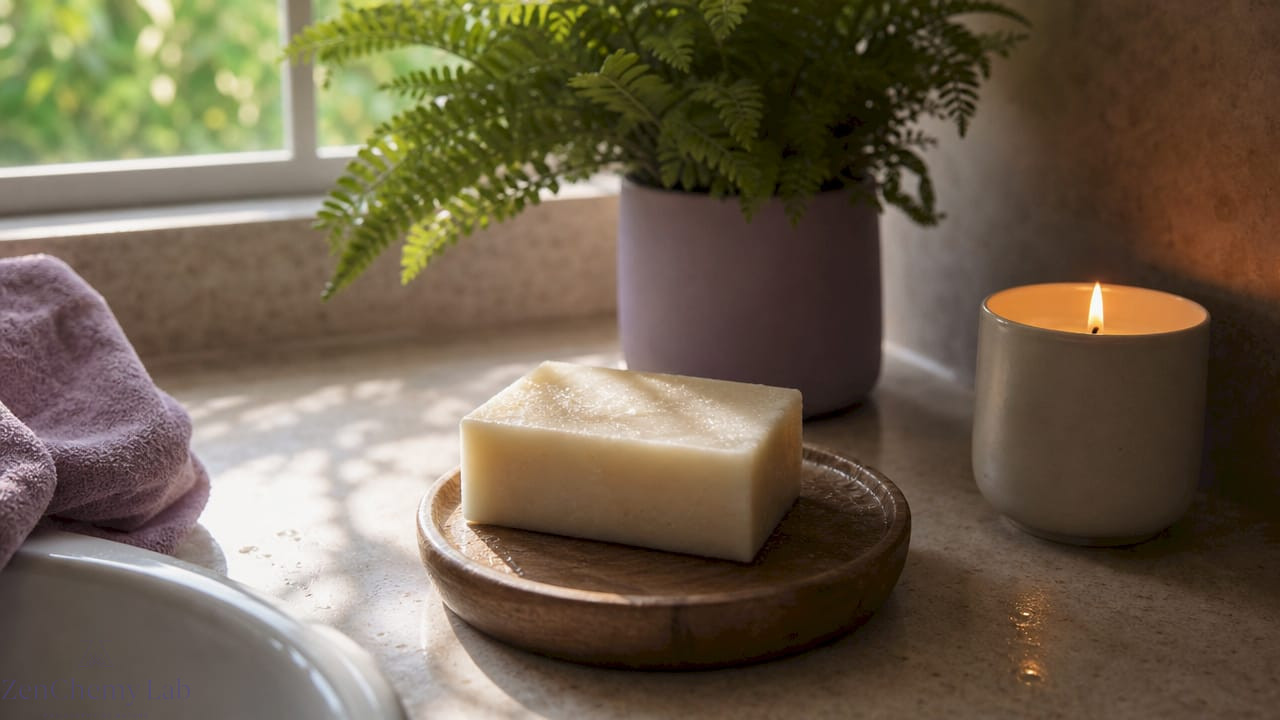
Store your bar on a well-draining soap dish between uses. Palm-free soaps are often softer than commercial bars because they lack palm-derived hardeners, so sitting in pooled water dissolves them quickly. A slatted wooden or ceramic dish that allows airflow underneath the bar makes a real difference.
Keep the bar away from direct shower spray when not in use. A small soap shelf positioned out of the water stream keeps the bar dry and firm. This single habit can double the lifespan of a handmade bar.
Palm-free soaps also pair well with complementary natural skincare practices. Following a palm-free cleanse with a plant-based moisturiser or facial oil seals in the glycerin your skin absorbed during washing, maximising the moisturising benefit.
Pro Tip: If your palm-free bar feels soft when you first unwrap it, give it an extra week or two of open-air curing on your bathroom shelf before regular use. The bar will firm up noticeably and last much longer.
Key takeaways
Palm oil free soap is the most direct way to avoid deforestation-linked ingredients in your daily skincare routine while gaining a gentler, more nourishing cleanse.
| Point | Details |
|---|---|
| Definition matters | Palm oil free soap avoids palm oil and all its derivatives, using named plant-based oils instead. |
| Formulation balance | Coconut oil, olive oil, shea butter, and castor oil work together to replace palm oil’s hardness and lather. |
| Label literacy | Check for sodium palmate, stearic acid, and “vegetable oil” as common hidden palm derivatives. |
| Curing time counts | Bars cured beyond four weeks are firmer, longer-lasting, and perform closer to palm-based soaps. |
| Skin and planet benefit | Retaining natural glycerin improves moisture, while palm-free sourcing reduces deforestation demand. |
Why I think palm-free soap is worth the switch
I have tested a lot of natural soaps over the years, and the most common misconception I encounter is that palm-free bars are somehow inferior. People expect them to be soft, short-lived, or poor lathering. A well-formulated palm-free bar, cured properly, performs just as well as any commercial bar and feels noticeably better on skin.
What changed my perspective was paying attention to what happens after washing. With a palm-free bar built on olive oil and shea butter, my skin did not feel tight or dry. That is the glycerin doing its job. Commercial palm soaps often have that glycerin removed and sold separately, leaving you with a bar that cleans but strips.
The ingredient transparency piece matters too. When a maker lists every oil by name and tells you exactly where it comes from, you are dealing with a fundamentally different kind of product. That level of honesty is rare in mass-market skincare. Small-batch producers who go palm-free tend to apply that same rigour across their entire formulation.
The environmental argument is real, but I find the skin argument equally convincing. You do not have to be a zero-waste advocate to benefit from switching. You just have to care about what goes on your skin every single day.
— Alex
Natural skincare without compromise at Zenchemylab
Zenchemylab crafts artisanal soaps and botanical body care products using raw, traceable plant-based ingredients, with no palm oil, no synthetic fragrances, and no parabens. Every bar is cold-processed and cured to deliver the glycerin-rich, nourishing cleanse that mass-market soaps cannot match.
If you are ready to make the switch, the Zenchemylab natural skincare collection is a practical starting point. Each product page lists the full INCI ingredient list so you can verify exactly what you are putting on your skin. Explore the range and find a bar that fits your skin type and values.
FAQ
What does palm oil free soap mean?
Palm oil free soap is a cleansing bar made without palm oil or any palm-derived ingredient, using named plant-based oils like olive oil, coconut oil, and shea butter instead.
Is palm oil free soap better for sensitive skin?
Yes. Palm-free bars avoid sulfates, parabens, and synthetic fragrances common in commercial soaps, making them gentler and less likely to trigger irritation on sensitive or reactive skin.
What are the most common palm oil free soap ingredients?
The most common ingredients are olive oil, coconut oil, shea butter, castor oil, and rice bran oil. Each contributes a specific property such as lather, hardness, or skin conditioning.
How do I spot hidden palm oil on a soap label?
Look for sodium palmate, sodium laureth sulfate, stearic acid (unspecified), and generic “vegetable oil.” Genuine palm-free soaps list every oil by its specific botanical or INCI name.
Why do palm oil free soaps need longer curing?
Palm oil provides natural hardness in conventional bars. Without it, makers extend curing time beyond four weeks and reduce water content so the bar firms up to a comparable density.