
TL;DR:
- Small batch skincare emphasizes ingredient freshness, transparency, and personalized accountability, unlike mass production. It offers natural, minimally formulated products with verified ingredient sources and shorter shelf lives for optimal potency. Trustworthy brands provide proof through Certificates of Analysis and clear sourcing to ensure safe, ethical, and effective self-care choices.
Mass production made skincare affordable and accessible, but it also made it anonymous. When you buy a product manufactured by the millions, you know very little about who made it, where the ingredients came from, or how long it sat in a warehouse before reaching your bathroom shelf. That is exactly why trust small batch skincare conversations have gained so much momentum. Small batch production offers something mass manufacturing structurally cannot: personal accountability, ingredient freshness, and transparency you can actually verify. This article breaks down what that means for your skin and your self-care choices.
Table of Contents
- Key takeaways
- What small batch skincare actually means
- Quality control and ingredient transparency
- Safety and efficacy: what the research shows
- Sustainability and ethics behind the bottle
- My take on trusting small batch skincare
- Why Zenchemylab is worth exploring
- FAQ
Key takeaways
| Point | Details |
|---|---|
| Freshness over shelf life | Small batch products contain no synthetic preservatives, meaning ingredients are fresher and more potent at point of use. |
| Transparency you can verify | Trustworthy small batch brands offer Certificates of Analysis and lot-based traceability so you know exactly what’s in your product. |
| Safer for sensitive skin | Minimalist, plant-based formulations with fewer than 10 ingredients reduce exposure to synthetic irritants and fillers. |
| Sustainability built in | Precise production quantities reduce overstock, packaging waste, and the environmental footprint common in mass manufacturing. |
| Scale doesn’t mean sacrifice | Reputable small batch brands maintain quality through supplier audits and batch documentation even as they grow. |
What small batch skincare actually means
“Small batch” is not just a marketing phrase. It describes a specific approach to production where products are made in limited, controlled quantities, often by hand, with direct oversight at every stage.
The difference between mass and small batch skincare production comes down to scale, speed, and intention.
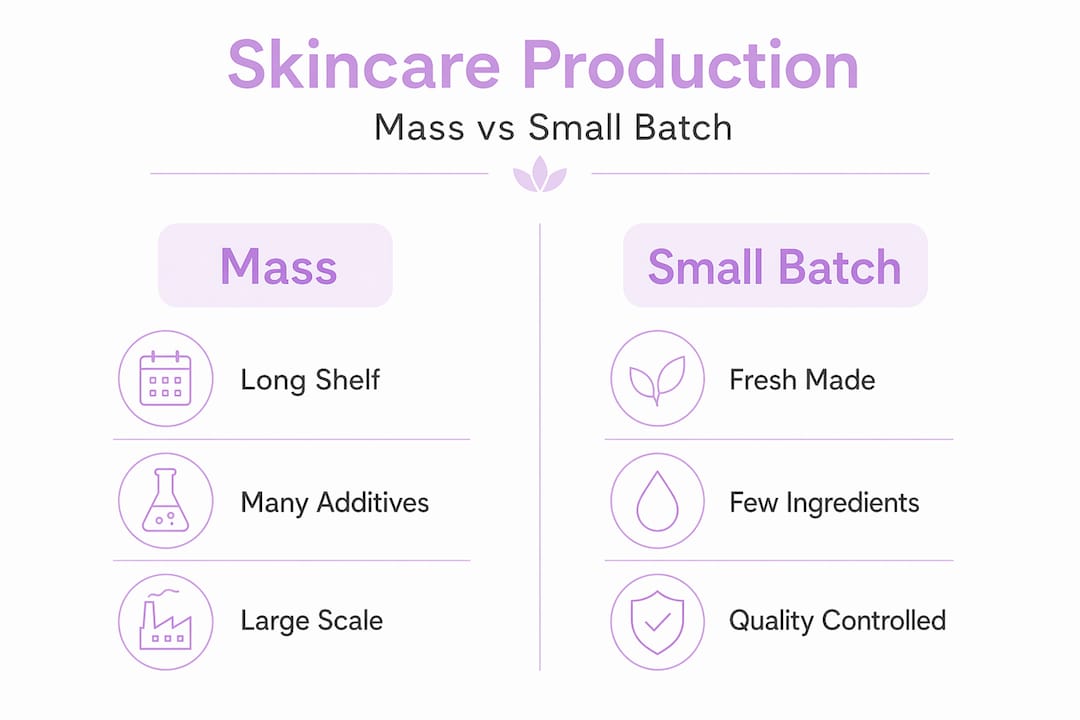
| Factor | Mass production | Small batch production |
|---|---|---|
| Batch size | Thousands to millions of units | Dozens to hundreds of units |
| Ingredient sourcing | Centralised, commodity-based | Direct supplier relationships |
| Preservatives | Synthetic preservatives standard | Plant-based or none |
| Freshness at purchase | Variable, months to years old | Recently produced |
| Quality oversight | Automated, standardised | Hands-on, artisan-controlled |
| Formulation flexibility | Fixed, rarely updated | Responsive to feedback and season |
What makes small batch production genuinely different for your skin is the impact on ingredient potency. Botanical extracts, plant oils, and natural butters begin to oxidise and degrade over time. A product that left a facility twelve months ago and sat in distribution is delivering meaningfully less active nutrition to your skin than one made six weeks ago. Artisanal skincare craftsmanship depends on this freshness being protected at every step.
The benefits of small batch skincare also extend to formulation control. Small batch brands typically:
- ✅ Produce only what they can sell within a short window
- ✅ Adjust formulas based on direct customer feedback
- ✅ Source from suppliers they know personally
- ✅ Maintain records at the individual batch level
- ✅ Avoid the cost-cutting ingredient substitutions common at scale
Small batch production also allows brands to refine formulas with tighter quality control before committing to larger volumes, which means better first products and fewer quality surprises for customers.
Quality control and ingredient transparency
This is where trustworthy small batch brands genuinely separate themselves from the rest of the market. Any brand can claim to be “natural” or “clean.” The question is whether they can prove it.
The gold standard of transparency in small batch skincare is the Certificate of Analysis (CoA). A CoA is a third-party lab document that confirms what is actually in a product, at what concentration, and whether it meets safety standards. Consumers can verify brand quality by requesting these documents or checking whether they are publicly posted on the brand’s website. If a brand hesitates or cannot provide one, that tells you something important.
Beyond CoAs, lot-based traceability means each batch of product is assigned a unique code that connects it to specific ingredients, sourcing records, and production dates. If an issue ever arises with a product, a traceable system makes it possible to identify and address the problem. Brands publishing lab reports and batch pages are investing in accountability, not just aesthetics.
Ingredient transparency is the other side of the coin. Small batch formulations typically use fewer than 10 ingredients and avoid synthetic fillers, fragrances, and preservatives. That minimalism is not just a philosophy. It is a practical commitment that makes ingredient sourcing easier to verify and adverse reactions easier to trace. When you see shea butter, calendula extract, and cold-pressed jojoba on an ingredient list, you know what you are putting on your skin. When you see a list of twenty-five items with names you cannot pronounce, the accountability disappears.
Understanding how to select pure skincare ingredients is a skill that pays off, and small batch brands generally make that skill easier to apply.
Pro Tip: When evaluating a small batch brand, ask three specific questions: Can I see a Certificate of Analysis for this batch? Who supplies your key botanical ingredients? What is the production date on this product? A trustworthy brand will answer all three without hesitation.
Safety and efficacy: what the research shows
Is small batch skincare safer? The honest answer is: it depends on what you are comparing. But for people with reactive, sensitive, or compromised skin barriers, the small batch skincare advantages are real and measurable.
Here is why:
-
No synthetic preservatives. Mass-produced products rely on parabens, formaldehyde releasers, and other synthetic preservatives to extend shelf life. These compounds are linked to skin sensitisation in some individuals. Small batch products avoid them by design, since the shorter shelf life due to natural formulations means the product is consumed before degradation becomes a concern.
-
Fewer synthetic fragrance compounds. Fragrance is one of the leading causes of contact dermatitis. Small batch formulations typically use no added fragrance or use only plant-derived scent from botanical ingredients already in the product.
-
Natural ingredient variability is not a flaw. A small batch body butter made in January may be slightly firmer than one made in August because the botanicals behave differently across seasons. Natural cosmetic variations are quality indicators, not defects. They confirm the product has not been stabilised with synthetic uniformity agents.
-
Faster use cycles protect potency. Because small batch products do not contain synthetic antioxidants to halt oxidation, you use them while they are fresh and active. This is precisely when plant lipids like rosehip oil or sea buckthorn are delivering their highest concentration of skin-nourishing fatty acids and carotenoids.
-
Reduced exposure to synthetic colourants. Many mass products contain synthetic dyes that serve no skin function. Small batch formulations colour naturally from ingredient pigment or not at all.
For small batch skincare for sensitive skin, these factors compound. Fewer synthetic inputs means fewer potential triggers. The result is a product category that consistently outperforms mass alternatives for people who have struggled with standard formulations. The real skincare benefits of handmade soap illustrate this well, particularly for individuals managing eczema or rosacea.
Sustainability and ethics behind the bottle
Small batch production is not just good for your skin. It aligns with a broader set of values that an increasing number of consumers in Canada care deeply about.

The environmental case is grounded in a simple principle: produce only what you can sell. Small batch production reduces waste by making precise quantities, which means less overstock heading to landfill and less packaging consumed unnecessarily. Compare that to mass manufacturing, where products are produced in anticipation of forecasted demand, and unsold inventory is a structural reality built into the margin.
The ethical dimension runs deeper than waste reduction:
- 🌿 Local and regional sourcing. Many small batch brands source botanicals from local farms or known regional suppliers. This supports local agricultural economies and reduces transportation emissions.
- 🌿 Artisan labour practices. Small batch brands are typically founder-led or operated by small teams. The person formulating your product is often the same person answering your customer service message.
- 🌿 Community accountability. A small brand’s reputation is built person by person. There is no anonymity, no corporate layer insulating founders from feedback. That proximity creates a different standard of care.
- 🌿 Ethical ingredient sourcing. Fair trade skincare principles are far easier to implement and verify at small batch scale, where supplier relationships are direct rather than brokered through commodity chains.
The small batch skincare advantages here are not incidental. They are structural. A brand making 200 units of a facial serum is operating in a fundamentally different accountability structure than one making 200,000. That difference shapes every decision from sourcing through to packaging.
Pro Tip: Look for brands that name their suppliers or share their sourcing regions publicly. “Organic shea butter from a cooperative in Ghana” tells you far more than “shea butter” alone. Transparency at this level is a reliable signal of ethical commitment.
Choosing small batch is also a vote for sustainable skincare practices at an industry level. Every purchase from an artisan brand signals that quality and ethics matter more than price and convenience.
My take on trusting small batch skincare
I’ve spent enough time in the skincare space to notice a pattern that rarely gets called out: the brands that shout “natural” the loudest are often the ones with the least to show for it. Meanwhile, smaller artisan producers who do the actual work of sourcing, formulating, and testing tend to be quieter about it. They just do it.
What I’ve learned is that trust in skincare isn’t built through clever marketing. It’s built through systems. When I evaluate a brand, I’m looking for batch codes, CoA availability, supplier transparency, and whether they offer samples. Those aren’t premium signals. They’re the baseline. Consumers should assess brands for exactly these criteria before committing.
The conventional wisdom says bigger brands are safer because they have more resources to test and regulate. In my experience, that’s backwards. Scale creates distance between the formulator and the consumer. Small batch removes that distance entirely. The founder who made your cleanser knows exactly which batch of calendula she used and why.
My strongest piece of advice: don’t be passive. Ask the brand questions. A founder who can’t tell you where their shea butter comes from or doesn’t know what a CoA is hasn’t built the kind of operation that deserves your trust. The ones who light up when you ask those questions? Those are the brands worth investing in.
— Alex
Why Zenchemylab is worth exploring
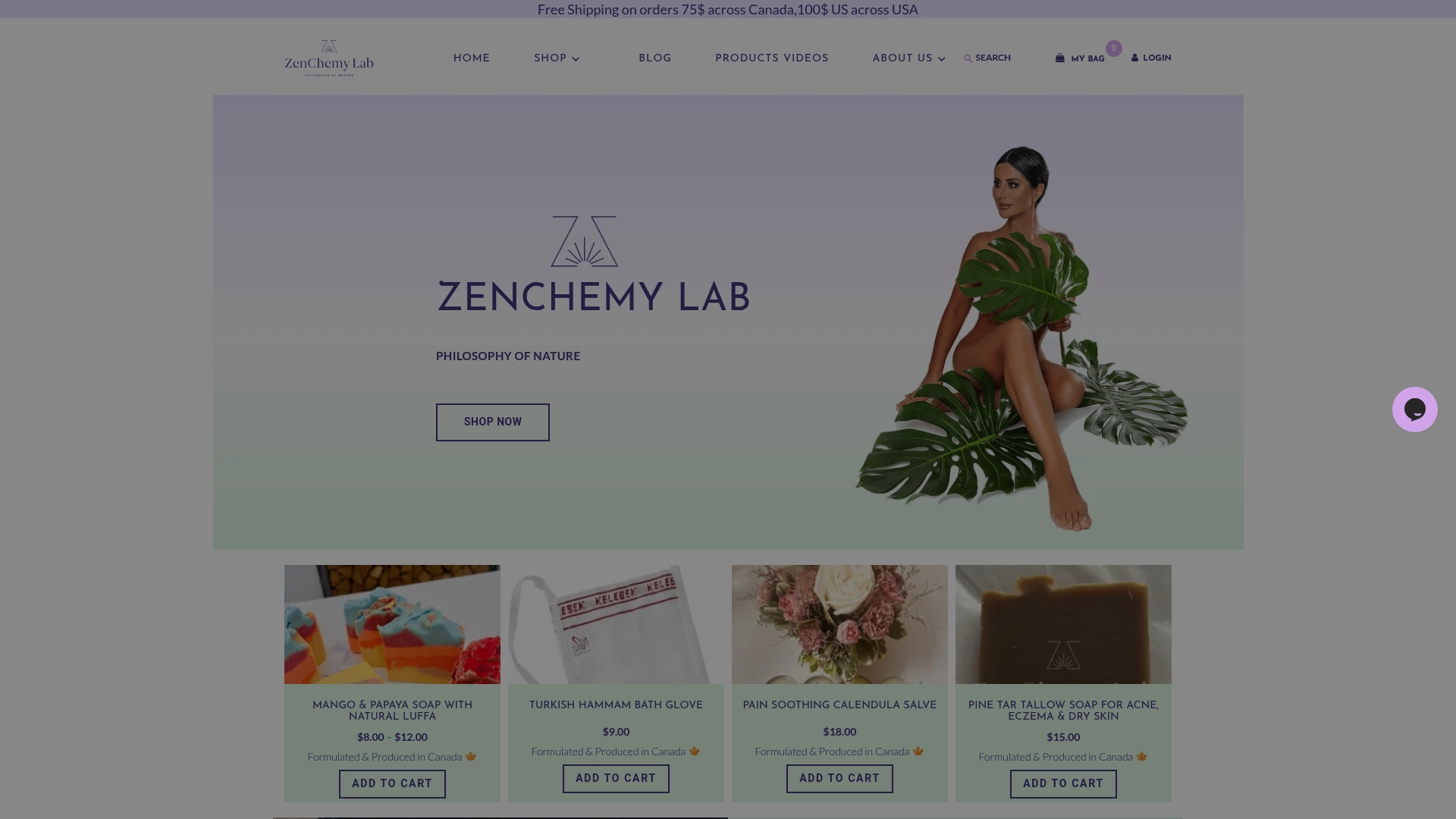
At Zenchemylab, every product is built on the small batch skincare principles we’ve covered here: minimalist formulations, plant-based ingredients, and full transparency from sourcing through to the finished product. There are no synthetic fillers, no mystery fragrances, and no compromises hidden behind a long ingredient list.
Zenchemylab’s natural skin collection showcases artisanal soaps, botanical cosmetics, and body care made in small, carefully controlled batches. Each product reflects the same commitment to purity and freshness that makes small batch skincare trustworthy. If you are building or refining your natural skincare routine, exploring the handmade soap range is a natural starting point. These are products you can feel good about using every day, knowing exactly what is in them and why.
Your self-care routine deserves that standard. Zenchemylab is here to help you meet it.
FAQ
What makes small batch skincare more trustworthy?
Small batch brands maintain direct oversight over ingredients and production, often providing Certificates of Analysis and lot-based traceability that mass manufacturers rarely offer. This transparency lets you verify what is actually in your product.
Is small batch skincare safer for sensitive skin?
Yes, for most people with sensitive skin, small batch formulations are safer because they avoid synthetic preservatives, fragrances, and fillers that commonly trigger contact dermatitis or irritation. Fewer ingredients also makes it easier to identify any reaction.
What is the difference between mass and small batch skincare?
Mass production prioritises volume and shelf life using synthetic stabilisers, while small batch production focuses on ingredient freshness, minimal formulations, and personal quality oversight. The result is a product that is closer to its botanical source.
How do I verify a small batch brand is legitimate?
Ask for a Certificate of Analysis, check whether the brand publishes batch codes and production dates, and look for named suppliers or sourcing regions. Brands that can answer those questions confidently are the ones worth trusting.
Does small batch skincare expire faster?
Yes. Without synthetic preservatives, small batch products have a shorter shelf life. This is a sign of freshness, not poor quality. Use products consistently after opening and pay attention to the recommended use-by period on the packaging.