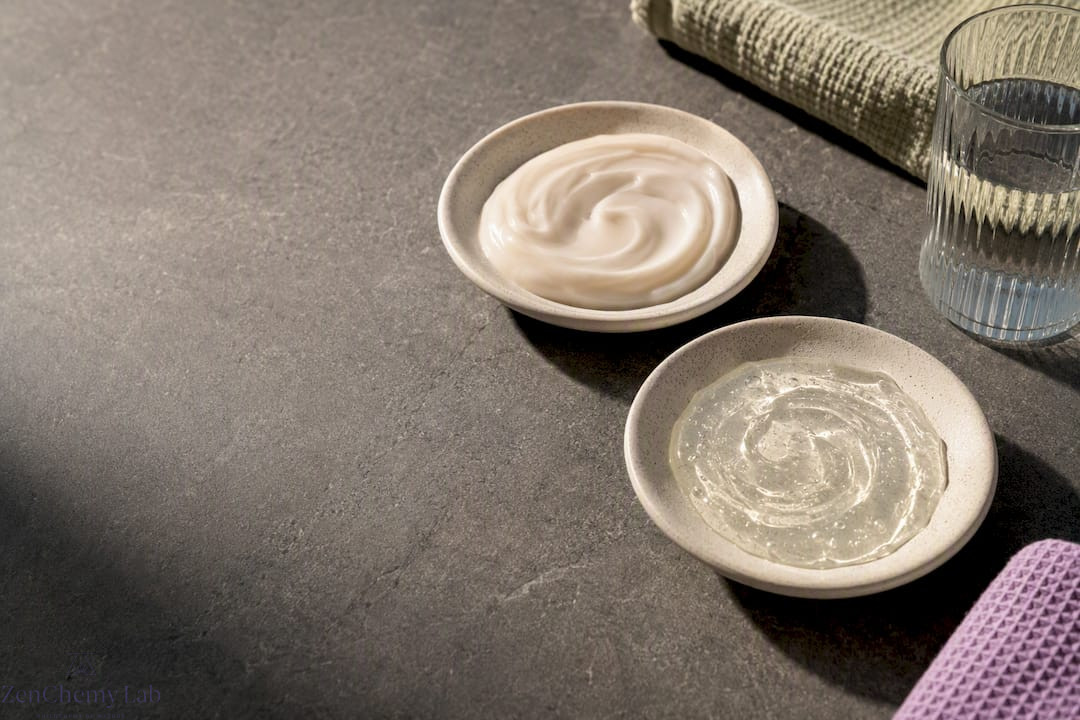
Cream cleansers are the better starting point for dry, sensitive, rosacea-prone, or barrier-compromised skin, thanks to milder surfactants and emollients that leave lipids intact. Gel cleansers suit oily, combination, or congestion-prone skin, and they earn their place as the second step in a double cleanse when you’re wearing heavy sunscreen or makeup. Hybrids blur that line, and most skin benefits from switching textures with the seasons rather than picking one forever.
TL;DR:
- Cream cleansers are ideal for dry, sensitive, or barrier-compromised skin because they are milder, leave lipids intact, and reduce tightness and irritation.
- Gel cleansers suit oily, acne-prone, or congestion-prone skin and perform best after heavy sunscreen or makeup, especially in humid conditions.
- Formulation quality, including humectants like glycerin or hyaluronic acid, is crucial; poorly formulated gels can cause tightness, while rich creams may underperform with heavy oils.
- Seasonal changes influence cleanser choice: switch to creams in winter for moisture retention and gels in summer for oil control.
- Proper cleansing technique, such as lukewarm water, gentle massage, and thorough rinsing, enhances effectiveness and preserves skin barrier health.
Table of Contents
- Cream cleanser vs. gel cleanser: what’s actually different at the formula level
- When a cream cleanser makes sense
- When a gel cleanser makes sense
- How to choose between a cream and a gel cleanser
- How to use your cleanser without undoing its benefits
- Ingredients worth seeking out, and ones worth skipping
- Seasonal switching and hybrid formulas: do you need both?
- How ZenChemy Lab’s approach lines up with this checklist
- Consistency beats novelty, and comfort beats “clean”
- Where to find gentle, barrier-friendly cleansers
- Sources
Cream cleanser vs. gel cleanser: what’s actually different at the formula level
The difference between a cream and a gel cleanser starts with the oil-to-water ratio, and that ratio decides almost everything about how a cleanser feels and behaves on your face.
Gel cleansers are typically water-based, built around surfactants that lift surface sebum, sweat, and debris off the skin. That’s why they foam or feel slippery, then rinse to a “clean” finish. Cream cleansers are emulsions with a higher oil content, formulated to emulsify grime without stripping the skin’s own lipids. Instead of lifting oil away aggressively, they dissolve dirt while leaving the barrier’s natural fats mostly undisturbed.
That mechanical difference explains the after-feel. Gels tend to leave skin feeling tighter, sometimes described as “squeaky.” Creams leave a soft, cushioned finish because they’re not designed to strip everything in their path.
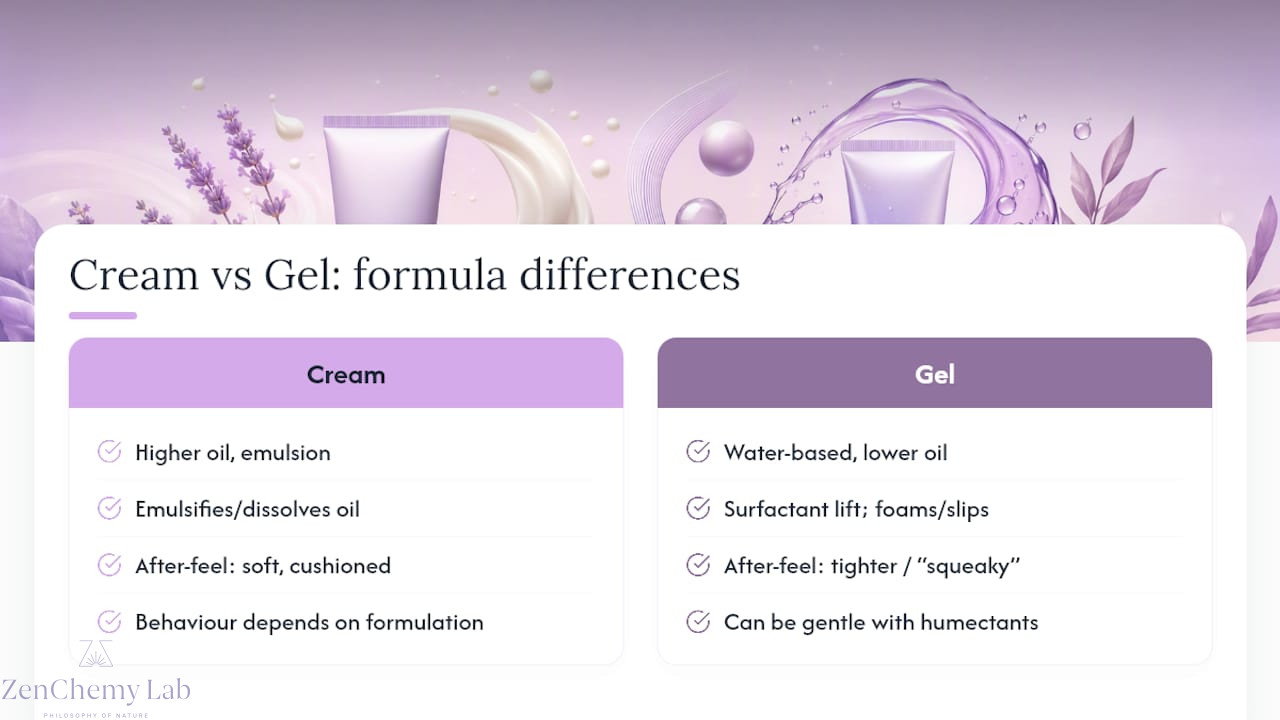
Heading into 2026, the line between the two has blurred considerably. Hybrid formulas, oil-to-foam cleansers, gel-to-oil textures, and hydrating gels loaded with humectants have become the norm rather than the exception. Many gel and foaming cleansers now include glycerin or hyaluronic acid specifically so they clean effectively without over-stripping. Texture still predicts behaviour reasonably well, but it’s no longer an absolute rule. A well-formulated gel can behave gently, and a poorly formulated cream can still clog pores if it’s loaded with heavy occlusive oils. Formulation matters as much as category.
When a cream cleanser makes sense
Cream formulas are the go-to for skin that’s already fighting to hold onto moisture. Dermatology guidance consistently points to cream, gel, or oil cleansers for dry, sensitive, or rosacea-prone skin, largely because milder surfactants and built-in emollients protect the skin barrier rather than working against it.
Cream cleansers tend to work well for:
- Dry, flaky, or dehydrated skin that tightens after any wash
- Rosacea-prone or reactive skin that flushes with harsher surfactants
- Mature skin, where slower lipid turnover makes barrier support a priority
- Post-procedure skin (after peels, microneedling, or retinoid ramp-up) that needs gentleness above all else
- Morning routines with no makeup, or light makeup removal at night
The main benefit is comfort: no sting, no tightness, and a finish that supports rather than fights your skin’s natural moisture barrier. The trade-off is that a rich cream can occasionally under-perform on heavy sunscreen, long-wear foundation, or a day spent sweating outdoors. If your cream cleanser leaves residue or a filmy feeling after rinsing, that’s usually a sign it needs backup, not that cream cleansers as a category have failed you.
When a gel cleanser makes sense
Gel and gel-to-foam formulas earn their spot when your skin is producing more oil than it needs, or when something else needs removing before your skin can breathe. Gels are the default recommendation for oily, combination, and acne-prone skin, and they’re also the practical choice after a workout or on days when you’ve worn heavy, water-resistant sunscreen.
Gel cleansers tend to work well for:
- Oily or combination skin dealing with midday shine
- Acne-prone skin that benefits from oil and sebum control
- Post-workout cleansing, when sweat and product buildup need a firmer lift
- The second step of a double cleanse, following an oil-based first cleanse to remove heavy SPF or makeup
- Warmer months, when heat and humidity push oil production higher
The upside is real: better control over pore congestion and a cleaner canvas for actives like niacinamide or retinoids. The downside shows up if the formula leans too hard on stripping surfactants without any humectant support. That’s where the tightness sets in, and tight skin often overcompensates by producing more oil. Look for hydrating gels that list glycerin or hyaluronic acid on the label. They exist specifically to give you the decongesting benefit of a gel without the drying penalty.
How to choose between a cream and a gel cleanser
Choosing between the two doesn’t require guesswork if you work through it in order. Start with your skin’s baseline behaviour, then layer in what you’re removing and what season you’re in.
- Identify your dominant skin state. If you’re dealing with dryness, sensitivity, redness, or a compromised barrier, start with cream. If oil, shine, or congestion is the bigger issue, start with gel.
- Factor in what’s on your face by day’s end. Heavy SPF, long-wear makeup, or sunscreen mean an oil-based first cleanse followed by either texture as the second step.
- Check the season. Winter air and indoor heating tend to favour cream; humid summer months tend to favour gel.
- Read the label before you buy. Favour glycerin, ceramides, panthenol, and mild surfactants. Avoiding harsh sulfates and unnecessary fragrance matters more for sensitive or reactive skin than for resilient skin.
- Watch for red flags in the first week. Tightness that doesn’t fade within a minute, new breakouts along the jaw or forehead, or visible flaking all mean it’s time to switch.
Three questions worth asking before you commit to a bottle: Does this cleanser remove what I actually put on my face (SPF, makeup, sweat)? Does my skin feel comfortable, not stripped, five minutes after rinsing? Am I choosing this because it suits my skin, or because I like how it feels in my hands? That third question matters more than it sounds. Compliance beats marginal formulation differences: a gentle cream you’ll actually use every night outperforms a technically superior gel that sits unused in the shower.
Pro Tip: If you’re torn between two textures, buy travel sizes of each before committing to a full bottle. A two-week side-by-side costs less than one bad purchase and tells you more than any ingredient list can.
Red flags that mean stop and switch immediately: persistent tightness an hour after washing, new breakouts in a spot you don’t normally get them, or any burning or stinging on application.
How to use your cleanser without undoing its benefits
Even the right formula can underperform if it’s applied wrong. Technique matters almost as much as texture selection.
- Wet your face with lukewarm water first, not hot. Heat strips lipids regardless of what cleanser you’re using.
- Massage gently for 30 to 60 seconds. This is long enough to lift debris but short enough to avoid over-manipulating the skin.
- Double-cleanse when needed. If you’re wearing heavy SPF or makeup, an oil-based first cleanse followed by a cream or gel second step removes product without requiring you to scrub harder with your regular cleanser.
- Rinse thoroughly, especially with gel formulas, since residue left behind can contribute to the tight feeling people mistake for “extra clean.”
- Adjust frequency around actives. If you’re using retinoids or exfoliating acids at night, a cream cleanser in the morning gives your barrier a break; save any gel or foaming step for evenings when your skin can tolerate it.
Morning and night don’t need to match. Many people do a splash-and-cream approach in the morning and a fuller double cleanse at night, which respects both the barrier and the buildup that accumulates over a day.
Ingredients worth seeking out, and ones worth skipping
Label literacy does more for your skin than brand loyalty ever will. A handful of ingredients show up again and again in formulas that respect the skin barrier:
- Glycerin and hyaluronic acid draw and hold moisture, countering the drying effect of surfactants
- Ceramides help replace lipids that cleansing can otherwise disturb
- Panthenol (provitamin B5) supports comfort and reduces the sting some formulas cause
- Niacinamide helps with oil regulation without being harsh
- Mild surfactants (coco-glucoside, decyl glucoside) clean without the aggressive foam of older formulas
On the other side of the label, be cautious of sodium lauryl sulfate (SLS) and sodium laureth sulfate (SLES), which strip lipids faster than most skin can replace them, along with denatured alcohol and heavy fragrance or dye loads that serve no cleansing function and raise irritation risk for reactive skin. If your routine includes exfoliating acids or retinoids, choose the gentlest cleanser you can tolerate; let your actives do the exfoliating work, not your cleanser.
Seasonal switching and hybrid formulas: do you need both?
Most skin shifts with the seasons, and your cleanser should shift with it. A common pattern: cream in fall and winter when indoor heat and cold air pull moisture out, gel in spring and summer when heat and humidity push oil production up.
Hybrid formulas, milky gels, gel-to-oil textures, exist for people who dislike the extremes of “slimy” cream or “squeaky” foam, and they’ve become genuinely common in 2026 lines rather than a niche compromise. If you’re unsure whether a switch actually helped, run a two-week test: track tightness, new congestion, and redness daily, then compare notes at the end. That’s more reliable than trusting how your skin feels on any single day.

How ZenChemy Lab’s approach lines up with this checklist
Some face washes are built around barrier-first logic: naturally derived mild surfactants paired with humectants, rather than harsh sulfates chasing a squeaky finish. That’s the same combination this checklist tells you to look for on any label, ours or otherwise. If your skin leans dry, reactive, or barrier-stressed, a gentle, naturally formulated wash is worth considering as your next bottle, not just because it’s handcrafted, but because it’s built around ingredients this article already recommends.
Consistency beats novelty, and comfort beats “clean”
Skip the chase for the newest launch. Pick a cleanser that fits your skin’s current state, commit to it for two weeks, and pay attention to how your skin actually feels rather than how dramatic the rinse-off is. That squeaky, tight sensation isn’t a sign of a deep clean. It’s usually a sign your barrier just took a hit it didn’t need.
— Alex
Where to find gentle, barrier-friendly cleansers
There are other routes to a barrier-friendly routine, plenty of drugstore and prestige brands sell decent cream and gel formulas. But if you want a cleanser built from the ingredient list this article just walked you through, rather than one you have to decode yourself, that’s where ZenChemy Lab’s approach differs.

Some gentle face washes are formulated around naturally derived mild surfactants and humectants instead of sulfates and synthetic fragrance loads, which means the label-reading work in this article is already done for you. If your skin fits the dry, sensitive, or barrier-stressed profile discussed above, our Intimate and Gentle Face Wash is worth a look, or browse our natural skincare tips for more on building a routine around it. Add it to your next order and give it the two-week test described earlier. Your skin will tell you within days whether it’s the right fit.
Sources
- Foam vs. Cream Cleanser: Which Is Better? — Oprah Daily
- Cream, gel or oil cleanser: Choosing the right cleanser for your skin — Institute of Dermatologists
- Gel vs Cream Cleanser: The 2026 Guide to Choosing Based on Your Skin Barrier — SkincareVine
- Best cream facial cleanser: a practical, dermatologist-backed guide — Media NewsReview