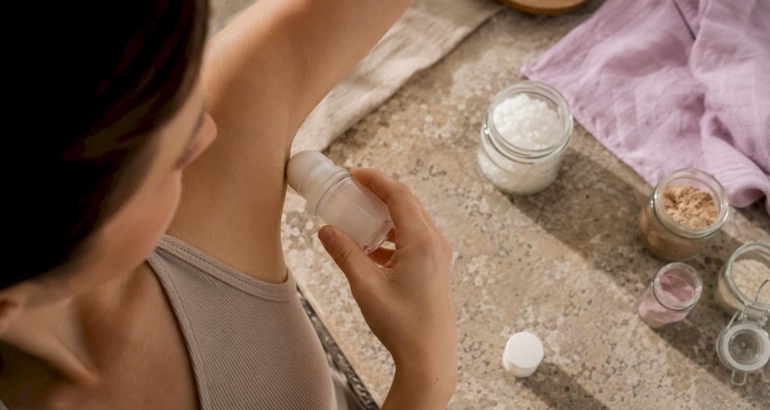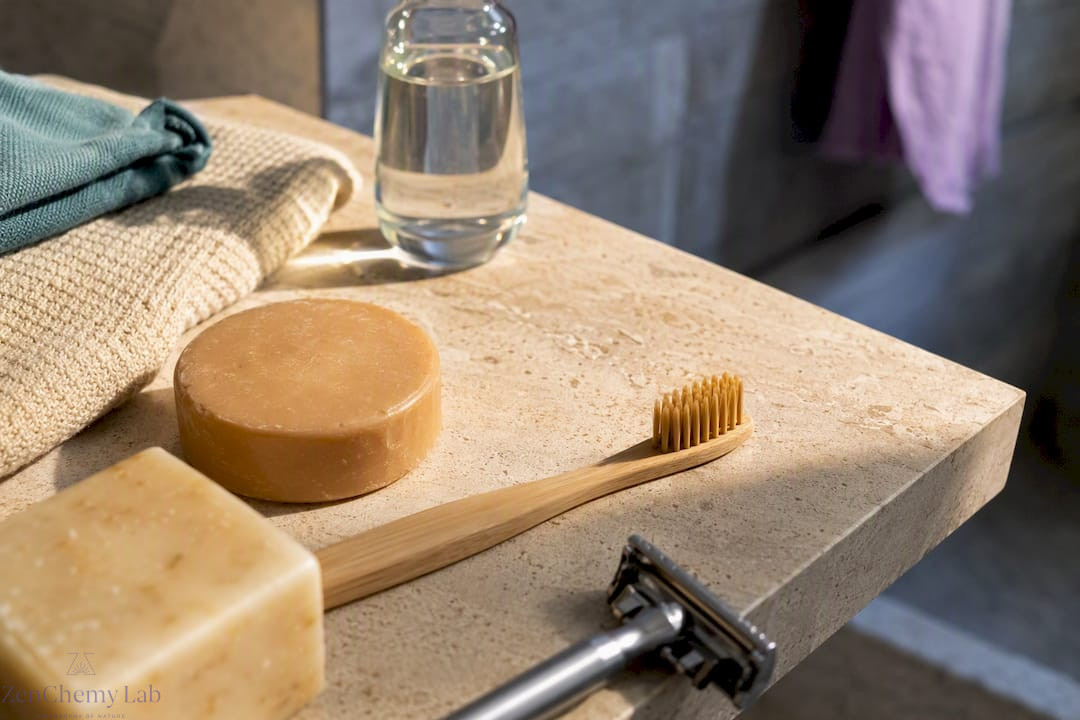
Switching your shower gel and shampoo bottles to solid bars removes the most single-use plastic from a bathroom with almost no learning curve. After that, prioritise a bamboo toothbrush, a stainless steel safety razor, and reusable period care. Use up what you already own before replacing it. ZenChemy Lab’s handmade soap bars and bamboo soap dishes make that first swap simple.
TL;DR:
- Replacing toothbrushes with bamboo handles can eliminate up to 300 plastic toothbrushes per person over a lifetime, as they still require nylon bristles.
- Solid shampoo and conditioner bars last two to three times longer than liquid bottles, reducing frequent purchases and plastic waste.
- Reusable menstrual cups and washable cloth pads significantly cut long-term plastic waste compared to disposable pads and tampons.
- Proper drainage in soap dishes and toothbrush holders can double product lifespan, saving money and reducing waste.
- Buying refillable and bulk products at refill stations minimizes plastic packaging and promotes sustainable bathroom habits.
Table of Contents
- Plastic free bathroom swaps by category
- How to prioritise your plastic-free swaps
- Making solid and refillable products last longer
- Where to buy plastic-free bathroom products and refills
- Why handcrafted soap fits a plastic-free routine
- What happens to bathroom waste after you toss it
- Do plastic-free swaps affect water use too
- Choosing plastic-free accessories: toothbrush holders and soap dishes
- Weighing the real trade-offs of plastic-free products
- Cutting bathroom waste beyond product swaps
- A closing note on where to start
- Get started with plastic-free products from ZenChemy Lab
- Sources
Plastic free bathroom swaps by category
A plastic free bathroom isn’t an overnight renovation. It’s a category-by-category swap, and some categories matter more than others because you touch them daily, rinse them down the drain, or press them against your skin for minutes at a time. Here’s what actually works in each one.
Oral care
The average toothbrush gets replaced every three months, which means a lot of plastic moves through your bathroom over a lifetime. Up to 300 plastic toothbrushes per person, and some take up to 500 years to break down, according to the Government of Canada’s plastic pollution campaign. That single fact is why oral care sits near the top of most swap-priority lists.
- Bamboo toothbrushes replace the handle with a biodegradable material, though most still use nylon bristles because no fully compostable bristle performs as well yet. Pull the bristles out with pliers before composting or bagging the handle for trash.
- Toothpaste tablets or tooth powder come in glass jars or compostable pouches instead of squeeze tubes, which are notoriously hard to recycle because they mix plastic and foil layers.
- Refillable mouthwash concentrates let you reuse one glass bottle indefinitely, just adding water and a tablet or drops when you run low.
Hair care
Solid shampoo and conditioner bars are the highest-visibility swap in a plastic free bathroom, mostly because bottled shampoo is something almost everyone buys repeatedly. A bar typically lasts as long as two to three bottles of liquid shampoo, which changes the math on cost per use fast.
Hard water can make some bars feel less lathery at first. Most people adjust within two or three washes as their scalp recalibrates. Curly and coily hair types sometimes need a vinegar rinse afterward to smooth the cuticle, since bars can leave more residue than sulfate-heavy liquids. Powder shampoo, an emerging alternative, works by absorbing oil rather than sudsing, and suits people who wash infrequently.
Body wash and hand soap
Bar soap is the original zero waste product, and a well-formulated bar with glycerine intact will outperform a stripped commodity bar on both moisture and packaging. Castile soap, sold in bulk or in tablet form that you dissolve into a foaming pump, gives you a liquid option without buying a new plastic bottle. If you’re not ready to give up your existing dispenser, keep small soap pouches on hand. They let you toss slivers of bar soap in when your current bar shrinks to a sliver, which uses the product fully instead of throwing away the last unusable bit.
Shaving
Disposable razors are a small object with an outsized landfill footprint, since the plastic handle, blade cartridge, and packaging are usually all thrown out together. A stainless steel safety razor uses a single metal blade you swap out, and the blades themselves are recyclable through metal recycling, unlike cartridge razors, which mix plastics and steel in a way that makes separation impractical. Pair it with a shaving soap puck instead of aerosol foam. It lathers with a brush and lasts for months.
Period care
Reusable period care delivers some of the biggest long-term plastic reduction of any swap on this list because disposable pads and tampons are used repeatedly, every month, for decades. A menstrual cup, made of medical-grade silicone, can last several years with proper care. Washable cloth pads work the same way, just laundered instead of discarded. If reusables feel like too big a jump right away, certified organic disposable pads and tampons are a reasonable transitional step. They still use some plastic in packaging and applicators but cut out synthetic fibres in the pad itself.
Textiles and shower liners
Towels and bath mats shed microfibres every time they’re washed, and synthetic blends shed more than natural fibres do. Natural fibre towels made from GOTS certified cotton or hemp avoid the microfibre shedding that’s become one of the more overlooked sources of bathroom microplastic pollution. A look at travel towel materials makes the same case for smaller textiles you might not think about, like packable camp towels.
Shower curtains deserve similar attention. Standard PVC liners release volatile organic compounds when hot shower steam hits them, something a University of Toronto study referenced in a plastic-free bathroom analysis flagged directly. Where a fabric liner isn’t practical, PEVA is the better plastic to choose over PVC.
Cleaning
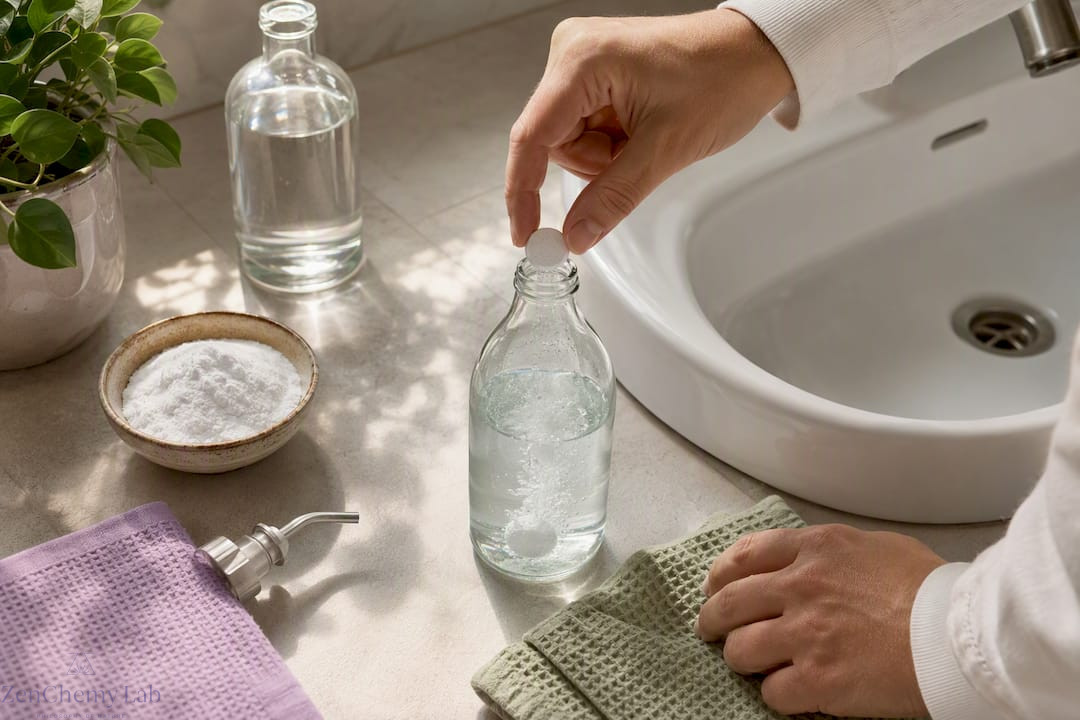
Bathroom cleaning is where plastic free swaps overlap with money saved. Bicarbonate of soda, white vinegar, and castile soap can replace several conventional cleaning products with almost no plastic packaging between the three of them. Solid cleaner tablets, dissolved into a reused spray bottle, are the closest thing to a drop-in replacement if you’re not ready to mix your own.
How to prioritise your plastic-free swaps
Not every swap deserves the same urgency. Some categories carry more risk or more plastic volume than others, and ranking them properly saves you money and prevents the kind of overwhelm that stalls a lot of good intentions after week one.
Four factors determine where a swap should sit on your list:
- Frequency of purchase. Items you rebuy monthly, like shampoo or body wash bottles, generate more cumulative plastic than something you buy once a year.
- Skin contact duration. Leave-on products and towels sit against skin longer than a quick rinse-off product, which raises the stakes on ingredient and material quality.
- Microplastic shedding risk. Synthetic textiles and certain scrubbing tools shed fibres every wash cycle, a risk bar soap or metal tools simply don’t carry.
- VOC or off-gassing risk. Heated plastic, like a PVC shower liner under hot steam, releases compounds that cold plastic packaging does not.
Ranking swaps by actual exposure reduction rather than aesthetics puts shampoo, body wash, and towels near the top, ahead of items that look more dramatic to switch but matter less in practice.
Weeks one and two: bar soap, a shampoo bar, and a bamboo toothbrush. These are cheap, widely available, and require zero behaviour change beyond picking up a different product at checkout.
Months one through three: a safety razor, plus swapping towels and bath mats as your current ones wear out rather than replacing them early.
Months three through twelve: a shower curtain liner, a full refill system for cleaning products, and reusable period care, since these involve either a bigger upfront cost or a genuine adjustment period.
Cost per use tells the real story here. A shampoo bar costing more than a drugstore bottle up front often works out cheaper per wash once you count the number of washes it delivers. The same logic applies to a safety razor: one $30 to $40 handle paired with blades costing pennies each beats replacing plastic cartridges every few weeks for years.
Pro Tip: Don’t throw out a half-used plastic bottle just to start fresh with a bar. Replacing items as they run out, rather than discarding usable products early, avoids adding to landfill volume while you build the habit.
Making solid and refillable products last longer
A bar of soap left in a puddle of water dissolves twice as fast as one that drains properly. That single storage detail changes how often you’re buying replacements, and it’s the difference most people overlook when a “cheap” plastic-free swap ends up costing more than expected.
- Use a soap dish with actual drainage, not a flat tray. Bamboo, ceramic ridges, or slatted wood all work, since the goal is airflow underneath the bar, not the material itself.
- Store shampoo and conditioner bars the same way, and let them air-dry fully between uses rather than sealing them in a closed container while damp.
- Travelling with solid bars works best in a tin or breathable soap bag, both of which let moisture escape instead of trapping it against the bar.
- When a bamboo toothbrush’s bristles wear out, pull them with pliers and compost or recycle the handle separately. Some people keep old handles as plant labels or small tool handles rather than tossing them.
- Rotate natural fibre sponges like konjac or loofah every three to four weeks, since they hold moisture and can develop odour faster than synthetic sponges if left unrinsed.
- Rinse and dry safety razor blades after each use to extend their life, and drop dulled blades into a dedicated metal blade bank for safe disposal rather than the trash.
Storage mistakes like flat soap dishes and constant water pooling can cut a bar’s lifespan in half, while proper drainage roughly doubles it. That’s the entire cost-per-use argument for solid products in one sentence.
Where to buy plastic-free bathroom products and refills
Refill stations are becoming a normal fixture in independent grocery and zero waste shops, and they typically stock liquid soap concentrates, bulk shampoo you pump into your own container, and cleaning product refills you dilute at home. Bring your own bottle, weigh it before filling if the shop uses that system, and you pay only for the product, not new packaging every time.
Buying online works too, but read past the marketing language. A few checks before adding to cart:
- Confirm ingredient lists are fully disclosed, not hidden behind vague terms like “fragrance blend” with no further detail.
- Check whether the seller offers a refill or return program for containers, which signals they’ve thought past the first sale.
- Compare cost per use, not sticker price. A $12 bar that lasts three months beats a $6 bottle you rebuy monthly.
- Watch for greenwashing signals: a brown paper label slapped on a plastic bottle isn’t a plastic-free product, and “recyclable” packaging is only meaningful if your local program actually accepts it.
Larger fixture swaps exist too, even if they’re a bigger investment. Recyclable mineral-material shower trays with lifecycle return programs show that plastic reduction thinking has reached bathroom fixtures, not just consumables, though these remain a specialty purchase rather than a weekend swap. For a broader look at building sustainable habits before you spend anything, what zero waste skincare actually looks like is a useful starting point.
Why handcrafted soap fits a plastic-free routine
Mass-produced commodity bars often strip out glycerine during manufacturing to sell it separately, which leaves the leftover bar harder and more drying on skin. Handcrafted soap keeps that glycerine in the finished bar, alongside milder surfactants and ingredient lists you can actually read and understand.
Some brands’ product ranges emphasize handmade bar soaps, botanical body care, and wooden and bamboo accessories like soap dishes designed for drainage rather than pooling. That combination, a well-formulated bar paired with the right storage, is exactly the pairing that makes solid products last and perform the way people hope they will when they first switch. For readers rebuilding their full routine, a deeper look at natural skincare fundamentals covers how ingredient choices affect skin tolerance during the transition.
What happens to bathroom waste after you toss it
Not everything plastic-free is automatically recyclable, and not everything plastic is automatically trash. Many toothbrushes and mixed cosmetic packaging aren’t accepted in standard kerbside recycling, which means a handle you assume is recyclable might just end up in landfill unless you seek out a specialty program.
Bamboo toothbrush handles are compostable once the bristles are removed, either in a home compost bin or through municipal green bin programs, depending on what your municipality accepts. Metal safety razor blades belong in a dedicated blade bank or a sealed container clearly marked for sharps, never loose in regular recycling where they can injure sorting staff. Soap wrappers vary by brand: paper and cardboard usually recycle fine, but any wax or plastic coating means it should go in the trash instead.
Glass containers from refillable products are among the easiest wins, since glass recycles indefinitely without losing quality, unlike most plastics, which degrade in quality each time they’re reprocessed. Rinse residue out first so contamination doesn’t send an otherwise recyclable container to landfill.
The honest answer here is that local rules vary block to block, let alone city to city. Checking your municipality’s specific list before assuming an item is recyclable saves more plastic from landfill than guessing ever will.
Do plastic-free swaps affect water use too
Plastic-free swaps and water conservation overlap more than people expect, mostly because the fixtures dispensing your products matter as much as the products themselves. Modern low-flow shower heads and dual-flush toilets use noticeably less water per minute or per flush than older fixtures, and pairing an efficient fixture with plastic-free products compounds the environmental benefit rather than working against it.
Bar soap and shampoo bars also tend to rinse off faster than heavily sudsing liquid formulas loaded with synthetic foaming agents, which can mean marginally shorter showers for some people once they adjust to a bar’s lather. That’s not a guarantee, since lather habits vary person to person, but it’s a real secondary benefit worth knowing about.
On the flip side, some reusable items do add small water cost. Washable cloth period pads and cotton towels need laundering, which uses water the disposable alternative wouldn’t have required directly from you. That water cost is almost always lower than the water and energy used to manufacture, package, and ship a constant stream of disposable replacements, but it’s worth being honest about rather than pretending reusables are free of any resource use at all.
If you’re weighing a full bathroom refresh, prioritizing water-efficient fixtures alongside your product swaps gets you further than focusing on plastic reduction alone.
Choosing plastic-free accessories: toothbrush holders and soap dishes
Accessories are easy to overlook because they’re not consumables, but a plastic toothbrush holder or soap dish sits in your bathroom for years, which makes material choice matter just as much as with anything you use up and replace.
Bamboo and ceramic are the two most common plastic-free materials for holders and dishes, and each comes with trade-offs. Bamboo is lightweight, naturally water-resistant to a point, and biodegradable at the end of its life, but it needs occasional oiling to prevent cracking if it’s exposed to constant moisture without drying time in between. Ceramic is heavier and more breakable if dropped, but it holds up indefinitely against water exposure and never needs conditioning.
Drainage design matters more than the material itself. A soap dish with slats, ridges, or holes lets water escape instead of pooling under your bar, which as covered earlier can double how long a bar lasts. The same logic applies to toothbrush holders: a design that allows airflow around bristles reduces the bacterial buildup that happens in a sealed plastic cup where water collects at the bottom.
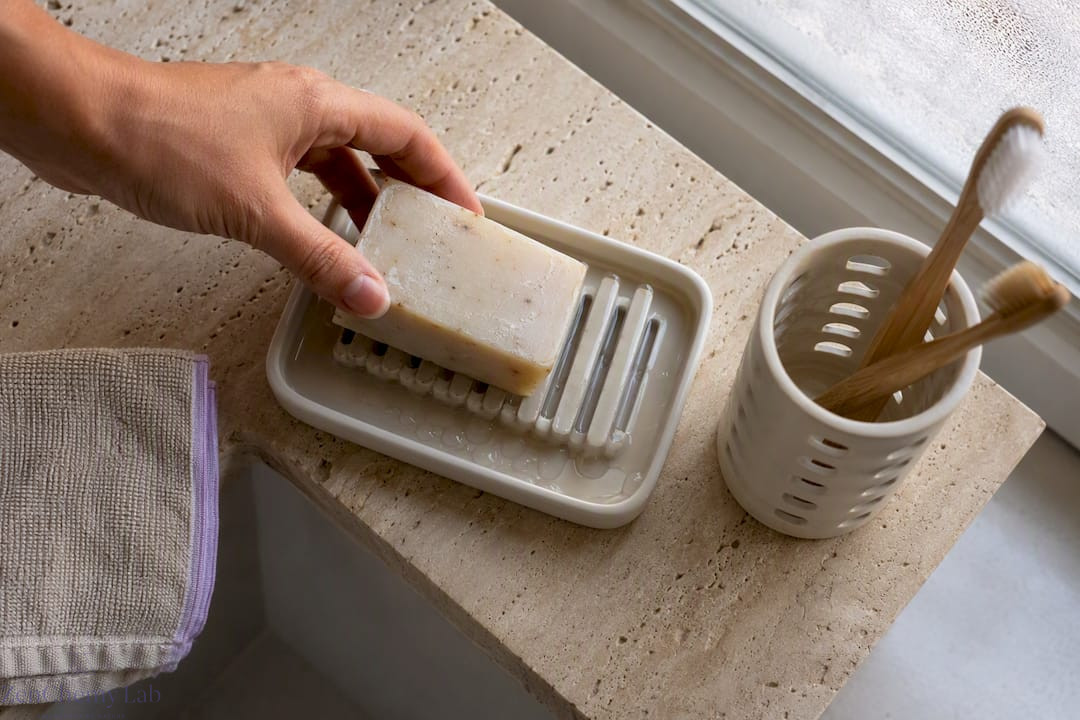
Before buying, check whether the accessory is finished with a natural oil or wax rather than a synthetic sealant, since some “bamboo” products are coated in plastic-based lacquer that defeats the purpose of choosing the material in the first place.
Weighing the real trade-offs of plastic-free products
Plastic-free bathroom products genuinely outperform their conventional counterparts in some areas and fall short in others, and being upfront about both sides helps you set realistic expectations before you switch.
On durability, well-made metal and glass items often outlast plastic equivalents by years. A quality safety razor handle can last a lifetime with occasional cleaning, something no disposable plastic razor was ever designed to do. Solid soap and shampoo bars, stored properly, also tend to outperform their liquid counterparts on cost per use over time.
On cost, the picture is mixed. Upfront prices for reusables like menstrual cups, safety razors, and quality soap dishes are almost always higher than the disposable version sitting next to them on a store shelf. The payoff comes over months, not at checkout, which means budget-conscious shoppers need to plan for that gap rather than expect immediate savings.
Performance is where honesty matters most. Shampoo bars can take a few washes to adjust to, some natural deodorants need a detox period, and bar soap doesn’t foam quite like a sulfate-heavy commercial formula. None of these are dealbreakers, but expecting an identical experience on day one sets people up to give up too early.
Cutting bathroom waste beyond product swaps
Product swaps solve packaging waste, but a genuinely low-waste bathroom also means using less of everything, not just switching what container it comes in.
Buying in bulk where refill stations exist cuts packaging waste per unit further than even a well-packaged single bar or bottle. Sharing larger-format products between household members, rather than everyone buying their own smaller version, reduces both packaging and cost. Repairing rather than replacing accessories, like re-oiling a bamboo toothbrush holder instead of tossing it at the first sign of dryness, extends the life of things you’ve already bought.
Digital receipts, skipping the extra plastic wrap some online orders add unnecessarily, and requesting minimal packaging when you order refills online are small habits that add up over a year of regular purchases. None of these require buying anything new. They just mean treating what you already have as something to maintain rather than something disposable.
A closing note on where to start
Momentum matters more than perfection here. Pick the shampoo bar or the bamboo toothbrush this week, not the full bathroom overhaul, and let one visible win prove to yourself that the switch isn’t a sacrifice. That’s the same swap this article opened with, and it’s the one that pays off fastest because you’ll notice the difference by your next shower.
Give yourself permission to use up what’s already under your sink before replacing it. A half-full bottle of conventional shampoo isn’t the enemy. Buying a new plastic bottle before the old one is empty is the actual waste. Start with one bar, one toothbrush, and build from there.
— Alex
Get started with plastic-free products from ZenChemy Lab
Some companies offer shampoo bars and soap swaps to make the switch to plastic-free bathroom products easier. These bars may be handcrafted with glycerine left intact, milder surfactants, and ingredient lists that are easy to understand, paired with bamboo and wooden accessories designed for drainage that makes a bar last.
If you’re weighing where to start, the natural beauty tips guide walks through how sustainable ingredient choices show up in daily routines, while the handmade versus commercial soap comparison breaks down exactly what you’re gaining by leaving mass-produced bars behind. Browse the current handmade soap collection and pick one bar to replace your next bottle of body wash. That single order is the whole plan from this article, put into practice.
Sources
- Beat plastic pollution challenge | Government of Canada
- Plastic-Free Bathroom Guide (2026): Every swap, ranked by impact | Plasticproof
- Plastic-Free Bathroom Guide | Reclaim Design
- Sustano shower trays | Duravit