Yes, coffee scrubs deliver reliable physical exfoliation and a short-term cosmetic lift you can see within minutes. Caffeine and antioxidants in coffee add real but modest effects on circulation and skin tone. Leave-on products generally outperform wash-off scrubs for lasting change. The upside is genuine; the timeline is short. Patch testing and sensible frequency make the difference between glowing skin and an irritated one.
TL;DR:
- Coffee scrubs provide quick physical exfoliation and temporary skin tightening, with most benefits fading within hours without regular use.
- The antioxidant and collagen-promoting effects seen in studies require longer contact times that wash-off scrubs do not deliver.
- Patch testing before full-body use and avoiding daily scrubbing are crucial to prevent irritation or micro-tears, especially on sensitive skin.
- Suitable ingredients, grind size, and proper formulation are key to avoiding harshness in homemade or commercial coffee scrubs.
- Using a leave-on product alongside a scrub enhances long-term antioxidant and skin tone benefits.
Table of Contents
- Coffee scrub benefits you can actually see and feel
- What the research actually says about coffee and skin
- Patch testing, skin types, and how often to scrub
- DIY coffee scrub recipes by skin type and area
- How to apply a coffee scrub for the best results
- Why formulation choices behind a coffee scrub matter
- The bottom line on coffee scrub benefits
- What the evidence actually supports, and where DIY advice oversells it
- Bring the ritual home with Zenchemylab
- Sources
Coffee scrub benefits you can actually see and feel
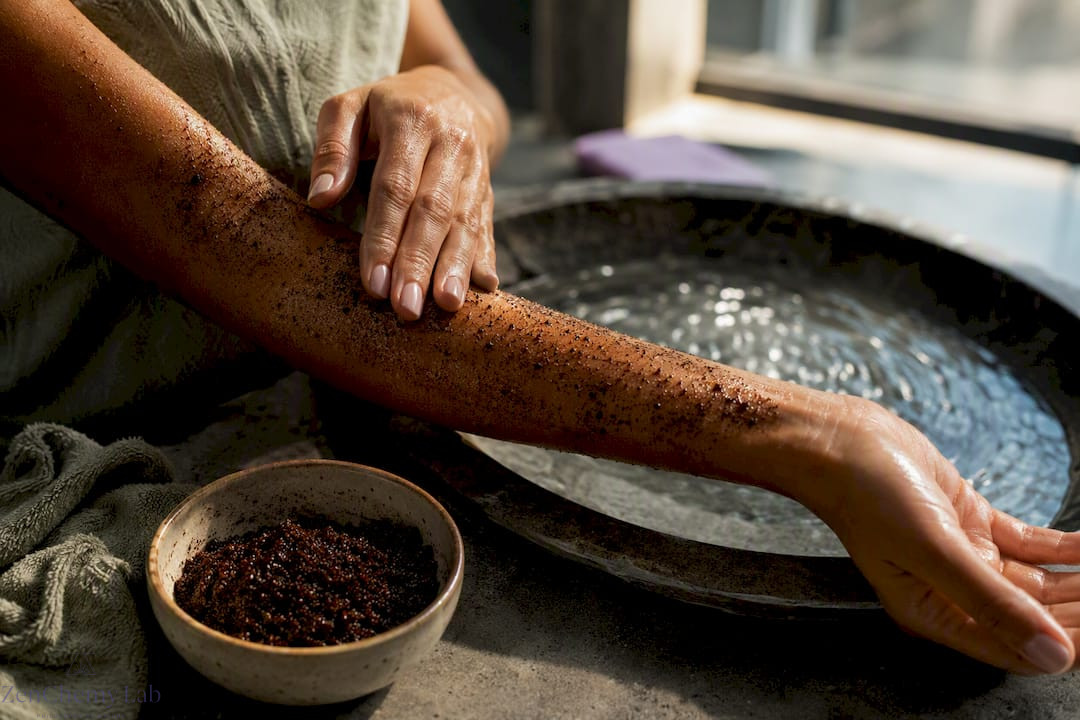
The most immediate benefit is mechanical: coffee grounds are gritty enough to physically lift dead skin cells off the surface, leaving skin smoother the moment you rinse. That’s not a caffeine effect. It’s simple friction, the same principle behind sugar or salt scrubs, just with a more textured, aromatic delivery system.
Caffeine’s contribution shows up in circulation. Research summarized by Medical News Today explains that caffeine applied to skin can trigger vasoconstriction, the temporary narrowing of blood vessels near the surface. That’s why your skin can look tighter and less puffy right after a scrub session, and why some people swear by coffee scrubs before a big event. The effect is real, but it fades within hours, not days.
Coffee also carries antioxidant compounds, which pair with the physical exfoliation to make skin look brighter almost instantly, mostly because you’ve just removed the dull, flaky layer sitting on top.
- Smoother texture from immediate mechanical exfoliation
- Temporary de-puffing and firmer-looking skin from caffeine’s vasoconstriction effect
- Brighter, more even-toned appearance right after use
- A sensory ritual (the scent, the massage) that makes people more likely to stick with regular exfoliation
Healthline lists unclogging pores and a temporary reduction in the appearance of cellulite among the likely outcomes of regular use, while noting that most of the underlying research studies coffee’s compounds in isolation rather than testing the scrub itself. That distinction shapes how you should read every benefit on this list: they’re consistently observed, but they’re short-lived without repeat use.
What the research actually says about coffee and skin
A lot of what gets repeated about coffee scrubs traces back to studies on isolated compounds, not the scrub sitting in your shower. A 2013 study on caffeic acid, one of coffee’s key antioxidants, found it may support collagen production in skin. That’s a meaningful finding, but it comes from controlled lab conditions, not from someone rubbing wet grounds on their thigh for 90 seconds.
Dermatologists interviewed by Byrdie are consistent on one point: wash-off scrubs simply can’t deliver the same active exposure as a leave-on serum. You rinse a scrub away within a minute or two, while a serum sits on skin for hours, giving compounds like caffeic acid and chlorogenic acid far more contact time to do anything measurable.
Coffee scrubs give you real exfoliation and a temporary circulation boost, but if you want caffeine’s antioxidant benefits to actually build over time, a leave-on product is going to outperform anything you rinse down the drain.
That doesn’t make DIY scrubs pointless. It means you should think of them as a texture and glow tool first, and an antioxidant delivery system second.
- Isolated-compound studies show promise, but don’t equal scrub-level results
- Wash-off contact time is minutes; leave-on contact time is hours
- Fresh grounds carry more active compounds than grounds that have already been through a brewer, according to Healthline’s freshness note
Patch testing, skin types, and how often to scrub
Coffee grounds are abrasive, and abrasive plus daily use is a fast route to micro-tears and irritation. Before your first full-body session, run a patch test.
- Mix a small amount of scrub and apply it to the inside of your forearm.
- Leave it on for 10 minutes, then rinse.
- Wait 24 hours and check for redness, itching, bumps, or swelling. Any of those signal allergic dermatitis, and you should skip the scrub.
- If skin looks calm, you’re clear to try a small facial or body area next.
Frequency depends on your skin type. If you’re dry or sensitive, once a week is plenty; more frequent use increases the risk of over-exfoliation, which shows up as tightness, flaking, or a compromised skin barrier. Never scrub over freshly shaved skin, broken skin, or active inflamed acne. Afterward, rinse thoroughly, moisturize while skin is still damp, and add SPF if you’re heading out during the day.
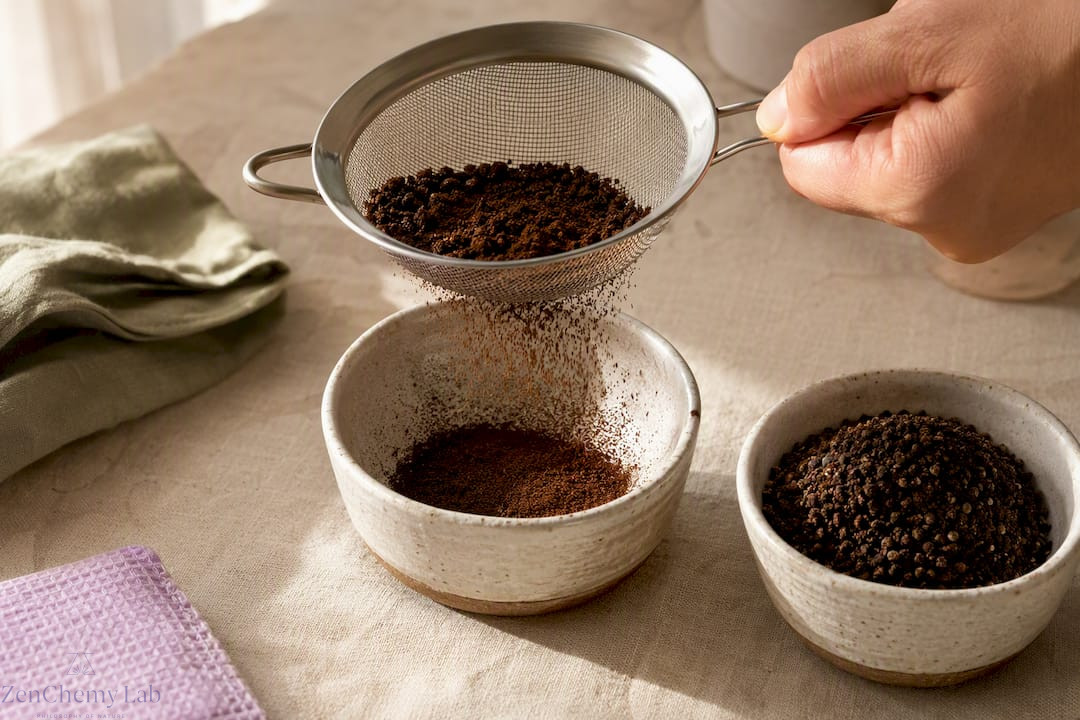
Pro Tip: If you’re using coffee on your face, strain the grounds through a fine sieve first, or buy a pre-ground fine blend. Coarse grounds are fine for elbows and knees, but they’re too rough for facial skin.
DIY coffee scrub recipes by skin type and area
Ingredient choice matters more than most DIY guides let on. Grind size, oil type, and binder all change how a scrub behaves on different areas of your body.
For body use, combine medium to coarse grounds with a carrier oil and either sugar or salt. The grounds handle exfoliation, the oil prevents the mixture from feeling scratchy and leaves skin softer, and the sugar or salt adds a second exfoliating texture that dissolves gently as you rub. Dr. Axe recommends jojoba or sweet almond oil here because both are non-comedogenic, meaning they’re unlikely to clog pores even on oilier skin.
For face use, go finer. Strained or fine grounds mixed with oats or a spoon of honey and a light oil give you exfoliation without the risk of micro-tearing. If you’re acne-prone, skip heavier oils like coconut and stick with jojoba or grapeseed, both far less likely to trigger breakouts.
For the scalp, mix grounds into your regular conditioner or a light oil, massage gently at the roots, and rinse thoroughly. Skip this entirely if your scalp is inflamed, flaking heavily, or actively irritated.
| Area | Base grounds | Binder/oil | Best for |
|---|---|---|---|
| Body | Medium to coarse | Sweet almond oil + sugar or salt | Rough patches, elbows, knees |
| Face | Fine or strained | Light oil + oats or honey | Dullness, uneven texture |
| Scalp | Fine, mixed into conditioner | Light oil | Buildup, dull-feeling scalp |
Spent grounds from your morning coffee still work for body scrubs and give you a sustainable second use, though cosmetic-science sources note fresh grounds carry more active antioxidant content. Store any mix in an airtight container in the fridge and use it within a week, since coffee-oil blends without preservatives can spoil quickly.
How to apply a coffee scrub for the best results
Technique changes outcomes more than most people expect. A quick 20-second rub gives you exfoliation but skips the circulation benefit entirely.
- Work in small circular motions, moving toward your heart, and spend roughly 60 seconds per area if you’re targeting cellulite-prone zones like thighs or the backs of arms.
- Apply in the shower on damp, not soaking, skin, since too much water dilutes the oil binder and reduces grip.
- Rinse with warm (not hot) water, pat dry, and follow with a moisturizer while skin is still slightly damp.
- Skip layering coffee scrubs with retinoids or acids on the same day. Both already increase skin turnover, and stacking them raises irritation risk.
- Give it a few weeks of regular use before judging results to observe improvements gradually. Texture improves fast; tone and firmness improvements build more gradually with consistency, echoed in guidance from the Velvet Glow Journal.
Rinse any leftover grounds into a compost bin rather than down the drain repeatedly. It’s a small habit that keeps plumbing clear and puts spent coffee back to good use.
Why formulation choices behind a coffee scrub matter
Not every coffee scrub is built the same, and the difference usually comes down to three things: grind size control, where the coffee is sourced, and what carrier oil and preservation system hold the whole thing together. Attention to these factors helps avoid inconsistent grind size, which is a common reason DIY scrubs feel too harsh in one batch and too weak in the next.
- Grind size is calibrated for consistent exfoliation without micro-tearing
- Coffee sourcing draws on Brazilian coffee, prized for its antioxidant profile
- Carrier oils are chosen for skin compatibility rather than just scent or shelf appeal
- Formulations avoid unnecessary synthetic fillers, in line with cruelty-free sourcing standards that ingredient-conscious shoppers look for
If you’d rather skip the mixing and storage questions altogether, Zenchemylab’s coffee emulsified body scrub is formulated and produced in Canada with that same grind and sourcing logic already built in.
The bottom line on coffee scrub benefits
Coffee scrubs earn their place in a skincare routine for one clear reason: dependable, low-cost exfoliation with a genuine, if temporary, circulation and glow bonus. Used once or twice weekly, patch tested first, and paired with a moisturizer afterward, they’re a low-risk way to improve texture fast.
If you want the antioxidant story to go further than a rinse-off can deliver, pair your scrub habit with a leave-on product, and if mixing your own feels like one more thing to manage, a pre-formulated coffee scrub solves the grind-size and freshness problem for you.
What the evidence actually supports, and where DIY advice oversells it
Most coffee scrub content online blurs the line between “this compound showed promise in a lab” and “this scrub will change your skin.” That gap is the biggest thing conventional advice gets wrong. Caffeic acid’s collagen findings are worth taking seriously, but they came from controlled study conditions, not a two-minute shower ritual.
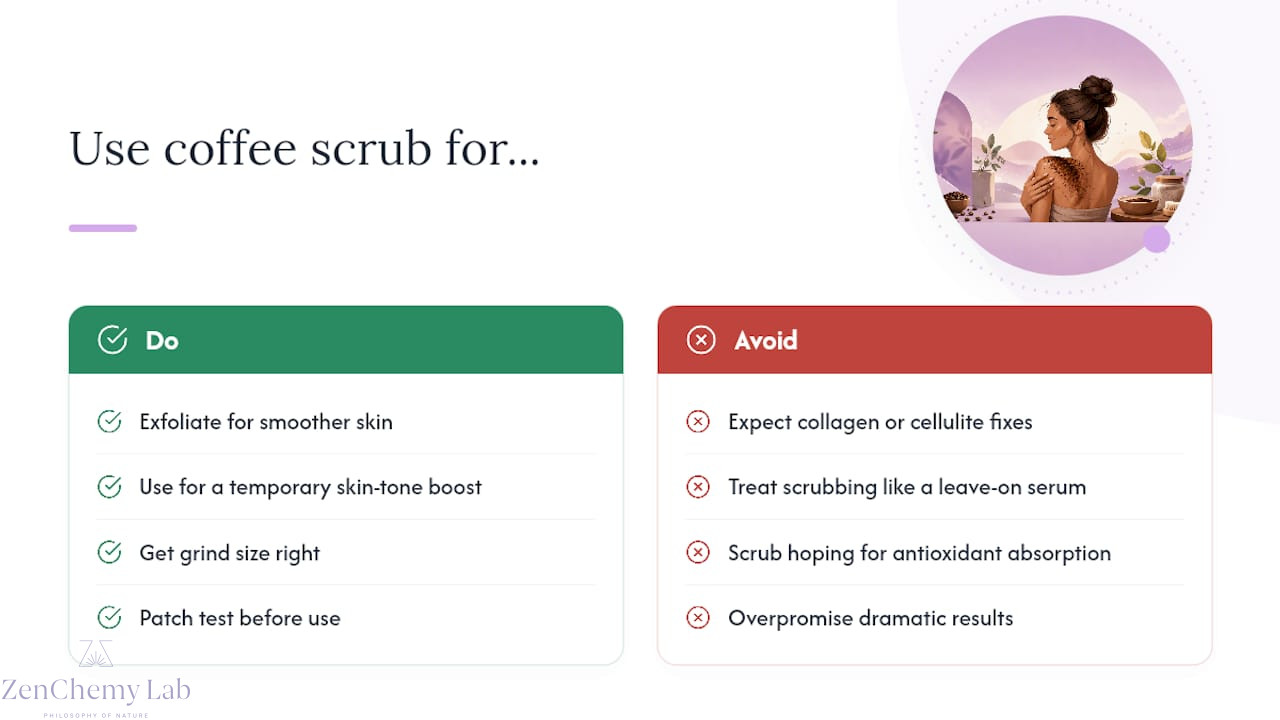
Where I think the DIY crowd gets it right is texture. Nobody needs a clinical trial to notice smoother skin after exfoliating; that part of the benefit is obvious and immediate. Where they get it wrong is treating cellulite reduction or antioxidant absorption as if scrubbing twice a week rivals a dedicated serum. It doesn’t, and pretending otherwise sets people up to abandon a genuinely useful habit when the “dramatic” results don’t show up.
My advice: use a coffee scrub for what it’s actually good at, exfoliation and a temporary skin-tone boost, and stop expecting it to replace targeted leave-on treatment. Get the grind size right, patch test first, and the rest takes care of itself.
— Alex
Bring the ritual home with Zenchemylab
Some coffee scrubs offer an alternative to guessing your own grind size and oil ratio: products formulated with a consistent, skin-safe texture, sourced from Brazilian coffee, and made without synthetic fillers. That consistency is a key factor often variable in homemade batches, where one mix feels perfect and the next feels too harsh.

If you’ve patch tested a DIY version and liked the results, you already know what regular exfoliation feels like, and a pre-formulated option just removes the storage, freshness, and grind-size guesswork. Browse the coffee emulsified body scrub or explore the wider body scrub collection to find a texture and finish that matches your skin type, then add it to your weekly routine starting this week.
Sources
- PubMed: caffeic acid study
- Do coffee scrubs have any real skincare benefits? (Byrdie)
- How to make a DIY coffee scrub (Healthline)
- Medical News Today: coffee for skin and hair