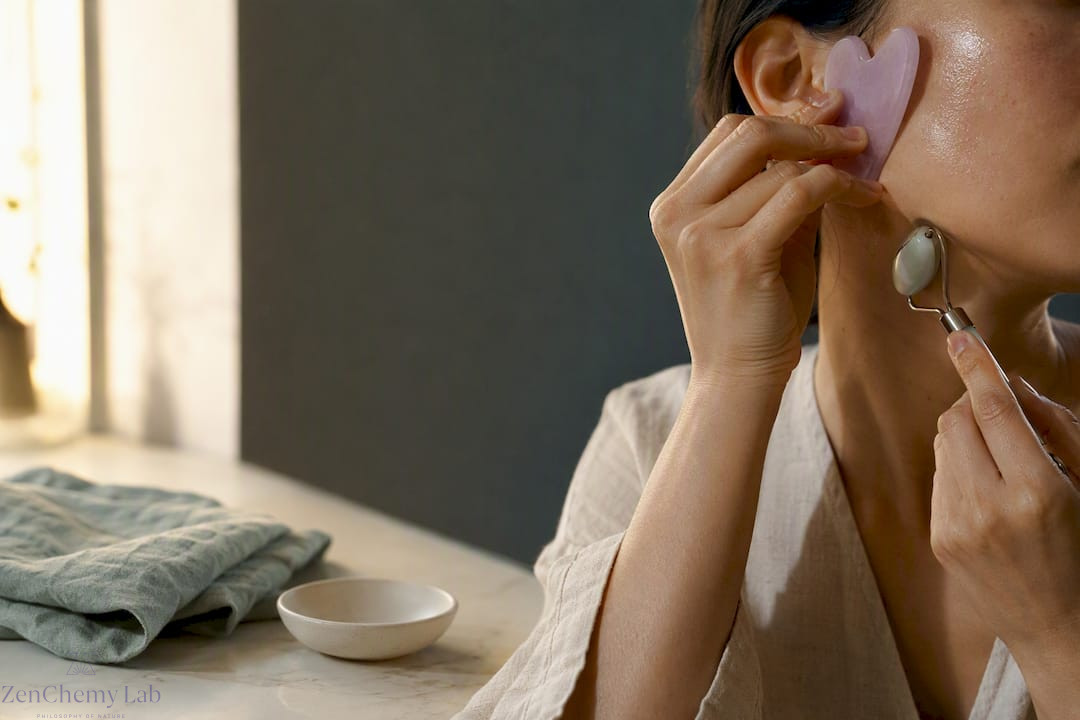
For deeper muscle tension and facial contouring, reach for gua sha. For quick de-puffing and a boost in skin elasticity, a face roller does the job better. Both tools produce modest, temporary improvements rather than permanent change, and a 2025 randomized controlled trial found they work through genuinely different mechanisms, so combining them often beats picking just one.
TL;DR:
- Gua sha primarily releases muscle tension and contours the face, requiring proper technique and consistent 10-minute sessions for visible results.
- Face rollers mainly de-puff and improve skin elasticity temporarily, with the best effects seen after daily five-minute use, especially when chilled.
- Combining gua sha and face rolling at the start and end of a routine enhances both muscle relaxation and surface skin calming, with consistent weekly use needed for measurable changes.
- Safety precautions include applying oil for glide, correct stroke angles, avoiding active skin issues, and stopping if bruising or redness persists.
- The 2025 trial confirms that both tools improve facial contour and elasticity over eight weeks, but results require patience and regular practice without expecting overnight effects.
Table of Contents
- Gua sha vs face roller at a glance
- How gua sha works and how to use it safely
- What a face roller actually does for your skin
- What the randomized controlled trial actually found
- Choosing the right tool for your skin goals
- A safe daily routine using both tools together
- Keeping your tools clean and lasting longer
- Why the “results in one session” myth needs to die
- Products that make your facial tools work better
- Sources
- FAQ
Gua sha vs face roller at a glance
Neither tool is a miracle worker, but each earns its place in a self-care routine when you know what it’s actually good at.
- Gua sha is best for: muscle tension release, jawline definition, and a sculpted, contoured look after regular use.
- Face rollers are best for: morning puffiness, a cooling pick-me-up, and gently improving skin elasticity over time.
- Session length that matters: the strongest clinical evidence used 10-minute sessions, five times a week, for 8 weeks. That’s the benchmark to aim for if you want measurable change, not just a nice feeling.
- Safety difference: gua sha is technique-sensitive. Wrong pressure or angle can bruise skin or damage capillaries. Face rollers are far more forgiving. You’d have to work hard to hurt yourself with one.
If you’re short on time or new to facial tools, a roller is the lower-risk entry point. If you’re chasing definition and you’re willing to learn proper stroke technique, gua sha rewards the effort.
How gua sha works and how to use it safely
Gua sha uses a flat, edged stone to apply firm, gliding pressure along muscle lines, not just the skin’s surface. That deeper engagement is the whole point. Whereas a roller skims across the top, gua sha strokes press into the fascia and underlying muscle, which is why practitioners describe it as a workout for your face rather than a spa treat.
The clinical signal backs that up. In the randomized controlled trial comparing facial rollers and gua sha, the gua sha group showed a drop in muscle tone measures, including oscillation frequency and dynamic stiffness, alongside visible improvements in facial contour. In plain terms, the muscle relaxed and the face looked more sculpted, not because fat was removed, but because tension eased.
Getting there safely means respecting technique:
- Apply oil or serum first so the tool glides instead of dragging.
- Hold the stone at roughly a 15 to 30 degree angle against the skin.
- Use long, deliberate strokes moving outward and upward, never scrubbing back and forth.
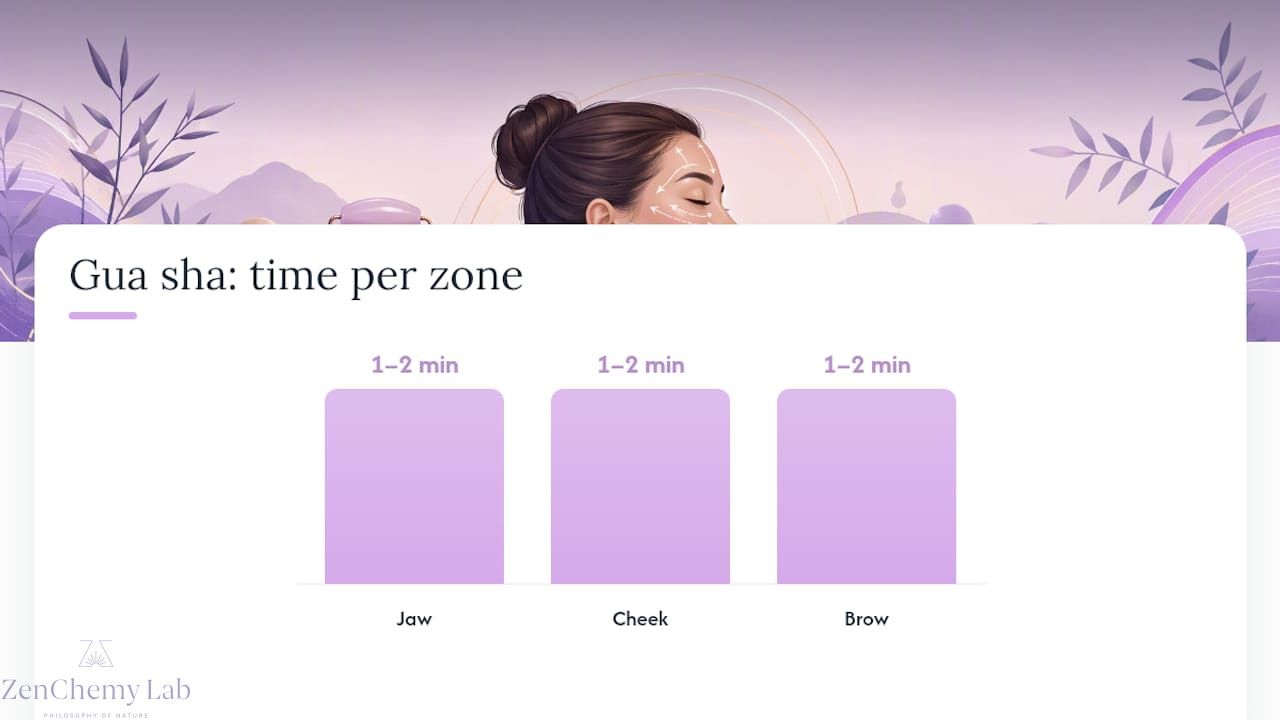
- Spend about one to two minutes per zone (jaw, cheek, brow), no longer.
- Stop immediately if you see redness that lingers, small red or purple dots, or visible bruising.
Sensitive skin, active acne, sunburn, or any open wound are reasons to skip gua sha altogether until skin has healed, a caution echoed in guidance on gua sha’s risks. If bruising keeps happening despite lighter pressure, that’s your cue to see a licensed esthetician or dermatologist rather than pushing through.
Pro Tip: Angle the stone flatter, not steeper, along the jawline. Steep angles concentrate pressure into a point and are the most common cause of accidental bruising.
What a face roller actually does for your skin
A roller’s mechanism is far simpler: gentle rolling pressure that encourages superficial circulation and lymphatic movement near the skin’s surface. It isn’t reaching muscle. It’s working on the layer you can see, which is exactly why it’s so forgiving to use.
That superficial action explains both its strengths and its limits. According to Cleveland Clinic’s guidance on face rolling, rollers offer temporary de-puffing and a soothing, cooling sensation, and results commonly fade within hours. Daily 5-minute sessions are the typical recommendation, which makes a roller far easier to fold into an actual routine than a technique-heavy tool like gua sha.
Material choice changes the experience more than people expect:
- Stone rollers (jade, rose quartz, amethyst) hold a cool temperature briefly and feel more luxurious, though they warm up faster during use.
- Stainless steel rollers stay cold longer and are more durable, which matters if you’re rolling daily and want the tool to last years, not months.
- Chilling either type in the fridge for a few minutes before use intensifies the de-puffing effect, since cold constricts blood vessels near the surface.
Keep pressure light. You’re not trying to press into muscle, just guide fluid and cool the skin. Wipe the roller down after every use, since anything gliding repeatedly across your face can spread bacteria if left dirty.
What the randomized controlled trial actually found
Most claims about gua sha and face rollers come from marketing copy, not data, which is what makes the 2025 randomized controlled trial worth paying attention to. Researchers randomized 34 women into gua sha and roller groups, running 10-minute sessions five times a week for 8 weeks, then measured facial contour, muscle tone, and skin elasticity with objective tools rather than before-and-after photos alone.
The numbers: Gua sha reduced facial surface distances by a few millimetres and dropped muscle oscillation frequency and dynamic stiffness by noticeable amounts. The roller group reduced surface distances by slightly larger amounts and improved gross and biological skin elasticity modestly.
Both groups improved facial contour, but through different routes. Gua sha’s gains tracked with muscle relaxation. The roller’s gains tracked with elasticity, the skin’s ability to bounce back after being stretched. Neither tool did the other’s job particularly well, which lines up with what a Dermatology Times summary of the trial frames as supportive, non-invasive aesthetic tools rather than substitutes for surgical or energy-based treatments.
The trial has real limits worth naming. Eight weeks tells you nothing about whether results hold at six months or a year. Thirty-four participants, all women, is a narrow sample that doesn’t reflect different ages, skin types, or ethnic backgrounds. Nobody has yet published data on what happens if you stop using either tool, or on how these effects compare across diverse populations.
Choosing the right tool for your skin goals
Match the tool to what you’re actually trying to fix, not to whichever one is trending.
- Puffiness or morning bloat: face roller, chilled, used for 5 minutes.
- Jaw and cheek tension, want more contour: gua sha, used with correct technique 3 to 5 times weekly.
- Loss of bounce or firmness: face roller, consistently, since elasticity gains build slowly.
- Combination of tension and dullness: both tools, in sequence, rather than picking one.
Before buying either, run through a short sensitivity checklist: avoid gua sha over active breakouts, sunburned skin, or any inflammation, and skip both tools entirely over open wounds, a caution that applies whether you’re using stone or steel.
When shopping, look for a smooth, rounded edge finish with no seams that could catch skin, a weight that feels comfortable after two full minutes of use, and a material that’s genuinely easy to wipe clean between sessions. A warranty is a nice bonus but not essential. What matters more is whether the edges feel finished, not sharp or grainy, right out of the box.
A safe daily routine using both tools together
The order matters more than most people realize. Since gua sha works deeper tissue and a roller works the surface, doing gua sha first and finishing with the roller lets you address tension before soothing the skin on top of it.
- Cleanse your face and pat dry.
- Apply a facial oil or serum generously, enough that the tool glides without tugging.
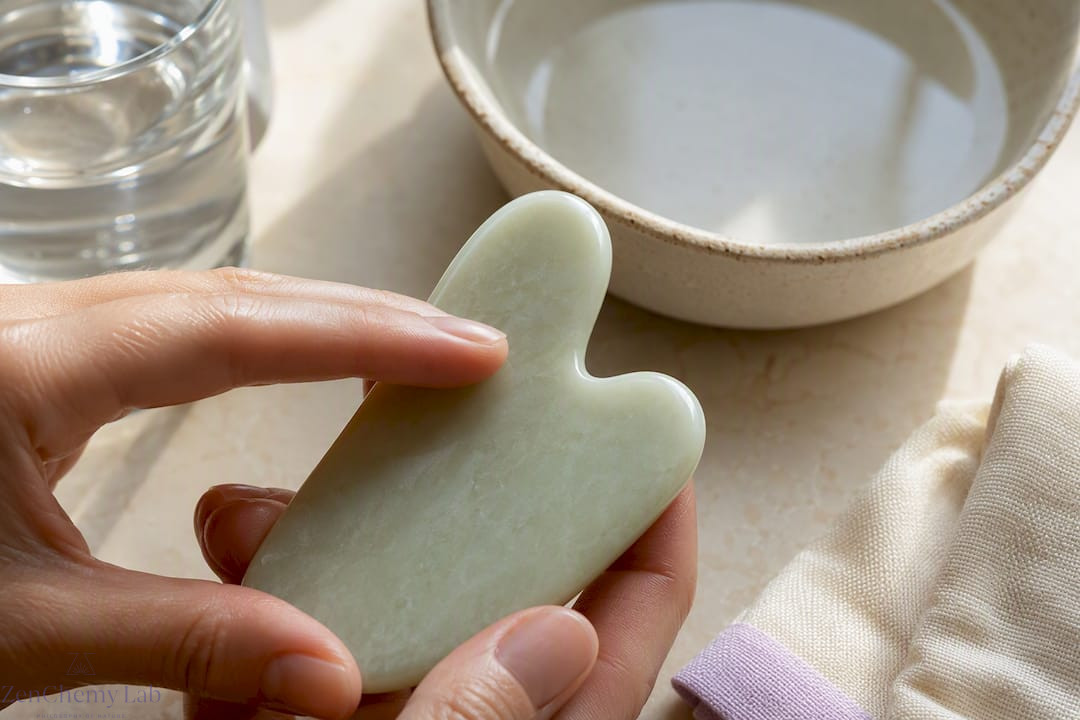
- Start with gua sha: work the jawline, cheeks, and brow bone with upward strokes, spending 1 to 2 minutes per zone.
- Finish with the roller: glide gently over the same areas for 3 to 5 minutes to soothe and reduce any redness from the gua sha step.
- Repeat 3 to 5 times weekly, matching the frequency used in the 8-week randomized trial that produced measurable contour and elasticity changes.
If your skin shows persistent redness, tightness, or small bruises the next day, cut back to 2 to 3 sessions a week and reassess your pressure before adding sessions back.
Pro Tip: Layer a lightweight serum underneath a richer oil rather than oil alone. The serum absorbs faster and hydrates, while the oil on top gives the tool the slip it needs without leaving skin greasy. A guide to layering serums and oils walks through the order in more detail.
Keeping your tools clean and lasting longer
Stone tools (jade, rose quartz) are porous enough to hold onto residue if you skip cleaning, while stainless steel resists bacteria better and tolerates more frequent washing without degrading.
- Wipe down with a gentle cleanser or diluted alcohol after every single use, not just occasionally.
- Deep clean weekly by rinsing under warm water and drying fully before storing.
- Store in a dry pouch or case rather than a damp bathroom shelf, since trapped moisture invites bacteria.
- Watch for chips, cracks, or a roller that no longer spins smoothly. That’s your sign to replace it.
Why the “results in one session” myth needs to die
Most of the disappointment people feel with gua sha and face rollers comes from expecting overnight transformation from tools designed for gradual, cumulative change. Somebody buys a rose quartz roller, uses it twice, sees nothing dramatic, and writes it off as marketing hype. That reaction is understandable, but it misreads what the evidence actually supports.
The 8-week trial didn’t measure a single session. It measured consistent use, five times a week, for two months. That’s the honest timeline, and it’s a far cry from the “10-minute miracle” framing you see in a lot of skincare marketing. The other misconception worth retiring is the idea that gua sha and rollers do the same thing with different aesthetics. They don’t. One nudges muscle tension, the other nudges skin elasticity, and expecting either to deliver both outcomes sets you up to feel let down by a tool that’s actually working exactly as designed.
What’s underrated is technique. A roller barely requires skill, which is why it’s the safer starting point for beginners. Gua sha genuinely rewards patience with proper stroke direction and pressure, and punishes carelessness with bruising. Anyone treating both tools as interchangeable is missing the more useful question, which is not “which tool is better” but “which problem am I actually trying to solve this week.” Pairing either with a proper glide medium, like a botanical face oil, matters more for comfort and skin barrier support than most buying guides let on.
— Alex
Products that make your facial tools work better
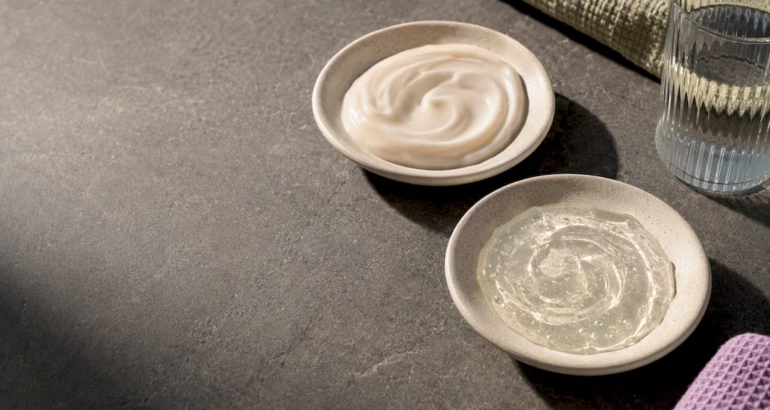
Whichever tool you reach for, friction is the enemy. Certain face oils and serums are designed to give gua sha stones and rollers the slip they need without leaving skin sticky, so your strokes glide instead of drag against dry skin. That’s the practical difference: a well-formulated oil protects your skin barrier during repeated contact, while a thin or greasy product either tugs at your face or just sits on top doing nothing.

If you’re building a routine around gua sha or rolling, start with the natural skin collection for hydrating, botanical formulations designed to support skin during massage, not just after it. For richer coverage during longer gua sha sessions, browse the face oil selection, where non-greasy botanical blends give you slip without clogging pores. Try a smaller size first to see how your skin responses before committing to a full bottle.
Sources
- Comparative effects of facial roller and gua sha massage on facial contour, muscle tone, and skin elasticity: randomized controlled trial
- Face rolling: How to do it and its many benefits — Cleveland Clinic
- At-home facial massage methods clinically proven to improve skin elasticity, tone, and contour — Dermatology Times
FAQ
Should I use a face roller or gua sha first?
Use gua sha first while skin is fresh and can handle firmer, targeted pressure, then finish with the roller to soothe the area and calm any redness.
What do dermatologists think of gua sha?
Clinical sources frame gua sha as a supportive, non-invasive massage technique with real evidence for reducing muscle tone, but they stress it’s not a substitute for surgical or energy-based treatments and requires careful technique to avoid bruising.
Is there a downside to gua sha?
The main risk is bruising or broken capillaries from incorrect pressure or angle, and it should be avoided on sunburned skin, active acne, or open wounds.
Does a gua sha roller really work?
A 2025 randomized controlled trial found gua sha measurably reduced muscle tone and improved facial contour after 8 weeks of consistent use, five sessions a week, so it does work, but gradually rather than instantly.