TL;DR:
- The natural beauty movement emphasizes botanical ingredients, but label claims often conceal complex safety and environmental realities.
- Botanicals offer targeted skin benefits rooted in scientific research, yet they can cause irritation if not used carefully.
The natural beauty movement has captured the hearts and bathroom shelves of health-conscious consumers everywhere. Walk down any beauty aisle or scroll through any skincare feed, and “natural,” “botanical,” and “plant-derived” are everywhere. But here’s the honest truth: the word “natural” on a label tells you far less than you might think. Safety, efficacy, and environmental impact all depend on a much deeper story than marketing language reveals. This guide cuts through the noise with evidence-based strategies so you can build a routine that genuinely serves your skin and your values.
Table of Contents
- Why nature matters in modern beauty routines
- Understanding the safety of natural ingredients
- Personalizing your routine: compound, context, and your skin
- Does ‘natural’ mean eco-friendly? The real sustainability story
- Why a balanced, sceptical approach to natural beauty wins
- Explore conscious beauty with expertly crafted natural routines
- Frequently asked questions
Key Takeaways
| Point | Details |
|---|---|
| Natural means targeted, not always safer | Choose plant-based actives for their proven benefits, but remember your skin may still react. |
| Personalisation is essential | Tailor natural ingredients to your specific goals and sensitivities for the best results. |
| Eco-friendly requires evidence | Look for life cycle assessments to find genuinely sustainable beauty choices. |
| Patch testing prevents surprises | Always test new botanicals gradually to minimise irritation and allergic reactions. |
Why nature matters in modern beauty routines
Having questioned the automatic merits of “natural,” let’s examine the concrete reasons botanicals are valued in advanced beauty routines.
Plant-derived ingredients are not popular simply because of trends. Plant-derived actives are researched for multifunctional skin goals such as photoprotection, anti-aging, hydration, pigmentation correction, and anti-irritation. This is real, peer-reviewed science, not wellness marketing. Botanicals carry specific bioactive compounds that interact with skin biology in measurable ways.
Mechanistically, botanicals work via antioxidant and anti-inflammatory signalling, including NF-κB-related pathways, and photoprotection by targeting UV and oxidative stress damage. In plain language: antioxidants neutralise the free radicals that accelerate visible aging, while anti-inflammatory compounds calm the immune responses that cause redness and sensitivity.
Here is a quick reference for matching natural actives to specific skin goals:
| Skin goal | Natural active | Key action |
|---|---|---|
| Brightening | Vitamin C (ascorbic acid) | Inhibits melanin synthesis |
| Soothing | Centella asiatica | Reduces inflammation |
| Hydration | Botanical oils (jojoba, rosehip) | Supports lipid barrier |
| Anti-aging | Astaxanthin, retinol alternatives | Antioxidant protection |
| Sun support | Raspberry seed oil, zinc-based actives | UV-filtering assistance |
| Barrier repair | Plant ceramides, oat extract | Strengthens skin structure |
| Pigmentation correction | Licorice root extract, kojic acid | Melanin inhibition |
✅ Nature offers targeted benefits, not blanket safety. The key is knowing which botanical does what for your specific concern.
“Botanical actives are best understood as targeted bioactives, not a category of universal gentleness or purity.”
For example, if your primary concern is environmental oxidative stress, exploring astaxanthin in skincare gives you a compelling look at one of nature’s most potent antioxidants. Pairing that knowledge with a well-designed natural skincare workflow makes a real difference in your results.
Understanding the safety of natural ingredients
While the bioactivity of botanicals is appealing, safety demands special attention before embracing a fully natural regimen.
Here is one of the most important things we can tell you: natural is not a synonym for safe. This is not meant to scare you away from plant-based products. It is meant to empower you to use them wisely. The reality, as noted by cosmetic chemistry experts, is that “natural” ingredients are not automatically safer or non-allergenic. Botanicals and essential oils can still cause irritation or allergic contact dermatitis.
Poison ivy is natural. So is urushiol, the compound that causes its infamous rash. Essential oils like cinnamon, clove, and citrus contain potent bioactives that can trigger photosensitivity or contact reactions in certain individuals. This is not a reason to avoid botanical ingredients. It is a reason to approach them thoughtfully.
Who should always patch test?
- ✅ Anyone with sensitive or reactive skin
- ✅ Those with a history of eczema, rosacea, or contact dermatitis
- ✅ Anyone introducing a new essential oil or botanical extract
- ✅ People switching from synthetic to natural products for the first time
- ✅ Anyone using high-concentration actives like vitamin C serums or exfoliating acids
What to do if a reaction appears:
- Stop using the product immediately
- Rinse the area thoroughly with cool water
- Apply a plain, fragrance-free moisturiser to calm the barrier
- If redness, swelling, or hives develop, seek medical advice promptly
- Note the ingredient list so you can identify the likely trigger
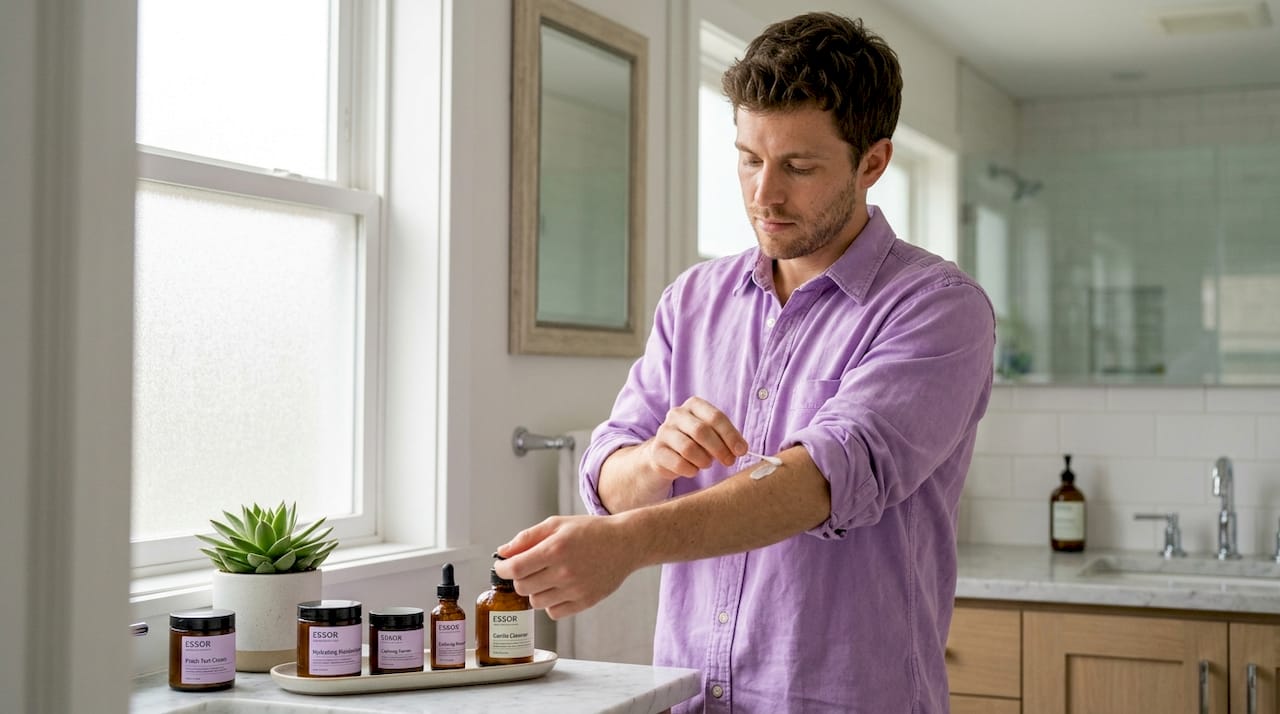
The recommended method for safe adoption of botanical cosmetics is to introduce new products gradually and use patch testing (or dermatologist-guided testing when appropriate), rather than assuming gentleness. Apply a small amount to your inner forearm and wait at least 48 hours before using the product on your face or body.
Pro Tip: If you experience repeated unexplained reactions to botanical products, seek professional patch testing with a dermatologist. They can identify your specific allergens using standardised panels, saving you considerable frustration and skin distress.
If your skin leans sensitive, exploring sensitive skin solutions and reviewing the best ingredients for sensitive skin will give you a reliable shortlist to start from. And for a broader look at why ingredient purity matters, the purity and safety of natural skincare is worth reading alongside this article.
Personalizing your routine: compound, context, and your skin
With safety in mind, success now depends on personalising your natural beauty routine for your own needs and context.
No botanical suits every skin type in every situation. What brightens one person’s complexion may cause redness in another. Effectiveness and tolerance depend on specific compounds, concentrations, and formulation context, not simply on whether an ingredient is plant-derived. This principle is the foundation of smart, personalised skincare.
How to build your personalised natural routine:
- Identify your primary goals. Are you addressing hyperpigmentation, dryness, fine lines, redness, or dullness? Rank them so you can prioritise targeted actives.
- Screen for contraindications. Review your known allergies and sensitivities before selecting any botanical. Cross-reference ingredient lists carefully.
- Start low and slow. Introduce one new product at a time, beginning with a lower-concentration formula. This makes it easy to identify what works and what does not.
- Assess tolerance over time. Give each product at least two to four weeks before judging results. Skin cell turnover takes roughly 28 days in young adults, longer as we age.
- Adjust as needed. If a product is not delivering results or is causing any discomfort, it is not the right fit. No single botanical is irreplaceable.
Here is how common skin goals align with well-researched natural actives:
| Skin goal | Best-matched natural active | Reason to choose |
|---|---|---|
| Hyperpigmentation | Licorice root extract | Inhibits tyrosinase, brightens without harshness |
| Barrier repair | Plant ceramides, oat extract | Replenishes lipids, reduces TEWL (transepidermal water loss) |
| Anti-aging (sensitive) | Bakuchiol | Retinol-like results, gentler on reactive skin |
| Inflammation / redness | Centella asiatica | Clinically studied soothing properties |
| Deep hydration | Hyaluronic acid (plant-fermented) | Draws moisture into skin layers |
| Antioxidant protection | Astaxanthin, green tea polyphenols | Neutralises free radicals from UV and pollution |
A real-world scenario: Imagine you want to address early signs of aging but your skin is also prone to redness and sensitivity. A standard retinol routine might cause too much irritation. Instead, bakuchiol, a plant-derived alternative, offers comparable results for building a natural routine that both delivers on anti-aging goals and respects your skin’s reactive nature. Pairing it with Centella asiatica for soothing support and a barrier-strengthening plant ceramide moisturiser creates a thoughtful, layered routine.
The goal is always to curate your natural skincare with intention, not simply to pile on everything labelled “natural.” For practical day-to-day application, our natural skincare routine tips break down the process into simple, actionable steps.
Does ‘natural’ mean eco-friendly? The real sustainability story
Beyond your skin, choosing nature impacts the broader environment. Let us see what true sustainability really looks like.
This is where the “natural equals green” myth gets its biggest reality check. Many consumers assume that a product made with plant-derived ingredients automatically has a smaller environmental footprint than a conventional alternative. The evidence tells a more complicated story. LCA (life cycle assessment) is the benchmark methodology for evaluating environmental impacts across the full product lifecycle, and its results often surprise people.
Consider this: growing botanical ingredients requires land, water, fertilisers, and transportation. Some popular ingredients, like shea butter or argan oil, come from regions where overharvesting has real ecological consequences. Others require significant energy in extraction and processing. The biodegradability of a final product, while genuinely valuable, is just one small chapter in a long environmental story.
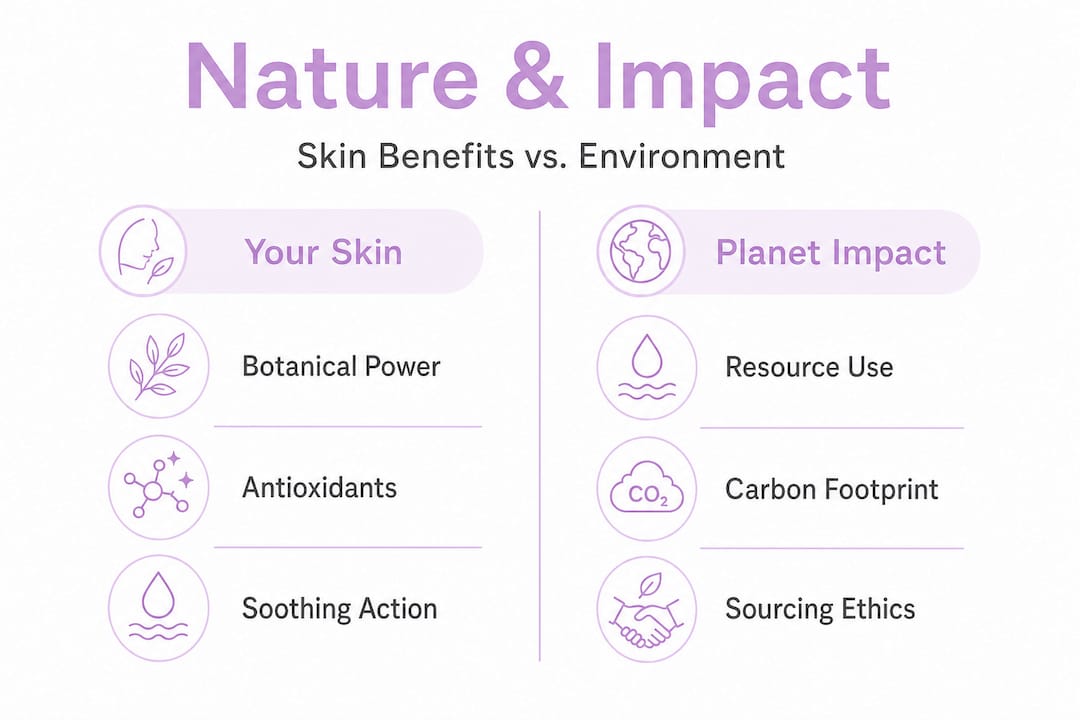
📊 Sustainability insight: Ingredients and upstream supply chains can dominate a product’s total carbon footprint, meaning that what goes into a product often matters far more than how it is packaged. Sourcing choices frequently outweigh packaging decisions in terms of actual environmental impact.
Some industry leaders take this seriously. Dedicated LCA teams and science-based tools are used by progressive ingredient companies to select lower-impact ingredients during product development. This is the direction conscientious brands should move toward.
What to look for when choosing genuinely sustainable products:
- ✅ Certified ethical sourcing (look for Rainforest Alliance, Fair Trade, or Ecocert)
- ✅ Transparency about supply chain and ingredient origins
- ✅ Minimal, recyclable, or refillable packaging
- ✅ Brands that publish or willingly discuss their carbon or LCA data
- ✅ Locally or regionally sourced ingredients where possible
- ✅ Concentrated formulas that reduce water usage and transport weight
Pro Tip: When evaluating a brand’s environmental claims, ask specifically whether they have conducted a life cycle assessment on their hero products. A genuine sustainability commitment goes well beyond recycled packaging or a green logo.
For a thorough, practical look at evaluating your choices, our eco-friendly skincare guide is an excellent next resource.
Why a balanced, sceptical approach to natural beauty wins
Pulling everything together, the right mindset for blending nature and beauty is one built on discernment, not default assumptions.
Popular wellness culture treats “natural” as a single, unified virtue. Natural equals gentle. Natural equals green. Natural equals holistic. But as we have seen, none of these equivalences hold up automatically under scrutiny. The most empowered natural beauty consumer is not the one who buys every product with a leaf on the label. It is the person who asks which botanical, why this formulation, and how was it sourced.
“Environmental claims for ‘natural’ skincare can be misleading without LCA. Ingredient sourcing, manufacturing energy, and usage patterns can outweigh presumed benefits from biodegradability or format changes.”
This is not cynicism. It is self-care at its highest level. When you understand that evidence-based botanical benefits come from specific compounds in specific concentrations rather than from a vague notion of “naturalness,” you make better decisions. You spend your money on products that actually perform. You protect your skin from unnecessary reactions. And you support brands and supply chains that genuinely reduce environmental harm.
The brands worth trusting are transparent about their formulations, honest about limitations, and grounded in science. They do not claim that “plant-based” is universally superior. They explain how their specific ingredients work and why their sourcing choices matter. That combination of targeted bioactivity, honest safety communication, and verifiable sustainability is what conscious self-care actually looks like.
Your beauty routine is personal. It should reflect your skin’s unique biology, your lifestyle, and your values. Nature has enormous gifts to offer in that journey. Getting the most from those gifts simply requires that you bring curiosity, patience, and a willingness to question simple narratives.
Explore conscious beauty with expertly crafted natural routines
Ready to go further? Dive into tailored resources and consciously chosen formulas inspired by the insights above.
At ZenChemy Lab, we translate the science of plant-derived ingredients into artisanal skincare you can trust and feel good using. Every formula we create starts with ingredient transparency and purposeful sourcing. Whether you are beginning your botanical journey or refining an existing routine, our resources are designed to support you every step of the way.

Explore our curated expert natural skincare tips for step-by-step guidance, browse our carefully selected botanical skincare picks to find actives matched to your goals, and discover the full range in our clean beauty collection. Your skin deserves products built with both science and soul.
Frequently asked questions
How can I test for allergies before using a new natural skincare product?
Apply a small amount of the product to your inner arm and wait at least 48 hours for any reaction; for sensitive skin types, patch testing with a dermatologist provides the most reliable results.
Are natural ingredients always safer for sensitive skin?
No. “Natural” botanicals and essential oils can still cause irritation or allergic contact dermatitis, so safety always depends on your individual skin’s tolerance to specific compounds.
What is a life cycle assessment in beauty products?
A life cycle assessment (LCA) tracks every environmental impact a product creates, from raw material harvesting through to end of life, giving you the complete ecological picture rather than a snapshot.
Why do some natural products still have a high carbon footprint?
The upstream supply chain and raw ingredient sourcing typically generate the largest share of a product’s total carbon footprint, often outweighing the environmental difference made by packaging choices alone.