
TL;DR:
- Botanicals offer multi-functional, gentle support for sensitive skin by strengthening the skin barrier and balancing microbiome.
- Adaptogens like centella, calendula, and green tea help regulate skin responses and improve resilience.
- Patch testing and sourcing quality ingredients are essential to prevent allergic reactions and ensure safe, effective use.
Many people assume that if a product is labelled “natural,” it is automatically gentle and safe for sensitive skin. That assumption can lead to real problems. The truth is more nuanced, and more interesting. Botanicals deliver multi-functional benefits that are gentler than many synthetics, but they also carry their own risks when chosen without care. Understanding the science behind botanical ingredients helps you make smarter choices, protect your skin barrier, and build a self-care ritual that genuinely works. This article walks you through the evidence, the cautions, and the practical steps.
Table of Contents
- How botanicals benefit sensitive skin: The science explained
- Beyond soothing: Adaptogens and multitargeted support for skin resilience
- Risks, allergies, and the importance of quality with botanicals
- Application tips: Choosing and using botanicals in your sensitive skin ritual
- The real value of botanicals for sensitive skin: An artisanal care perspective
- Discover artisan botanical care for sensitive skin
- Frequently asked questions
Key Takeaways
| Point | Details |
|---|---|
| Botanicals multitask for sensitive skin | Evidence shows botanicals calm, protect, and restore sensitive skin through several pathways. |
| Not all ‘natural’ is gentle | Patch testing is essential, as some botanicals may be allergenic despite being natural. |
| Artisanal quality and science matter | Choosing tested, high-quality botanicals maximises benefits and minimises risk for sensitive skin. |
| Adaptogens boost skin resilience | Unique botanicals like Centella and green tea help skin adapt to stress and reduce irritation. |
How botanicals benefit sensitive skin: The science explained
With the misconception clarified, let’s explore exactly how botanicals work for sensitive skin on a scientific level.
Sensitive skin is not simply “reactive.” It is a complex condition involving a compromised skin barrier, heightened nerve sensitivity, and often an imbalanced microbiome. The barrier itself works like a “brick and mortar” structure: skin cells are the bricks, and lipids (fats) are the mortar holding them together. When that mortar weakens, moisture escapes and irritants get in. This is where botanicals can genuinely help.
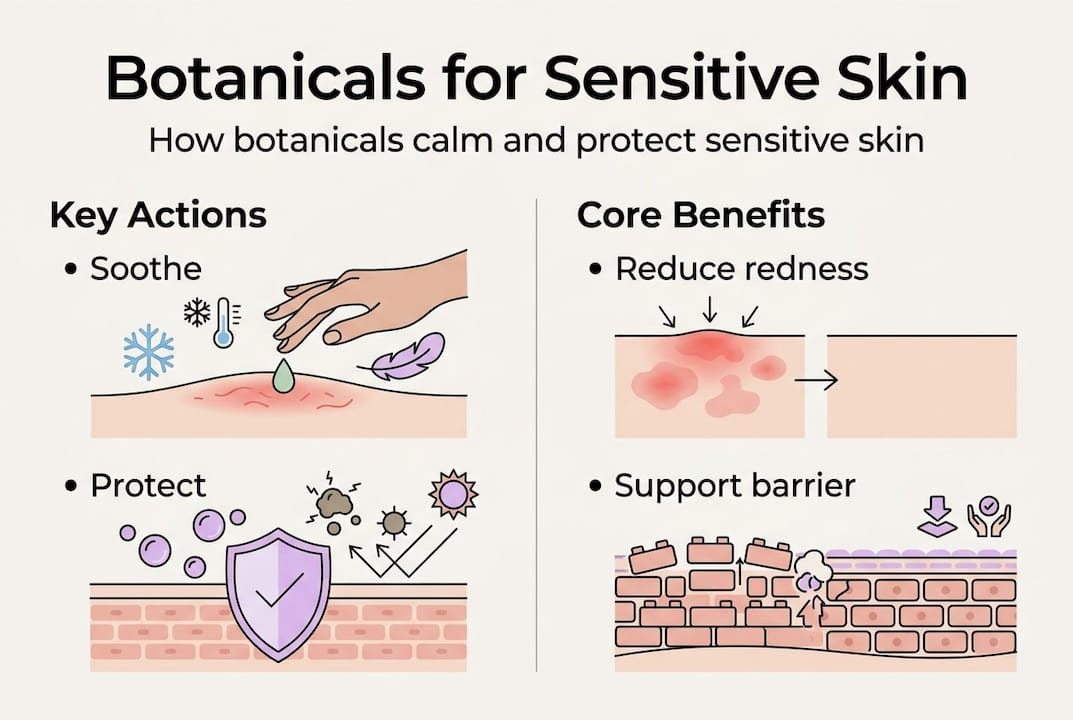
Research confirms that botanicals have anti-inflammatory, antioxidant, antimicrobial, and barrier-repairing properties. These are not vague marketing claims. They are measurable, documented effects observed in controlled studies. The mechanisms include fortifying the skin barrier and supporting the microbiome, two of the most critical factors in managing sensitive skin long-term.
Here is a quick comparison of how botanicals stack up against common synthetics for sensitive skin concerns:
| Concern | Botanical approach | Synthetic approach |
|---|---|---|
| Inflammation | Calendula, chamomile (anti-inflammatory) | Hydrocortisone (short-term use only) |
| Oxidative stress | Green tea, rosehip (antioxidants) | Synthetic vitamin C derivatives |
| Barrier repair | Oat extract, shea butter (lipid support) | Petrolatum-based occlusives |
| Microbiome balance | Prebiotics from plant extracts | Probiotic-derived synthetics |
The advantages of botanicals for sensitive skin include:
✔ Multi-targeted action — one plant extract can address several concerns at once
✔ Lower irritation potential than many synthetic actives at equivalent concentrations
✔ Compatibility with the skin’s natural chemistry, particularly lipid-based extracts
✔ Synergistic effects when combined thoughtfully in artisanal formulations
When comparing natural vs synthetic skincare, the evidence increasingly supports a nuanced view: botanicals are not inherently superior, but for sensitive skin specifically, their multi-functional and gentler profiles make them a compelling first choice. If you are exploring natural solutions for sensitive skin, understanding these mechanisms gives you a much stronger foundation than simply trusting a label.
Beyond soothing: Adaptogens and multitargeted support for skin resilience
Now that we know the core science, let’s focus on a powerful sub-category: adaptogens.
The word “adaptogen” comes from the idea of helping an organism adapt to stress. In skincare, adaptogenic botanicals help the skin regulate its own responses, reducing overreaction to environmental triggers. This is particularly valuable for sensitive skin, which tends to overrespond to temperature changes, pollutants, and even emotional stress.
Adaptogens such as Centella and green tea promote homeostasis, meaning they help the skin find and maintain its natural balance. Rather than suppressing a single pathway (as many synthetic actives do), they work across several simultaneously. This multitargeted action is what makes them so well-suited to artisanal natural products.

Here is how some key adaptogens perform across different skin health markers:
| Botanical adaptogen | Inflammation | Hydration | Barrier support | Antioxidant |
|---|---|---|---|---|
| Centella asiatica | ✔✔ | ✔ | ✔✔ | ✔ |
| Green tea extract | ✔✔ | ✔ | ✔ | ✔✔ |
| Calendula extract | ✔✔ | ✔✔ | ✔✔ | ✔ |
| Ashwagandha | ✔ | ✔ | ✔ | ✔✔ |
The top three botanicals to consider for building skin resilience:
- Centella asiatica — clinically shown to support collagen synthesis and calm redness in reactive skin
- Calendula extract — demonstrated to enhance hydration and reduce transepidermal water loss (TEWL) faster than placebo in controlled trials
- Green tea (EGCG) — a potent botanical antioxidant that neutralises free radicals and calms UV-triggered inflammation
Pro Tip: If your skin tends to flush or react after weather changes or stress, look for formulations that combine Centella and calendula. This pairing targets both the inflammatory response and the barrier simultaneously, giving your skin more than one layer of support.
The concept of multitargeted action is one of the most exciting developments in botanical skincare. Instead of reaching for a single-ingredient fix, you benefit from a network of plant compounds working in concert. That is the artisanal advantage: thoughtful formulation that mirrors the complexity of your skin.
Risks, allergies, and the importance of quality with botanicals
Adaptogens may be powerful, but are botanicals always safe? Here’s the reality check.
The word “natural” does not equal “safe.” This is one of the most important things to understand before building a botanical skincare ritual. Some of the most potent allergens in skincare come directly from plants. Allergic contact dermatitis from botanicals is a real and documented concern, particularly from certain botanical families and essential oils. Patch testing is not optional — it is essential.
The botanical families and ingredients most associated with allergic reactions include:
✔ Compositae (Asteraceae) family — includes chamomile, calendula, arnica, and echinacea; cross-reactivity is common
✔ Essential oils — lavender, tea tree, and ylang-ylang are among the most frequent sensitisers
✔ Citrus-derived ingredients — particularly phototoxic when used before sun exposure
✔ Fragrant plant extracts — even “natural” fragrance can trigger reactions in sensitive skin
“Not all botanicals are created equal. The source, extraction method, and concentration all determine whether an ingredient soothes or sensitises. Third-party testing is the only way to verify what is actually in your product.”
Quality and sourcing matter enormously. A calendula extract from a reputable supplier, standardised for active compounds and tested for contaminants, behaves very differently from a low-grade extract in a mass-produced formula. When you choose artisanal products, you are often choosing a higher standard of ingredient integrity.
Pro Tip: Before introducing any new botanical product, apply a small amount to the inside of your wrist or behind your ear. Patch test for 48-72 hours and watch for redness, itching, or swelling. If you react, that ingredient may not suit your skin, regardless of how natural it is.
For those exploring body care, even products like natural deodorant for sensitive skin benefit from this approach. Checking ingredient lists and patch testing first protects you from unnecessary irritation.
Application tips: Choosing and using botanicals in your sensitive skin ritual
With risks and benefits outlined, here’s how to apply this knowledge to your daily ritual.
Knowing the science is one thing. Translating it into a routine that works for your skin is another. The good news is that with a few clear steps, you can build a botanical ritual that is both safe and genuinely effective.
Start by reading labels with intention. Variability in botanical potency means you cannot assume all products with the same ingredient name deliver the same benefit. Look for:
✔ Standardised extracts with listed percentages where possible
✔ Third-party testing or quality certifications
✔ Transparent ingredient lists with INCI (International Nomenclature of Cosmetic Ingredients) names
✔ Absence of synthetic fragrance, which is a common sensitiser
✔ Artisanal or small-batch production, which often means fresher, higher-quality ingredients
Here is a step-by-step approach to introducing botanicals into your sensitive skin routine:
- Identify your primary concern — is it redness, dryness, TEWL, or reactivity? Choose botanicals targeted to that issue.
- Start with one new product at a time — introducing multiple botanicals simultaneously makes it impossible to identify what caused a reaction.
- Patch test for 48-72 hours — apply to a discreet area and observe before full-face use.
- Introduce slowly — begin with every other day use and observe how your skin responds over two weeks.
- Layer thoughtfully — apply lighter, water-based botanicals (like a rose facial toner) before heavier creams.
- Seal with a barrier-supportive cream — a product like our sea buckthorn face cream helps lock in the benefits of earlier layers.
For a weekly ritual boost, consider a Spirulina dry face mask for antioxidant support, or a turmeric face scrub to gently address uneven tone without harsh abrasives.
Pro Tip: Keep a simple skin journal for the first month of any new botanical routine. Note the date, product, and any changes in texture, redness, or comfort. Patterns emerge quickly, and you will know within two to three weeks whether a botanical is working for you.
The ritual itself matters. Taking a few mindful minutes each morning and evening to care for your skin is not indulgent. It is a form of self-knowledge that pays off in long-term skin health.
The real value of botanicals for sensitive skin: An artisanal care perspective
Let’s step back and reflect — not just on the science, but on the lived wisdom of botanicals in everyday care.
Here is something most skincare guides will not tell you: the best botanical routine is not the one with the most ingredients. It is the one you understand well enough to trust. We have seen people with sensitive skin cycle through dozens of “clean” products, reacting to each one, because they were chasing trends rather than building knowledge.
The real power of botanicals comes from the intersection of science and intention. When you choose a product because you understand what the extract does, how it was sourced, and why the formulation was designed that way, you are no longer a passive consumer. You are an active participant in your own skin health.
Artisanal botanical care offers something that mass-market products rarely can: transparency, freshness, and a formulator’s genuine attention to ingredient synergy. That is not sentimentality. It is a practical advantage for skin that needs consistency and care.
Exploring purity in sensitive skin care is not just about avoiding harm. It is about building long-term resilience through curiosity, caution, and the right botanical allies.
Discover artisan botanical care for sensitive skin
Ready to upgrade your self-care with safe, artisanal botanicals? Here’s where to start.
At ZenChemy Lab, every product begins with a question: what does sensitive skin actually need? Our botanical formulations are built on the same evidence you have read here, combined with the care and transparency that only small-batch, artisanal production can offer.

Whether you are new to botanical skincare or refining an existing routine, our resources can help. Explore our guide to sensitive skin natural solutions for a deeper look at purity-focused care, or follow our natural skincare routine tips to build a ritual that works. If you want to understand the full picture, our breakdown of the science behind natural skincare is a great next step.
Frequently asked questions
Are botanicals always safe for sensitive skin?
No. Some botanicals cause contact dermatitis and irritation, particularly essential oils and Compositae family plants. Always patch test any new botanical product before regular use.
Which botanicals are best for sensitive skin?
Calendula, Centella asiatica, and green tea are among the most evidence-supported options. Calendula promoted hydration and reduced TEWL in controlled trials, while Centella and green tea support multitargeted skin health across inflammation, barrier function, and antioxidant defence.
How do you patch test a botanical product?
Apply a small amount to clean skin on your inner wrist or behind your ear, then wait 48-72 hours and check for any redness, swelling, or itching before applying the product more broadly.
Can botanicals help with eczema-prone sensitive skin?
Yes, with care. Clinical evidence shows that calendula is comparable to steroids in managing eczema symptoms, with a lower side-effect profile, making it a promising option for eczema-prone skin when used consistently and correctly.
Recommended
- Sensitive skin: Why natural solutions matter for purity – ZenChemy Lab
- Birch Tar Soap: The Science Behind a Traditional Skin Remedy – ZenChemy Lab
- Honey Soothing Cream – ZenChemy Lab
- Spirulina Dry Face Mask. 35 grams – ZenChemy Lab
- Understand skin sensitivity: simple solutions for hydration – SMPL SKIN South Africa

3 Comments