
TL;DR:
- Sustainable skincare considers the entire product lifecycle, including sourcing, manufacturing, packaging, use, and disposal.
- It is different from natural or organic labels, which focus on ingredient origin, not environmental impact.
- Making informed choices involves verifying certifications, reducing packaging waste, and prioritizing lifecycle transparency.
You’ve seen the labels: natural, organic, clean, green. They’re everywhere, and they all sound reassuring. But here’s the problem: none of them automatically mean sustainable. Sustainable skincare minimizes environmental harm across the full product lifecycle, from ingredient sourcing and manufacturing through to packaging, daily use, and disposal. That’s a much bigger picture than a “botanical” label suggests. In this guide, we’ll clear up the confusion between natural, organic, and sustainable, show you what to actually look for, and give you practical steps to make your beauty routine genuinely kinder to the planet.
Table of Contents
- What does sustainable skincare truly mean?
- Sustainable vs natural vs organic: what’s the real difference?
- What actually makes a skincare product sustainable?
- How to make sustainable choices in your beauty routine
- Why true sustainability starts with informed choices
- Discover natural routines that care for your skin and the planet
- Frequently asked questions
Key Takeaways
| Point | Details |
|---|---|
| Sustainable means lifecycle impact | Genuine sustainable skincare addresses environmental effects from ingredient sourcing to final disposal. |
| Natural isn’t always greener | Not all natural or organic products are environmentally friendly—sometimes synthetics are the more sustainable choice. |
| Smart shopping is critical | Certifications, clear labelling, and company transparency help you avoid greenwashing and make responsible choices. |
| Trends are evolving | Luxury self-care now includes upcycled and waterless options that restore ecosystems, not just reduce harm. |
What does sustainable skincare truly mean?
Now that you know there’s more to sustainability than natural labels, let’s define sustainable skincare in tangible terms.
At its core, sustainable skincare means caring for your skin in ways that don’t harm the planet. That sounds simple, but it covers a surprisingly wide range of decisions made long before a product reaches your hands.
Sustainable skincare focuses on environmental impact across the entire product lifecycle. Think of it like this: every product has a story that runs from field or lab to landfill. Sustainability means that story is responsible at every chapter.
Here are the five key phases to consider:
- 🌿 Ingredient sourcing: Are raw materials farmed responsibly, without depleting ecosystems or exploiting communities?
- ⚗️ Manufacturing: Does production minimise water and energy use, and avoid harmful chemical runoff?
- 📦 Packaging: Is it minimal, recycled, recyclable, or refillable?
- 🧴 Usage: Does the formula require less product per application, reducing overall consumption?
- ♻️ Disposal: Can the packaging be composted, recycled, or returned through a take-back programme?
This is where a critical distinction emerges. Sustainable does not equal natural or organic. These terms describe how an ingredient was grown or processed, not how the entire product system affects the planet. A product made with certified organic shea butter can still be packaged in non-recyclable plastic, shipped across several continents, and formulated with ingredients that were overharvested. That’s not sustainable, even if every ingredient is plant-based.
For a broader understanding of how ingredient origin shapes a product’s values, the discussion around vegan skincare explained offers helpful context on ethics and sourcing. Similarly, if you’re building a planet-friendlier routine from scratch, organic body care essentials is a good starting point.
Sustainable beauty grew to represent roughly 12% of all beauty market sales in 2023, and that share continues to rise. Consumers are asking better questions, and brands are being held to higher standards. The more you understand what genuine sustainability looks like, the harder it becomes to be misled by clever marketing.
“Sustainability in skincare isn’t a certification or a label. It’s a commitment to every decision that shapes a product’s journey from raw material to recycling bin.”
The good news? Once you know what to look for, identifying truly sustainable products becomes much easier.
Sustainable vs natural vs organic: what’s the real difference?
With the basics clarified, it’s essential to break down how sustainable skincare differs in practice from other popular beauty trends.
These three terms are often used interchangeably, but they mean very different things. Knowing the distinction protects you from greenwashing and helps you make choices that actually align with your values.
| Term | What it means | What it doesn’t guarantee |
|---|---|---|
| Organic | Ingredients grown without synthetic pesticides or fertilisers | Sustainable packaging, ethical supply chains, or low carbon footprint |
| Natural | Minimally processed or plant-based ingredients | Environmental responsibility or ecological safety |
| Sustainable | Planet-friendly practices across the full product lifecycle | That it’s also organic or 100% natural |
Here’s the insight most people miss: some synthetic ingredients are actually more sustainable than their natural counterparts. Overharvesting natural ingredients can cause significant environmental damage, threatening biodiversity and depleting wild plant populations. Rosewood oil, wild argan, and certain sandalwood species have all faced pressure from cosmetic demand.
Biotechnology now allows labs to create versions of rare plant compounds without touching a single wild plant. These biotech alternatives often require less land, water, and energy to produce. The science behind this is covered in detail in our look at natural vs synthetic skincare, and the findings may surprise you.
How to spot greenwashing: Brands use vague language because there’s no universal legal definition of “sustainable” or “natural” in cosmetics. Watch for these red flags:
- ✗ Claims like “eco-friendly” with no third-party certification
- ✗ Green packaging with no recycling information
- ✗ “Natural” prominently featured while synthetic preservatives remain unlisted
- ✗ No sourcing or supply chain transparency on the brand’s website
Pro Tip: Search for certifications like COSMOS, ECOCERT, or B Corp. These third-party bodies verify specific environmental and ethical standards, giving you something concrete to trust beyond the label copy.
If you want to rebuild your routine with these distinctions in mind, our natural skincare routine guide walks through practical decisions with these trade-offs factored in.
What actually makes a skincare product sustainable?
Now that the differences are clear, let’s examine exactly what makes a skincare product truly sustainable.
Sustainability isn’t one single quality. It’s a combination of decisions made across every stage of a product’s life. Here’s a practical checklist you can apply to any product you’re considering:
- Ingredient source: Is it bio-based, upcycled, or responsibly farmed? Sustainable ingredients include candelilla wax, shea butter, biotech enzymes, and upcycled seed oils from food processing waste.
- Processing method: Low-energy extraction methods like cold pressing or CO2 extraction are generally preferable to chemical solvent extraction.
- Packaging: Look for glass, aluminium, post-consumer recycled plastic, or packaging-free formats. Refillable options are even better.
- Supply chain: Short, transparent supply chains reduce emissions and improve traceability. Canadian-made products often have an advantage here.
- End-of-life: Can the container be recycled curbside, composted, or returned to the brand?
Two trends leading sustainable skincare in 2026 are waterless formulas and upcycled ingredients. Waterless products (balms, oils, solid bars) are more concentrated, require less packaging, and produce less wastewater during manufacturing. Upcycled ingredients, like coffee ground exfoliants or berry seed oils from juice production, repurpose materials that would otherwise go to waste.

Carbon footprint is another metric worth understanding. The carbon footprint of a body cream averages around 2.5 kg CO2e, while a sustainable lipstick emits roughly 45g CO2e compared to 120g for a conventional one. These numbers seem small individually, but multiply them across an entire beauty routine and the impact adds up quickly.
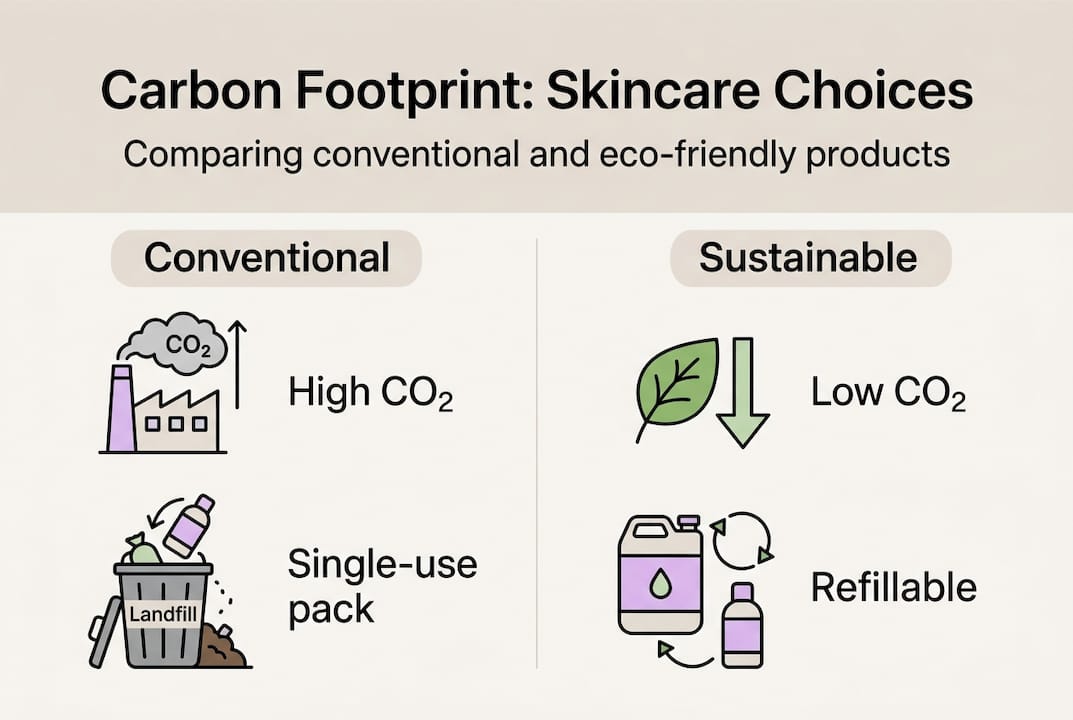
| Product type | Conventional CO2e | Sustainable CO2e |
|---|---|---|
| Lipstick | 120g | 45g |
| Body cream | ~2.5 kg | Varies by formula |
For a closer look at which natural body care ingredients meet these standards, we’ve put together a detailed resource covering sourcing, benefits, and what to prioritise.
How to make sustainable choices in your beauty routine
With a clear understanding of what to look for, here’s how you can bring genuine sustainability into your daily beauty rituals.
Making your routine more sustainable doesn’t mean overhauling everything overnight. Start with awareness, then layer in better choices one product at a time.
- ✅ Audit your current products: Check ingredient lists and packaging. Are there obvious swaps you could make when a product runs out?
- ✅ Look for third-party certifications: COSMOS Organic, Leaping Bunny, and B Corp are meaningful. Vague eco-claims without backing are not.
- ✅ Choose minimal or refillable packaging: Every piece of plastic you avoid is a genuine win. Solid bars, glass jars, and aluminium tins are excellent alternatives.
- ✅ Prioritise ingredient transparency: Brands that list full INCI names and sourcing information are telling you something important: they have nothing to hide.
- ✅ Trust evidence, not aesthetics: A brown paper label and a leaf logo don’t make a product sustainable. The ingredient list and the brand’s sourcing practices do.
Consumers are willing to pay a 20% premium for certified sustainable skincare, yet trust gaps remain a barrier between intention and purchase. That’s understandable, and it puts the responsibility squarely on brands to be transparent.
In 2026, the skincare industry is seeing a notable shift toward restoration, with upcycled and waterless formulas leading the charge in luxury eco-care. This isn’t harm reduction anymore; it’s active regeneration.
Pro Tip: Build your routine around multi-use products. A botanical face oil that works as a serum, moisturiser, and light makeup remover means fewer bottles, less packaging, and often better skin results.
Our skincare routine tips guide brings all of these ideas together into a practical daily framework.
Why true sustainability starts with informed choices
Here’s an opinion you won’t often hear: the most sustainable skincare routine isn’t necessarily the one with the most eco labels. It’s the one you’ve thought carefully about.
Many “natural” solutions aren’t as green as they appear. Some plant-based ingredients travel thousands of kilometres before reaching a Canadian shelf, offsetting any environmental gains from their farming practices. Meanwhile, a locally produced product with one or two synthetic ingredients might have a fraction of the carbon footprint.
The uncomfortable truth is that sustainability requires trade-offs, and no product is perfect. What matters most is lifecycle thinking, transparency from brands, and your willingness to ask questions. Our article on natural vs synthetic skincare science challenges the assumption that natural always wins, and we stand by that.
Luxury and efficacy don’t have to be sacrificed. But they do require you to look past the label and ask: Where did this come from? How was it made? What happens when it’s finished? Those questions, asked consistently, are what genuine sustainable skincare looks like in practice.
Discover natural routines that care for your skin and the planet
If you’re ready to make your beauty regimen truly sustainable, here’s where to find trusted guidance and carefully crafted Canadian options.
At ZenChemy Lab, we believe that luxury self-care and environmental responsibility belong together. Every product we craft starts with thoughtful ingredient selection, responsible sourcing, and a commitment to transparency.

Whether you’re just starting to explore the science behind natural vs synthetic skincare, looking to understand which natural ingredients for radiant skin are worth your attention, or ready to follow essential routine tips built around clean, effective formulas, we have the resources and the products to support every step. Your skin and the planet both deserve better than guesswork.
Frequently asked questions
What makes a skincare ingredient sustainable?
A sustainable skincare ingredient is responsibly sourced, has low environmental impact, and supports ecosystem health from harvest to disposal. Sustainable examples include candelilla wax, shea butter, biotech enzymes, and upcycled oils.
Is ‘natural’ always better for the environment?
No. Overharvesting natural ingredients can harm ecosystems, while certain synthetics carry a lower environmental impact than their wild-harvested counterparts.
How can I spot greenwashing in skincare?
Look for specific, verifiable claims backed by third-party certifications and full lifecycle transparency. Vague terms like “eco-friendly” without supporting evidence are a common greenwashing tactic.
Does sustainable skincare cost more?
Consumers pay roughly 20% more for certified sustainable products, but transparency, ingredient quality, and long-term skin benefits often justify that investment.