TL;DR:
- Artistic soap making transforms functional bars into culturally expressive, visually appealing objects through deliberate design choices. The process combines chemistry, craftsmanship, and aesthetics, with techniques like swirl, layering, carving, embedding, and natural coloring enhancing visual storytelling. Aesthetic appeal influences market value, trust, and perceived quality, with cold process offering the most precision for intricate designs.
Soap making as a form of art is the practice of transforming a functional cleansing bar into a visually expressive, culturally significant object through deliberate choices in colour, texture, form, and symbolism. The role of art in soap making goes far beyond decoration. It is the difference between a bar that cleans and a bar that communicates. Natural soap production integrates chemistry, craftsmanship, and product design, making it a genuinely multidisciplinary art form. For artisans and creative enthusiasts, understanding this intersection is where the real craft begins.
What is the role of art in soap making?
Art in soap making is the intentional application of visual and sensory design principles to a handcrafted product. The core creative elements are colour, texture, pattern, and scent. Each one carries meaning and communicates quality before a customer ever touches the bar.
Colour tells a story instantly. A deep charcoal bar reads as detoxifying and modern. A soft lavender swirl reads as calming and botanical. Texture signals process. Rough, rustic tops suggest hot process craftsmanship. Smooth, glossy surfaces point to melt and pour precision. These are not accidental outcomes. They are deliberate artistic decisions made at every stage of the saponification process, which is the chemical reaction between oils and lye that produces soap.
The artisan’s role is to work within the chemistry and express something through it. That constraint is what makes soap making genuinely artistic. You cannot simply paint a bar. You must understand how oils behave at trace, how pigments disperse in a batter, and how cure time affects both scent and surface. The art and the science are inseparable.
What creative techniques are used in artistic soap crafting?
The most widely practised creative techniques in soap crafting fall into five categories, each with its own learning curve and expressive range.
-
Soap carving treats a cured bar as a sculptural medium. Artisans use fine tools to cut floral reliefs, geometric patterns, and figurative forms directly into the surface. This technique is common in Thai and Japanese soap art traditions and requires a firm, fully cured bar.
-
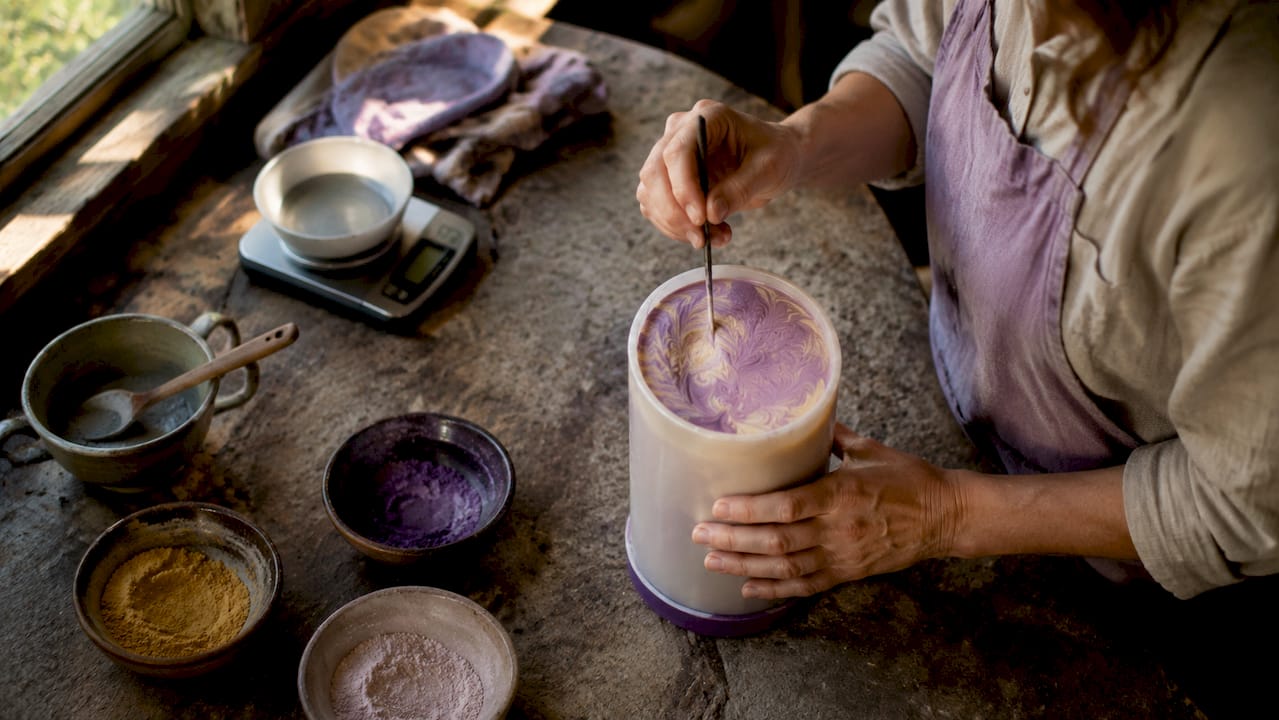
Colour swirling is the signature technique of cold process soap. Controlling trace consistency and blending techniques is what separates a clean swirl from a muddy blend. Thin to medium trace allows the batter to flow freely, producing wispy, distinct lines. Stick blending in short pulses gives you control over colour dispersion without accelerating saponification prematurely.
-
Layering builds visual depth by pouring distinct coloured batters in sequence. Each layer must reach a firm enough stage before the next is added, or the colours bleed into each other. When done well, a cross-section reveals a precise, graphic composition.
-
Embedding places pre-made soap shapes, botanicals, or decorative elements inside a fresh pour. Melt and pour soap is the preferred base for this technique because it requires no lye handling and allows picture embeds and complex layered aesthetics without a lengthy cure period.
-
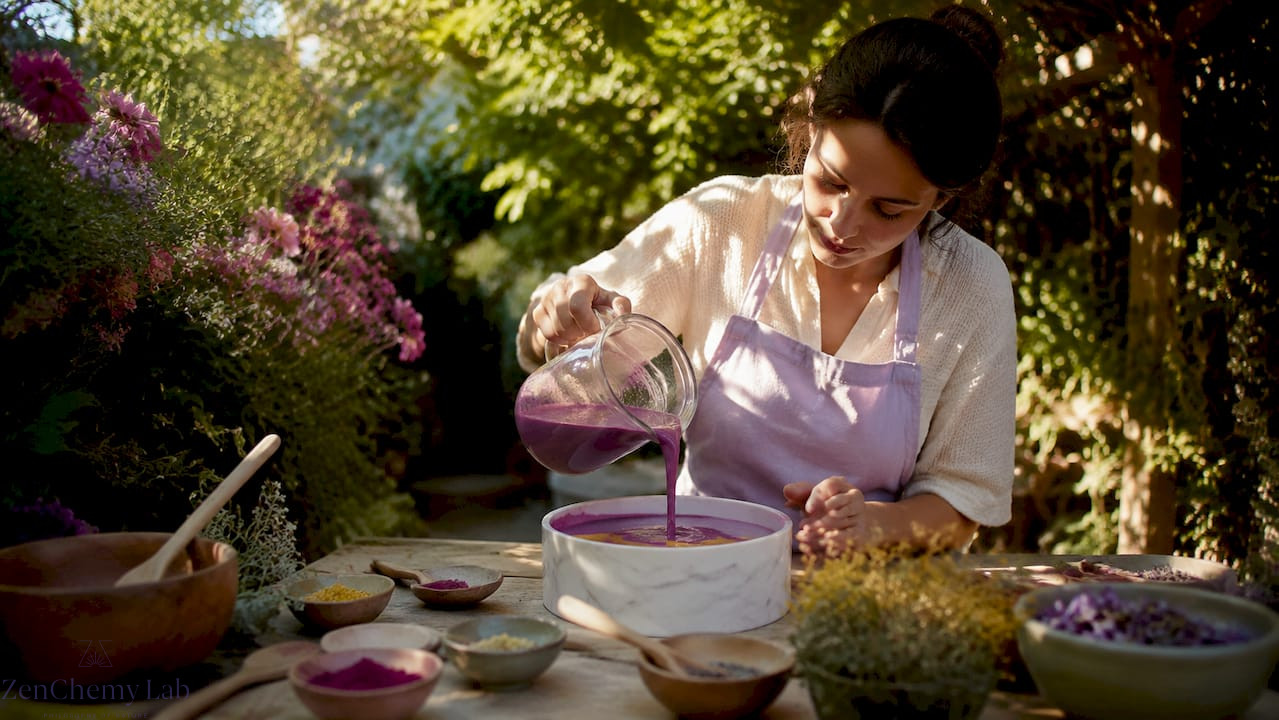
Natural colouring uses botanical powders, clays, and plant extracts as pigments. Turmeric and activated charcoal serve dual roles as both colourants and therapeutic additives. Turmeric produces warm golden tones and offers gentle brightening properties. Activated charcoal creates dramatic blacks and greys while supporting detoxification.
Pro Tip: When working with natural pigments, pre-mix them with a small amount of lightweight oil before adding to your batter. This prevents clumping and produces a smoother, more even colour distribution throughout the bar.
Why does aesthetics matter so much in soap making?
Aesthetics in soap making directly determines market appeal, perceived value, and brand identity. This is not a soft claim. Customers rely on visual storytelling, including colour, shape, and packaging, to perceive craftsmanship and premium value. For artisans selling online, a photograph is the first and sometimes only point of contact with a potential buyer.
The importance of aesthetics in soap making becomes even clearer when you consider what buyers cannot experience through a screen. They cannot smell the bar. They cannot feel its weight. So the visual presentation must carry the full sensory promise of the product. High-quality photography, thoughtful styling, and consistent colour palettes are not optional extras. They are part of the product itself.
Here is what strong soap aesthetics communicate to a buyer:
- ✅ Colour consistency signals a controlled, repeatable process
- ✅ Texture variation signals handcrafted authenticity and natural ingredients
- ✅ Botanical inclusions signal premium, skin-beneficial formulation
- ✅ Intentional imperfections signal human craft over machine production
- ✅ Cohesive packaging signals a professional brand with a clear identity
“The true art in soap making embraces individuality and the aesthetic value of handcrafted texture variations and colour shifts.” — Domestika, Creative Soap Making
Consistency in colour story, shape, and packaging builds customer trust over time. A buyer who receives a bar that matches its photograph exactly will return. One who receives something that looks nothing like the listing will not. Aesthetics, in this sense, is a functional business tool as much as a creative one.
How do soap making methods compare for artistic expression?
The three primary soap making methods offer very different levels of artistic control. Choosing the right one depends on the type of design you want to achieve.
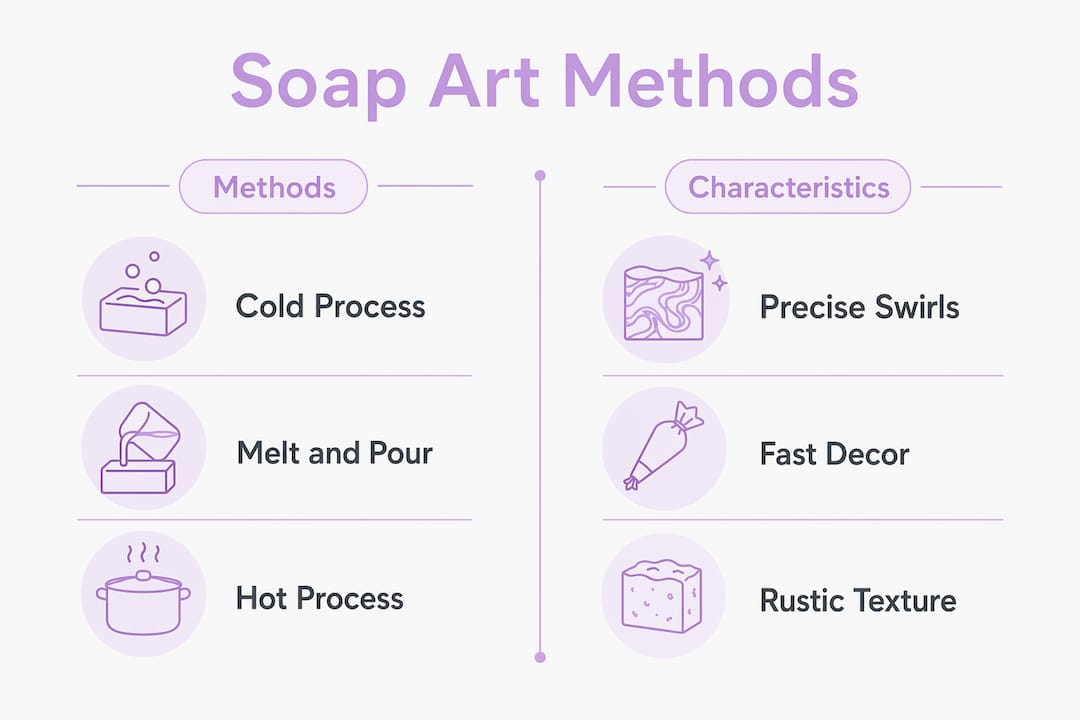
| Method | Artistic Strengths | Limitations | Best For |
|---|---|---|---|
| Cold Process | Superior swirl precision, natural glycerin retention, refined colour work | Requires 4–6 week cure time, lye handling | Complex swirls, layered designs, botanical bars |
| Hot Process | Rustic, textured tops, earthy aesthetic, faster usability | Less design precision, batter thickens quickly | Artisan rustic bars, natural chunky textures |
| Melt and Pour | Fast, detailed embeds, zero cure time, beginner-friendly | Contains pre-made base, less control over ingredients | Embedded designs, custom shapes, novelty soaps |
Cold process soap retains natural glycerin and produces a gentler pH of 9–10 compared to mass-market bars at pH 10–11. That glycerin retention is not just a skin benefit. It also contributes to the smooth, translucent quality that makes cold process bars so visually appealing when cut.
Cold process soap making is a philosophy of patience, and that patience pays off in both fragrance retention and design stability. The extended cure allows essential oils to bind fully and colour swirls to set without bleeding. Hot process, by contrast, cooks the batter to full saponification before moulding. This produces a more rustic, textured surface that many artisans intentionally cultivate as a design signature.
Melt and pour sits in a different category entirely. It is the fastest-growing segment for decorative and custom-branded soaps precisely because it removes the chemistry barrier. You can achieve intricate embedded designs, clear soap windows, and multi-layered colour blocks without managing lye or waiting weeks to use the finished bar. The trade-off is less control over the base formula. For artisans focused on pure ingredient integrity, cold process remains the gold standard.
What practical tips help artisans improve their soap art?
Artistic growth in soap making comes from deliberate experimentation, not just following recipes. These practical approaches will help you push your creative range further.
-
Build custom tools from household items. Artisans create swirl rakes from index cards and hair-roller picks to achieve marbling effects not possible with standard equipment. A bent wire, a chopstick, or a comb can produce entirely unique pattern signatures.
-
Use botanical powders for dual creative and functional effects. French green clay adds soft sage tones and draws out impurities. Spirulina produces vivid greens with antioxidant properties. Madder root creates warm pinks and reds. Each ingredient adds both colour and a skin-care story to your bar. You can explore natural soap options to see how these ingredients translate into finished products.
-
Master trace before you master design. Thin to medium trace enables wispy swirl lines, while thick trace produces bold, defined peaks. Understanding where your batter is in the trace progression is the single most important technical skill for any artistic soap maker.
-
️ Draw inspiration from cultural and symbolic motifs. Japanese shibori patterns, Moroccan geometric tile work, and Scandinavian botanical illustration all translate beautifully into soap design. Cultural references give your work depth and a narrative that resonates with buyers looking for more than a functional product.
-
Embrace variability as a design feature. No two handmade bars are identical, and that is the point. Perfect uniformity is less valued than unique colour shifts and textures that signal genuine artisan quality. Lean into the variation rather than fighting it.
Pro Tip: Keep a soap journal. Photograph every batch from the same angle and lighting, note your trace timing, temperatures, and pigment ratios. Patterns in your notes will reveal what produces your best results faster than memory alone.
Key takeaways
Artistic soap making succeeds when chemistry, aesthetics, and intentional design work together, and when artisans treat every batch as both a technical and creative exercise.
| Point | Details |
|---|---|
| Art transforms function | Soap making as a form of art turns a basic product into a culturally expressive, premium object. |
| Method shapes artistic range | Cold process offers the most design precision; melt and pour suits fast, detailed embeds. |
| Aesthetics drive market value | Colour, texture, and packaging communicate craftsmanship before a buyer touches the bar. |
| Natural pigments do double duty | Botanicals like turmeric and activated charcoal add colour and skin-care benefits simultaneously. |
| Variability is a strength | Unique colour shifts and textures in handmade bars signal authenticity, not inconsistency. |
Why soap art is more than a craft trend
I have spent years watching soap making move from a niche hobby into a serious creative discipline, and what strikes me most is how few people treat it with the same rigour they would apply to ceramics or textile art. The chemistry is real. The design decisions are real. The cultural references are real. Yet soap is still often dismissed as a “craft” rather than an art form.
What I find most compelling about artistic soap making is the constraint. You are working with a living batter that changes minute by minute. You cannot undo a swirl once it is poured. You cannot rush a cure. That limitation forces a kind of creative clarity that I think is genuinely rare. You have to know what you want before you start, and then you have to let the material do some of the work.
The artisans I most admire are the ones who have stopped trying to make perfect bars and started making intentional ones. They understand that a slight colour bleed or an uneven top is not a failure. It is evidence of a human hand. That is exactly what buyers who seek out handmade soap are paying for. They are not buying a bar. They are buying a decision, a process, and a perspective.
If you are just starting out, resist the urge to replicate what you see online. Use cultural motifs that mean something to you. Experiment with pigments from your own region. Build tools from what you have. The most distinctive soap art I have ever seen came from artisans who were solving a problem with whatever was on hand, not following a tutorial.
— Alex
Explore artisan soap making with Zenchemylab
If this article has sparked ideas for your own creative practice, Zenchemylab is a useful next stop. The brand focuses on transforming raw natural ingredients into artisanal soaps and botanical cosmetics that reflect exactly the kind of intentional design philosophy discussed here.
Zenchemylab’s blog covers everything from the handmade versus commercial soap debate to the latest in natural beauty science and sustainability. Whether you are sourcing ingredient inspiration or looking to understand how artisan methods translate into skin benefits, the resources there are grounded in the same respect for craft and chemistry that defines serious soap art. Explore the full range and find your next creative starting point.
FAQ
What makes soap making a form of art?
Soap making becomes an art form when the maker applies deliberate design choices in colour, texture, pattern, and symbolism to a functional product. Natural soap production integrates chemistry, craftsmanship, and product design, making it a genuinely multidisciplinary creative practice.
Which soap making method is best for artistic designs?
Cold process soap offers the most artistic control, particularly for swirl and layered designs, because it retains natural glycerin and allows precise trace management. Melt and pour is better suited for embedded and shaped designs with zero cure time required.
How do you decorate handmade soap naturally?
You can decorate handmade soap using botanical powders like turmeric for golden tones, activated charcoal for deep blacks, and French green clay for soft greens. These natural colourants also add skin-care benefits, making them a preferred choice over synthetic dyes.
Why do artisan soaps look different from commercial bars?
Commercial soaps remove glycerin and use synthetic additives to reduce production costs, which strips both the skin benefits and the visual character from the bar. Artisan soaps retain glycerin and embrace natural colour variation, texture, and botanical inclusions as intentional design features.
How does trace affect soap swirl designs?
Trace is the thickness of the soap batter at the point of pouring. Thin to medium trace produces fluid, wispy swirl lines, while thick trace creates bold, defined peaks and textures. Mastering trace timing is the most critical technical skill for achieving consistent artistic designs in cold process soap.