TL;DR:
- True artisan soap involves careful, traditional craftsmanship that retains glycerin and uses natural botanicals.
- Handmade soaps are generally milder, better for sensitive skin, and more environmentally friendly than commercial options.
- Choosing craft soap supports local makers, promotes transparency, and aligns with sustainable, skin-loving values.
Most people grab a bar of soap without a second thought. It lathers, it rinses, it smells nice — job done. But there’s a significant difference between a mass-produced cleansing bar and a true piece of artisan craftsmanship. The ingredients, the process, the care behind each batch — all of it shapes how your skin feels, behaves, and ages over time. This article walks you through what real soap craftsmanship involves, how it compares to commercial alternatives, and what you should look for as a more informed Canadian consumer ready to make a meaningful switch.
Table of Contents
- Understanding soap craftsmanship: More than just cleansing
- Key elements of artisan soap making
- Handmade vs commercial soaps: How quality and benefits compare
- Choosing and caring for artisan soap: Tips for Canadian consumers
- The real impact of choosing craft soap: More than a skincare trend
- Experience the best in handcrafted skincare
- Frequently asked questions
Key Takeaways
| Point | Details |
|---|---|
| Artisan soaps use pure ingredients | Handcrafted soaps prioritize natural botanicals and oils that nourish your skin without harsh chemicals. |
| Skin compatibility is superior | Artisan soap typically has a milder pH and supports sensitive skin better than commercial brands. |
| Environmental impact is lower | Natural soaps break down easier and are often made with sustainably sourced ingredients. |
| Craftsmanship adds value | Handmade soap reflects careful, small-batch processes that benefit both your wellbeing and the community. |
Understanding soap craftsmanship: More than just cleansing
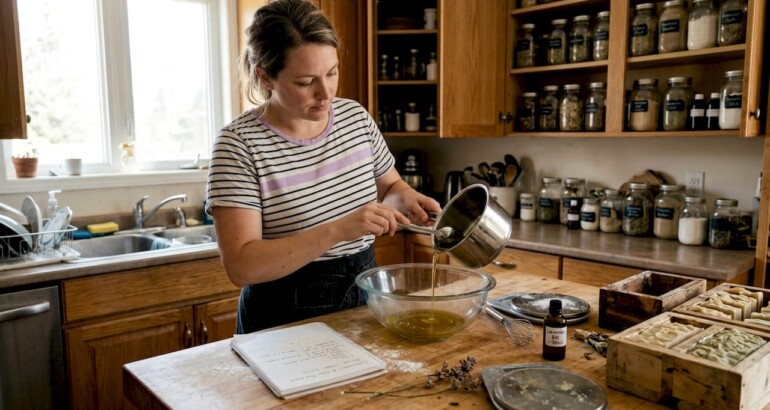
Soap craftsmanship is the careful, hands-on creation of soap using traditional methods, intentional ingredient selection, and genuine attention to skin compatibility. It’s not simply mixing oils and lye. It’s a practice rooted in both science and sensory awareness, where every decision — from which botanical to include to how long the bar cures — affects the final product your skin experiences.
At its core, artisan soap making centres on the process of saponification: a chemical reaction between fats or oils and an alkali (typically sodium hydroxide) that produces soap and glycerin. What sets handcrafted soap apart is that the naturally occurring glycerin is retained in the bar, rather than extracted and sold separately as commercial manufacturers often do. Glycerin is a humectant, meaning it draws moisture to the skin. Keeping it in the soap is a small but meaningful act of care.
Artisan makers prioritise natural botanicals for skin nourishment, including antibacterial ingredients like neem and tulsi, and moisturising agents like aloe vera. Sustainability is built into the model through small-batch production and local sourcing, which reduces environmental impact and supports community economies.
“The shift toward botanical-based formulations reflects both a consumer demand for transparency and growing evidence that plant-derived ingredients offer meaningful skin benefits with lower ecological cost.”
Here are the core values that define true soap craftsmanship:
- ✅ Ingredient purity — no synthetic fillers, sulphates, or artificial preservatives
- ✅ Sustainability — small batches, responsibly sourced materials
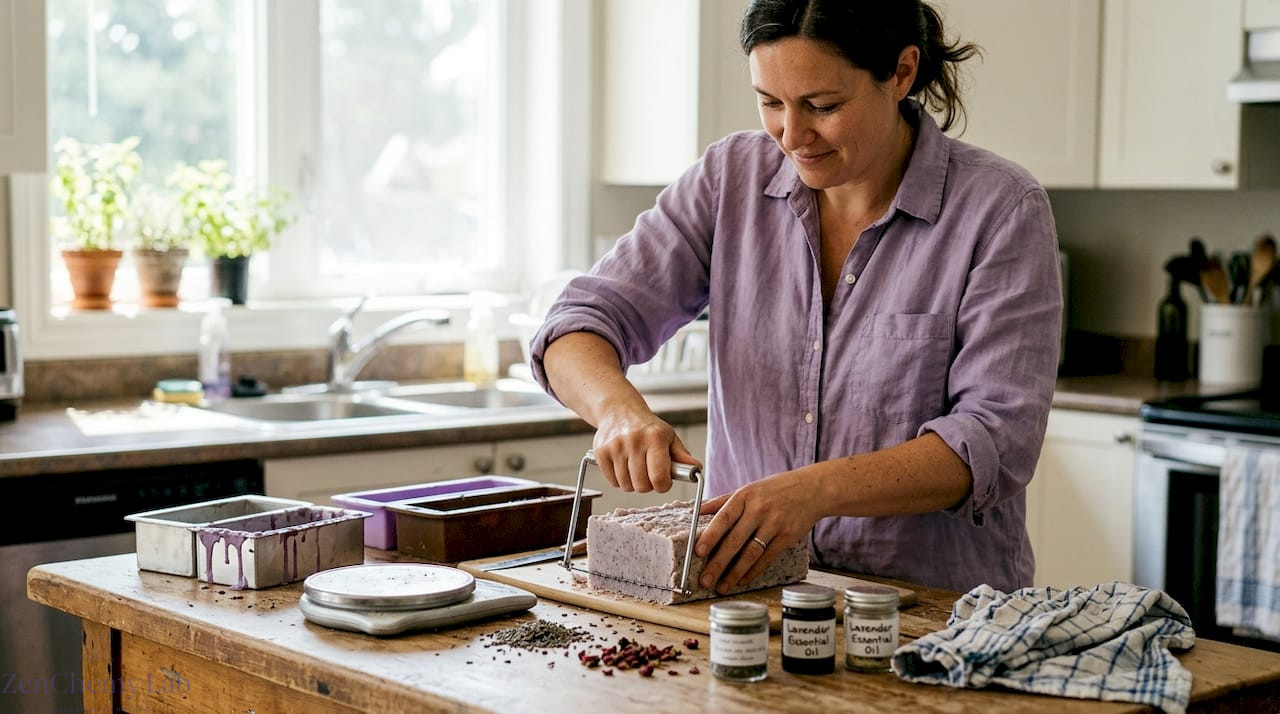
- ✅ Hand-finishing — each bar is cut, inspected, and labelled by hand
- ✅ Creativity — unique botanical blends, scent profiles, and textures
- ✅ Tradition — methods passed down and refined over generations
If you’re curious about the hands-on side of this process, our DIY handmade soap guide walks you through the full journey from raw ingredients to finished bar.
Key elements of artisan soap making
Understanding what goes into an artisan bar helps you appreciate why it performs differently on your skin. Here’s how the process typically unfolds:
- Ingredient selection — Artisan makers choose carrier oils (like coconut, olive, or castor), skin-loving butters (shea, cocoa, mango), and botanicals based on their specific properties and compatibility with different skin types.
- Formulation and testing — Each recipe is carefully calculated to ensure the correct lye-to-oil ratio. Makers often run small test batches and adjust based on lather quality, skin feel, and scent balance.
- Mixing and saponification — Oils and lye solution are combined at precise temperatures. Botanicals, clays, and essential oils are added at specific stages to preserve their integrity.
- Moulding and setting — The raw soap is poured into moulds and left to set, typically for 24 to 48 hours, before unmoulding and hand-cutting.
- Curing — This is where most of the magic happens. Artisan soaps cure for four to six weeks, during which excess water evaporates, the pH stabilises, and the bar hardens. Research confirms that milder pH post-cure makes natural soaps better suited for sensitive skin, with lather quality that actually improves with age.
- Finishing and labelling — Each bar is inspected, trimmed if needed, and labelled with full ingredient transparency.
The role of essential oils and botanicals goes beyond fragrance. Lavender calms inflammation, tea tree supports antibacterial action, and calendula soothes irritated skin. These aren’t marketing claims — they’re functional choices backed by botanical science.

Explore the full picture of handmade soap benefits and how pH in handmade soap affects your skin’s natural barrier.
Pro Tip: When shopping for artisan soap in Canadian stores or markets, check for a full INCI ingredient list, a curing date or batch number, and the maker’s name or studio. These are signs of genuine craftsmanship and accountability.
Handmade vs commercial soaps: How quality and benefits compare
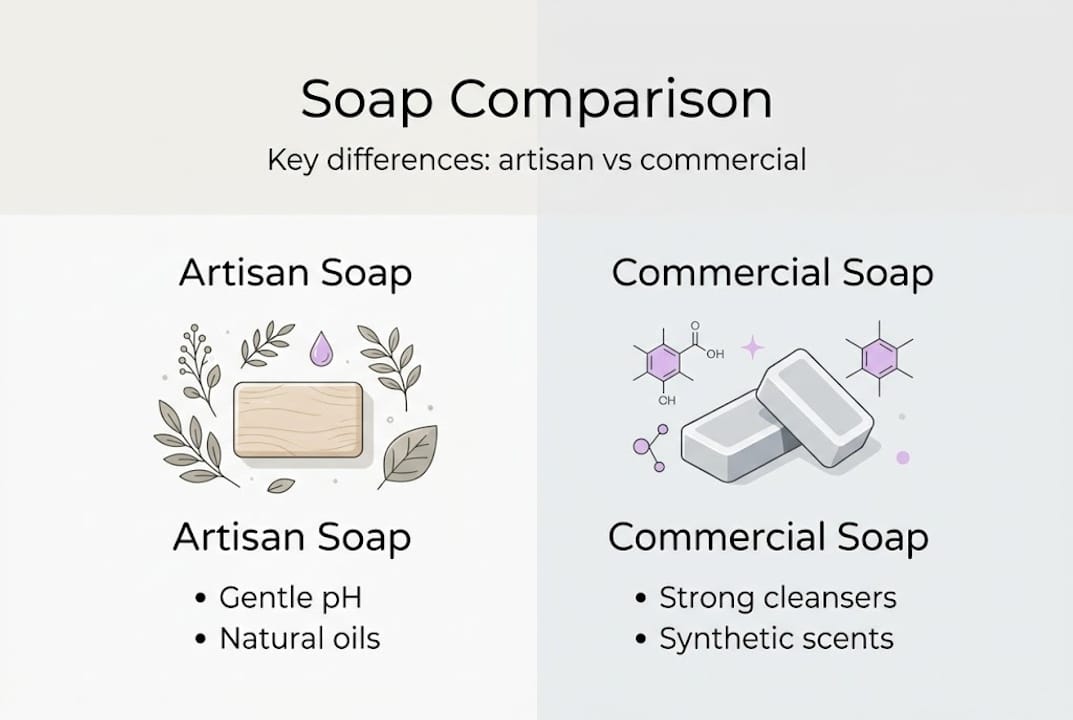
Once you understand the process, the comparison becomes clear. Here’s how artisan and commercial soaps stack up across the factors that matter most:
| Factor | Artisan soap | Commercial soap |
|---|---|---|
| Glycerin content | Retained naturally | Often removed |
| pH level | Mildly alkaline, skin-friendly | Variable, often higher |
| Foam retention | Superior over time | Consistent but synthetic |
| Skin compatibility | High, especially sensitive skin | Lower due to additives |
| Antibacterial effect | Moderate (botanical-based) | Stronger (chemical-based) |
| Environmental impact | Biodegradable, low waste | Higher chemical load |
| Ingredient transparency | Full, traceable | Often vague |
Comparative lab data shows that commercial soaps tend to have stronger antibacterial performance, while handmade soaps demonstrate superior foam retention and skin compatibility. This is an important nuance. If you’re washing hands in a clinical setting, a commercial antibacterial soap may serve a specific purpose. But for daily skin health, the artisan bar wins on nearly every other measure.
Pros and cons at a glance:
✅ Artisan soap:
- Retains natural glycerin for skin hydration
- Gentle on sensitive and reactive skin
- Biodegradable and lower environmental impact
- Transparent ingredient sourcing
⚠️ Commercial soap:
- Consistent antibacterial performance
- Longer shelf life due to preservatives
- Widely available and lower upfront cost
- May strip natural skin oils over time
For a deeper look at how these two categories differ day to day, read our breakdown of handmade vs commercial soap and explore the best natural soaps suited to different skin concerns.
Choosing and caring for artisan soap: Tips for Canadian consumers
Knowing what to look for makes all the difference when you’re standing in front of a market table or browsing an online shop. Here’s how to find quality and make it last.
Reading the label: A genuine artisan soap will list ingredients using their INCI (International Nomenclature of Cosmetic Ingredients) names, such as Cocos nucifera (coconut oil) or Butyrospermum parkii (shea butter). If the label says “fragrance” without specifying essential oils, that’s a flag. Transparency is a hallmark of real craftsmanship.
Common botanicals and their skin benefits:
| Botanical | Key benefit |
|---|---|
| Neem | Antibacterial, acne-prone skin |
| Aloe vera | Soothing, hydrating |
| Calendula | Anti-inflammatory, sensitive skin |
| Turmeric | Brightening, antioxidant |
| Lavender | Calming, balancing |
| Oatmeal | Gentle exfoliation, itch relief |
Research confirms that natural soaps are less toxic to skin cells and more biodegradable than synthetic alternatives, which matters both for your body and for what goes down the drain.
Pro Tip: Store your artisan soap on a well-drained soap dish between uses. Artisan bars are denser and longer-lasting than commercial soaps, but sitting in pooled water will shorten their life significantly. A slatted wooden or ceramic dish keeps airflow moving and extends each bar’s lifespan by weeks.
Mistakes to avoid with artisan soap:
- ❌ Leaving the bar in a wet soap dish — it softens and dissolves quickly
- ❌ Expecting the same foam volume as commercial soaps — natural lather is different, not lesser
- ❌ Judging by scent alone — fragrance doesn’t indicate quality; ingredients do
- ❌ Storing unused bars in plastic — let them breathe in a cool, dry spot
- ❌ Assuming all “natural” labels are equal — always check the full ingredient list
For guidance on building a full routine around your artisan choices, our natural body care routine guide is a great next step.
The real impact of choosing craft soap: More than a skincare trend
Here’s something most skincare guides won’t tell you: choosing artisan soap isn’t just a personal preference. It’s a values statement.
When you buy from a small Canadian maker, you’re supporting a person who sources ingredients thoughtfully, tests formulations carefully, and stands behind every bar with their name. That level of accountability simply doesn’t exist in mass production. The ingredient list on a commercial bar often hides behind legal loopholes. The artisan maker has nowhere to hide — and they don’t want to.
We also think the “luxury” label attached to handmade soap is misleading. Craftsmanship isn’t an indulgence. It’s a return to what soap was always meant to be: a simple, effective, skin-compatible product made with care. The fact that it also happens to support local economies and reduce chemical runoff is a bonus, not a selling point.
“Choosing handmade isn’t about spending more. It’s about knowing more — what’s in your product, where it came from, and who made it.”
Understanding handmade cosmetic standards helps you hold both makers and yourself to a higher bar.
Experience the best in handcrafted skincare
Ready to take your skin routine to a higher level of care and quality? At ZenChemy Lab, we transform raw, natural ingredients into artisanal soaps and botanical body care that your skin will actually thank you for.

We invite you to explore handmade soap differences and discover why thousands of Canadians are making the switch. Browse our artisan soap collection — each bar formulated and produced in Canada with full ingredient transparency. And if you’re still weighing the switch, our guide to real skincare benefits lays out exactly what you can expect.
Frequently asked questions
What ingredients should I look for in true artisan soap?
Look for natural oils, botanicals like neem or aloe, and full ingredient transparency that signals small-batch production. Genuine artisan soaps prioritise natural botanicals chosen specifically for skin nourishment.
Are handmade soaps really better for sensitive skin?
Yes. Handmade soaps typically develop a milder pH post-cure and contain fewer synthetic irritants, making them a gentler daily option for reactive or sensitive skin types.
How does artisan soap help the environment?
Artisan soaps are formulated with biodegradable ingredients and produced in small batches that reduce waste. Research confirms natural soaps are more biodegradable than their synthetic counterparts.
Do natural soaps kill as many germs as commercial soaps?
Commercial soaps can have stronger antibacterial effects due to chemical agents, but handmade soaps show superior foam retention and skin compatibility, making them the better choice for everyday skin health.
Recommended
- Handmade soap: real skincare benefits you’ll notice – ZenChemy Lab
- Make beautiful DIY handmade soap: a step-by-step guide – ZenChemy Lab
- Best types of natural soaps for healthy, radiant skin – ZenChemy Lab
- Birch Tar Soap: The Science Behind a Traditional Skin Remedy – ZenChemy Lab
- Τι είναι η μέθοδος 7 skins και τα οφέλη της ενυδάτωσης | B Woman