
TL;DR:
- Choosing products with simple, fragrance-free ingredients and known research support reduces skin irritation.
- Natural ingredients like Centella asiatica, squalane, and zinc oxide effectively calm and protect sensitive skin.
- Focus on formulation quality, routine consistency, and patch testing for best skincare results.
Finding skincare that actually calms sensitive skin without triggering a reaction can feel exhausting. Many products promise gentleness, yet their ingredient lists are packed with synthetic fragrances, harsh preservatives, and high-potency actives that leave your skin red, tight, or stinging. The truth is, knowing what’s in your product matters just as much as the brand name on the label. When you learn to read ingredients with confidence, you gain the power to choose what genuinely works for your skin, not just what’s marketed well. This guide breaks down the most effective, research-backed natural ingredients for sensitive skin, so every product you pick earns its place in your routine.
Table of Contents
- How to choose ingredients for sensitive skin
- Top natural ingredients: Gentle and effective choices
- Natural vs. synthetic: What shows up in real results?
- Quick comparison: Ingredient benefits for sensitive skin
- A fresh perspective on ingredient purity and real-world skin results
- Explore natural, artisanal skincare for sensitive skin
- Frequently asked questions
Key Takeaways
| Point | Details |
|---|---|
| Gentle botanicals | Centella asiatica is highly effective for calming and supporting sensitive skin. |
| Barrier-focused oils | Squalane and plant oils hydrate and restore without clogging pores or causing reactions. |
| Purposeful hydration | Hyaluronic acid and glycerin offer deep hydration suitable for even the most sensitive types. |
| Safe UV defence | Mineral sunscreens like zinc oxide protect with minimal irritation risk. |
| Formulation matters | Product effectiveness depends on ingredient quality, routine, and how products are formulated. |
How to choose ingredients for sensitive skin
Not all “natural” or “gentle” claims on a label mean the same thing. Learning a few clear criteria helps you separate effective products from well-packaged noise.
Ingredient selection for sensitive skin must prioritise low irritation, effective barrier support, and hydration. With those three pillars in mind, here’s how to evaluate what you’re putting on your skin:
-
Fragrance-free versus unscented. These are not the same. “Unscented” products may still contain masking fragrances to neutralise natural odours. “Fragrance-free” means no added scent compounds, which is the safer choice for reactive skin. Look for “fragrance-free” explicitly on the label.
-
Know your common irritants. Alcohol (especially denatured alcohol listed as “SD alcohol” or “alcohol denat.”), high concentrations of vitamin C (above 15%), and essential oils like peppermint or eucalyptus are frequent culprits behind sensitive skin flares. Checking the position of these ingredients on the list helps too. Ingredients listed higher appear in greater concentration.
-
Seek clinical support. Ingredients with dermatological endorsement or peer-reviewed evidence behind them are worth your trust. A short list of well-studied actives beats a long list of trendy botanicals with little research support.
-
Favour shorter ingredient lists. The fewer ingredients, the fewer potential irritants. Artisanal and natural formulations often excel here. When you see natural solutions for sensitive skin built around five to seven core ingredients, that simplicity is a feature, not a limitation.
Pro Tip: Patch test every new product on your inner forearm for 24 to 48 hours before applying it to your face. Even gentle, natural formulas can interact differently with individual skin chemistry.
Top natural ingredients: Gentle and effective choices
With ingredient selection rules in place, we can focus on the stars of sensitive skin care and why they matter. These ingredients are not just popular. They have research behind them, and they work in ways that genuinely support reactive skin.
🌿 Centella asiatica (Gotu kola)
Centella asiatica is a botanical that has been used in traditional medicine for centuries, and modern research confirms why. Centella asiatica calms inflammation, supports hydration, reduces transepidermal water loss (TEWL), and is ideal for reactive, easily irritated skin. TEWL refers to the amount of water that passively evaporates through your skin. When that number is high, your barrier is compromised.
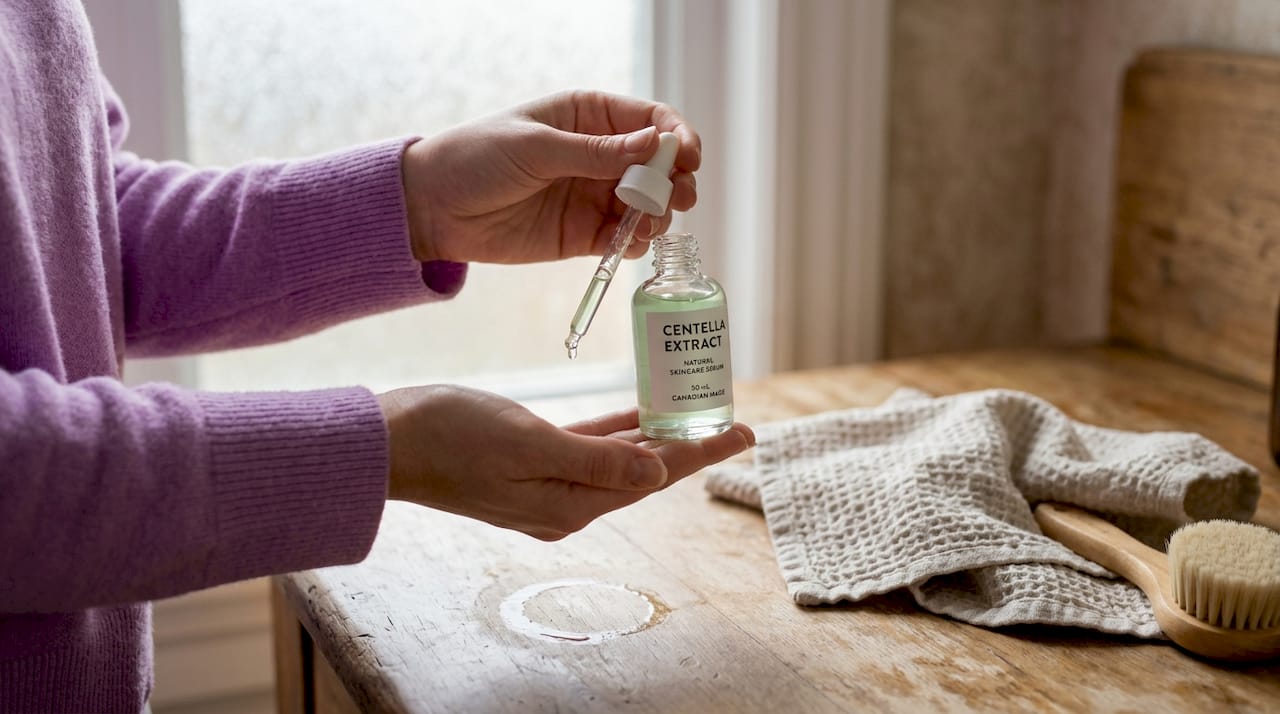
Centella works by stimulating collagen synthesis and reducing inflammatory markers, making it excellent for post-reaction recovery, eczema-prone skin, and general redness. You’ll find it listed as “Centella asiatica extract,” “cica,” or “Gotu kola extract” on labels. The active compounds, asiaticoside and madecassoside, are responsible for most of its skin-calming action.
This is one ingredient worth seeking out if you regularly deal with redness or skin sensitivity. Explore why botanicals soothe sensitive skin to understand the broader evidence for plant-based actives.
💧 Ceramide-mimicking oils: Squalane, sunflower, and camellia
Your skin barrier functions like a “brick and mortar” structure, where skin cells are the bricks and lipids (oils and fats) are the mortar holding them together. When that mortar is depleted, moisture escapes and irritants enter. That’s where barrier-restoring oils come in.
Squalane and natural oils help strengthen the skin barrier and nourish without clogging pores. Squalane, derived from olive or sugarcane, closely mimics the skin’s natural sebum, making it exceptionally well tolerated. Sunflower oil is rich in linoleic acid, a fatty acid that sensitive and acne-prone skin often lacks. Camellia oil is lightweight, high in oleic acid, and absorbs smoothly without a greasy finish.
- ✅ Squalane: Best for all skin types, including oily and acne-prone; non-comedogenic; stabilises easily
- ✅ Sunflower oil: High in linoleic acid; helps restore barrier function and reduce inflammation
- ✅ Camellia oil: Rich in antioxidants; silky texture; excellent for dry or mature sensitive skin
💦 Hyaluronic acid and glycerin
Hyaluronic acid and glycerin hydrate at low concentrations and are widely tolerated by virtually all skin types, including those with sensitivities. These are humectants, meaning they draw water into the skin and hold it there.
Hyaluronic acid holds up to 1,000 times its weight in water and works within the upper layers of skin to plump and smooth. Glycerin, a simpler molecule, pulls moisture from the surrounding air into the skin’s surface. Together, they provide lightweight hydration without the heaviness of occlusives. You can learn more about why moisture retention is foundational at skin hydration essentials.
☀️ Zinc oxide (mineral SPF)
Mineral sunscreens like zinc oxide provide gentle UV protection that sits on top of the skin rather than penetrating it, making it significantly less likely to trigger irritation. Chemical SPF filters like oxybenzone or avobenzone can sting, especially around the eyes or on inflamed skin.
Zinc oxide also has mild anti-inflammatory properties and is used in diaper rash creams precisely because it’s so gentle on reactive skin. For everyday sensitive skin sun protection, a zinc oxide formulation at 15 to 20 percent provides broad-spectrum coverage without the sting.
“The most effective skincare routine for sensitive skin isn’t the most complex one. It’s the one your skin can tolerate daily, built around a small number of ingredients with genuine research behind them.” — ZenChemy Lab
Natural vs. synthetic: What shows up in real results?
Each natural ingredient offers unique strengths, but how do they stack up against modern, lab-produced actives? This is a question worth answering honestly, because both camps have real merits and real limitations.
The most commonly discussed synthetic actives for sensitive skin are ceramides. Ceramide-containing moisturisers often outperform naturals in clinical barrier repair benchmarks, but their effectiveness depends significantly on formulation quality and ceramide ratio. Ceramides are lipids naturally found in your skin barrier. When replicated in the lab, they can be delivered at precise, measurable concentrations.
Naturals, on the other hand, are measured by SCORAD and EASI benchmarks (clinical scoring tools for skin conditions like eczema) and TEWL reduction rates. They consistently excel in tolerability and ingredient purity, two factors that matter enormously when your skin is reactive.
| Criterion | Natural ingredients | Synthetic actives |
|---|---|---|
| Tolerability | ✅ Generally very high | ⚠️ Varies by formulation |
| Purity control | ✅ Easier to verify | ⚠️ Depends on manufacturer |
| Barrier repair speed | ⚠️ Gradual but consistent | ✅ Can be faster at clinical doses |
| Irritation risk | ✅ Low when properly sourced | ⚠️ Some actives sensitise over time |
| Research depth | ⚠️ Growing but smaller base | ✅ Extensive clinical literature |
| Formulation flexibility | ✅ High for artisanal makers | ✅ High for pharmaceutical labs |
The important takeaway is that natural versus synthetic skincare isn’t a competition with a clear winner. Context matters enormously. An organic plant extract in a poorly designed formula won’t outperform a well-formulated synthetic serum. Ingredient lists alone don’t tell the whole story. Formulation, concentration, delivery method, and how ingredients interact with each other all shape what your skin actually experiences.
If you’re working on a compromised or sensitised skin barrier, the guide on repairing the skin barrier naturally offers a useful starting framework for rebuilding from the foundation up.
Quick comparison: Ingredient benefits for sensitive skin
To help you match the right ingredient to your unique needs, here’s a quick reference and expert scenario advice.
| Ingredient | Primary benefit | Best for | Tolerability | Bonus tip |
|---|---|---|---|---|
| Centella asiatica | Calms redness and inflammation | Reactive, post-irritation skin | ✅ Excellent | Look for “cica” on Korean skincare labels |
| Squalane | Barrier repair and moisture sealing | All types, especially oily-sensitive | ✅ Excellent | Apply on slightly damp skin for better absorption |
| Hyaluronic acid | Deep hydration, plumping | Dry, dehydrated, or flaky skin | ✅ Excellent | Layer under a moisturiser to lock in hydration |
| Glycerin | Surface moisture retention | All types, especially combination | ✅ Excellent | Works best in humid climates |
| Zinc oxide | UV protection and mild calming | Sun-sensitive, rosacea-prone skin | ✅ Excellent | Choose micronised for lighter texture |
TEWL reduction, hydration improvements, and dermatologist consensus confirm that these five ingredients consistently perform well across different sensitive skin presentations.
Scenario guidance based on your primary concern:
- 🔴 Persistent redness or irritation: Start with Centella asiatica. Add squalane to reinforce the barrier once redness is reduced.
- 💧 Tightness and dryness: Layer hyaluronic acid first, seal with a glycerin-rich moisturiser, and follow with a barrier oil.
- ☀️ Sun sensitivity or rosacea: Make zinc oxide SPF your daily non-negotiable. It protects while mildly calming inflammation.
- 🌿 Post-breakout sensitivity: Sunflower oil provides linoleic acid to help regulate sebum and soothe healing skin without triggering new breakouts.
- 🌡️ Reactive skin after using strong actives: Pause the actives, reach for Centella, and support your skin hydration evidence with consistent humectant use.
A fresh perspective on ingredient purity and real-world skin results
Here’s the part that doesn’t always make it into ingredient guides: purity obsession can become its own form of skin sabotage.
We see it often. Someone with sensitive skin methodically assembles a lineup of the purest, most natural ingredients available, each one carefully researched and thoughtfully sourced. Yet their skin is still reacting. Why? Because ingredient purity is only one piece of the puzzle. Formulation quality, routine structure, and consistency all determine whether pure ingredients actually deliver results.
A single, high-quality ingredient used correctly and consistently will outperform a dozen pure actives layered haphazardly. There’s a temptation to keep adding, keep optimising, keep swapping. But for sensitive skin, less is almost always more productive.
There’s also a broader risk in pursuing “natural” above all else. Essential oils, for instance, are 100 percent natural and also among the most common contact sensitisers for reactive skin. “Natural” and “safe for sensitive skin” are not synonyms. Evidence-based choices grounded in research will always serve you better than clean-label marketing.
The real game-changers for sensitive skin are three things: quality formulations, simple routines, and consistency. Introducing one new ingredient at a time, patch testing faithfully, and giving each addition at least four to six weeks to show results is what actually creates clear, calm skin over time. Understanding natural ingredient purity insights helps you distinguish genuine quality from clever packaging. Trust the evidence. Keep it simple. Give it time.
Explore natural, artisanal skincare for sensitive skin
Ready to deepen your sensitive skin care journey? There’s a whole world of carefully crafted, evidence-informed natural skincare waiting for you, built around the very ingredients this guide has covered.

At ZenChemy Lab, we believe skincare should feel like a ritual, not a gamble. Our artisanal formulations are built around gentle, purposeful ingredients, with no unnecessary fillers and no synthetic fragrances. Whether you’re building your first gentle routine or refining one that isn’t quite working, our natural skincare routine tips offer clear, practical guidance grounded in skin science. Curious about what’s actually behind the natural skincare movement? Explore the science behind natural skincare. And when you’re ready to discover products that honour your skin’s sensitivity, browse our curated top botanical skincare options for formulations your skin will genuinely thank you for.
Frequently asked questions
Which ingredient is best for calming redness in sensitive skin?
Centella asiatica is one of the most effective botanicals for calming redness and irritation in sensitive skin. Centella asiatica calms inflammation and actively supports hydration in reactive skin.
Can you use oils on very sensitive or acne-prone skin?
Yes, when chosen carefully. Squalane and natural oils mimic sebum and nourish without clogging pores, making lightweight options like squalane and sunflower oil well suited even for acne-prone skin types.
Is mineral sunscreen really better for sensitive skin than chemical SPF?
Generally, yes. Mineral sunscreens provide low-irritation UV protection and prevent barrier damage, making zinc oxide a preferred choice for reactive or rosacea-prone skin.
How do hyaluronic acid and glycerin differ for sensitive skin?
Hyaluronic acid holds moisture below the skin’s surface, while glycerin draws water in from the surrounding air. Both hydrate at low concentrations and are safe and well tolerated across all sensitive skin types, though they complement each other best when used together.
Recommended
- Sensitive skin: Why natural solutions matter for purity – ZenChemy Lab
- Top natural body care ingredients for radiant skin 2026 – ZenChemy Lab
- Why botanicals soothe sensitive skin: Evidence-based benefits – ZenChemy Lab
- Natural Deodorant – Aluminum-Free & Safe for Sensitive Skin. Formulated & produced in Canada – ZenChemy Lab