

TL;DR:
- True natural skincare ingredients are minimally processed plant and mineral products with proven benefits.
- Synthetic chemicals like parabens and phthalates are linked to hormone disruption and health risks.
- Clinical research shows natural actives can effectively treat skin concerns such as sebum, inflammation, and hyperpigmentation.
Many people assume that “natural” on a skincare label is just clever marketing. The truth is more interesting. True natural ingredients, sourced from plants and minerals with minimal processing, carry genuine science-backed advantages for your skin and your health. Synthetic chemicals like parabens, phthalates, and PFAS found in conventional products are linked to hormone disruption and skin irritation, making the case for purity far more than a trend. This guide walks you through what makes an ingredient truly natural, why it matters for your safety, what clinical research confirms, and how to build a routine grounded in real, radiant results.
Table of Contents
- What makes an ingredient ‘natural’?
- Why natural ingredients are safer for your skin
- Science-backed results: What research says about natural actives
- Applying natural ingredients in your skincare routine
- The truth most brands won’t admit about natural ingredients
- Explore natural skincare crafted for purity and real results
- Frequently asked questions
Key Takeaways
| Point | Details |
|---|---|
| Clearer ingredient choices | Understanding ‘natural’ helps you choose products that align with your health values. |
| Science-backed benefits | Clinical trials show that natural actives can visibly improve various skin concerns. |
| Reduced exposure to chemicals | Natural skincare minimizes contact with hormone disruptors and common irritants. |
| Not risk-free for all | Patch testing is essential, as even natural products can cause reactions in some people. |
| Transparency is key | Checking labels and certifications ensures the purity and effectiveness of what you use. |
What makes an ingredient ‘natural’?
Now that you understand the significance of choosing true natural options, let’s clarify exactly what qualifies as ‘natural’ and what doesn’t.
A natural skincare ingredient is one derived directly from a plant, mineral, or animal source and processed using only gentle, physical methods such as cold-pressing, steam distillation, or simple drying. The goal is to preserve the ingredient’s original chemistry. Think of shea butter pressed from the shea nut, or rose hip oil extracted from the fruit of the rose plant. These are ingredients your skin recognises.
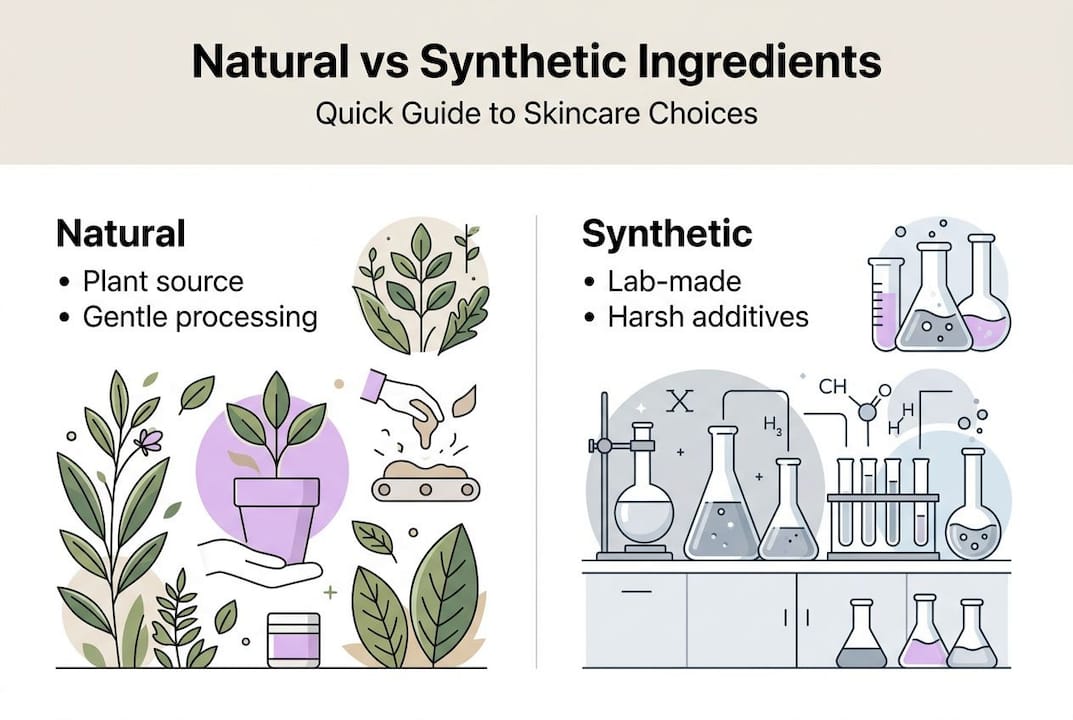
Synthetic ingredients, by contrast, are created or significantly altered through chemical reactions in a laboratory. That doesn’t automatically make them harmful, but it does mean they introduce compounds your body has not evolved alongside. The concern is not complexity; it’s the specific chemicals involved.
Synthetic chemicals commonly found in conventional skincare to watch for:
- ❌ Parabens (methylparaben, propylparaben): preservatives linked to hormone interference
- ❌ Phthalates: plasticisers used in fragrance, associated with reproductive concerns
- ❌ PFAS (per- and polyfluoroalkyl substances): persistent chemicals tied to cancer risk
- ❌ Synthetic fragrances: catch-all terms that can hide dozens of undisclosed compounds
These harmful synthetic chemicals are routinely found in mainstream beauty products, which is precisely why label literacy matters.
| Feature | Natural ingredients | Synthetic ingredients |
|---|---|---|
| Source | Plants, minerals, botanicals | Lab-created or chemically altered |
| Processing | Minimal, physical methods | Chemical reactions, industrial processes |
| Health concerns | Generally low; rare sensitivities | Potential hormone disruption, irritation |
| Regulatory standard | Varies; certifications help | Regulated but not always restricted |
| Recognisability | Familiar botanical names | Complex chemical nomenclature |
Reading ingredient labels is your first line of defence. Look for recognisable botanical names like Butyrospermum parkii (shea butter) or Rosa canina (rose hip). If the list reads like a chemistry exam, that’s worth questioning. Exploring artisanal skincare benefits can also help you understand what thoughtful formulation looks like in practice. A strong natural skincare routine begins with knowing exactly what you’re applying. For a deeper look at how these two worlds compare, the science behind natural vs synthetic skincare offers valuable context.
Why natural ingredients are safer for your skin
Defining ‘natural’ is only the beginning. Understanding why it matters for your health and comfort is the next step.
Your skin is not a barrier that blocks everything. It absorbs. Studies consistently show that compounds applied topically can enter the bloodstream, which is why the chemistry of your skincare products genuinely matters. Synthetic additives in conventional formulas carry a growing body of concern.
Health risks linked to common synthetic skincare additives:
- 🔴 Endocrine disruption: parabens mimic oestrogen, potentially interfering with hormonal balance
- 🔴 Increased cancer risk: PFAS exposure is associated with elevated breast cancer risk
- 🔴 Reproductive issues: phthalates are classified as reproductive toxicants in several jurisdictions
- 🔴 Skin irritation and sensitisation: synthetic fragrance is the leading cause of contact dermatitis
📊 Statistic callout: Parabens, phthalates, and PFAS in conventional cosmetics are linked to endocrine disruption, hormone interference, increased cancer risk, reproductive issues, and skin irritation, making ingredient transparency a genuine health priority.
Natural formulations sidestep these concerns by relying on ingredients with long histories of safe use. For those with sensitive or allergy-prone skin, this is especially meaningful. Fewer synthetic additives means fewer triggers. Botanicals like calendula, oat extract, and chamomile have well-documented soothing properties without the chemical baggage. If you’re navigating reactive skin, exploring sensitive skin natural care is a practical next step.
Certifications add another layer of confidence. Look for EcoCert, COSMOS Organic, or NSF/ANSI 305 (the Canadian standard for personal care products containing organic ingredients). These third-party standards require verified sourcing and restrict synthetic additives, giving you more than just a brand’s word.
Understanding the risks of synthetic beauty ingredients helps you make informed choices rather than reactive ones.
Pro Tip: Even natural products can cause reactions. Always patch-test a new formula on your inner wrist for 24 hours before applying it to your face. Plant-based actives like essential oils and fruit acids are potent and can still irritate certain skin types.
Science-backed results: What research says about natural actives
With safety established, explore what the science reveals about the actual effectiveness of natural skincare ingredients.
Natural doesn’t mean mild or ineffective. Recent clinical research shows that specific plant-derived actives produce measurable, statistically significant results on real skin concerns.
Four natural actives with strong clinical support:
- Opuntia ficus-indica (prickly pear cactus) extract → reduces sebum, inflammation, and pore size
- Indigo naturalis oil extract (Lindioil) → soothes atopic dermatitis with pharmaceutical-level results
- Ursolic acid from apple oil → reduces UV spots, brown spots, and melanin index
- Calendula officinalis extract → accelerates wound healing and reduces inflammatory markers
| Natural active | Condition addressed | Clinical result |
|---|---|---|
| Opuntia ficus-indica | Oily, acne-prone skin | Sebum reduced by 21.1%, pore size by 9.6% |
| Indigo naturalis (Lindioil) | Atopic dermatitis | Comparable to pharmaceutical treatments, fewer side effects |
| Ursolic acid (apple oil) | Hyperpigmentation | Reduces UV spots and melanin index significantly |
| Calendula extract | Irritation, wound healing | Measurable reduction in inflammatory markers |
“Indigo naturalis oil extract reduces atopic dermatitis severity comparably to pharmaceutical treatments, with a more favourable side-effect profile.”
The Opuntia ficus-indica data is particularly compelling for anyone managing oily or breakout-prone skin. A 21.1% reduction in sebum and a 9.6% decrease in pore size from a plant extract is not a trivial outcome. That’s the kind of result typically associated with pharmaceutical-grade actives.

For those dealing with hyperpigmentation, ursolic acid from apple oil offers a gentler alternative to aggressive brightening agents like hydroquinone, with clinical evidence supporting its efficacy.
Natural actives also tend to offer better tolerability over time, meaning fewer flare-ups and less sensitisation with continued use. If you’re building a natural body care routine, these actives are worth prioritising. For those with reactive skin, the evidence supporting natural solutions for sensitive skin is growing steadily.
Applying natural ingredients in your skincare routine
Scientific evidence is promising, but how do you actually use natural ingredients to achieve healthy, radiant skin? Here’s how to make the switch.
How to transition to a natural skincare routine:
- Start with one product. Swap your cleanser first. It’s the most frequent point of contact and a low-risk place to begin. Look at types of natural soaps to find the right fit for your skin type.
- Vet the ingredient list. Short lists are usually better. Recognisable botanical names, cold-pressed oils, and plant extracts are good signs. Avoid anything with “fragrance” listed without further detail.
- Check for certifications. EcoCert, COSMOS, or NSF/ANSI 305 labels confirm third-party verification. Review handmade cosmetic standards to understand what these mean in practice.
- Introduce one product at a time. Wait two weeks before adding something new. This makes it easy to identify what’s working and what isn’t.
- Journal your skin’s response. Note texture, hydration, breakouts, and sensitivity. Your skin tells a story if you pay attention.
Greenwashing is real and widespread. Terms like “natural,” “clean,” and “botanical” carry no legal definition in most markets, including Canada. A product can claim to be natural while still containing synthetic preservatives or fragrance compounds. Your best protection is reading the full INCI (International Nomenclature of Cosmetic Ingredients) list, not just the front-of-pack claims.
Pro Tip: Prioritise products with short ingredient lists and recognisable names. If a brand is transparent about sourcing and processing, that’s a strong signal of genuine commitment to purity. Minimising exposure to hormone-disrupting synthetics is one of the most practical reasons to make this switch.
Exploring organic body care essentials can help you build a complete, cohesive routine that supports your skin from head to toe.
The truth most brands won’t admit about natural ingredients
Here’s something most natural skincare brands won’t say out loud: natural does not mean universally safe or suitable for everyone. Essential oils, fruit acids, and even botanical extracts can cause genuine reactions in certain individuals. The idea that “it comes from nature so it must be gentle” is a simplification that can lead to real skin problems.
The word “natural” is also not regulated in Canada or most international markets. Any brand can use it freely, regardless of what’s actually inside the formula. This is why understanding cosmetic standards matters more than trusting label language alone.
The brands worth trusting are the ones that share their full ingredient lists, explain their sourcing, and back their formulations with evidence rather than aesthetics. Natural skincare at its best is not just an ethos; it’s a commitment to transparency, testing, and genuine skin health. Trust your own experience alongside the science, and you’ll make far better choices than any marketing claim can guide you toward.
Explore natural skincare crafted for purity and real results
Ready to prioritise purity, skin health, and transparency? Here’s where to find curated essentials and tips.
Building a natural routine doesn’t have to be overwhelming. At ZenChemy Lab, we’ve done the formulation work so you don’t have to second-guess every ingredient. Start with our natural skincare routine tips to map out a regimen that fits your skin type and lifestyle.

For those ready to experience the difference that thoughtful craftsmanship makes, our artisan soap collection is handmade in Canada using botanicals with proven skin benefits. Every bar is formulated with purity in mind, no synthetic shortcuts. Explore the full range of ZenChemy Lab natural products and find what your skin has been waiting for.
Frequently asked questions
Are natural skincare ingredients always better for sensitive skin?
Many natural ingredients are gentle and clinically reduce inflammation, but some plant-based actives can still cause irritation or allergic reactions. Always patch-test any new product before full application.
How can I tell if a product’s ingredients are truly natural?
Look for short ingredient lists with recognisable botanical names, verified certifications like COSMOS or EcoCert, and brands that are transparent about sourcing. Verifying ingredient labels and choosing certified products is the most reliable approach.
Do natural skincare ingredients have proven benefits?
Yes. Studies confirm that natural actives like Opuntia ficus-indica, indigo naturalis, and ursolic acid can measurably reduce sebum, inflammation, hyperpigmentation, and soothe chronic skin conditions with strong clinical results.
Can natural ingredients help with specific issues like acne or pigmentation?
Absolutely. Opuntia ficus-indica reduces sebum and inflammation, while ursolic acid from apple oil decreases UV-related pigmentation and melanin index in clinical trials, offering targeted, evidence-based results.
Is ‘natural’ a regulated term in Canadian skincare?
No. In Canada, “natural” has no legal definition in cosmetics labelling, which means any brand can use it freely. Relying on third-party certifications and reading the full INCI ingredient list gives you far more reliable information than front-of-pack claims.
Recommended
- Sensitive skin: Why natural solutions matter for purity – ZenChemy Lab
- Handmade cosmetic standards: What safe, pure really means – ZenChemy Lab
- Top 5 benefits of artisanal skincare for radiant skin – ZenChemy Lab
- Natural vs Synthetic Skincare: What Science Actually Says – ZenChemy Lab
- Raw Hair Explained: Purity and Lasting Beauty – Gaurash Beauty Supply


4 Comments