
TL;DR:
- Sustainable self-care emphasizes low-waste routines tailored to real life, not perfection.
- Building habits that anchor to existing routines and using durable products support lasting practices.
What sustainable self-care actually means
Sustainable self-care is a low-waste, low-friction wellness routine that fits your real life, not an idealised version of it. It is an ongoing relationship with wellbeing rather than a reactive response to burnout or a shopping list of expensive products.
The dual focus matters: your personal health and the health of the planet are not competing priorities. Choosing eco-conscious product practices supports both simultaneously. Zenchemylab’s transparent natural body care process is a clear example of this, showing exactly which raw botanical ingredients go into each product and why.
Core components to keep in mind:
- ✅ Habit sustainability over perfection
- ✅ Waste reduction through fewer, more durable products
- ✅ Authentic brand transparency and verified certifications
- ✅ Routines that flex on difficult days rather than breaking
Table of Contents
- How to build sustainable self-care habits that last
- Where to source local and seasonal ingredients
- Does sustainable self-care cost more?
- Zenchemylab: natural body care you can trust
- Key takeaways
How to build sustainable self-care habits that last
Sustainable self-care is a design problem, not a willpower one. Behavioural scientists consistently show that reducing environmental friction makes the healthy choice the automatic one. Anchor new habits to what you already do: a one-minute breathing exercise when the kettle boils, a moisturiser applied right after brushing your teeth.
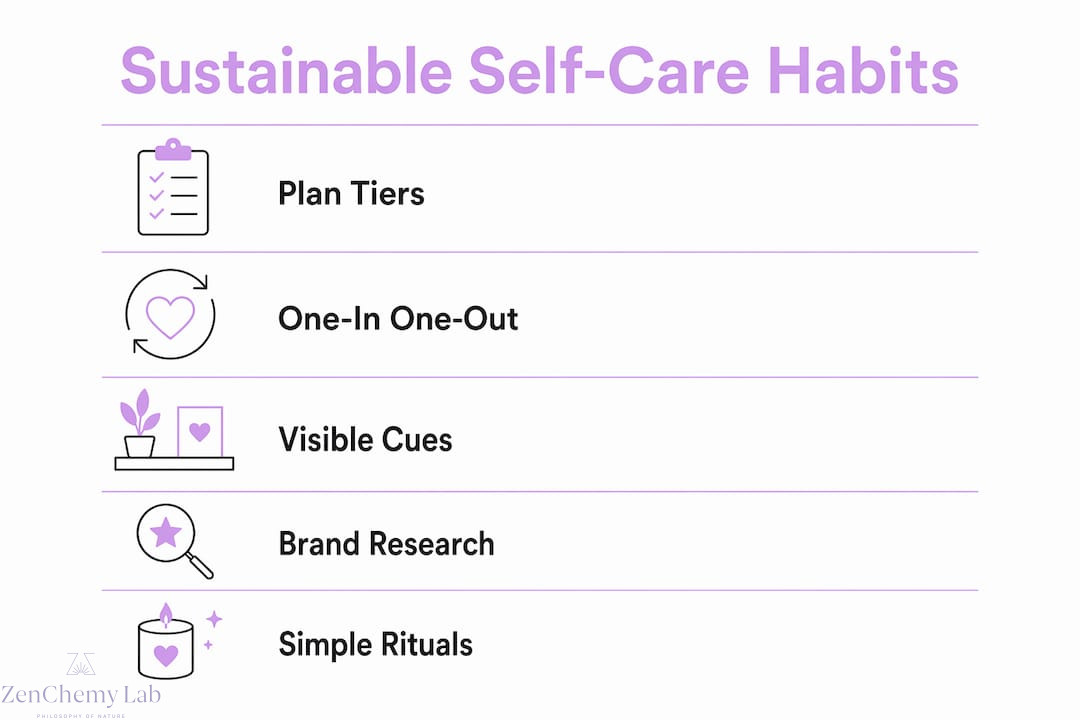
Build three tiers from the start: a full version, a medium version, and a minimum viable routine for hard days. All three count. The thread stays intact even when life gets demanding.
For products, apply the one-in, one-out rule: finish existing products before adding new ones. This prevents clutter, reduces packaging waste, and keeps decision fatigue low. Fewer, durable and reusable products save money and reduce environmental load over time.

Pro Tip: Place your morning essentials, water bottle, cleanser, and moisturiser, in one visible spot. Visible cues remove the decision step entirely and make the routine feel effortless.
When selecting brands, look beyond “natural” labels. Authentic sustainability means a company publishes ingredient origins, manufacturing details, and environmental standards. Vague green claims are a signal to dig deeper. Check for certifications such as COSMOS Organic, EWG Verified, or Leaping Bunny. Explore eco luxe self-care options that meet both luxury and environmental standards.
Simple natural self-care rituals worth trying: a two-minute facial oil massage with cold-pressed jojoba, a warm oat bath soak, or a DIY sugar scrub using local honey and coconut oil. These require minimal packaging and use ingredients you likely already own.
Where to source local and seasonal ingredients
Canadian farmers’ markets, available from May through October in most provinces, are the most direct route to seasonal botanicals. Look for dried lavender, calendula, and chamomile from Ontario and British Columbia growers. These ingredients work beautifully in DIY face steams, bath soaks, and infused oils.
Buying locally also cuts the carbon footprint tied to long-distance ingredient shipping. Seasonal sourcing aligns your routine with your body’s natural rhythms: richer, warming oils like shea and cocoa butter suit Canadian winters, while lighter carriers like grapeseed oil suit warmer months. Check out morning routine essentials that pair well with seasonal adjustments.
Does sustainable self-care cost more?
Not over time. The upfront cost of a safety razor, a refillable soap dispenser, or a concentrated botanical cleanser can feel higher, but these items replace dozens of disposable purchases across a year. Starting with what you already own, then replacing only what runs out, keeps costs manageable and prevents the common trap of buying “green” replacements for products that still have life in them.
Prioritise high-frequency items first: the products you use daily deliver the greatest savings and waste reduction when switched to durable alternatives. A natural skincare routine built around multi-use products, such as a single botanical body cream that works for both face and body, simplifies your shelf and your budget.
Zenchemylab: natural body care you can trust

Zenchemylab crafts artisanal soaps and botanical body care using traceable, raw natural ingredients. Every product is made through a transparent saponification process, so you know exactly what touches your skin. No synthetic fillers, no vague “fragrance” listings. For anyone building a genuinely low-waste routine, Zenchemylab’s handmade formulations replace multiple single-use products with one durable, purposeful bar or cream. Browse the full natural skin collection and find the products that fit your routine today.
Key takeaways
Sustainable self-care works best when it is designed for your real life, not an idealised one, with fewer products, anchored habits, and transparent ingredient sourcing.
| Point | Details |
|---|---|
| Design over willpower | Anchor habits to existing routines and reduce friction so healthy choices happen automatically. |
| Tiered routines | Build full, medium, and minimum versions so your practice survives difficult days without breaking. |
| One-in, one-out rule | Finish existing products before buying new ones to cut waste and prevent decision fatigue. |
| Seasonal sourcing | Use local Canadian botanicals in season for lower carbon impact and fresher ingredients. |
| Zenchemylab | Offers transparent, artisanal natural body care that replaces multiple disposable products with one purposeful formulation. |