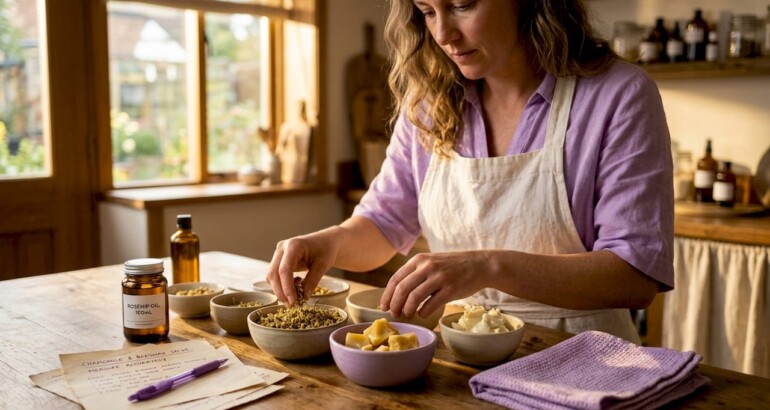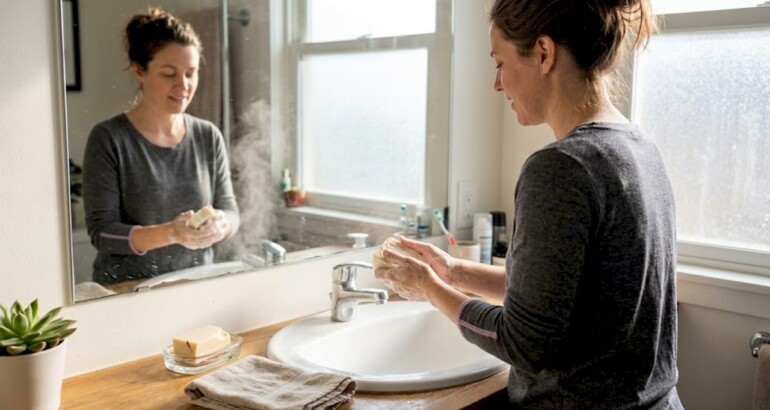
Mineral clays are among the most effective natural ingredients you can add to soap, and the science behind why is straightforward. Their primary mechanism is adsorption: the clay’s charged surface physically attracts and binds excess sebum, dirt, and impurities, then carries them away when you rinse. This is not the same as harsh detergent stripping. Clay cleanses without dismantling the skin’s natural lipid barrier, which is the “brick and mortar” structure that keeps moisture in and irritants out.
The role of mineral clays in soap goes well beyond simple cleansing. Here is what they actually deliver:
- ✅ Gentle, non-stripping cleansing through physical adsorption of oils and impurities
- ✅ Oil control and sebum regulation without over-drying
- ✅ Improved soap texture — a silkier, more cushioned lather
- ✅ Skin conditioning via trace minerals like silica and alumina deposited on the skin surface
- ✅ Enhanced lather slip, making clay soaps particularly effective for shaving
- ✅ Natural fragrance retention, as clay particles help anchor essential oils during curing
The three clays you will encounter most in natural soap are kaolin, bentonite, and Fuller’s earth. Each has a distinct mineral profile and ideal skin type, with differences in absorption strength documented in research. Understanding those differences is what separates a well-formulated clay soap from one that simply looks earthy on a shelf.
Table of Contents
- What types of mineral clays are used in soapmaking?
- How do clay-infused soaps actually benefit your skin?
- How to choose the right mineral clay soap for your skin type
- What the science says about clay chemistry and soap formulation
- Zenchemylab’s natural clay soaps for every skin type
- Key takeaways
What types of mineral clays are used in soapmaking?
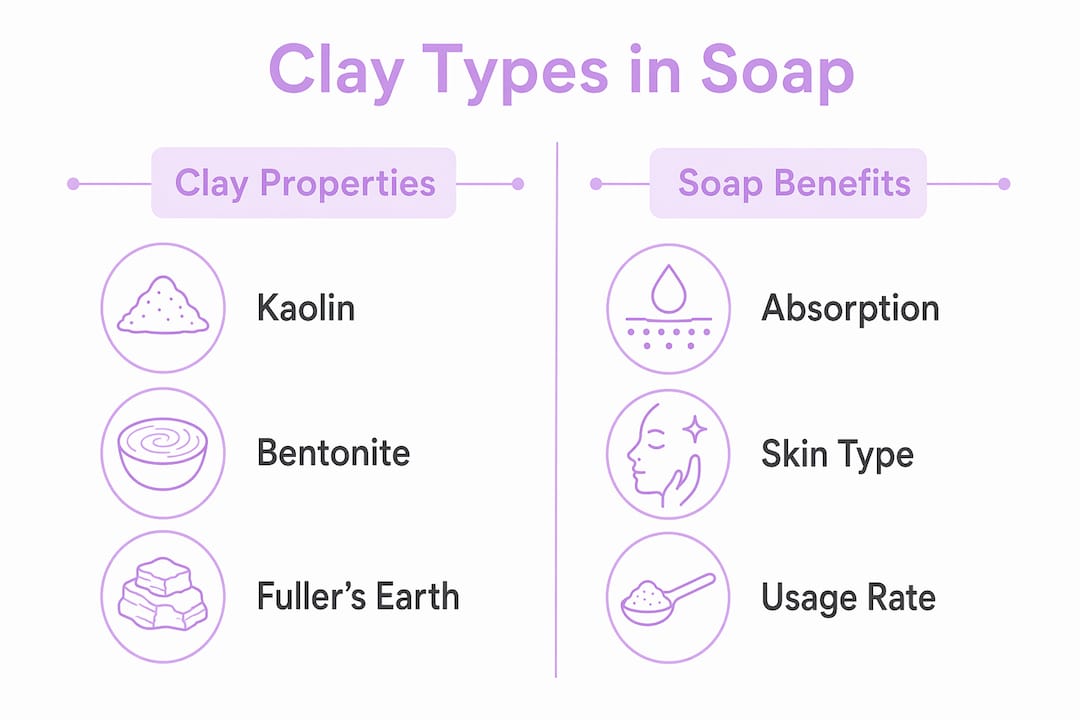
Not all clays perform the same way in a bar of soap. Their behaviour depends on mineralogy, particle size, and ion-exchange capacity — not on colour or marketing language. Clay performance is driven by whether the mineral belongs to the kaolinite group or the smectite group, a distinction that shapes everything from how much oil it absorbs to how it affects your soap batter.
- Kaolin: The gentlest of the group. Kaolin’s fine particle size of 1–10 micrometres and layered crystalline structure give it a large surface area for oil adsorption without any gritty feel. Its low cation-exchange capacity means it absorbs modestly, making it ideal for dry and sensitive skin. It is also the clay most widely reviewed for cosmetic safety.
- Bentonite: A smectite-group clay of volcanic origin with a polycationic structure that allows it to absorb negatively charged toxins and impurities far more aggressively than kaolin. It contains silica and alumina, both of which contribute to skin health. Bentonite suits oily and acne-prone skin best.
- Fuller’s earth: A highly absorbent clay historically used in textile and skin cleansing. Its strong oil-pulling capacity makes it effective for detoxifying and deep-cleansing formulations, though it can be drying if overused.
| Clay | Absorption strength | Typical soap usage rate | Origin | Best skin type |
|---|---|---|---|---|
| Kaolin | Low to moderate | 1–5% | Sedimentary deposits | Dry, sensitive, normal |
| Bentonite | High | 1–3% | Volcanic ash | Oily, acne-prone, combination |
| Fuller’s earth | High | 1–3% | Sedimentary/hydrothermal | Oily, congested, detox-focused |
Particle size matters as much as clay type. Kaolin’s fine grains sit smoothly against skin, while coarser clays can feel slightly more textured. When you are choosing a clay for a handmade soap formulation, matching the clay’s absorption strength to the intended skin type is the single most important decision.
How do clay-infused soaps actually benefit your skin?
The skin benefits of clay in soap are real, but they are also specific. Clay does not chemically extract toxins from deep tissue. Its cleansing effect is mechanical surface absorption: it lifts sebum, dead cells, and environmental residue from the skin’s surface, then rinses clean. That is exactly what skin needs from a daily cleanser.
Here is how those benefits break down by effect:
- Gentle exfoliation: Clay particles provide mild physical exfoliation, smoothing skin texture without microtears.
- Sebum regulation: Adsorption of excess oil reduces shine and helps keep pores from becoming congested.
- Antimicrobial action: Kaolin formulated at sufficient concentrations shows bactericidal properties against Staphylococcus aureus and Escherichia coli, two common skin pathogens.
- Mineral delivery: Bentonite contributes silica and alumina to the skin surface, supporting barrier integrity.
- Pore appearance: Regular use of absorbent clays can reduce the look of enlarged pores by keeping them clear of excess sebum.
- Soothing effect: Kaolin in particular is well-tolerated by reactive skin, helping calm redness without aggressive chemical action.
Skin type shapes which benefit you will feel most. Oily skin notices oil control within days. Sensitive skin responds to kaolin’s gentleness without the tightness that stronger clays can cause. Dry skin benefits from clay’s mineral content and mild exfoliation, provided the soap formula includes enough conditioning oils to offset any moisture loss.
Pro Tip: Keep clay concentration between 1% and 5% by weight in your soap formula. Below 1%, the effect is negligible. Above 5%, you risk over-drying even resilient skin types, and the soap batter becomes harder to work with.
How to choose the right mineral clay soap for your skin type
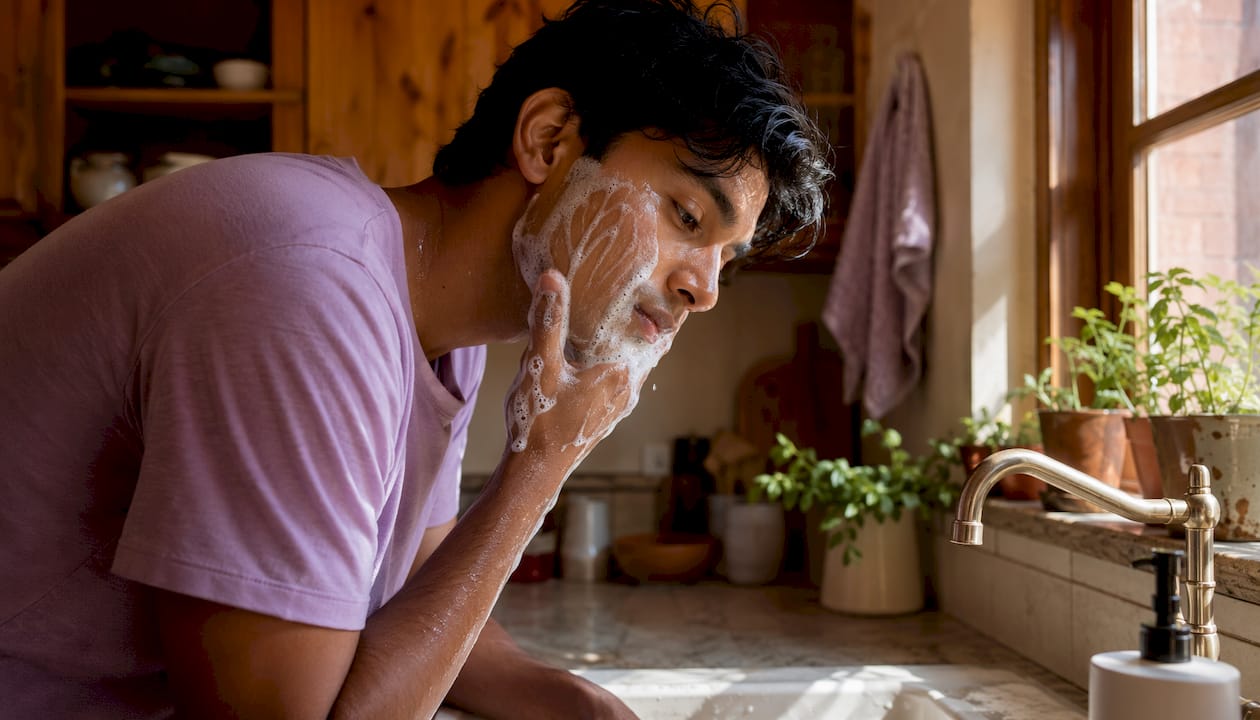
Matching clay to skin type is where the real personalisation happens. The right clay for dry or sensitive skin is kaolin; for oily or acne-prone skin, bentonite or Fuller’s earth delivers the stronger absorption those skin types need.
- Oily skin: Bentonite or Fuller’s earth, used at 2–3% in the formula. Pair with a lightweight oil base like sunflower or grapeseed to avoid a heavy feel.
- Acne-prone skin: Bentonite’s antimicrobial mineral profile and strong adsorption make it the preferred choice. Look for soaps that also include tea tree or neem oil for added support.
- Sensitive skin: Kaolin only. Its low exchange capacity means it cleanses without triggering reactivity. Avoid Fuller’s earth, which can be too stripping.
- Dry skin: Kaolin at the lower end of the usage range (1–2%), combined with moisturising oils like shea butter or avocado oil. Clay and rich lipids together cleanse and condition simultaneously.
- Combination skin: Kaolin works well across the whole face. Some formulators blend a small amount of bentonite into kaolin-dominant bars to address the T-zone without over-drying cheeks.
Patch testing is worth doing before committing to any new clay soap, particularly if your skin is reactive. Apply a small amount to the inner wrist for 24 hours. Redness, itching, or tightness that persists beyond the first rinse suggests the clay concentration or type is not right for you.
Clay soaps compare favourably to other natural soap additives. Activated charcoal is also highly absorbent but lacks clay’s mineral content and can feel harsher on sensitive skin. Botanical powders like turmeric or spirulina add colour and antioxidants but contribute little to oil control. Clay is the only natural additive that simultaneously cleanses, conditions, improves lather, and retains fragrance. You can read more about how these ingredients compare in the context of natural soap benefits.
What the science says about clay chemistry and soap formulation
The chemistry behind clay’s performance in soap comes down to surface charge. Smectite-group clays like bentonite carry a net negative charge across their layered silicate sheets, which attracts positively charged contaminants and oily residues through electrostatic interaction. Kaolinite, by contrast, carries minimal surface charge, which is precisely why it is gentler. Mineralogy, not marketing colour or name, determines how a clay actually performs in a formulation.
Clay also changes the physical properties of soap in ways that go beyond skin feel:
- Lather slip and glide: Mineral clays stabilise lather and add a slip that is especially valued in shaving soaps, where the bar needs to reduce drag across skin.
- Fragrance anchoring: Clay particles bind to volatile essential oil molecules, reducing evaporation during the curing process and extending scent longevity in the finished bar.
- Rheology effects: Adding clay thickens soap batter and can accelerate trace, the point at which oils and lye emulsify into a solid-like consistency.
Formulation technique matters as much as clay selection. Pre-dispersing clay in a small amount of water or oil before adding it to the soap batter prevents visible clumping and ensures even mineral distribution throughout the bar. Skipping this step often results in streaky or gritty soap.
The upper limit for clay concentration is a practical constraint. Above 5–10% by weight, clay rapidly hardens the bar and accelerates trace to the point where intricate swirl designs or layered pours become nearly impossible. Research on bentonite soap confirms this: bars containing 20g of bentonite per batch showed a rapid onset of trace that made moulding difficult, while those at 15–17.5g met all quality standards with a better appearance and more even mineral distribution. The bentonite soap formulations that performed best maintained a pH of 8.7–8.8, foam stability above 70%, and zero free alkali content, all within Indonesian National Standard requirements.
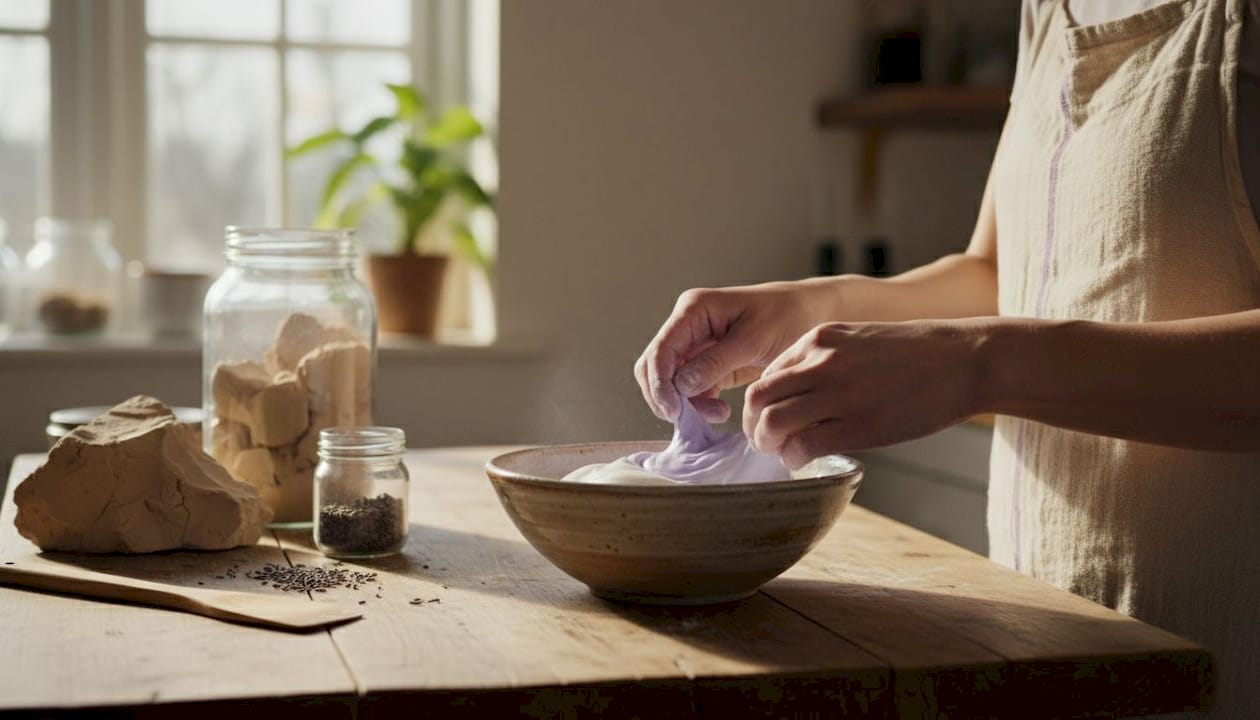
For shaving soaps specifically, the combination of clay’s lather slip and fragrance retention makes it a near-ideal additive. Zenchemylab’s shaving soap formulations draw on exactly these properties to deliver a close, comfortable shave without synthetic slip agents.
Zenchemylab’s natural clay soaps for every skin type
If you have spent time understanding which clay suits your skin, the next step is finding a soap that actually applies that knowledge rather than just listing “clay” on the label.
Zenchemylab formulates its artisanal soaps with specific clay types matched to specific skin needs, using lab-sourced mineral clays at concentrations that deliver real results without over-drying. Every bar starts with raw, natural ingredients and goes through a cold-process saponification method that preserves the clay’s mineral integrity and the conditioning properties of the base oils. There are no synthetic fillers, no harsh surfactants, and no guesswork about what is actually in the formula.
Whether your skin is oily and congested, dry and reactive, or somewhere in between, Zenchemylab’s natural skin collection offers clay-infused options formulated with the same depth of ingredient knowledge covered here. Browse the full range and find the bar your skin has been asking for.
Key takeaways
Mineral clays improve soap through physical adsorption of oils and impurities, while also enhancing lather, fragrance retention, and skin-feel in ways no synthetic additive replicates.
| Point | Details |
|---|---|
| Adsorption is the core mechanism | Clay’s charged surface binds sebum and impurities, removing them without stripping the skin’s lipid barrier. |
| Clay type must match skin type | Kaolin suits dry and sensitive skin; bentonite and Fuller’s earth are better for oily and acne-prone skin. |
| Concentration range matters | Keeping clay between 1–5% delivers skin benefits; above 5–10% accelerates trace and risks over-drying. |
| Mineralogy drives performance | Smectite clays like bentonite absorb far more aggressively than kaolinite, regardless of colour or brand name. |
| Zenchemylab applies this science | Zenchemylab’s cold-process clay soaps use lab-sourced minerals matched to specific skin types for real, formulated results. |