TL;DR:
- Canadian small-batch formulators can replace synthetic preservatives with multifunctional hurdle systems combining glyceryl caprylate, caprylyl glycol, and levulinic acid at specific pH levels. These ingredients, used together and tested via challenge testing, create effective natural preservation in various product types while meeting Health Canada regulations. Proper sourcing, documentation, and pH control are essential for safety, compliance, and product stability.
For Canadian small-batch formulators, the most effective approach is to replace single synthetic preservatives with a multifunctional hurdle-technology system: combine glyceryl caprylate with caprylyl glycol and levulinic acid or sodium levulinate at typical cosmetic use levels, keep your finished product pH between 4.0 and 5.5, and hold the safety documentation Health Canada requires before your first sale.
Three practical starting points to test this week:
- ✅ Leave-on cream or lotion: glyceryl caprylate plus caprylyl glycol at recommended use levels, pH adjusted to an acidic range effective for organic acids, paired with a chelating agent such as phytic acid
- ✅ Rinse-off product (body wash, shampoo bar): levulinic acid plus sodium levulinate system at recommended use levels, pH in the acidic range effective for organic acids; surfactant systems tolerate this pairing well
- ✅ Anhydrous balm or oil serum: glyceryl caprylate alone at typical use levels provides bacteriostatic support; water activity is low enough that a full broad-spectrum system is less critical
Your immediate next step: order 100 g samples of each ingredient, request a Certificate of Analysis (COA) and Safety Data Sheet (SDS) from the supplier, confirm your formulation pH, and book a third-party challenge test before selling.
Table of Contents
- How do the main natural preservative alternatives compare?
- How do you choose the right alternative and vet a supplier?
- What does each natural preservative ingredient actually do?
- Where can you source these ingredients in Canada?
- What does Health Canada require before you sell a handcrafted cosmetic?
- Real-world substitution examples from Canadian small-batch makers
- Key takeaways
- Why Zenchemylab favours multifunctional natural systems
- Zenchemylab’s small-batch natural products and formulation resources
- Primary sources and further reading
How do the main natural preservative alternatives compare?
The table below covers the four most practical building blocks for Canadian small-batch formulators. Natural and multifunctional preservative strategies rely on combining these ingredients rather than using any single one as a complete solution.
| Ingredient / System | Best for | Preservative spectrum | pH dependence | Typical cosmetic use levels | Certification claims | Canadian availability | Documentation |
|---|---|---|---|---|---|---|---|
| Glyceryl caprylate | Leave-on creams, emulsions | Bacteria (gram+), some yeast | Moderate; works pH 4.0–6.5 | 0.5–1.5% | COSMOS/Ecocert-eligible | Distributed via specialty ingredient houses; importable | COA, SDS, TDS |
| Caprylyl glycol | Leave-on and rinse-off; booster | Bacteria, yeast, mould (booster) | Low dependence; broad range | 0.5–1.0% | COSMOS-eligible (check grade) | Available through specialty distributors | COA, SDS |
| Levulinic acid / sodium levulinate | Rinse-off, surfactant systems, emulsions | Bacteria, yeast | High; effective pH 3.5–5.5 | 0.5–1.0% each | COSMOS/Ecocert-eligible (bio-derived) | Importable; some domestic stock | COA, SDS, TDS |
| Lexgard® Natural MB / pentylene glycol (Hydrolite®, Zemea®) | Leave-on, rinse-off; building-block blend | Bacteria (broad); weaker on mould alone | Low-moderate | 0.5–2.0% blend | COSMOS-eligible; plant-derived | Specialty distributors; import from US | COA, SDS, TDS, challenge data |
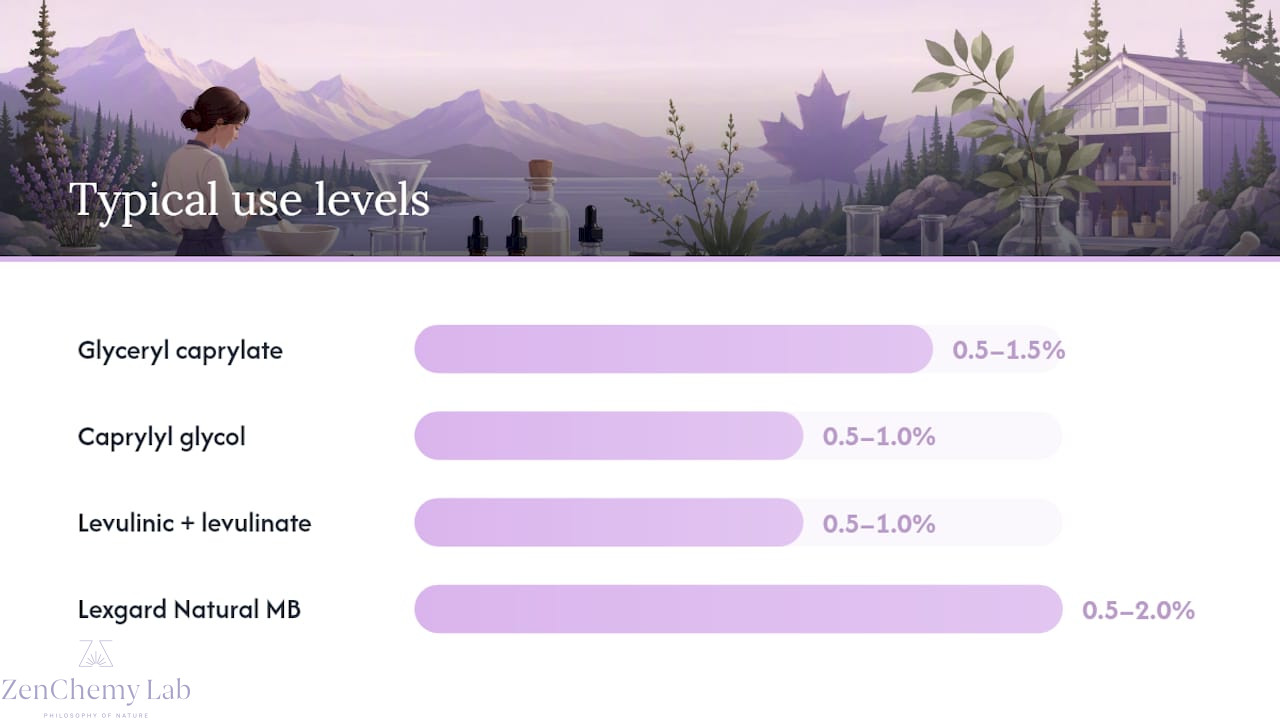
Quick read: glyceryl caprylate is the best starter for a leave-on cream. For a surfactant system, lead with levulinic acid + sodium levulinate. Lexgard® Natural MB works as a building block but typically needs a yeast/mould partner for full-spectrum coverage.
How do you choose the right alternative and vet a supplier?
Start with your product type and target pH. A leave-on face cream sits on skin for hours; a rinse-off body wash contacts skin for seconds. Those two realities demand different use levels and different pH targets.
Supplier due-diligence checklist:
- ☑ COA (Certificate of Analysis) with batch number and test results
- ☑ SDS (Safety Data Sheet) current to GHS standards
- ☑ TDS (Technical Data Sheet) with recommended use levels and pH guidance
- ☑ Preservative challenge test data (ISO 11930 or equivalent) if the supplier claims broad-spectrum activity
- ☑ Certification documentation (COSMOS, Ecocert, NATRUE) if you are making natural or organic claims
- ☑ Minimum order quantity (MOQ) and sample policy for small batches
- ☑ Lead time and cold-chain or storage requirements
Questions to ask every supplier before ordering:
- Can you provide a COA for the specific batch I am purchasing?
- What is the recommended use level and pH range for your grade of this ingredient?
- Do you have third-party challenge test data I can reference?
- Is this ingredient COSMOS- or Ecocert-certified, and can you supply the certificate?
- What is your MOQ and do you offer 100 g or 500 g samples?
- What are the storage and shipping temperature requirements?
Red flags: no COA available, vague “all-natural” claims with no certification paperwork, no microbiological data, and suppliers who cannot confirm the INCI name. Walk away from any supplier who cannot answer questions 1 and 2 above.
What does each natural preservative ingredient actually do?
Understanding how these ingredients function helps you combine them intelligently rather than guessing at ratios.
Glyceryl caprylate is a mono-ester of glycerin and caprylic acid (C8), derived from coconut or palm kernel oil. It acts as a bacteriostatic agent and mild co-emulsifier, disrupting bacterial cell membranes. It performs well in leave-on emulsions at pH 4.0–6.5 and contributes a skin-conditioning feel.
Caprylyl glycol (1,2-octanediol) is a multifunctional humectant and preservative booster. It enhances the activity of other antimicrobials, particularly against gram-negative bacteria and yeast, and is relatively pH-tolerant. At 0.5–1.0%, it rarely causes irritation and blends easily into both water and oil phases.
Levulinic acid and sodium levulinate are bio-derived organic acids (from plant sugars) that work synergistically. Levulinic acid is the active antimicrobial form; sodium levulinate buffers the pH and improves skin compatibility. Together they are effective against bacteria and yeast, but their activity drops sharply above pH 5.5, making pH control non-negotiable.
Zemea® (propanediol) is a 1,3-propanediol derived from corn sugar. It functions primarily as a humectant and solvent, improving texture and ingredient solubility. It is not a standalone preservative but contributes to water activity reduction and can enhance the delivery of active ingredients.
Pentylene glycol (Hydrolite®) is a bio-based 1,2-diol with mild antimicrobial properties against bacteria and yeast. It is frequently used as a preservative booster or as part of a multifunctional system, and it is COSMOS-eligible when sourced from a certified supplier.
Lexgard® Natural MB combines glyceryl caprylate and undecylenic acid in a plant-based blend. Inolex positions it as a building block rather than a complete broad-spectrum preservative, meaning you will typically pair it with a yeast and mould control agent such as sodium levulinate for full protection.
Hurdle technology in practice: no single natural ingredient covers all microbial threats at safe use levels. The strategy is to stack multiple “hurdles” — an organic acid for bacteria, a glycol booster for yeast, pH control, low water activity, and good packaging — so each hurdle lowers the microbial load until the combined effect achieves broad-spectrum protection. A practical starting pair: glyceryl caprylate combined with sodium levulinate and levulinic acid at appropriate use levels, in a leave-on cream at pH carefully controlled in an acidic range effective for preservation.
Pro Tip: Always add your organic acid component to the water phase before emulsification and check the final emulsion pH after cooling to room temperature. pH can shift by 0.3–0.5 units during cooling, which directly affects preservative efficacy.
Where can you source these ingredients in Canada?
Canada has a growing network of specialty ingredient distributors who serve small-batch formulators, though some multifunctionals still require import from US or European suppliers.
Types of suppliers to know:
- Cosmetic advertising, labelling and ingredients – Canada.ca
- Industry guide for the labelling of cosmetics – Canada.ca
- Cosmetic Ingredient Hotlist — Prohibited or restricted ingredients – Canada.ca
- Regulatory information for cosmetics – Canada.ca
- Cosmetic Regulations (C.R.C., c. 869) – Laws-Lois Justice Canada
- The Ultimate Guide to Cosmetic Preservative Selection
- Lexgard® Natural MB – Knowde (Inolex product page)
Practical ordering checklist:
What does Health Canada require before you sell a handcrafted cosmetic?
Health Canada treats natural and synthetic ingredients equally under the Food and Drugs Act and Cosmetic Regulations. “Natural” is not a safety claim on its own.
The Cosmetic Regulations place the responsibility for safety evidence squarely on the manufacturer or importer. You must hold that evidence before your first sale and provide it to Health Canada on request.
Mandatory pre-sale checklist:
- ☑ INCI labelling on the outer label, ingredients listed in descending order of concentration. Botanicals must include genus and species (e.g., Rosa canina fruit oil, not just “rosehip oil”).
- ☑ Cosmetic Notification submitted to Health Canada within 10 days of first sale in Canada.
- ☑ Safety evidence on file: stability data, challenge test results, ingredient safety assessments.
- ☑ Cosmetic Ingredient Hotlist checked for every ingredient, including preservatives and fragrance components.
- ☑ GMP expectations met: documented batch records, clean manufacturing environment, proper storage.
Common pitfalls: omitting the species name for botanicals, listing a preservative without its concentration when the Hotlist requires one, and translating INCI names into French or English common names on the label. The INCI name must appear as-is. Review the regulatory information for cosmetics page for the full notification and GMP guidance.
Real-world substitution examples from Canadian small-batch makers
Two scenarios illustrate how this works in practice for Canadian formulators.
Scenario 1: Face cream, leave-on. A small-batch maker formulating a botanical face cream originally used phenoxyethanol at 1.0%. Switching to glyceryl caprylate with caprylyl glycol and sodium levulinate/levulinic acid at recommended use levels, with pH adjusted to 5.1, produced a system that passed ISO 11930 Category B challenge testing at a Canadian lab. The reformulated cream qualified for COSMOS-eligible ingredient claims, supporting the brand’s clean beauty positioning.
Scenario 2: Shampoo bar, rinse-off. A surfactant-based shampoo bar formulator replaced a synthetic broad-spectrum blend with levulinic acid + sodium levulinate (1.0% each) at pH 4.8. Because rinse-off products have shorter skin contact time and lower water activity in bar form, this simpler two-ingredient system passed challenge testing without additional boosters. The formulator sourced both ingredients from a US specialty distributor with Canadian shipping and received COA and COSMOS certification documents within 48 hours of ordering.
These examples reflect the hurdle-technology principle: match the system complexity to the product’s actual risk profile.
Key takeaways
For Canadian small-batch formulators, the most reliable path to a natural preservative system is combining glyceryl caprylate, caprylyl glycol, and levulinic acid at the right pH, backed by challenge test data and Health Canada-compliant documentation before your first sale.
| Point | Details |
|---|---|
| Use hurdle technology | Combine glyceryl caprylate, caprylyl glycol, and levulinic acid rather than relying on any single ingredient. |
| Control pH rigorously | Organic acid systems require finished product pH of 4.5–5.5 to remain effective; test after cooling. |
| Document everything | Hold COA, SDS, challenge test results, and batch records before selling; Health Canada can request them at any time. |
| Check the Hotlist | Verify every ingredient against the Cosmetic Ingredient Hotlist and confirm INCI labelling includes genus and species for botanicals. |
| Zenchemylab’s approach | Zenchemylab uses the same multifunctional natural systems described here in its small-batch artisan lines, available at the natural skin shop. |
Why Zenchemylab favours multifunctional natural systems
The conventional wisdom in small-batch formulation is that natural preservation is either too complicated or too risky. That framing misses the point. The real challenge is not the ingredients themselves; it is the lack of a clear testing and documentation habit. Formulators who skip challenge testing and rely on “natural = safe” assumptions are the ones who run into problems, not the ones using glyceryl caprylate or levulinic acid.
What actually works is treating preservation as a system, not a single ingredient swap. pH control, water activity, packaging, and a validated blend of multifunctional ingredients together create a product that is both genuinely natural and genuinely safe. Health Canada’s framework supports this approach: it does not penalise natural ingredients, it simply requires the same evidence it would ask for from any manufacturer.
At Zenchemylab, the same ingredient classes covered in this article inform the formulation of our artisan soaps, botanical creams, and body care lines. The approach is not theoretical; it is the practical standard we hold ourselves to, and it is one any Canadian small-batch maker can apply with the right sourcing and testing habits.
Zenchemylab’s small-batch natural products and formulation resources
If you are ready to move from research to product, Zenchemylab’s natural skin collection shows exactly what a finished small-batch line looks like when these ingredient principles are applied from the ground up: artisan soaps, botanical face creams, body balms, and more, all made with non-toxic, cruelty-free ingredients and transparent INCI labelling.
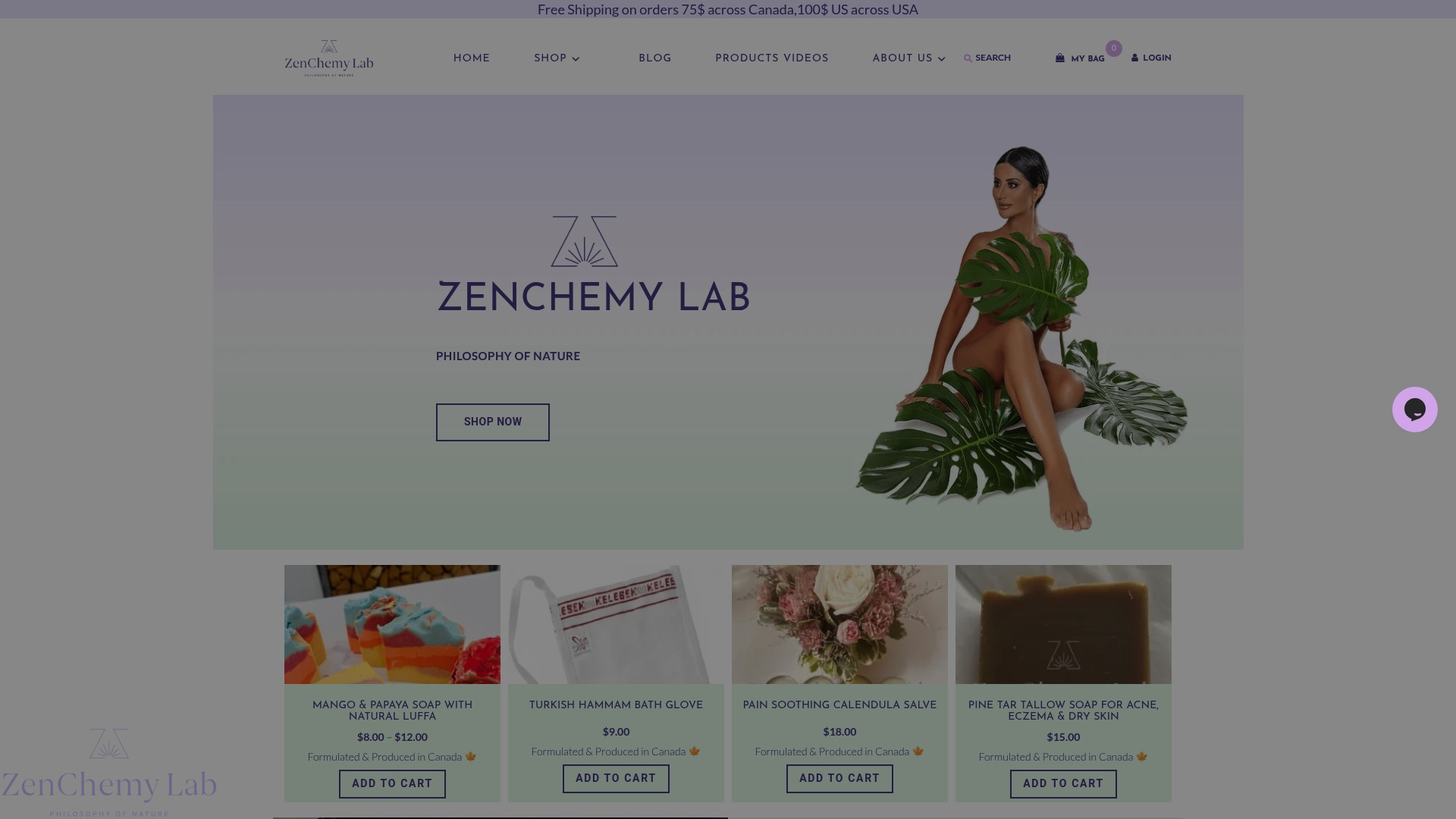
Browse the full range, or use the making cosmetics resources tag for formulation guidance, ingredient sourcing tips, and deeper reading on natural skincare science. For wholesale enquiries or small-order questions, reach out directly through the site.
Primary sources and further reading
The links below are the core regulatory and technical references used throughout this article. Bookmark the Health Canada pages; they are the authoritative source for any rule that changes.
Regulatory (Health Canada):
- Cosmetic advertising, labelling and ingredients — natural vs. synthetic ingredient rules, safety obligations
- Industry guide for the labelling of cosmetics — INCI format, botanical genus/species requirements
- Cosmetic Ingredient Hotlist — prohibited and restricted ingredients with concentration limits
- Regulatory information for cosmetics — notification, GMP expectations, linked guidance
- Cosmetic Regulations (C.R.C., c. 869) — full text of the governing regulations
Technical:
- The Ultimate Guide to Cosmetic Preservative Selection (SpecialChem) — hurdle technology, pH dependence, combination strategies
- Lexgard® Natural MB product page (Knowde/Inolex) — plant-based building block blend, COA and TDS access
Save these for your formulation file: the INCI labelling guide and the Hotlist are the two documents you will return to most often. The SpecialChem preservative guide is the best single technical reference for understanding why pH and combination strategy matter.
This article provides general educational information for Canadian small-batch formulators. It is not legal, regulatory, or professional safety advice. Confirm current requirements with Health Canada or a qualified cosmetic chemist before selling any product.