Expect to pay $6 to $10 for a budget or mid-market bar, $10 to $15 for true artisan or premium bars, and $15 and up for luxury bars built on rare oils and pricier essential oils. Bar weight, ingredient sourcing, and packaging shift these numbers, and labour is almost always the hidden cost driving them higher than you’d guess. Some handmade soap lines fit within the artisan pricing range and can serve as useful reference points when shopping.
TL;DR:
- A handmade soap maker typically targets a 3× markup on the true cost, resulting in retail prices around $10 to $15 for most artisan bars.
- Properly calculated costs include ingredients, fair labour at about $20 per hour, overhead, and cure time of four to six weeks, which heavily influences the final price.
- Bundles usually offer a 10 to 20 percent discount, but only save money if you would have purchased all those bars separately anyway.
- Regional costs and seasonal demand influence prices, with higher living costs or limited editions adding to the price, but transparency and ingredient clarity remain key for value.
Table of Contents
- Price bands explained: single bars, premium bars, and bundles
- What drives artisan soap price?
- How to estimate cost per bar yourself
- Bundles, subscriptions and wholesale: how buying format changes per-bar price
- How to compare value when buying: what actually matters beyond the price tag
- Typical profit margins for artisan soap makers
- Average time from production to sale and its impact on pricing
- Pricing for custom or limited edition artisan soaps
- Regional pricing differences and their impact on artisan soap prices
- Seasonal demand fluctuations and pricing strategies
- How marketing and branding influence price points
- What ZenChemy Lab’s own pricing tells you about honest artisan soap
- Where ZenChemy Lab fits in these price bands
- Sources
- FAQ
Price bands explained: single bars, premium bars, and bundles
Bars priced at different points can look nearly identical on a shelf. What separates them is weight, ingredient sourcing, and how much hand labour went into the batch. Quality cold-process bars generally cluster into three recognized price bands:
- Budget to mid-market ($6–$10): simpler oil blends, fragrance oils rather than essential oils, and often a lighter bar (80 to 100 grams).
- Artisan or premium ($10–$15): cold-process bars with named botanical ingredients, essential oil blends, and heavier bars (100 to 140 grams).
- Luxury ($15+): rare butters, single-origin oils, or costly essential oils like rose absolute, plus more elaborate packaging.
The trick to comparing fairly is converting everything to price per ounce or per 100 grams, since a “cheap” 60 gram bar can actually cost more per wash than a $14 bar that weighs twice as much. Bundles complicate this further. A typical 3-pack sold at $24 works out to $8 per bar, a modest discount over buying three bars individually at $9 each. A 4-pack gift set priced at $38 comes to $9.50 per bar, often reflecting nicer packaging rather than a real savings. Always divide the bundle price by the bar count before deciding whether it’s actually a deal.
What drives artisan soap price?
Two bars that look alike on a shelf can carry very different price tags, and the gap almost always comes down to five components: materials, fragrance, labour, overhead, and cure time.
Materials (oils, butters, lye, fragrance, colourants, and additives) typically range within a moderate cost per bar depending on quality. Coconut oil and olive oil sit at the affordable end; shea butter, cocoa butter, and specialty clays push costs upward.
Fragrance is where prices split sharply. A synthetic fragrance oil might add $0.20 to $0.40 per bar, while a rich essential oil blend can add $0.75 or more. Rare botanicals go further still: rose absolute or certain single-origin essential oils can add over $1 per bar compared to inexpensive fragrance oils, which is exactly why a lavender bar and a rose bar from the same maker rarely share a price tag.
Labour is the cost most sellers underestimate. The Handcrafted Soap and Cosmetic Guild and industry practitioners recommend a production labour floor around $20 per hour when costing a batch, and skipping this step is the single most common reason handmade soap ends up underpriced.
Overhead adds more still:
- Marketplace and payment processing fees (often 3 to 10% of the sale)
- Packaging, labels, and shipping materials
- Cure time of four to six weeks, during which capital sits idle as inventory rather than earning revenue
How to estimate cost per bar yourself
Here’s the formula that separates a sustainable soap business from one that’s quietly losing money on every sale: materials per bar + labour per bar + overhead per bar = true cost per bar. This loaf-to-bar approach is the standard used across the craft pricing world, and it works whether you’re checking your own numbers or sizing up a listing.
- Calculate total batch materials cost (oils, lye, fragrance, additives) and divide by the actual number of sellable bars, not the theoretical yield.
- Track your hands-on production time for the batch and multiply by an hourly labour rate, then divide by bar count.
- Add a per-bar share of overhead: packaging, fees, utilities, and cure-time storage.
- Sum the three figures for your true cost per bar.
- Apply a markup, commonly 3× for retail, to set your sale price.
Here’s a worked example for a standard 10 bar loaf batch:
That $19.50 might look steep until you see the maker is still only earning $13 profit per bar before fees, and even less once wholesale accounts (paying roughly the keystone convention of 50% of retail) enter the picture.
The most common mistake here is using theoretical yield instead of actual sellable bars after trimming, which quietly inflates margins on paper while starving them in reality. The second is forgetting to price fragrance variants separately. If you want to sanity-check your own numbers or a seller’s price, plug batch figures into a free soap costing calculator and compare the suggested retail at 2×, 3×, and 4× multipliers.
Bundles, subscriptions and wholesale: how buying format changes per-bar price
Buying three bars at once almost always beats buying three separately, and the math explains why. Marketplace listing fees, packaging, and shipping are largely fixed per order, not per bar, so bundling spreads those fixed costs across more units and lowers the effective per-bar price.
- Bundle discounts on artisan sites typically range from 10 to 20% off the sum of individual bar prices.
- Subscription or membership pricing extends this further, often locking in a lower per-bar rate in exchange for recurring, predictable orders.
- Wholesale buyers should expect roughly 50% of retail price per bar, reflecting the keystone convention, but usually only at minimum order quantities that make batch-scale production worthwhile for the maker.
The catch: a bundle discount only matters if you’d have bought all those bars anyway.
How to compare value when buying: what actually matters beyond the price tag
Price alone tells you almost nothing until you know what you’re actually paying for. Before you click “buy,” run any listing through this quick checklist:
- Normalize to price per ounce or per 100 grams so a small $7 bar and a large $12 bar can be compared honestly.
- Read the ingredient list for specificity. “Fragrance” and “botanical extract” without detail is a red flag; named oils like shea butter, rose absolute, or single-origin coconut oil signal real cost and real quality.
- Check for stated cure time. A maker who publishes a four to six week cure time is usually transparent about batch practices; one who says nothing may be selling soap before it’s properly hardened.
- Look at packaging quality and disclosure of scent source (essential oil versus fragrance oil), since this alone can explain a $4 price gap between two otherwise similar bars.
- Watch for missing weight. No stated gram or ounce weight on a listing is one of the clearest signs a seller hasn’t done their own costing carefully.
Small-batch makers who publish real ingredient lists and cure times, the way ZenChemy Lab’s handmade soap collection does, give you enough information to judge value rather than guess at it.
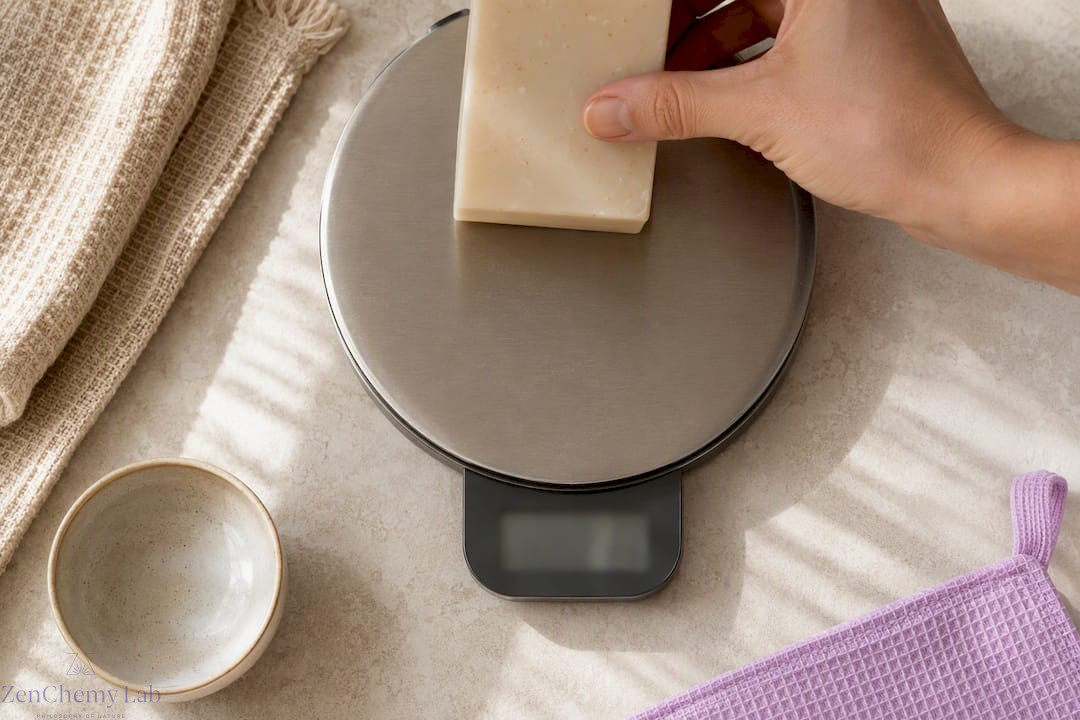
Pro Tip: Weigh a bar on a kitchen scale if you’re ever unsure. Sellers occasionally round up listed weights, and a 15 to 20 gram difference changes your real price-per-ounce more than you’d expect.
Typical profit margins for artisan soap makers
Most artisan soap makers target 60 to 70% gross margin at retail, which roughly matches a 3× markup on true cost per bar. That figure sounds generous until marketplace fees, returns, packaging waste, and unpaid administrative hours get subtracted.
This is why a $12 bar rarely means the maker is pocketing $8 or $9. Between ingredient cost, labour at a fair hourly rate, packaging, marketplace commissions, and the capital tied up during a four to six week cure, that $12 might net the maker $3 to $4 after everything clears.
This matters for you as a buyer because it explains why sustained “everything’s $5” pricing rarely survives. A maker selling consistently below true cost is either underpaying their own labour, cutting ingredient quality, or won’t be in business long enough to reorder your favourite scent. Prices that hold steady in the $10 to $15 range over time are usually a sign the maker has actually done the math, not that they’re overcharging.
Average time from production to sale and its impact on pricing
Cold-process soap needs four to six weeks to cure properly before it’s ready to sell, and that curing window is not idle time. It’s inventory sitting on a shelf, tying up the maker’s cash in materials and labour that haven’t generated a dollar of revenue yet.
A maker producing a batch today won’t see that batch on the shelf, let alone sold, for at least a month. Add photography, listing, and typical sell-through time, and six to ten weeks between pouring a loaf and a bar reaching a customer’s hands isn’t unusual for a small operation. That gap has to be priced in somewhere, and it usually shows up as a slightly higher per-bar price than you’d see from mass manufacturers who turn inventory in days, not weeks.
This is also why limited scent runs sell out and don’t always come back immediately. A maker restocking a popular fragrance is committing to another five or six week wait before that batch is sellable, which is a real business risk if the scent trend has moved on by the time it cures.
Pricing for custom or limited edition artisan soaps
That premium covers the extra labour of formulating a new batch for a single client, smaller-than-usual batch sizes (which raise labour and overhead per bar), and the risk of unsold inventory if the custom design doesn’t fit the maker’s usual buyer base.
Part of that reflects genuine cost. Rare essential oils or specialty butters sourced in small quantities cost more per unit than bulk-purchased staples. Part of it reflects simple scarcity: a scent that will never be made again carries value beyond its ingredient list.
If you’re buying custom or limited soap, ask directly about minimum order quantities and lead time. A maker asking for a four to six week turnaround on a custom order isn’t being slow. They’re respecting the same cure-time chemistry that governs every cold-process bar, custom or not.
Regional pricing differences and their impact on artisan soap prices
Where a maker operates changes what a bar costs to produce, and that shows up directly in shelf price. Studio rent, local minimum wage requirements, and shipping distance to suppliers all vary by region, and small-batch makers can’t absorb those differences the way large manufacturers with negotiated bulk contracts can.
A maker in a higher cost-of-living region paying fair local labour rates will price bars differently than one operating from a lower overhead location, even using identical recipes. Shipping also plays a role you might not expect. Makers farther from botanical oil suppliers or packaging manufacturers often pay more in freight, and that cost gets folded into the per-bar price rather than absorbed as a loss.
Climate matters too, in a less obvious way. Humid regions sometimes need longer cure times or different packaging to prevent moisture issues, adding storage cost. None of this means a $16 bar from one region is automatically better than a $9 bar from another. It means comparing prices across very different makers requires accounting for their real operating conditions, not just assuming higher price equals higher quality.
Seasonal demand fluctuations and pricing strategies
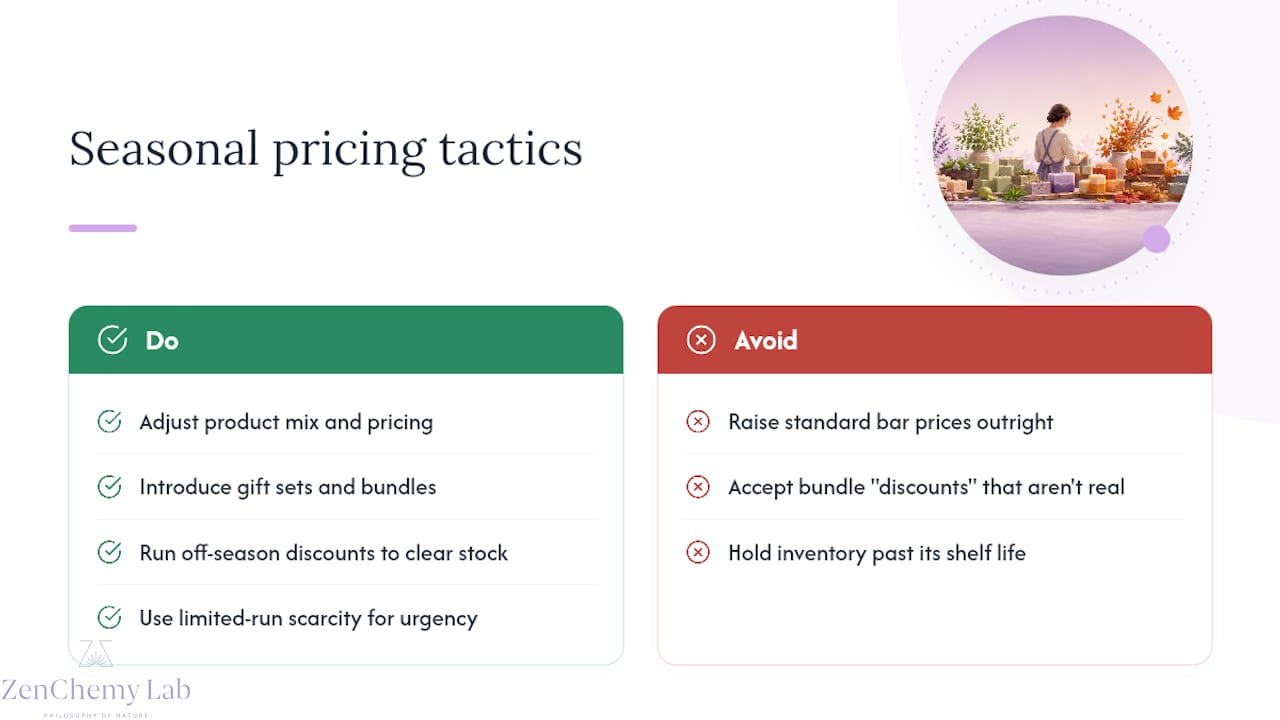
Soap sales spike hard around gift-giving seasons, and smart makers adjust both product mix and pricing to match. Holiday season and Mother’s Day typically drive the highest demand, and many makers introduce gift sets and bundles specifically for these windows rather than raising the price of standard bars outright.
Off-season months see the opposite pattern. Makers often discount bundles or run clearance pricing on seasonal scents (think pumpkin spice past October) to clear inventory before it ages past its best-use window, since soap does have a shelf life even after curing. Watching for these discount cycles is one of the most reliable ways to find genuine savings on artisan soap, as opposed to bundle “discounts” that aren’t really discounts at all.
Makers also use scarcity strategically during high-demand periods. A seasonal scent released only in November creates urgency that a same-old lavender bar available year-round simply can’t. That’s not a pricing trick exactly. It reflects real batch-planning decisions, since a maker committing kitchen time and cure-time inventory space to a seasonal scent is taking on real risk if it doesn’t sell through before the season ends.
How marketing and branding influence price points
Two bars with nearly identical ingredient costs can sell at very different prices, and branding explains most of that gap. Packaging design, photography quality, brand storytelling, and perceived positioning all shape what a buyer is willing to pay, independent of what’s actually in the bar.
This isn’t necessarily a bad thing for buyers. A maker who invests in clear ingredient labelling, professional photography, and a coherent brand story is often the same maker who’s careful about sourcing and batch consistency. Branding investment and product quality tend to travel together, though not always. Watch for makers who lean heavily on aesthetic packaging while staying vague about actual ingredients or weight; that combination is worth extra scrutiny.
Positioning language matters too. A bar marketed as “luxury” or “small batch” without any specific ingredient or cure-time detail to back it up is leaning on branding to justify price rather than substance. Compare the story a brand tells against what it actually discloses about materials, weight, and process before deciding a premium price is earned rather than assumed.
What ZenChemy Lab’s own pricing tells you about honest artisan soap
Setting prices for our own soap forced us to face the same loaf-to-bar math covered above: materials, real labour hours, cure time, and overhead all add up faster than a “just make soap and sell it” mindset accounts for. That’s part of why our artisan collection sits in the $10 to $16 range rather than racing toward the bottom of the market. Small-batch pricing always trades speed and scale for ingredient quality and hands-on care, and we’d rather be upfront about that trade-off than pretend it doesn’t exist.
— Alex
Where ZenChemy Lab fits in these price bands
If you’ve read this far, you already know what separates a fairly priced bar from an underpriced one: real materials, real labour, and honest cure time. ZenChemy Lab’s Artisan Soap Collection – Handmade is priced at $10 to $16 per bar, landing squarely in the artisan and premium bands this guide has walked through, built on the same non-toxic, cruelty-free ingredient philosophy across the whole line.
For buyers who want more than one bar, or who are shopping for gifts, comparing the per-bar math on a bundle against buying single bars is worth the two minutes it takes. If you’re a soap maker, retailer, or gifting business looking to buy at scale rather than by the bar, ZenChemy Lab’s cold-processed handmade soap bulk option runs $80 to $220 per order, giving you the same small-batch formulation without pricing per single unit. Browse the full ZenChemy Lab shop to compare single bars against bundle and bulk pricing before you decide which format actually fits how you (or your customers) use soap.
Sources
- How to Price Your Handmade Soap to Actually Make a Profit (The Loaf-to-Bar Formula) | Craftybase
- How to Price Handmade Soap: True Cost Formula (2025) | PetalMade Guides
- Know the true cost of your handmade soap | Modern Soapmaking
FAQ
How much should I sell my handmade soap for?
Price it using the loaf-to-bar formula: add materials, labour (at a fair rate, commonly a $20 per hour floor), and overhead per bar, then apply a 3× markup for retail. Most small makers land between $10 and $15 per bar once labour is properly counted.
How much should a bar of handmade soap cost?
Quality cold-process bars typically run $6 to $10 for budget or mid-market options and $10 to $15 for artisan or premium bars, with luxury bars using rare oils pricing at $15 and up. Bar weight and fragrance source explain most of the gap within these bands.
What is the most expensive soap in the world?
Ultra-luxury soaps using rare ingredients like gold flakes or extremely rare botanical extracts can sell for hundreds of dollars per bar in niche luxury markets, though these are outliers rather than representative of the artisan market most shoppers browse. For the vast majority of handcrafted soap, $15 to $25 represents the realistic top end.
Which is the number one best soap in the world?
There’s no single universally recognized “best” soap, since quality depends on ingredient sourcing, skin type, and formulation goals rather than one fixed standard. Look for transparent ingredient lists, stated cure time, and clear weight labelling as the practical markers of a well-made bar, whether you’re comparing ZenChemy Lab’s handmade soap line or any other small-batch maker.
Is buying an artisan soap bundle actually cheaper per bar?
Usually, yes, since bundles spread fixed shipping and packaging fees across more units, but only if you divide the bundle price by the bar count to check.