Set the scene, follow a deliberate order of operations, and end with rest — that sequence, not the product count, is what separates a real at-home spa day from a rushed skincare routine. Give yourself a quick 90-minute version or a longer ritual lasting several hours, and lean on staples like Epsom salts, a kaolin mask, and a gua sha tool to move through soak, scrub, facial, and hair care without breaking your flow.
TL;DR:
- Proper sequencing of treatments, such as applying a hair mask under the bath and sitting still afterward, enhances the restorative effects of a spa day.
- Pre-warming towels, robes, and the bathroom environment creates a seamless, relaxing experience that signals deliberate self-care rather than rushed routine.
- A full at-home spa ritual lasts three to four hours, but a condensed version around 90 minutes can still include essential steps like soak, scrub, facial, and rest.
- Essential products include bath salts, a body scrub, a targeted face mask, and a massage oil, with sophisticated tools like gua sha or facial rollers as upgrades.
- Attention to detail and proper timing, like a 20-minute soak and a 10 to 15-minute mask, are critical for maximizing relaxation and treatment benefits.
Table of Contents
- What is an at-home spa day, really?
- Your step-by-step spa day ritual, timed out
- How do you do each treatment properly?
- What do you actually need for a home spa day?
- How long should each spa treatment take?
- Building your ritual with ZenChemy Lab products
- Why the order matters more than the products
- Bring the ritual home with ZenChemy Lab
- Sources
- FAQ
What is an at-home spa day, really?
An at-home spa day is not a shopping list. It is a sequenced ritual: atmosphere first, treatments in a specific order, then a deliberate rest period that lets your nervous system catch up with your skin. Miss the sequencing and you get a nice bath followed by a rushed face mask while you scroll your phone. That is a routine, not a ritual — and the difference shows up in how relaxed you actually feel afterward.
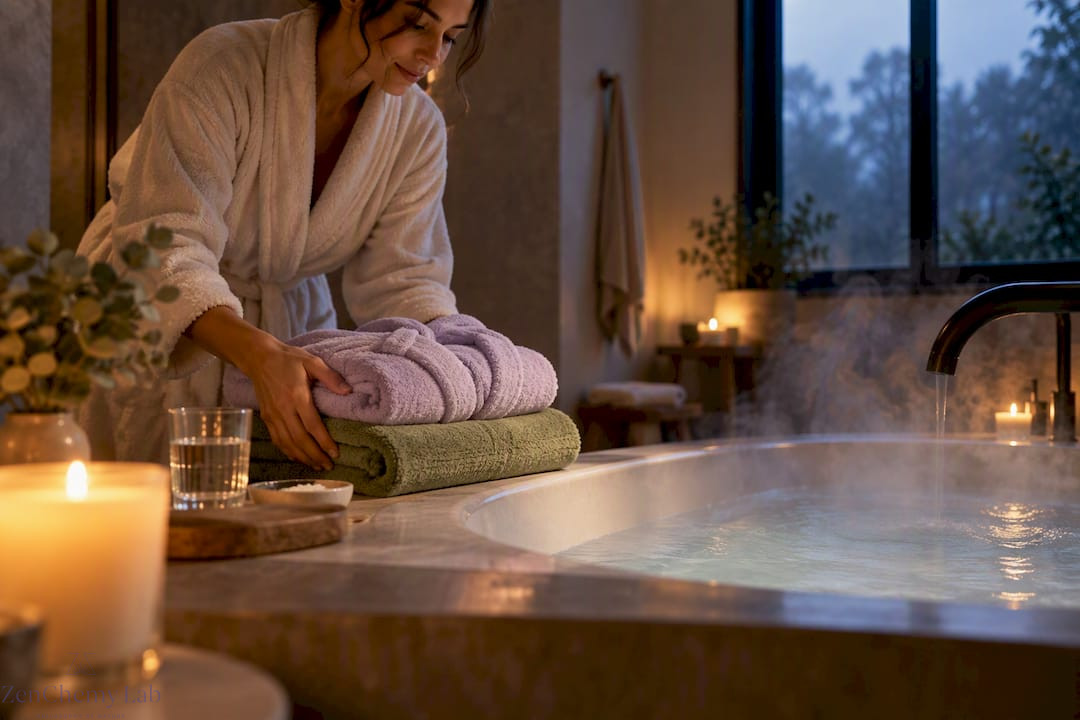
Setting the scene matters more than most people think. Warm the bathroom before you undress. Run the shower on hot for two or three minutes with the door closed, then turn it off — this pre-warms the room and prevents that jarring cold-tile shock when you step in. Do the same with your towel and robe: toss them in the dryer for five minutes, or drape them over a warm radiator, so you never land back in cold fabric after a hot soak.
Lighting and sound do real work here too. Swap overhead lights for a single warm lamp or two candles, and queue a playlist before you start rather than mid-treatment. Wellness writers describe the goal as creating a sense of unlimited time — your nervous system needs to believe there is nowhere else to be, and nothing does that faster than removing your phone from the room entirely.
Here is your prep checklist before a single product touches your skin:
- Warm the bathroom and pre-heat your towel or robe
- Set lighting to low and warm; light a candle or run a diffuser
- Queue a playlist or a white noise track
- Put your phone in another room, or on airplane mode in a drawer
- Set a loose timer so you are not clock-watching, just pacing
- Gather every product onto one tray so you never have to get up mid-ritual
Editorial guides on recreating a luxury spa day at home consistently point to atmosphere and sequencing, not expensive products, as the actual driver of how “spa-like” the experience feels.
Pro Tip: Pre-warming your robe and running a hot shower for two minutes before you start prevents the jarring cold-to-hot transition that makes so many home spa attempts feel unfinished rather than luxurious.
Your step-by-step spa day ritual, timed out
The order matters because certain treatments need to work while you do something else — a hair mask left dry on your scalp does nothing, but one applied under a shower cap while you soak does real conditioning work. Below are two versions: a quick 90 to 120 minute ritual and a full 3 to 4 hour version, both built around the same sequence.
The quick ritual (90 to 120 minutes)
- Set the scene (10 minutes). Warm the room, dim the lights, queue music, phone away, tray assembled.
- Apply a hair mask (0 minutes active). Work it through damp or dry hair and tuck it under a shower cap before you get in the bath — it works passively while you do everything else.
- Soak (20 minutes). Run a warm bath with Epsom or mineral salts and hydrate with a glass of water beside the tub.
- Body scrub (5 minutes). Exfoliate while still damp from the bath, then rinse.
- Facial in three steps (20 minutes). Cleanse, apply a mask, and use a gua sha or facial roller while it sets.
- Rinse hair and moisturize (10 minutes). Wash out the hair mask, apply body cream while skin is still damp.
- Integration rest (10 to 15 minutes). Sit quietly with tea before you move on with your day.
The full ritual (3 to 4 hours)
- Set the scene (15 minutes). Same prep as above, but with more time to actually settle in.
- Hair mask applied first (0 minutes active). Longer sit time here, ideally 30 to 45 minutes under a shower cap.
- Dry brush or dry exfoliation (5 minutes), before the bath. This works best on dry skin, so do it before you get wet.
- Long soak (25 to 30 minutes). Add Epsom salts or a botanical soak; editorial guidance consistently points to at least 20 minutes to actually relax muscle tension, not just warm up.
- Body scrub in the bath or immediately after (10 minutes). Rinse thoroughly.
- Full facial sequence (30 to 40 minutes). Cleanse, steam over a bowl of hot water, gentle exfoliation, then a mask with gua sha or roller work while it sets.
- Rinse hair, condition, style minimally (15 minutes).
- Hand and foot treatment (20 minutes). Quick soak, scrub, and a short self-massage.
- Moisturize head to toe (10 minutes). Body cream, face serum, and any finishing oil.
- Integration rest (20 minutes minimum). This is not optional — it is where the relaxation actually consolidates.
The stacking logic is the whole point here. A hair mask applied early and left to sit during your bath and facial gets far more conditioning time than one you rush through at the end. Practitioners who focus on ritual over routine consistently point to this kind of treatment stacking, rather than the number of products used, as what separates a genuinely restorative session from a checklist you race through.
How do you do each treatment properly?
Sequencing gets you through the day, but each step has its own technique, and getting the details wrong is how a spa day turns into a chore.
Bath or soak. Epsom salts (magnesium sulfate) dissolve fast and are the standard choice for muscle relaxation; mineral or Dead Sea salts work similarly but often carry added minerals and a coarser texture. Keep the water warm, not scalding — around body temperature plus a few degrees is enough — and soak for at least 20 minutes to let the salts do their work. Keep a glass of water within reach; a long hot soak dehydrates you faster than you’d expect.
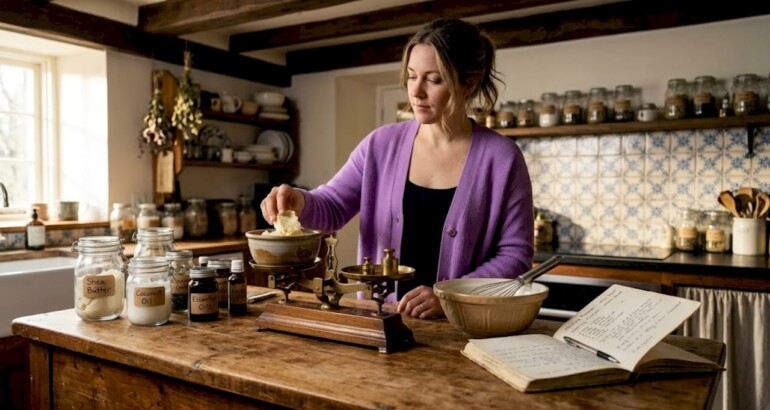
Body scrub. Apply to damp skin using circular motions, working toward the heart, then rinse. A DIY option — brown sugar mixed with a neutral oil like sweet almond or grapeseed — works well for most skin types, but skip physical scrubs entirely if you have active acne, eczema, or sunburned skin, where a chemical exfoliant or no exfoliation at all is the safer call.
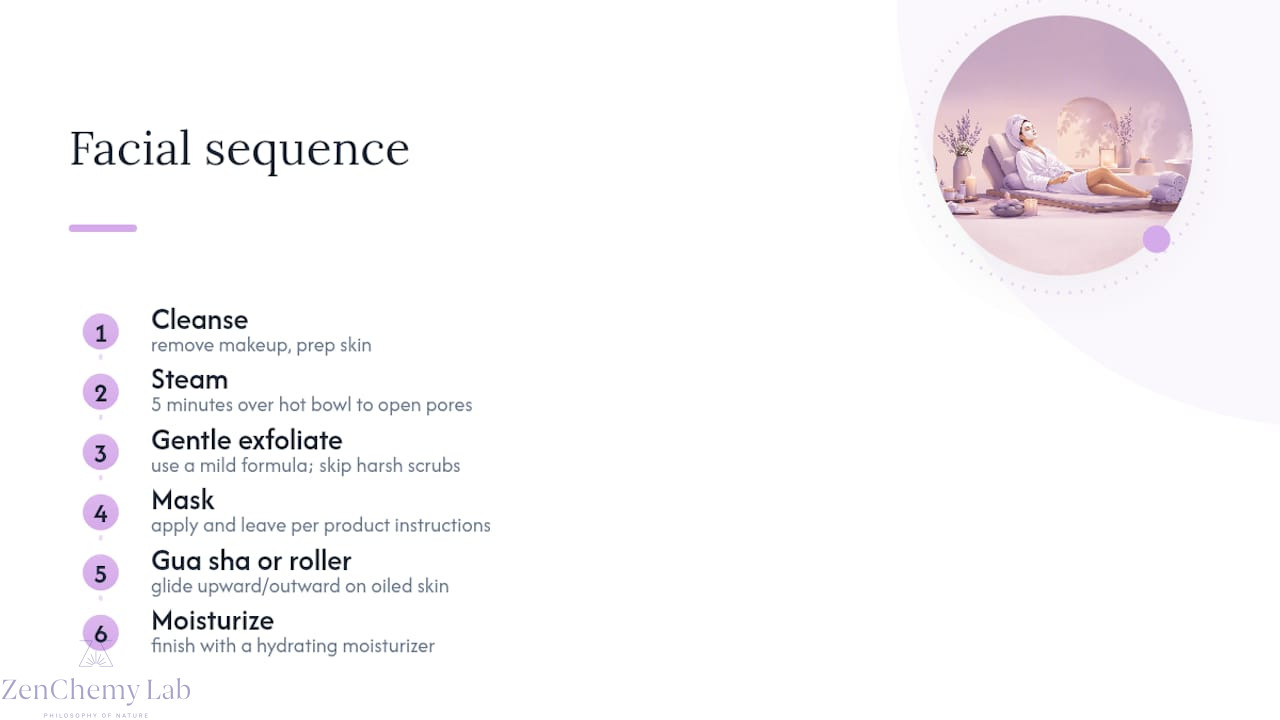
Facial. The sequence is cleanse, steam, gentle exfoliate, mask, gua sha or roller, then moisturize. Steaming over a bowl of hot water for five minutes opens pores before exfoliation; skip a harsh scrub here and use a gentle formula instead, since facial skin is thinner than body skin.
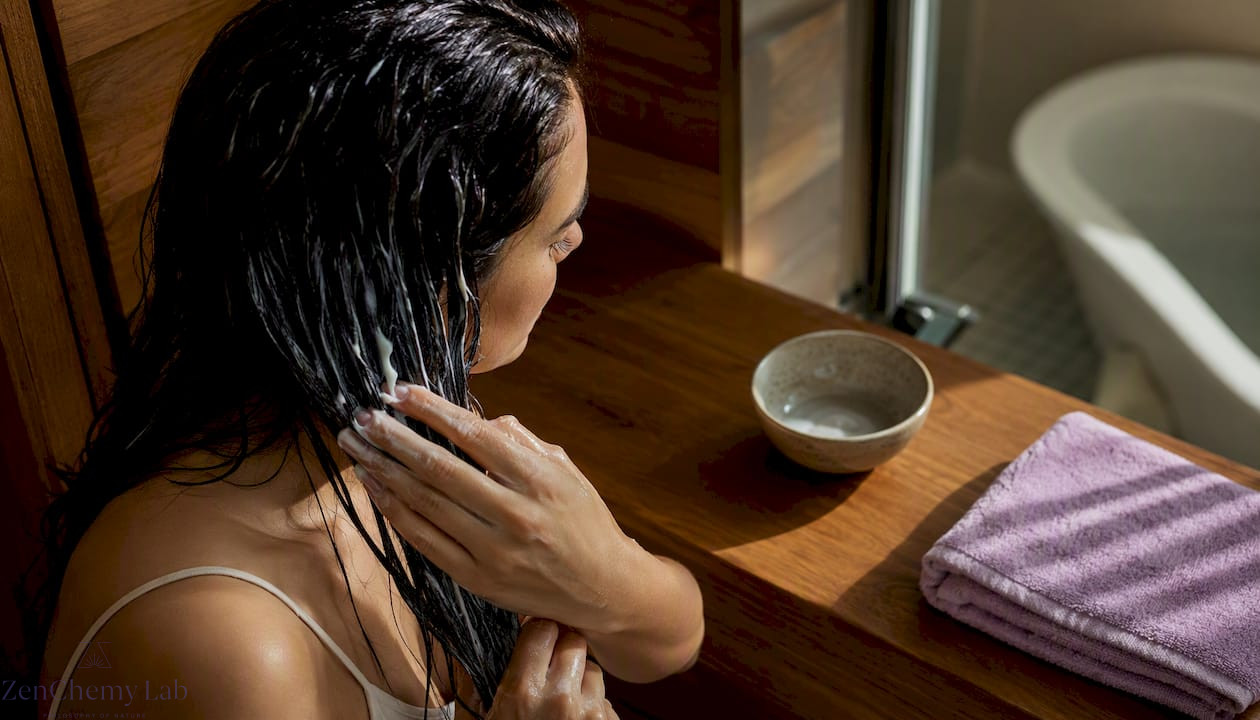
Hair. Apply the mask before your bath, not after, so it has 20 to 45 minutes of passive sit time while you move through other steps.
Hands and feet. A five-minute soak in warm water with a few drops of oil, followed by a light scrub and two minutes of thumb-pressure massage along the arches and palms, does more than most people expect from so little time.
Tools. A gua sha stone works best gliding upward and outward along oiled skin, never dragged dry. A scalp massager feels best used in slow circles for two to three minutes before shampooing. If you own an LED or infrared device, follow the manufacturer’s timing exactly — these are the one category where more is not automatically better.
Editorial coverage of home spa routines notes that warm lighting, scent, and pre-warmed towels shift the entire feel of a session more than any single expensive product does. That is a useful thing to remember before you overspend on step six of your routine.
What do you actually need for a home spa day?
You do not need a cabinet full of products. You need the right handful, chosen well, plus two or three upgrades if your budget allows.
Must-haves, regardless of budget:
- A soft towel and robe you can pre-warm
- Bath salts (Epsom or mineral)
- A body scrub, store-bought or DIY
- A face mask suited to your skin type
- A basic moisturizer or body oil
- A candle or diffuser
- A tray to keep everything within reach
Nice-to-haves that meaningfully upgrade the experience:
- A gua sha stone or jade roller
- A scalp massager
- A hair mask or deep conditioner
- A facial steamer (or just a bowl and towel)
- A curated playlist saved in advance
- A second robe layer for hand and foot treatments
- Herbal tea for the rest period
Three investment items worth considering if you do this regularly: a proper bath tray that spans the tub, a quality massage oil, and a reliable LED facial device if skin concerns justify the cost.
| Item | Purpose | Price band |
|---|---|---|
| Bath salts | Muscle relaxation, mineral soak | Low |
| Body scrub | Exfoliation, smoother skin | Low to mid |
| Face mask (kaolin or hydrating) | Deep cleanse or hydration | Low to mid |
| Gua sha or roller | Circulation, de-puffing | Low |
| Massage or body oil | Moisture lock, massage medium | Mid |
| Facial steamer | Pore prep before extraction/masking | Invest |
| LED facial device | Targeted skin concerns | Invest |
When shopping for natural options, check the product page for a full ingredient list, not just a marketing claim of “natural,” and look for cruelty-free labelling and clear sourcing. Handmade artisan soap lines and cold-processed formulations tend to disclose this more transparently than mass-market alternatives.
How long should each spa treatment take?
Realistic timing keeps a spa day from either dragging or feeling rushed. Use these as anchors, not rigid rules:
- Steam: 5 minutes, before exfoliation
- Face mask: 10 to 15 minutes, per the product’s own instructions
- Bath soak: 20 to 30 minutes minimum
- Body scrub: 5 to 10 minutes
- Self-massage (hands, feet, or scalp): 5 to 10 minutes per area
- Integration rest: 10 to 20 minutes, non-negotiable
That last one is the step people skip, and it is the one that locks everything else in. A short quiet period with tea after your last treatment lets your nervous system consolidate the relaxation instead of dumping you straight back into a screen or a task list. Editors generally agree that two to three hours is the practical sweet spot for a full routine that includes real rest without eating your whole day.
For frequency, aim for a full ritual monthly, a condensed 90-minute version every two weeks, and single-treatment mini-rituals (just a mask, just a soak) whenever the week has been rough.
Building your ritual with ZenChemy Lab products
You do not need a dozen brands cluttering your bathroom shelf. A handful of well-chosen categories cover the entire sequence above.
- Start the soak with a luxurious calming bath soak during your 20 to 30 minute bath, right after your hair mask goes on.
- Apply a kaolin-based face mask before your soak, not after, if you want it to work while your pores are still cool, or afterward if you prefer the post-steam glow.
- Use a body scrub straight out of the bath, while skin is still damp and receptive, following the body scrub routine approach.
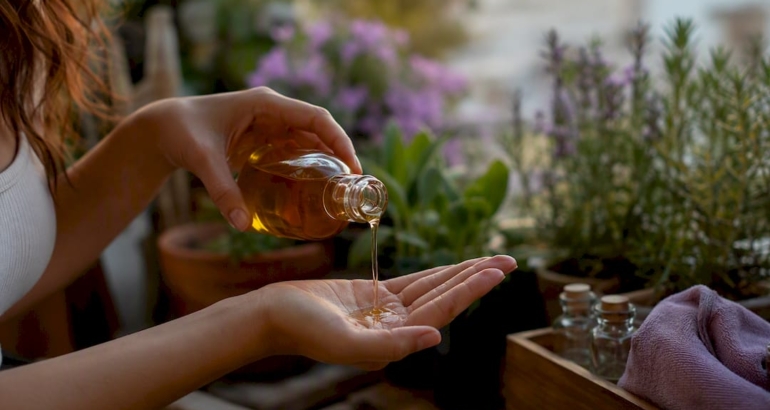
- Finish with a massage oil during your integration rest, working it into shoulders and forearms while you sit with tea.
Ingredient transparency is where handmade, cold-processed products tend to separate themselves from mass-market lines — check the ingredient list, not just the front label, before you commit a whole ritual to a new product.
Why the order matters more than the products
Most spa day advice fixates on what to buy. That misses the actual lesson: two people using identical products, but one following a deliberate sequence and one improvising, will walk away with completely different results. The person stacking their hair mask under a bath, moving into a facial while their skin is still warm and receptive, then sitting still for fifteen minutes at the end, gets more from a $20 bath soak than someone dropping $200 on tools used in the wrong order.
My practical takeaway: pre-warm your towel. It sounds trivial, but that one detail signals to your body that the whole session is deliberate, not rushed. Do it once, notice the difference, and you will want to schedule the fuller ritual again within the month.
— Alex
Bring the ritual home with ZenChemy Lab
Some natural skincare brands offer products for the ritual, including bath soaks, body scrubs, and massage oils, often handmade and with ingredient transparency on their product pages.
That matters most at the two pressure points in your ritual: the soak and the scrub, where cheap, synthetic formulas often do the opposite of what you want. When you’re shopping, check for a full ingredient list, cruelty-free labelling, and cold-processed methods, all signs the product was made with the same care you’re putting into your ritual. Start with the Artisan Soap Collection or a calming bath soak, and build your tray from there, one category at a time, rather than buying everything at once.
Sources
- How to Re-create a Luxury Spa Day at Home | goop
- How to Give Yourself a Real At-Home Spa Day for Under $80
- 10 Steps to the Perfect DIY Spa Night | AARP
- Spa Day at Home Ideas: The Complete Guide to Actually Luxurious At-Home Spa Treatments Wineful Living
FAQ
What should I do for a spa day at home?
Set the scene first with warm lighting, low sound, and your phone put away, then move through soak, scrub, facial, and hair treatments in that order before finishing with a rest period. A 90 to 120 minute quick ritual covers all the basics if you’re short on time.
What does a typical spa day include?
A typical ritual includes a warm soak with salts, a body scrub, a facial sequence (cleanse, mask, gua sha), a hair mask applied early, and a short rest period at the end. Full versions run 3 to 4 hours, while condensed versions fit into about 90 minutes.
What should be in a home spa?
The essentials are a soft towel and robe, bath salts, a body scrub, a face mask, a basic moisturizer or oil, and a candle or diffuser for atmosphere. Zenchemylab’s bath soak collection and handmade soaps cover several of these categories in one natural, ingredient-transparent line.
What are some ideas for a home pamper day?
Try stacking a hair mask under a bath soak, doing a hand and foot treatment while your facial mask sets, or ending with a short massage using a body oil during your rest period. Small sequencing choices like these do more for the overall feel than adding extra products.